With all the talk about tariffs affecting sales, I am reminded about one of my favorite topics: SALES and of course Sales Training.
And that relates to this topic of filters. I don’t know how hearing aid filters evolved. Did they exist from day one? If so, then ear horns must have had mosquito netting to keep insects from clogging the brass!
But I imagine that in the early days of hearing aids, or as hearing aids, moved from speaker tubes, to actual speakers themselves being inserted into the ear canal, the very first aids did not have any filters. Eventually I guess some users gummed up the works. And thus filters were born. Filters probably evolved through various materials, frames, holders, etc. Speakers themselves too I am sure developed with varying front grills and build solutions to deal with the stress of survival within humid, hot, hairy waxy ears.
Eventually someone came up with a very saleable suggestion: filters!
For some people, filters probably were life savers then. With only a bit of maintenance, an occasional visit to the professional, they kept hearing aids humming. Eventually the visit to the hearing professional became a regular necessity if nothing else, than to change the filters.
Frequently in my history going to professionals, the staff would routinely schedule a visit, and also would give out hearing aid filters and batteries… just enough until the next visit. Uh-huh.
Over the years, even for those with cleaner ears, and even with more robust and cleaning capable speakers, the mantra of filter necessity persisted.
Filters have to fit within the speaker’s grill. so they **
are narrower than that which they fit into. They also have very fine latticework, so they clog more readily in addition to clogging due to them just being narrower than the speaker, and of course, right upfront at the speaker, not recessed as the speaker grill often is in practice, when in an earmold.
Since they attach to the speaker, one can understand that they can become unattached… Then what - where they go then?
Being so tiny, they are even more awkward to handle than the batteries people complain about. In fact, to address these situations, they are provided with specialized tools to hold and to insert and remove the filters - small items that too require negotiation with the filters themselves for them to be of any use.**
All that leads to many requiring help. Read service! Meaning service appointments - to change the filters. That just possibly are not always needed in the first place nowadays!
I believe that with the high power speakers, and the sophisticated engineering, it should be possible to enter cleaning mode. In that mode, which can only be entered, when the aids are NOT in the ears, so this could be a reason to sell a hearing aid holding frame, or to add a switch to the charging case…anyway the cleaning mode, causes the aids to vibrate - or to produce full power sound at just the ideal frequency to help shake off the grime that might have gotten adhered to the speakers!
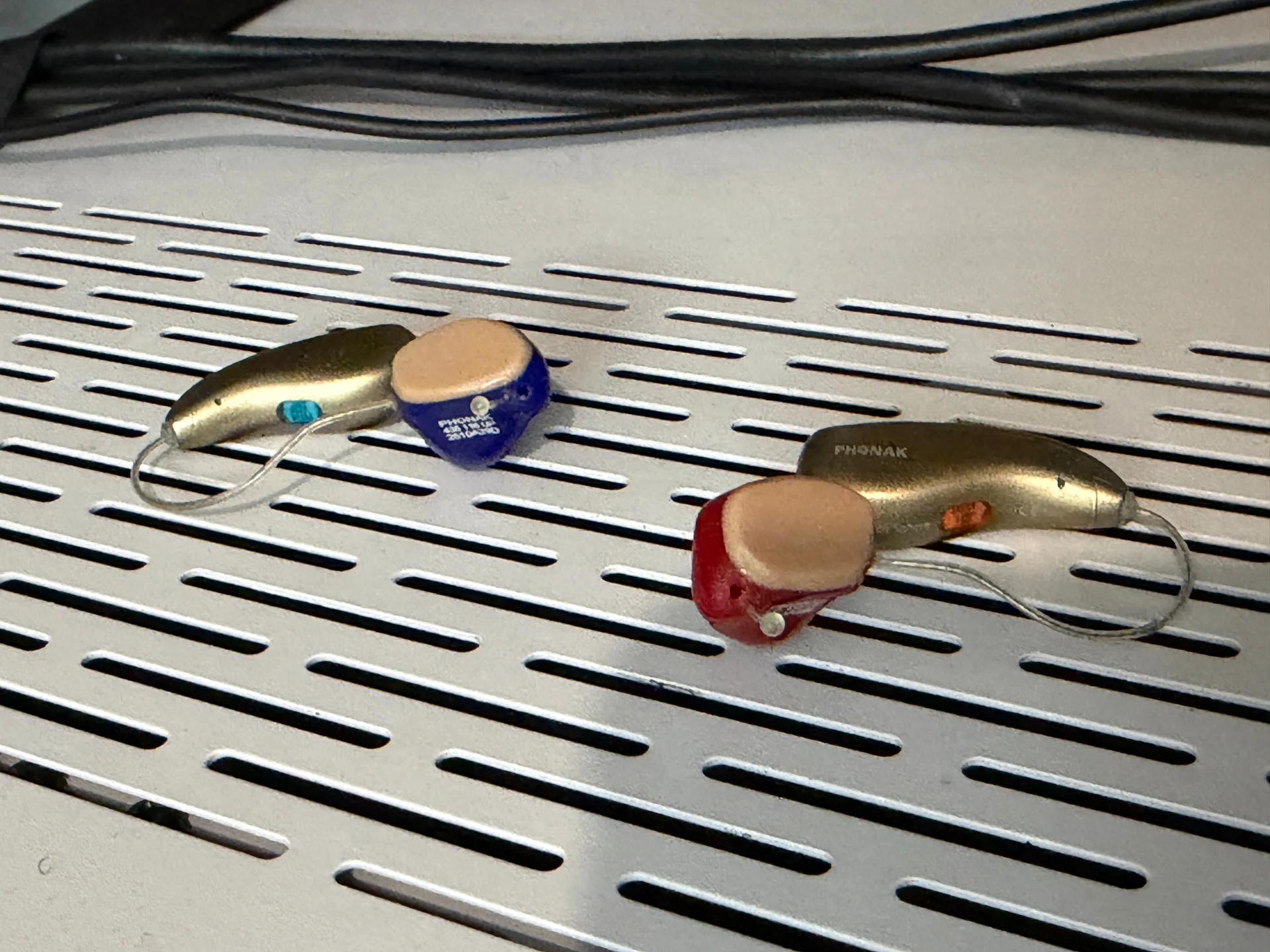
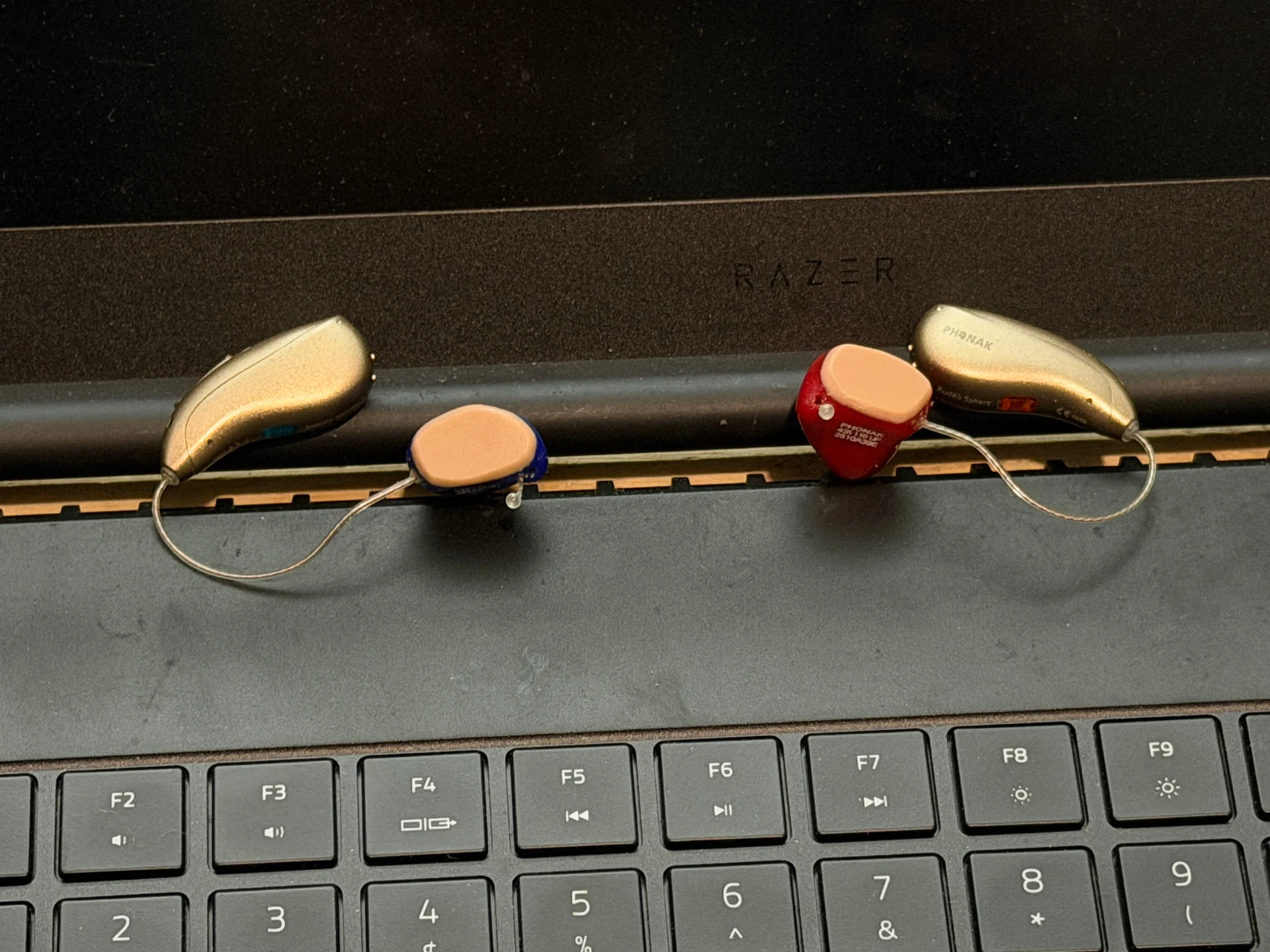
But I digress. I believe that with a small bit of self grooming awareness, today’s instruments do not require filters. Having a filter BELOW a dome, is bizarre - it is so far from the wax, and protected by the dome. Just remove the dome, soak it in warm water and dry it, (while wearing other domes - they so cheap). Having a filter at the front of a mold, is asking to be gummed up! My older hearing aids actually had filters on the speakers below the molds, and filters at the outside of the mold. Ridiculous! Once I realized that, I yanked both off. Problem is that the molds originally from the factory, are best fit to the speaker, and never fit the same way, after unearthing the filter hidden needlessly below.
So my bottom line is that this whole filter thing, while probably needed by some high waxers, for most it is just an industry approach that makes sense by giving yet another reason to schedule visits - and then at the visit the “handholding service” experienced in the cleaning and changing of filters - leaves little time remaining to actually have to do any serious work beyond what the basic “customer support technician” can do.
All that is yet another way of dumbing down the service, and making it mostly about sales!

 Canada (Toronto) YYZ

 Rural New England
 Poland