
 Hot Springs Village, Arkansas
Dr Cliff is getting ready to go to Denmark for the Oticon announcement. Si stand by more than likely about the first of November.
You’re ignoring this member’s posts.
This topic is closed.
91 replies4.9k viewsLast reply
Dr Cliff is getting ready to go to Denmark for the Oticon announcement. Si stand by more than likely about the first of November.
You’re ignoring this member’s posts.
You’re ignoring this member’s posts.
NAL-NL3 is universal fitting rationale. And I don’t see why not.
Oticon may suggest VAC+ but when you read their white paper about their technology and test result. They use as standard formula too.
You’re ignoring this member’s posts.

I’m sure all the manufacturers software will be updated to include the NAL3 when universally available.
You’re ignoring this member’s posts.
Because its a generic formula which will be available for all the prod classes, its implementation will take a LONG time, I wouldn’t expect it BEFORE genie 2026.2 / We haven’t seen interacustics / Audioscan or Medrx having it on their .
You’re ignoring this member’s posts.
Next week it is EUHA it will be announced there.
My bet is on a new form factor, Styleto type, long awaited PP refresh ?
You’re ignoring this member’s posts.
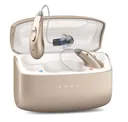
You do realise that NAL 3 is ‘just’ a target? If you want your hearing aids set sharper than the target under , you literally can have them adjusted (or adjust them yourself via the app) to do this.
I’m not entirely sure why people are getting so excited about it (you can already default the software out of Vac+ in preferences). It’s quite common for audiologists to move away from the ‘basic’ target following client feedback.
You’re ignoring this member’s posts.
You do realise that NAL 3 is ‘just’ a target? If you want your hearing aids set sharper than the target under REM, you literally can have them adjusted (or adjust them yourself via the app) to do this.
A better rationale, if NAL 3 turns out to be that, would save a lot of people, both clients and clinicians, a lot of time and frustration.
You’re ignoring this member’s posts.
Why?
It’s just drawing different lines on your measuring tape. It doesn’t fundamentally change what gets amplified, doesn’t affect how speech is identified from background noise and enhanced, takes no account of channel or directional performance.
It’s like trying to say that if you make all runners 6 feet tall, they’ll run the 100m and marathons at the best pace.
I’ll pose this for you: if you drive an aid to full NAL 3 levels all day with equalised energy per syllable and intra-syllabic sound: you’ll likely pass all the testing with flying colours, but that doesn’t mean you’ll not going to suffer auditory fatigue or cause yourself loudness growth problems. That said, if you want your aid louder or clearer, you can ask for it: especially in secondary programs.
You’re ignoring this member’s posts.
You’re ignoring this member’s posts.
loudness growth problems
Can you clarify, sensitivity to loud sounds or the need for more volume or something else? Does this require a significant increase in volume or can it happen with a small volume bump?
You’re ignoring this member’s posts.
Specifically how much loudness you can accommodate in terms of an already loud signal. Though there’s a specific subset of users who can turn into ‘sound junkies’ who ask for increased cumulative prescription levels above their actual threshold needs.
You’re ignoring this member’s posts.
how much loudness you can accommodate in terms of an already loud signal.
The remaining overhead between the targets for a loud stimulus and the uncomfortable level? It makes sense that there is less space if one increases the volume but it sounded like you were saying something grows, is that the uncomfortable level?
Have you figured out any reasons some are sound junkies?
You’re ignoring this member’s posts.
I have a question l. I wear Oticon INTENT1 aids with 105db receivers and custom ear molds. The Gene2 software says I should be able to use 85db receivers. But 85db receivers only gave me tons of feedback or muffled sound. It did take almost 18 months of adjustments and even chances in hearing aids and or receivers and custom ear molds to find a sweet spot that I could understand speech as well as I can now. No it isn’t perfect and can never be perfect. But the positive is that I don’t have feedback issues, and no wind noise issues. My aids are adjusted to approximately 110% in the mid range frequencies. I also hear low frequencies through my aids great. I don’t hear streaming audiobooks any differently than I hear individuals talking to me. Yes I did therapy to learn to accept the louder sounds. Yes at first it was painful. But the positive results is that I can going to meetings and be a part of the conversations, I can go to lectures and even enjoy concerts.
My question is in your belief was ir wrong to push my limits?
You’re ignoring this member’s posts.
What type of pain did it cause? Similar to being at a loud event or something different?
What is happening to let you adapt? Is it how the brain processes these louder sounds or does something in the ear change too? What program/software did you use and how did they configure it for this purpose? Does it just get louder over time at an accelerated pace?
You’re ignoring this member’s posts.
It was a process of letting my brain get use to louder sounds. At first I tried to force it to happen to fast. Once I slowed down the process down to where I could handle the increase in smaller amount of change. It took about 18 months to adjust to the sounds.
You’re ignoring this member’s posts.
saying something grows
The level at which you ‘like’ to hear the quietest sounds.
Nobody hears ‘everything’ in every given situation, but if you know that there’s potentially ’extra’ hearing on tap, the temptation is to raise the level of the quietest sounds. People then acclimate to more gain, rinse and repeat. The problem is that you lose the loudness graduation in your remaining dynamic range.
Certain fitting protocols encourage equal loudness in all parts of speech = maximum intelligibility. A ‘Holy Grail’ for people with badly damaged cochleas. Certain companies traded for years on this approach (Widex): bolder/more rounded sound.
However, diminishing the intrasyllabic rise and fall also robs a degree of the clarity where your natural cochlea amplifier should detect the level change and use this information as part if your speech understanding. Arguably, a sharper sound with cleaner rises and falls. Possibly better for less damaged cochleas.
So depending on the nature of the damage to your cochlear (plus the specific situation): a mix of the approaches might be appropriate. However, if you’ve already over-energised the cochlear through a high intensity output, it’s difficult to walk back to the lower energy/clarity approach.
So sometimes less IS more.
You’re ignoring this member’s posts.
My question is in your belief was ir wrong to push my limits?
Not necessarily: if your were compromised through recruitment, then some ‘education/habituation’ probably helped you get the most out of your residual hearing.
However, if you continue to need a louder threshold level of sound because ’things don’t seem quite as clear’, you have to bear in mind that you’ve simply habituated to your current settings. Also given that your threshold is already at 70-80dB, greater output levels come double edged: with distortion, feedback, hitting the soft of the aid or physically over-driving the receiver - plus auditory fatigue.
So, given the state of the cochlea, probably not wrong to try it, but further seeking higher average energy protocols might become detrimental.
You’re ignoring this member’s posts.
On the very topic: I would bet on a discreet rechargeable Bluetooth-enabled in-the-ear custom. This is what their line-up is missing.
You’re ignoring this member’s posts.
The level at which you ‘like’ to hear the quietest sounds.
Nobody hears ‘everything’ in every given situation, but if you know that there’s potentially ’extra’ hearing on tap, the temptation is to raise the level of the quietest sounds. People then acclimate to more gain, rinse and repeat. The problem is that you lose the loudness graduation in your remaining dynamic range.
But what if your patient says that a bit of background noise actually soothes their 24/7 tinnitus, and that they can’t bear total ‘silence’? Would you make things a bit louder to distract them, or is there another way to approach this?
You’re ignoring this member’s posts.
Hearing Aids175 replies
Hearing Aids28 replies
Hearing Aids6 replies
Hearing Aids32 replies
Hearing Aids104 replies
 Poland
 Wales, UK

 London