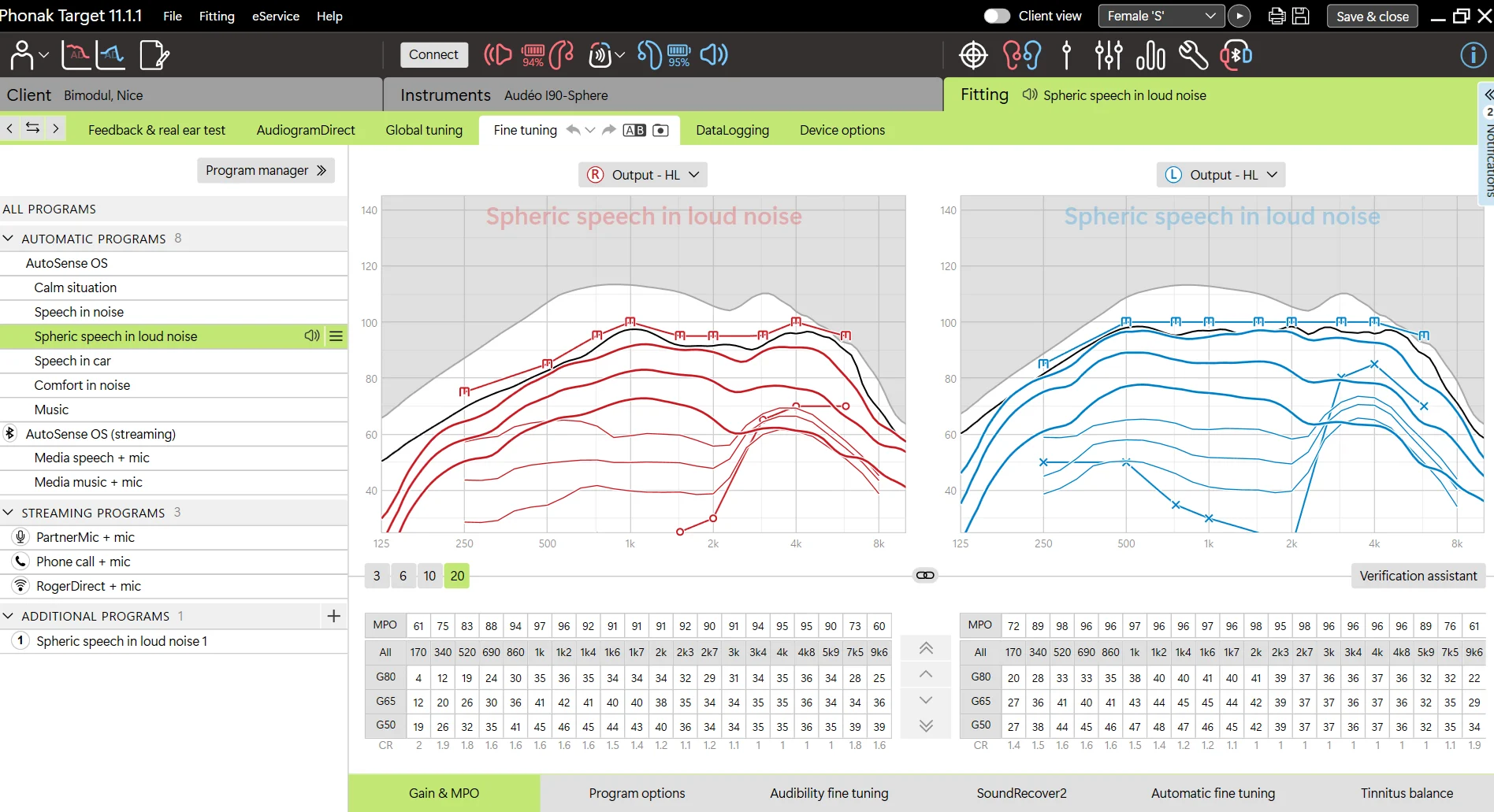
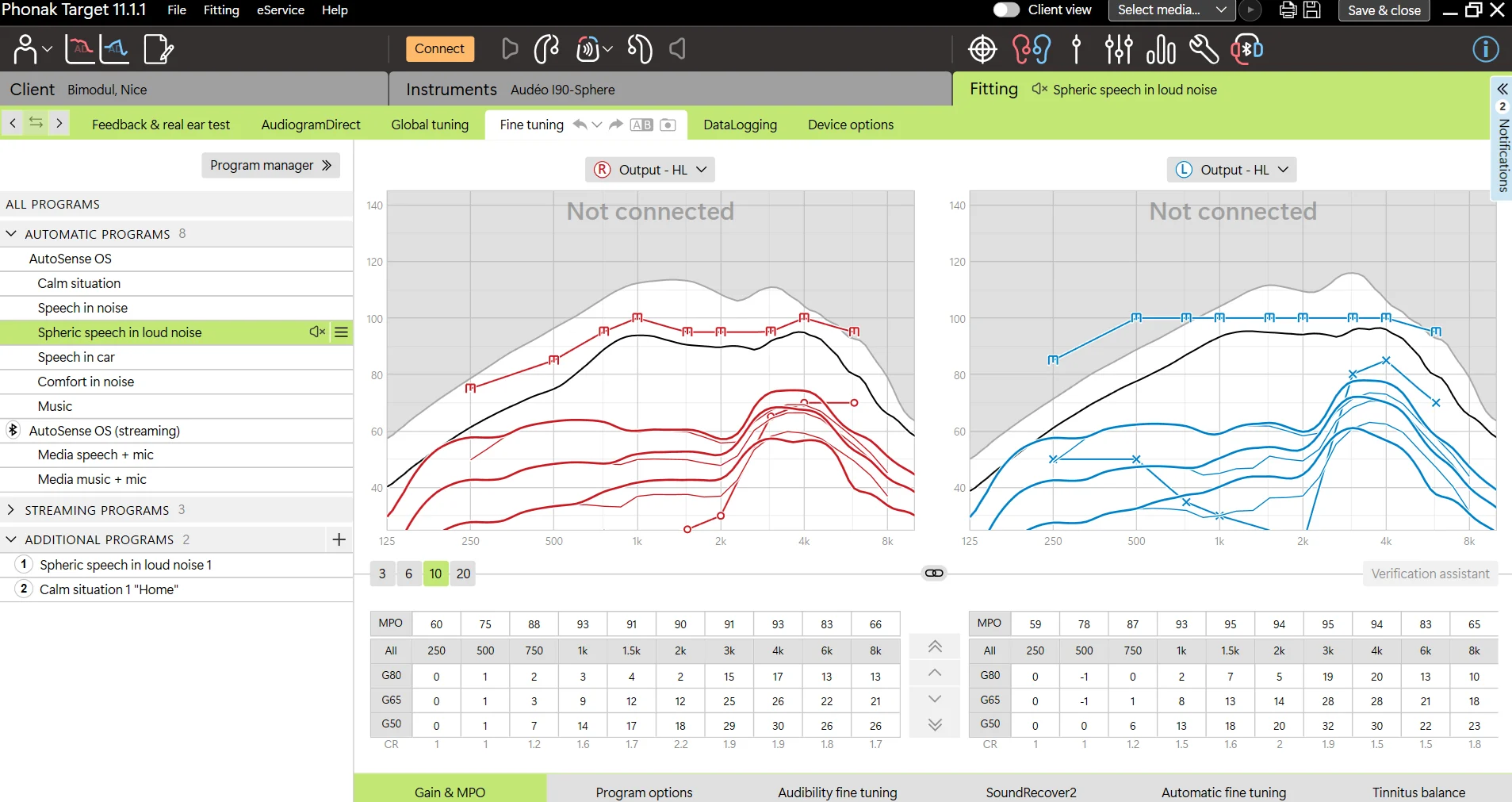
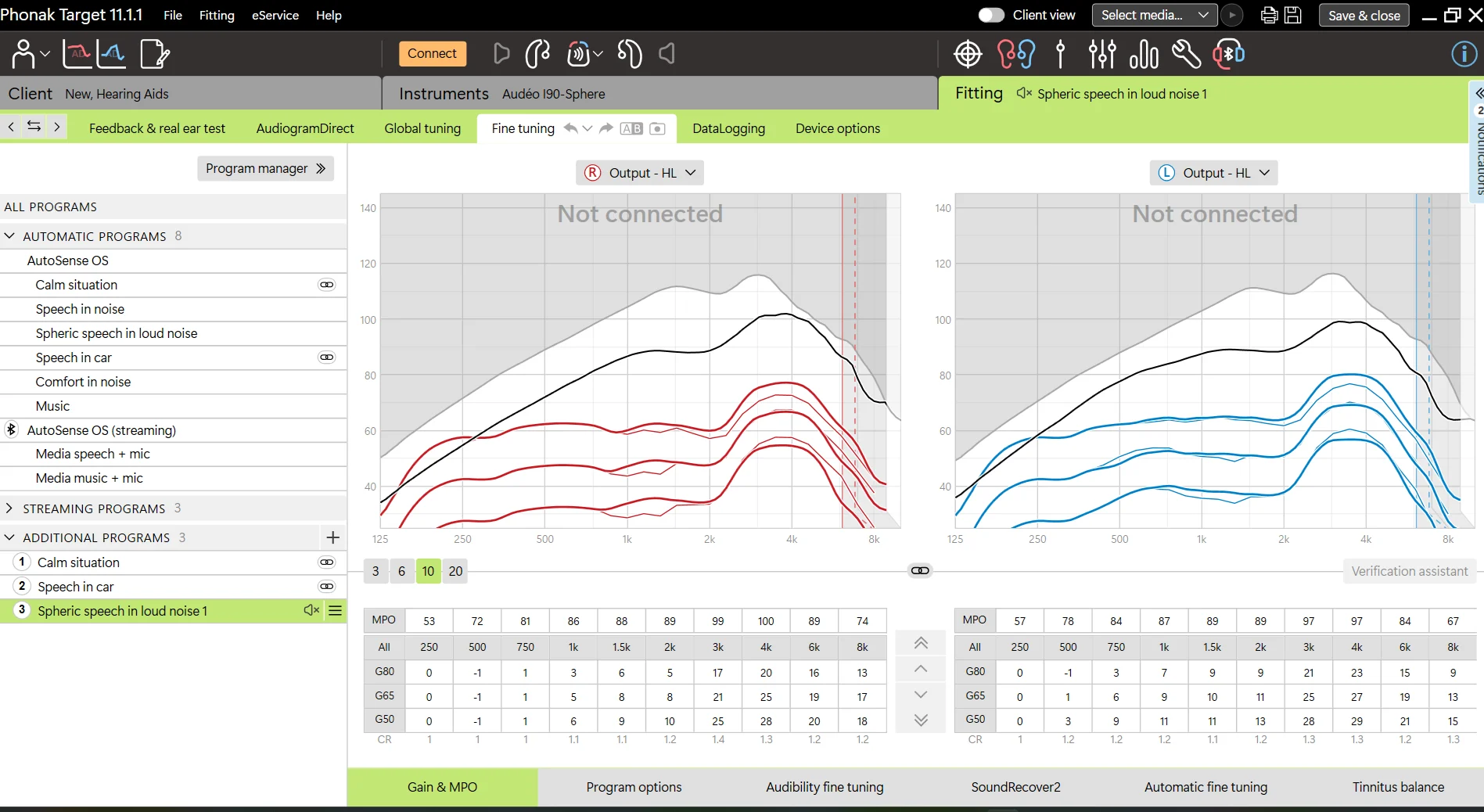
I ordered the Unitorn power domes, they arrive soon. Yes, I have ensured all the Target settings are correct. This screenshot shows large Phonak power domes in both ears with a medium-power
receiver.
You’re ignoring this member’s posts.
66 replies2.1k viewsLast reply
I ordered the Unitorn power domes, they arrive soon. Yes, I have ensured all the Target settings are correct. This screenshot shows large Phonak power domes in both ears with a medium-power
receiver.
You’re ignoring this member’s posts.
OMG, I’m not surprised at all that you’re not satisfied with the results with Spheres. With high probability, you shouldn’t get benefit from that gains.
I’ll write more tomorrow, it’s almost 4 AM at my place.
Please give also output screen with lines.
You’re ignoring this member’s posts.
You’re ignoring this member’s posts.
This screenshot shows large Phonak power domes in both ears with a medium-power receiver.
Based on what I see, you probably have problem not only in noise, but also in quiet condition.
Tl;dr: Save previous fitting, create new appointment in Target as ‘new patient’, setting proper acoustic parameters and feedback test (in absolutely quiet environment), check feedback threshold and then make AudiogramDirect with hearing threshold and .
All below wouldn’t work if you have poor seal with power domes and low feedback threshold
So, it means that it is possible that you hear lowest frequencies poorer than with bare ears, because earplug effect is not overcomed by hearing aids amplification, especially in 500-1000Hz range. Your feedback threshold is low, so I assume that your recent power domes don’t provide you desired seal in ear canal.
That limits G50 gain, which makes problem even in hearing soft voices in quiet.
That should be solved by:
a) experimenting with size of power domes and their depth. If you can push them deep, sometimes you should change size from L to M or even S to prevent overfolding domes in the narrowest part of ear canal near the eardrum.
b) bigger receiver (like P vs. M) has more occluding effect.
c) using retention wire to add stability:
https://youtu.be/pYl1-bLRkks4
d) (after experimenting with different sizes of power domes) - cShell with very small vent - diameter is a bit of trial and error, but you must probably have below 1 mm. I have 0.9 mm, but wanted 0.6 mm.
cShells should be from deep silicone impressions, at least 5mm past 2nd bend of ear canal, because deeply placed earmold reduces greatly occlusion effect and can provide additional “free” few gain, due to Boyle’s law (less volume of ear canal between cShell and eardrum).
3. I would try first to disable SoundRecover 2, if you don’t have dead regions over 3 kHz.
Dead regions are usually identified when puts amplification over your 2 kHz and you feel that sound much distorted along with gain (without SoundRecover). However, I would be careful to diagnose that without a trial of a few months with getting used to and learning how to hear that frequencies. Distorted sound may be from sub-feedback amplification, active , unwanted Sound Recover, etc.
SoundRecover 2 is a great feature if you have dead regions in your cochlea, but it should have been enabled after a trial of traditional amplification and high frequency hearing rehabilitation.
That takes time and require patience, because for long time you really have not really heard them, so first you may perceive sound as unpleasant, metalic and tinny and you must persist with it, especially if they met target in REM with e.g. 5.0
I have no experience with that like @Raudrive, but I think if you will need to use SoundRecover2, it should rather compress your sound more into around 1,5 kHz range or higher if that will provide you ‘s’ and ‘sh’ sound audibility and distinction.
4. What fitting algoritm do you have? 2.0? If so, you should try Australian , or even Canadian DSL 5.0 Adult first.
DSL 5.0 Adult has a bit less amplification in the mid frequencies compared to NAL-NL2 and more in highs and a bit in lows (requires improvement with power domes seal).
Reportedly it is better for sloping loss like yours, but that’s a theory. I thinks you should try it for at least few months just for trial with high frequencies.
If your hearing loss is from childhood and you can bear the gain, you can trial DSL 5.0 Pediatric also. It gave +10 db more in all frequencies (only with at least P receiver).
5. Your are pretty conservative, especially regarding program for speech in noise. It is highly individual and depends on user (loudness discomfort level). Too low MPO limits access to the speech peak sounds, which are necessary to listening in noise and for fuller experience with music.
YMMV, but that’s mine in Quiet situations program
DSL 5.0 Pediatric (kind regards for @Neville) with cShell 0 UP receiver, 0.9 mm vent diameter:
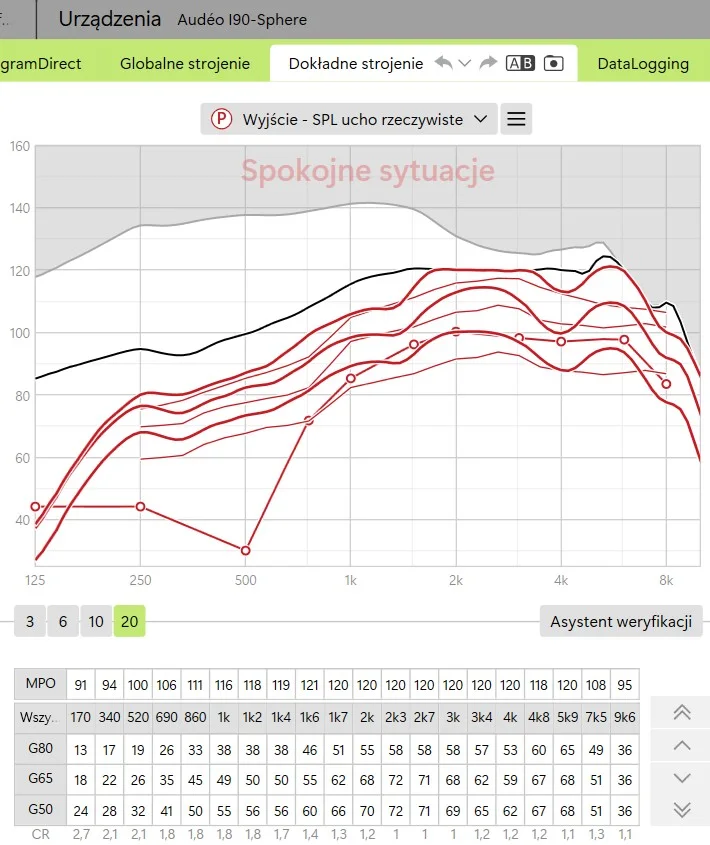
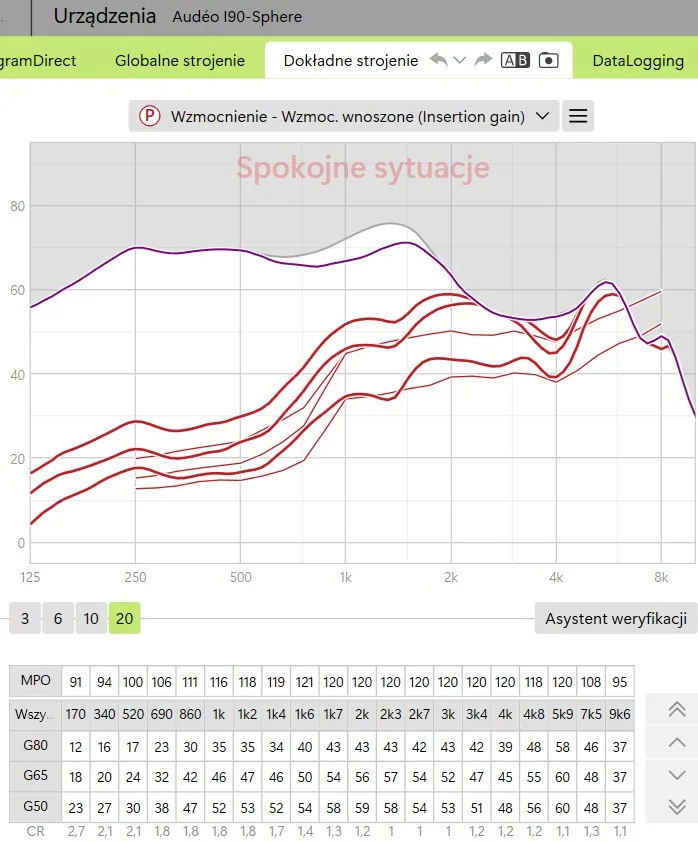
The easiest advice is saving old fitting in Target software and make new “appointment”, then try use AudiogramDirect not only for hearing thresholds, but also with UCLs/LDLs (which means levels you found uncomfortable). You’ll get that graph:
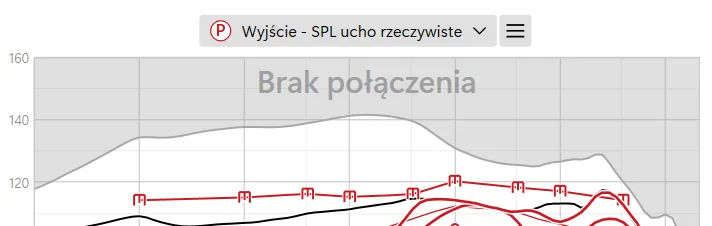
(as you can see, I still have some room for improvement).
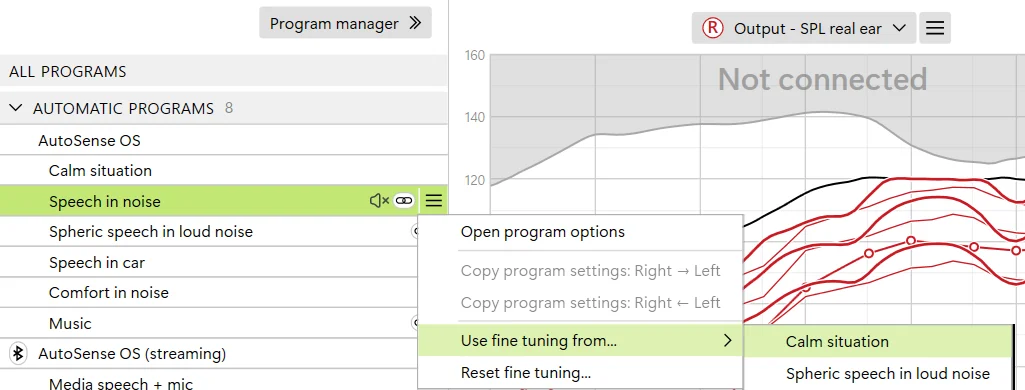
In Speech in Noise, Spheric, Speech in Car and Music you can experiment with increasing MPOs, please don’t overdo it - maximum 2-3 dB over UCLs, if absolutely necessary (probably not).
Too much can damage your cochlea, so its better to start with a bit below UCLs graph. (just like after trasferring from Calm program).
Lower MPO in Comfort in Noise (someone please correct me if I am wrong).
And after getting P receiver, please find , who make Real Ear Measurement. A new REM is needed after switching to cShell.
No here, although I should consider using it for making my thoughs more clear or organised.
You’re ignoring this member’s posts.

**A P receiver on paper-can get louder, but it needs more sound “back pressure” in the ear to work well. Because the vent had to be made so large after the P receiver was chosen, a lot of sound—especially bass—escapes.
That forces the hearing aid to work overtime to make up for the loss, pushing the processing too hard. As a result, the receiver starts to distort before the sound is actually clear or comfortable.*
I sure could be wrong but this sounds like nonsense.
You have a different kind of than most. This could be why there is difficulty tuning your aids. Looking at some of your gain charts I can see they are way off IMO. My first very important question is can you really hear sounds in those upper frequencies? Not squeals and squeaks. Pending on that answer would direct you in what direction to tune those aids. You may need Sound Recover. If so vented or power domes should suffice with a M receiver.
Have you tried setting the sides up with Audiogram Direct?
Maybe one of the pros will jump in and help.
You’re ignoring this member’s posts.
It’s an excellent post. might make it messier.
When you run direct, do you mark where you clearly hear the tone or just barely hear the tone? I’ve tried this with domes and cShells and usually in can hear the tone better than the clinician’s audiogram. But possibly having the added amplification of the audiogram is more desiru? Or perhaps audiogram direct accounts for the fitting prescription differently and would get to a similar amplification level despite less loss on audiogram direct?
You’re ignoring this member’s posts.
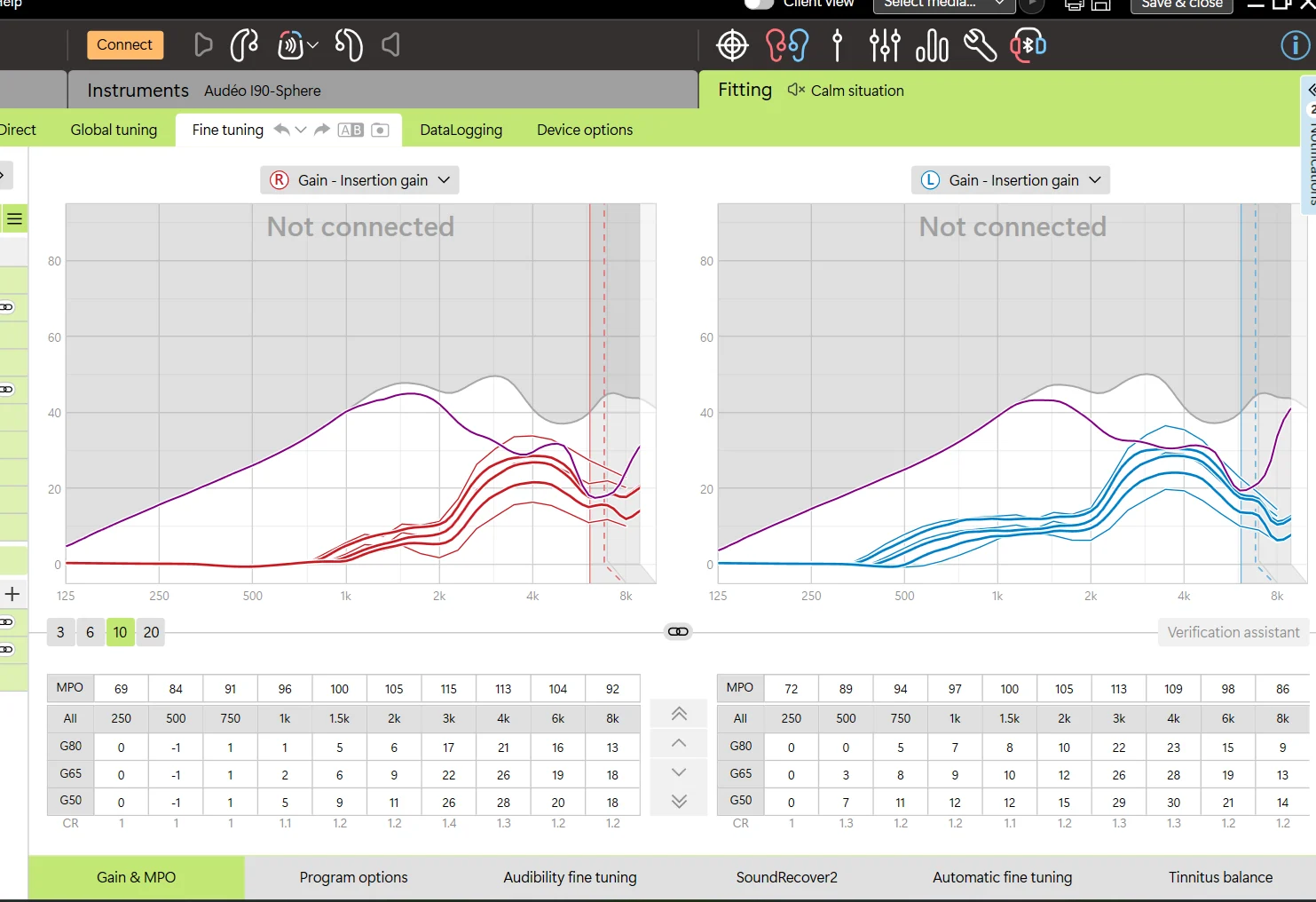
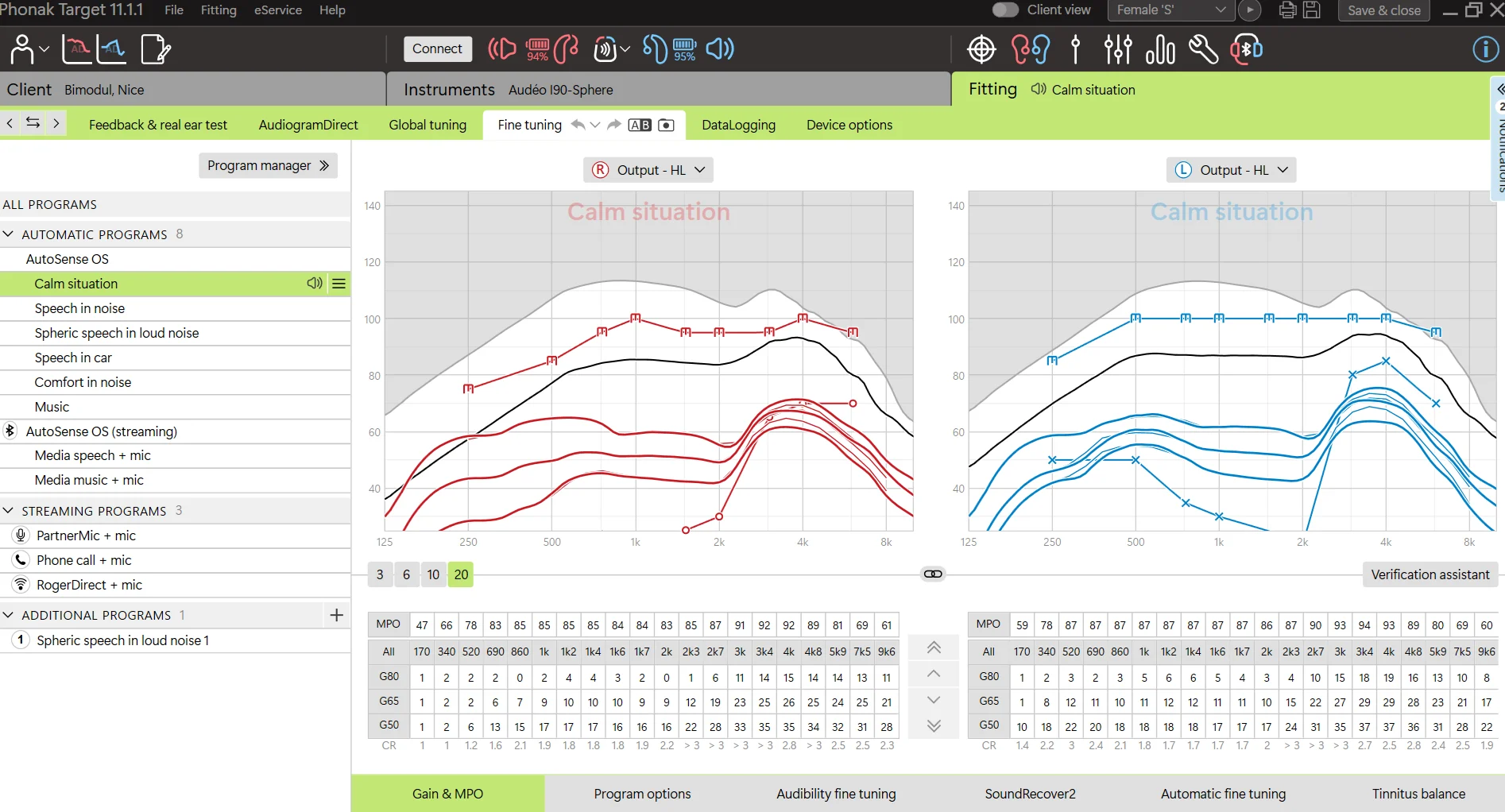
Thanks for the excellent post! I did my best to follow your instructions. I set the gain close to the in the Autosense Spheric Speech in Noise, Speech in Noise, and Car Programs. All other programs use the Calm Setting, which has less gain. I have posted the Calm and Spheric Speech in Noise screenshots. I hear a hissing noise in a quiet room with the Spheric Speech in Noise program. Is that normal? Anything I can do to reduce the hissing?

You’re ignoring this member’s posts.
You’re ignoring this member’s posts.
Phonak or Unitron sleeves arrived since I last posted. I am doing better with those on the feedback test
You’re ignoring this member’s posts.
Whoa now, what are you doing?? Don’t do that. What have you done to confirm that you aren’t over-amplifying?
You’re ignoring this member’s posts.
Let me say here again, the safe output of a hearing aid is NOT determined by the . Damage is caused by noise dose over time–the regular day-to-day loudness of your hearing aids. Don’t go jacking things way up without the close management of an audiologist. It’s one thing to around the adult target levels which are pretty conservative in the fitting software, its another to push way up without to ensure you aren’t going too high.
There’s some info floating around out there that as long as you don’t touch the MPO you’re fine. This is not correct.
You’re ignoring this member’s posts.
suggests that your recommendation of higher gain in all frequencies will not improve hearing ability, may impede the Spheric speech in loud noise algorithym, and may damage hearing and the ability to hear with long term use at these levels. So I have reverted to my normal, safe settings.
You’re ignoring this member’s posts.
For the Calm program I only adjusted the . For the Speech in Noise and Spheric Speech in Noise I screwed up and adjusted both the MPO and the gain. As mentioned, I reverted back to normal levels now.
You’re ignoring this member’s posts.
said that you could slightly increase the , not increase the gain to MPOs.
And Bimodal has had done and so does know where his limits are. I believe. Unless I’m confusing him with someone else I talk to who also has a pink icon. 
(This makes me wonder if I should change my avatar photo from grey N. Is grey N not sufficiently unique? Am I the only one who recognises people based on their icons? Like, if tenkan changes from the little green alien robot I will not be able to recognize him. Wait, has DonRadleur changed his?)
You’re ignoring this member’s posts.
You’re ignoring this member’s posts.
You’re ignoring this member’s posts.
Yes, you are right. I made the correction. I tried to delete the graph with the excessive gain but couldn’t figure out how. So I uploaded the corrected graph
You’re ignoring this member’s posts.
When you run audiogram direct, do you mark where you clearly hear the tone or just barely hear the tone?
It’s a good question, but I don’t used AudiogramDirect in my case. My fitting is from my traditional + some , although without testing + some adjustments.
IIRC, there should be mark when it seems that it is 50/50 probability you hear it. However, Audiogram Direct is biased, because in you make it for yourself and you know, when to expect the sound. As a results you have “better” thresholds.
I am not very excited about AudiogramDirect. This is a tool better than none in case of lack of high quality audiogram and REM.
Sometimes I use it to control my hearing thresholds not looking at absolute values, more for possible trending.
You’re ignoring this member’s posts.
Like @Neville said, carefullness is recomended, especially when your actual gain/output lines deviates much from first fit (software proposed gain or output) thin lines with gain/output proposition.
Strange graph, after AudiogramDirect you shouldn’t have lines deviated so much. Hissing could be from excessive low frequency amplification.
From what I read, if you have fitted deep and with proper size occluding earpieces like power domes, it is highly probable, that first fit low frequency gain will be quite accurate.
First fit is usually underamplified in higher frequencies, like over 2 kHz, sometimes even 10-15 (highly individual).
I have written so much, so I didn’t write this, but make fundamental change of gain in you Calm program and then transfer it to the noise programs/subprograms.
I am curious about your gain screen with new feedback threshold with new power domes and P receivers. Hope you will get improvements.
Sorry for responding late I was quite busy.
And Bimodal has had REM done and so does know where his limits are. I believe. Unless I’m confusing him with someone else I talk to who also has a pink icon.
(This makes me wonder if I should change my avatar photo from grey N. Is grey N not sufficiently unique? Am I the only one who recognises people based on their icons? Like, if tenkan changes from the little green alien robot I will not be able to recognize him. Wait, has DonRadleur changed his?)
Yes, I had done, although I felt that was too quiet, strange - maybe that was from imperfect REM equipment? I don’t know.
Yes, I caught myself that I often recognize someone by avatar, especially you, @Neville, by white N in gray circle. I think it is sufficiently unique, although I was one time confused by seeing “N” in different colour circles 
You’re ignoring this member’s posts.
It would be nice to have an automated test so one does not know it is being pressed. The timing and other aspects would also need to vary. I had not heard of the 50/50 instructions.
You’re ignoring this member’s posts.
Log in to reply to this topic.
Hearing Aids169 replies
Hearing Aids104 replies
Hearing Aids20 replies
Cochlear Implants17 replies
Hearing Aids52 replies
 Poland
 Texas Hill Country