
If money isn’t an issue, the Roger On can be plugged into a laptop and the streaming is pretty easy on the hearing aid battery.
You’re ignoring this member’s posts.
54 replies1.6k viewsLast reply
If money isn’t an issue, the Roger On can be plugged into a laptop and the streaming is pretty easy on the hearing aid battery.
You’re ignoring this member’s posts.

Thanks for the reference.
I’ll have to look that gadget up since it isn’t clear to me how it can affect the battery.
You’re ignoring this member’s posts.
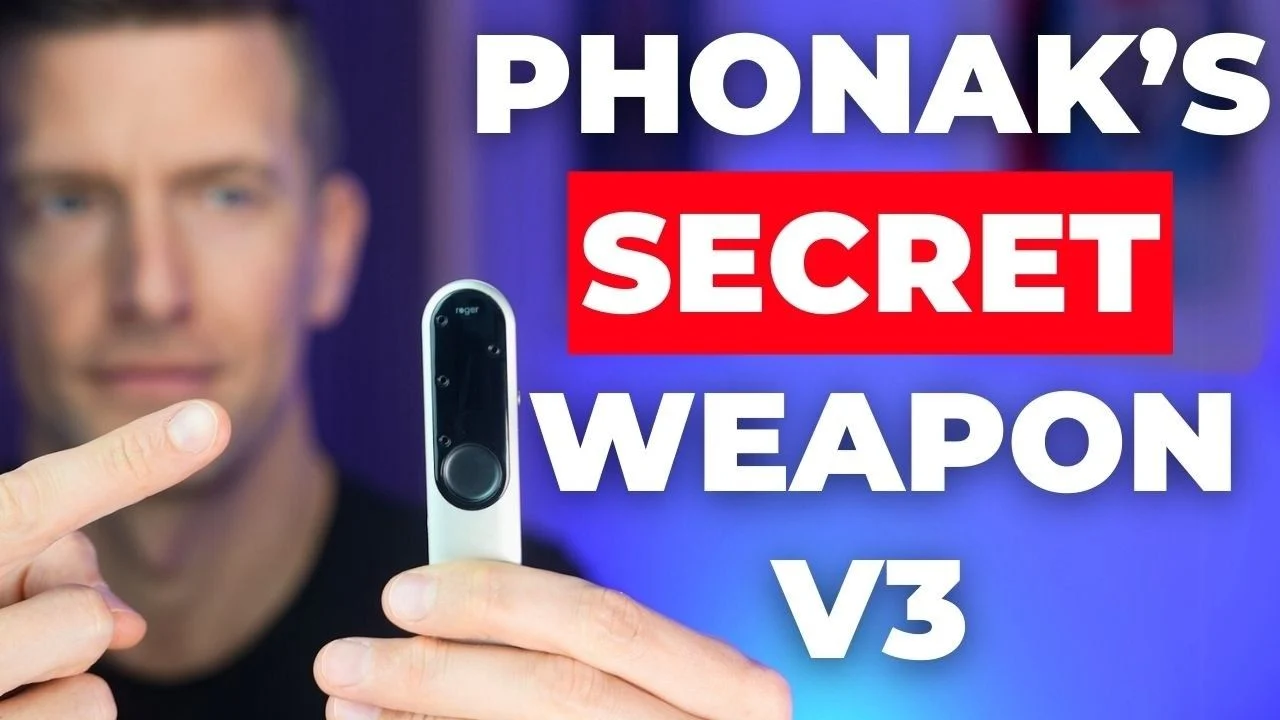
I just listened to this guy explain what the Roger on does and now I understand how that device can improve battery life in the . It does preprocessing of the signal and sends that already digested information to the HAs so they don’t have to waste their battery energy on the task. The Roger On is a preprocessor for the HAs. A pretty slick idea.
You’re ignoring this member’s posts.
Several brands, including Phonak, support remote programming. So if your Hawaiian audiologist supports this he/she can still help you with the tweaking while you are at home.
You’re ignoring this member’s posts.
The proprietary wireless signal is more efficient than classic bluetooth and doesn’t have that constant packet acknowledgement. It would be the same with their TV connector. But the TV connector isn’t great for meetings because: 1) it lacks the mic so you have to use the laptop mic, although this is pretty minor, more importantly, 2) when the audio stream going into the TV connector stops (e.g. when you are the one talking) it automatically flips out of the streaming program which is totally aggravating. I think some forum users got past this by playing a continuous low-level sound clip in the background, but it’s kind of an annoying hack. The TV connector is certainly cheaper.
You’re ignoring this member’s posts.

If I recall correctly the Phonak aids have two Bluetooth radios. One is the classic Bluetooth that can be hard on its battery and the other is the low energy proprietary Bluetooth that is used for the phone app, TV connector and also the Roger devices.
I am all ears if incorrect.
You’re ignoring this member’s posts.
@RoatanBill There’s lots of great advice above. Please allow me to share some non-technical advice.
There are some great audiologists and some awful ones. When it comes to fitting your device in Miami or wherever, pick your vendor carefully. Someone here from that region may be able to give you some recommendations.
My personal experience was the the initial fitting was good. Follow-up visits were simply cleaning and advice.
As @PeterOo said, a good audiologist can update/tweak/reprogram aids over the internet. They can also offer support if you mail the aids to them. Unfortunately, hearing aids are not produced or engineered in the high volume of cell phones and aren’t quite as bulletproof as we would like. Things probably will go wrong and need mechanical repair every few years. In my case, one of the transducers/receivers/speakers malfunctioned intermittently after two years and needed warranty replacement.
There’s some folk wisdom about moisture leading to premature hearing aid failure and drying hearing aids in cheap or expensive specialized hearing-aid dryers being valuable. Every time I visit my audiologist, she puts my aids in their expensive dryer. Yet others have used hearing aids for years and never put them in dryers, so we don’t have good data to know if it really matters. I assume you live in a humid climate, so you might want to investigate hearing aid dryers. If nothing else, they might give you some peace of mind.
As you get closer to making the purchase, feel free to ask more specific questions here.
You’re ignoring this member’s posts.
From the numerous videos I’ve watched, Phonak’s latest and greatest does have 2 radios but only the standard Bluetooth is operational. Those videos hinted/stated that in the future the LE will be activated.
Once LE becomes the overwhelming standard, as an EE, I suspect their future products will drop the older tech to free up space in the hardware and because everything draws power even if it’s not fully active.
You’re ignoring this member’s posts.
From the numerous videos I’ve watched, Phonak’s latest and greatest does have 2 radios but only the standard Bluetooth is operational.
You are incorrect about this. The LE radio has been used as I stated for many years.
The is different. As mentioned it is in a Ready state with the newest Phonak aids waiting to becactivated.
You’re ignoring this member’s posts.

Well I have stayed out of this until now. While Bluetooth is definitely important. Having the right hearing aids for your hearing loss is the most important thing. I have worn aids for 20 years. I have worn aids with no connectivity or even controls. I have worn aids with just t-coils. I have worn aids with Bluetooth le. Bluetooth le audio, and Bluetooth classic. I find Bluetooth Classic the most versatile. Bluetooth le and le audio is great on devices that support them. I foresee in the future when we finally have a standard platform, and that platform more than likely is Bluetooth le audio and but that is still a year or more away. So for now I have my Phonak Spheres with Bluetooth classic and my backup aids are Oticon INTENT1 aids with le audio.
You’re ignoring this member’s posts.
Finding a provider to fit the is definitely on my to do list. I watched this guy with a British accent explain that what I want is ‘’ (Real Ear Measurement) for a proper fit.
His explanation made a lot of sense and while watching I thought of my situation on an island 40 miles off the coast of Honduras thinking there’s no way I’m going to find a provider that does REM anywhere in Honduras where airfare is still reasonable. Depending on season, a flight from Roatan to Miami is $1200. Even off season it’s $600. Adding numerous of those to the cost of the HA and I’m well over $10,000. Having someone capable of what the computer industry calls OTA (Over The Air) updates narrows the search even further assuming the HA’s support the capability.
As far as moisture, I run A/C 24/7/365 if not for temperature then for humidity control since the island has 80% humidity year round. I’m working on a 3D printer set up where I’ve already designed a ‘filament dryer’ using an ESP32 micro controller and written the control software to dry filament, make ‘black garlic’, make yogurt and dry anything else I want to put in there with temperatures ranging from 90F through 250F.
You’re ignoring this member’s posts.
I agree on your priority. However, communications via wireless across the internet is also a must in my case.
Battery life while using whatever communications protocol to eventually become TCP/ packets becomes the underlying issue. I’ve not found out what battery life is when using Bluetooth classic or Bluetooth LE in a 100% streaming environment. The videos I’ve watched are all over the place on this issue. Most claim 3 hours in some fabricated ‘normal’ use case for some mythical average person. That type of nonsense information is of no value at all.
I want to know how long the battery lasts from fully charged to drop out in a 100% streaming test of voice communications over the internet. I’ve not found any reliable information.
You’re ignoring this member’s posts.
It maybe due to battery size, but i an seeing less of an overall battery load streaming with my Phonak Spheres than I do with my Oticon INTENT.
You’re ignoring this member’s posts.

I’m a professional software developer that uses Linux computers all day long…
Software developer: Check. Linux: Check. Hours of Zoom meetings: Check, although my organization is trending more towards Teams.
Three observations:
If you can convince people that you’re crazy, you may manage to be invited to fewer meetings. Sadly, when it’s a conflict between crazy and essential, essential wins out and you have to be in meetings instead of getting any actual work done. 
I’ve got Phonak Spheres, and battery life even with long meetings/phone calls does not appear to be a problem. Maybe if you spend all your time in between meetings in a noisy bar (triggering Spheric Speech in Hell mode) you’d brush against battery limits; but in most realistic scenarios you can expect to finish the day with a solid 60% or more of your battery left. (How true this will be after the aids have been running for a couple of years, I don’t know.)
Another classic conflict for the hearing-impaired Linux developer: Hearing aids make you more socially capable, but being socially dysfunctional improves the battery life of your hearing aids.
I’d write at more length, but I’ve got a migration to Production in a few hours. 
You’re ignoring this member’s posts.
If I’m watching a YouTube video, for example, is the Bluetooth stream processed by the HA ecosystem or is it a pass through?
The hearing aid processes a Bluetooth stream less than “normal” sound (e.g. it doesn’t try to figure out exactly which parts of the sound are likely to be of the most interest to you), but it does provide amplification based on your hearing loss - so you should have a considerably easier time understanding what’s being said.
You’re ignoring this member’s posts.
A video I saw stated that the Roger On used a proprietary tech. I just looked up the spec sheet for Roger On https://www.phonakpro.com/content/dam/celum/datasheet-roger-on-/PH_Datasheet_Roger_On_210x297_EN_V3.00_10.pdf1 and did a Ctrl-F for Bluetooth and that word does not appear anywhere on that document. What does appear is :
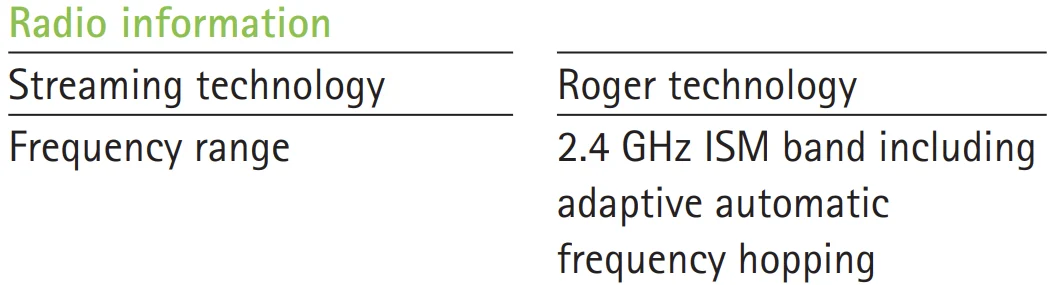
That 2.4 GHz frequency range is the same one all of Bluetooth uses, most of wireless Ethernet uses, model radio Xmitters use, etc. There’s no telling, in detail, what ‘Roger technology’ means.
You’re ignoring this member’s posts.
We software developers fully recognize that the public thinks we’re a bit off to put it mildly. Then add the Linux sub category and normies start to back away from us so as not to catch what has obviously infected us.
Ah, real world experience from a kindred spirit. Good information!
‘Production’ - the last year of testing with unpaid testers.
You’re ignoring this member’s posts.
I am a retired IT professional/software engineer/electronics technician/engineer. I have been around since before the PC. At retirement I was Microsoft Certified System Engineer Master level, before Microsoft i as a Unix person. I have worked with, Unix, Linux, CPM, Microsoft DOS, Windows from the first release. And Apple MACOS. In retirement i only need and use Android. At my retirement I retired and gave away everything Microsoft. I was burned out. I don’t even recognize what Microsoft calls Windowx now.
You’re ignoring this member’s posts.
 Southwest Florida
Here’s something for you to consider and research. I just received a new set of Resound Vivia hearing aids. They have the ability to use . My phone an is older entry level Samsung Galaxy A13 which is not compatible (can’t stream too) my new hearing aids. I bought a Voyager dongle from Avantree which has the ability to stream Auracast. To connect to a device, it uses a 3.5 mm audio plug. I simply plug it in to any device I want to listen to, computer, TV, etc., that has a headphone jack and the Voyager broadcasts excellent quality sound with low latency to my HA’s. My phone has a head phone jack, so I can also stream audio and calls from it in the same way. This could be of particular interest to you since it sounds as if you might have to buy mail order hearing aids. Jabra has a good reputation, IMO, for mail order hearing aids and fitting. Jabra is made by Gn which makes Resound. Some say the top tier Jabras are exactly the same as the Resounds. In any event, I think they should be able to receive Auracast, but I leave that to you to research.
BTW, I am extremely pleased with my Resound aids after transitioning from Signia C&G Pure AX’s.
Best of luck to you
You’re ignoring this member’s posts.
I can practically cut and paste your background for mine. I’m an EE & CS by education (1972, Polytechnic Institute of Brooklyn, now part of NYU). I was a Novell Gold reseller and was grandfathered into their program because I was there before the program started. Also did 3COM EtherShare. First Linux was Caldera when Ray Noorda of Novell started it.
I wrote software starting on an IBM 1130 in 1966 @ Brooklyn Tech High School. I walked past a room making a rhythmic noise and curiosity caused me to peek inside and found my electricity teacher working on some strange machines. When I asked him what they were he replied ‘a computer’ and I had to further query him what a computer was. The rhythmic noise was coming out of a line printer that appeared to be printing gibberish. He said to stare at it a while and then suddenly it became the Playboy centerfold sitting on a bar stool all done with the gradations of the letters of the alphabet. I was hooked as a 15 year old.
I’ve written code for Texas Instruments, Rockwell International, etc and then went out on my own as an independent developer. I retired to Roatan Island in 2004 and kept writing code primarily for myself.
You’re ignoring this member’s posts.
Log in to reply to this topic.
Hearing Aids2 replies
Hearing Aids104 replies
Hearing Aids169 replies
Hearing Aids341 replies
Hearing Aids30 replies
 The Netherlands