You’re ignoring this member’s posts.
NAL-NL3 Fittings
50 replies1.7k viewsLast reply


Yes, for my , the change is negligible. NAL-NL3 makes a greater difference in reverse-sloping audiograms. Plus, there is now a module for normal audiograms with poor speech understanding.
Here is my audiogram comparing and NAL-NL3 prescriptions: https://imgur.com/a/IhYTxJO167
You’re ignoring this member’s posts.

tenkanProvider
Interesting, thanks for sharing, I think this will also make a difference for severe profound user’s, but it’s hardly a “wow” factor, obviously some people will end up with different results, but after reading the marketing blurb about this new formula people would expect more..
You’re ignoring this member’s posts.

 Canada (Toronto) YYZ
Thanks!
good to know it’s being used.
I hope my hearing instrument specialist is using it. Every improvement helps.
Have Canadians…Toronto…had it installed?
DaveL
Just west of Toronto Airport (Pearson)
You’re ignoring this member’s posts.
I have trouble with speech understanding. Close up/quiet; speech in noise.
Severe hearing loss/workman’s compensation claim over 20 years ago. Ontario, Canada
DaveL
You’re ignoring this member’s posts.
I was/am hoping for a marked improvement in the Speech In Noise aspect of things. I guess the jury’s out…
You’re ignoring this member’s posts.
 Poland
You’re ignoring this member’s posts.
Have Canadians…Toronto…had it installed?
I think most devices will have it installed in 2026 with exception of MedRx devices. I didn’t see NAL-NL3 option in Phonak Target software.
You’re ignoring this member’s posts.
Dave. I’ve plugged your into NL2 vs NL3. Your NL2 program is essentially the same as the NL3 “comfort in noise” module. The NL3 default curves add a couple of gain to your targets in the speech frequencies, especially in the 3-4 kHz range. I don’t think there would be a big difference.
You’re ignoring this member’s posts.
kgilbertsen. With your , there would be virtually no difference in targets. Maybe a or two gain in 1-4 khz, and a slight decrease in gain at 125 khz
You’re ignoring this member’s posts.
Bimodal_user: I have a MedRx device from around 2010 that has , but the screenshots are of their new Studio software. You can play around with it in simulation mode without actually having the hardware: MedRx, Inc.14
You’re ignoring this member’s posts.
Yep, that’s the impression I got after watching the YouTube of the NL3 fitting formula some months back. But it did also suggest that the Speech In Noise would be improved markedly for most, even people like me with mild hearing loss. I’ll be willing to try if given the opportunity.
You’re ignoring this member’s posts.
I hope it helps. I honestly think they did these modules, which they use to analize and predict, to give them flexibility going forward. I think we’ll see a paradigm shift over the next decade in which speech in noise becomes almost perfect (within the limits of physics). That’s because, with a closed fitting, AI will eventually be able to ferret out speech from the most complex environments, making hearing aid users have almost super-human speech discrimination. So much so that many people without hearing or understanding issues will wear them in certain situations. I imagine if you strapped a macbook pro onto your back, coupled to your ears with some receivers, this is already possible with the right programming and mics.
You’re ignoring this member’s posts.
tenkanProvider
I imagine if you strapped a macbook pro onto your back, coupled to your ears with some receivers, this is already possible with the right programming and mics.
Ha ha I can visualize this!
You’re ignoring this member’s posts.

I think you (or I) will be able to set up our hearing aids to recognize a set of specific voices (friends, family, business teams) and extract or enhance them from other voices.
You’re ignoring this member’s posts.
@DaveL, like @DrJimmyJoeJimbob, I don’t think that NAL-NL3 could be revolutionary compared to the .
IIRC, in 2026 you’ll be eligible for new , so it will be more important, especially when after Aug Phonak probably will release new platform, better than Spheres. We’ll see.
However I don’t think that differences are insignificant. There is even 5dB differences in the. most important frequencies needed to English speech understanding.
I’m in the step-by-step process of setting up my HA with my new cShell with UP receiver and I’m surprised that even small changes can make a difference.
You’re ignoring this member’s posts.
You’re ignoring this member’s posts.
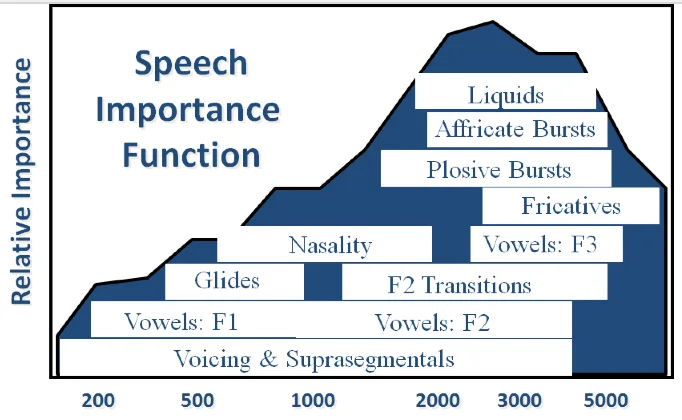
Best ha for speech in my opinion are Oticon or Jabra Pro 30 as they amplify the high frequencies best.
You’re ignoring this member’s posts.
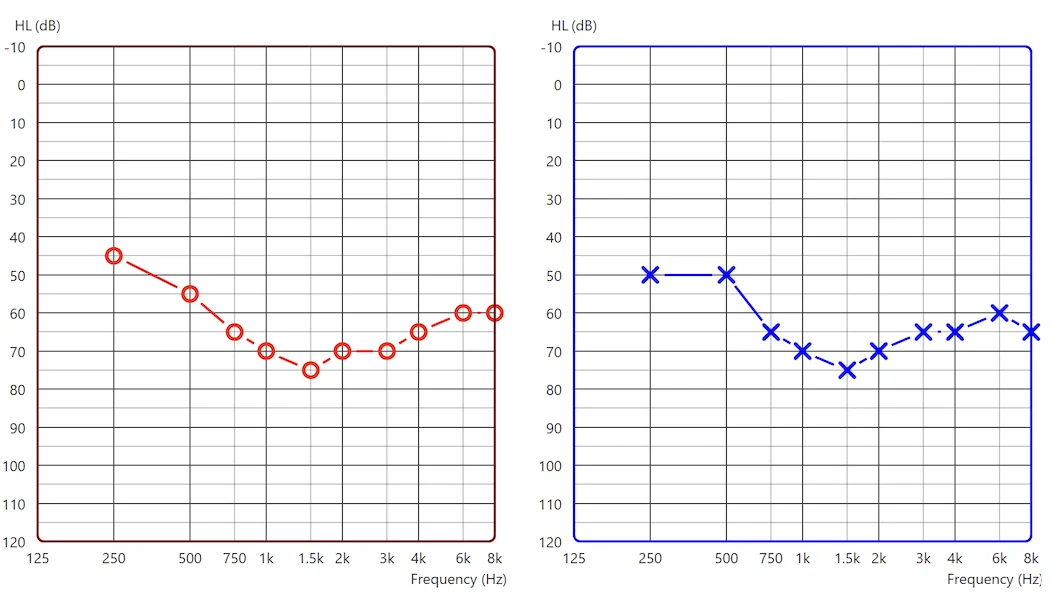
Hello @DrJimmyJoeJimbob, can you run the same for my ? I’m curious how to goes and how it compares to what Oticon Genie 2 auto generates for my .
Thank you.
You’re ignoring this member’s posts.
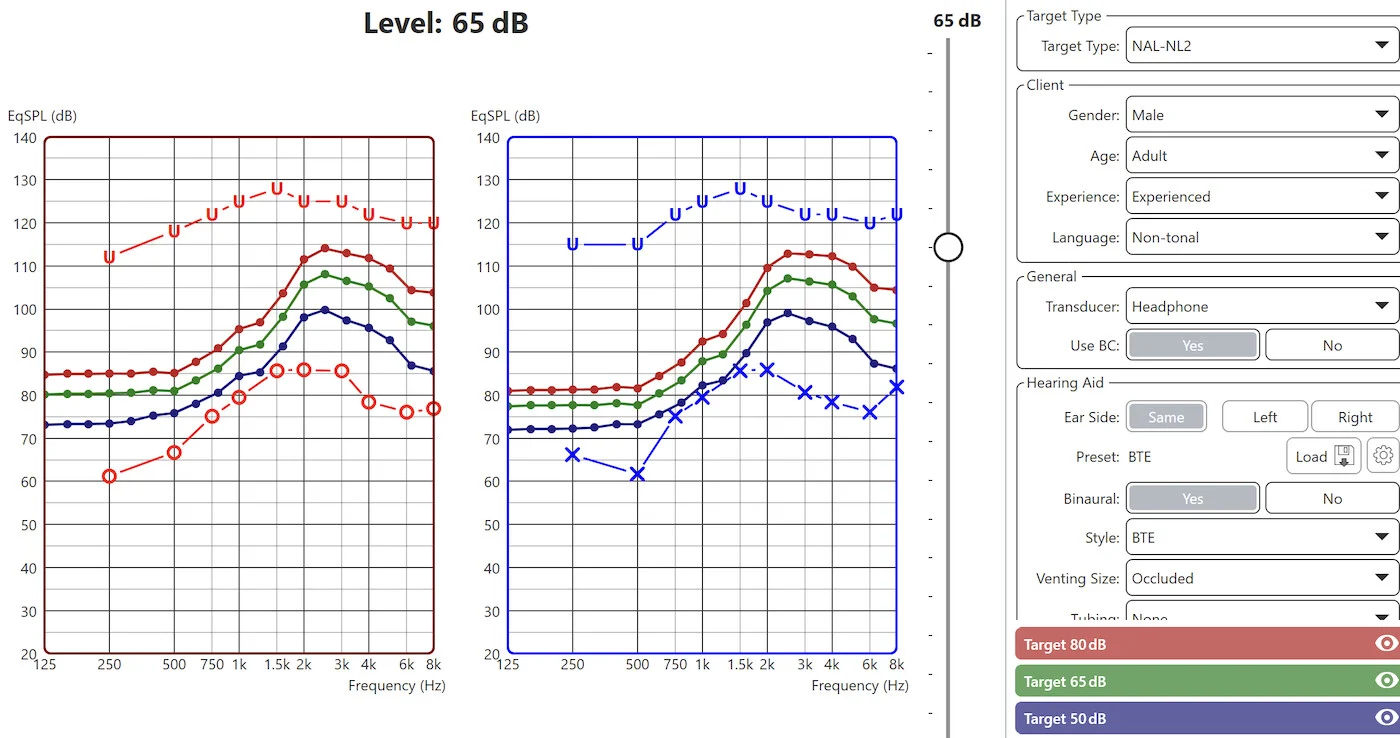
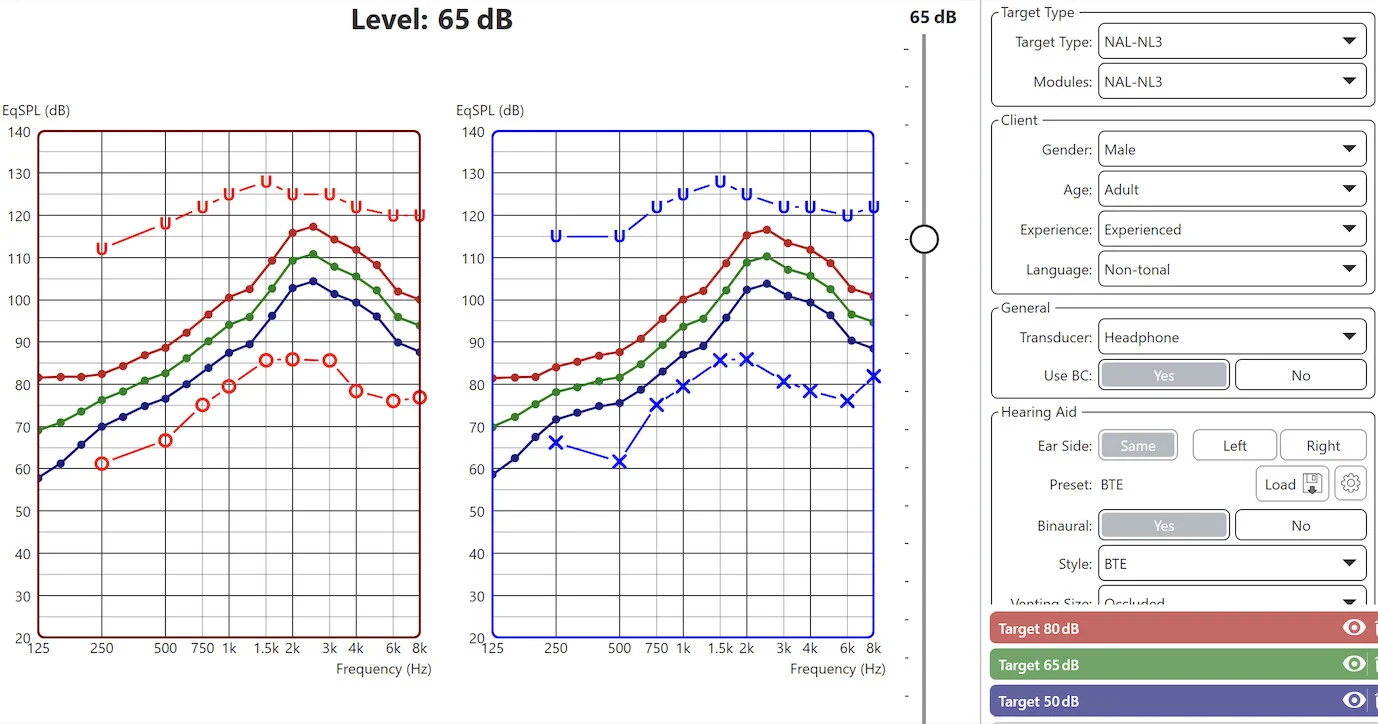
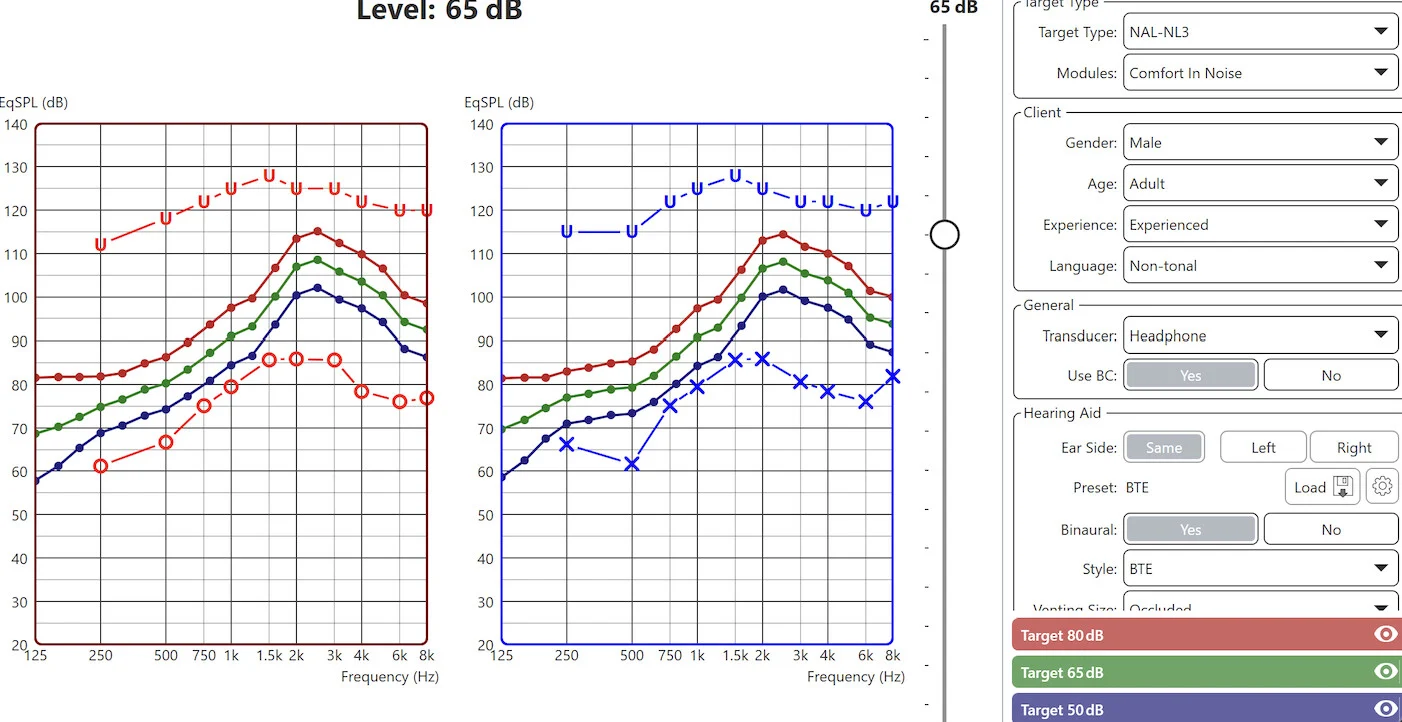
Bruno_Marques: I think the common theme is that the curves more closely resemble the NL3 “comfort in noise” modules.
The key features in your in the NL2 vs NL3 base program seem to be the following:
- Less gain and more compression (more separation from 80,65,50 inputs) at 125 kHz in NL3. This seems to be the case with everyone’s programming.
- A less concave curve on the left side of the rise in NL3. That is, a more linear, steeper rise in gain in the 500 to 1.5 kHz region.
- A few dB higher gain at the peak in the 2-4 kHz region in NL3.
- Less compression in NL3 after 2 kHz (less separation from 80,65,50 dB inputs)
- Faster roll off of gain between 6-8 kHz in NL3
You’re ignoring this member’s posts.
Log in to reply to this topic.
Related discussions
Hearing Aids23 replies
Hearing Aid Self-Fitting (DIY)8 replies
Hearing Aids25 replies
Fitting Software Requests892 replies
Hearing Aids144 replies