
 Vancouver, Washington
testing123,
I think you’ve raised some valid concerns, particularly regarding the importance of proper hearing evaluations and professional fitting. However, I believe some of the statements are opinions rather than established facts.
For example, while premium prescription hearing aids often include advantages such as professional fitting, real-ear measurements, remote support, tinnitus programs, and more sophisticated signal processing, that doesn’t automatically mean a more expensive hearing aid will produce better hearing outcomes for every individual.
You also mentioned that hearing aids reportedly have a 70% return rate. I’ve seen that figure repeated online, but I haven’t found widely accepted research supporting it. If there is a reliable study, I’d genuinely be interested in reading it.
Regarding the comment that “cheap aids lack power or programming range,” I think it’s important to distinguish between inexpensive amplifiers and today’s better OTC hearing aids. Devices such as the Elehear Beyond Pro, Sony CRE-C20, Jabra Enhance Select, and Lexie B2 Plus offer features including:
-
Self-fitting algorithms
-
Multiple fitting channels
-
Bluetooth connectivity
-
Noise reduction
-
Amplification that is appropriate for many adults with mild to moderate hearing loss
They aren’t designed for severe or profound hearing loss, and the has never marketed them for that purpose.
I also agree that a professional remains the gold standard for diagnosing hearing loss and fitting hearing aids. However, many modern OTC devices—including the Elehear Beyond Pro—perform in-app hearing assessments that generate personalized fittings. While these aren’t as comprehensive as a diagnostic audiogram combined with real-ear measurements, research has shown that self-fitting hearing aids can provide very good outcomes for many adults with mild to moderate hearing loss.
As for the statement that OTC hearing aids have been “a step back,” that’s certainly one perspective. Another way to look at it is that the FDA created the OTC category because millions of Americans with untreated hearing loss were unable to obtain prescription hearing aids due to cost, access, or both. Expanding access doesn’t replace professional care—it provides another option for people who might otherwise receive no treatment at all.
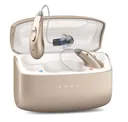
For context, I currently wear Phonak Audeo Lumity L90 prescription hearing aids, but I also own a pair of Elehear Beyond Pro hearing aids as a backup. In my experience, the Beyond Pro is one of the more capable OTC hearing aids in its price range. It includes self-fitting, multiple listening modes, -assisted noise reduction, and adequate amplification for many people with mild to moderate hearing loss. Is it a replacement for professionally fitted prescription hearing aids in complex cases? No. But I also don’t think it’s fair to dismiss it as simply a “cheap” hearing aid. Independent reviews have generally found it to be a strong performer within the OTC market, especially considering its cost.
I think both prescription and OTC hearing aids have an important place. The key is matching the right device to the individual’s hearing loss, needs, and budget rather than assuming one approach is always better than the other.
You’re ignoring this member’s posts.


 Wales, UK



 Geneva, Switzerland