 Christchurch New Zealand
You’re ignoring this member’s posts.
Oticon New Product: Oticon Reveal
175 replies10.6k viewsLast reply

Sorry, yes I was referring to Sphere. I forget that there is the regular non-sphere.
You’re ignoring this member’s posts.
You’re ignoring this member’s posts.
Yes, the marketing departments need some reigning in. Resound’s 88% more accurate claims are also based on studies that didn’t do spectral analysis. If you don’t do spectral analysis you aren’t really assessing the performance of devices using technology which makes comparisons meaningless.
You’re ignoring this member’s posts.
Isn’t the Minimum-Variance Distortionless Response (MVDR) technique used by Oticon also a type of beamforming technology?
You’re ignoring this member’s posts.
Minimum-Variance Distortionless Response
Apparently, but it is a monoaural beamformer as opposed to a beamformer found in Phonak/Signia/Resound products. It seems like their technology upgraded with Opn hasn’t changed a lot since then. It is capable of audio streaming for but doesn’t seem to have a high enough bandwidth for high resolution dual direction audio streaming.
You’re ignoring this member’s posts.
More detailed information about the various technology levels is available here.22 I still won’t be able to recommend below tech level 2 for this product when competing manufacturers offer much better performance in noise for the price given the relatively poor input dynamic range at tiers 3 and 4.
You’re ignoring this member’s posts.
It seems there a balance point beyond which removing contextual cues impairs the brains ability to understand speech. This makes sense as the brain has its own speech enhancement circuitry for separating speech and background noise which requires specific information in order to work effectively.
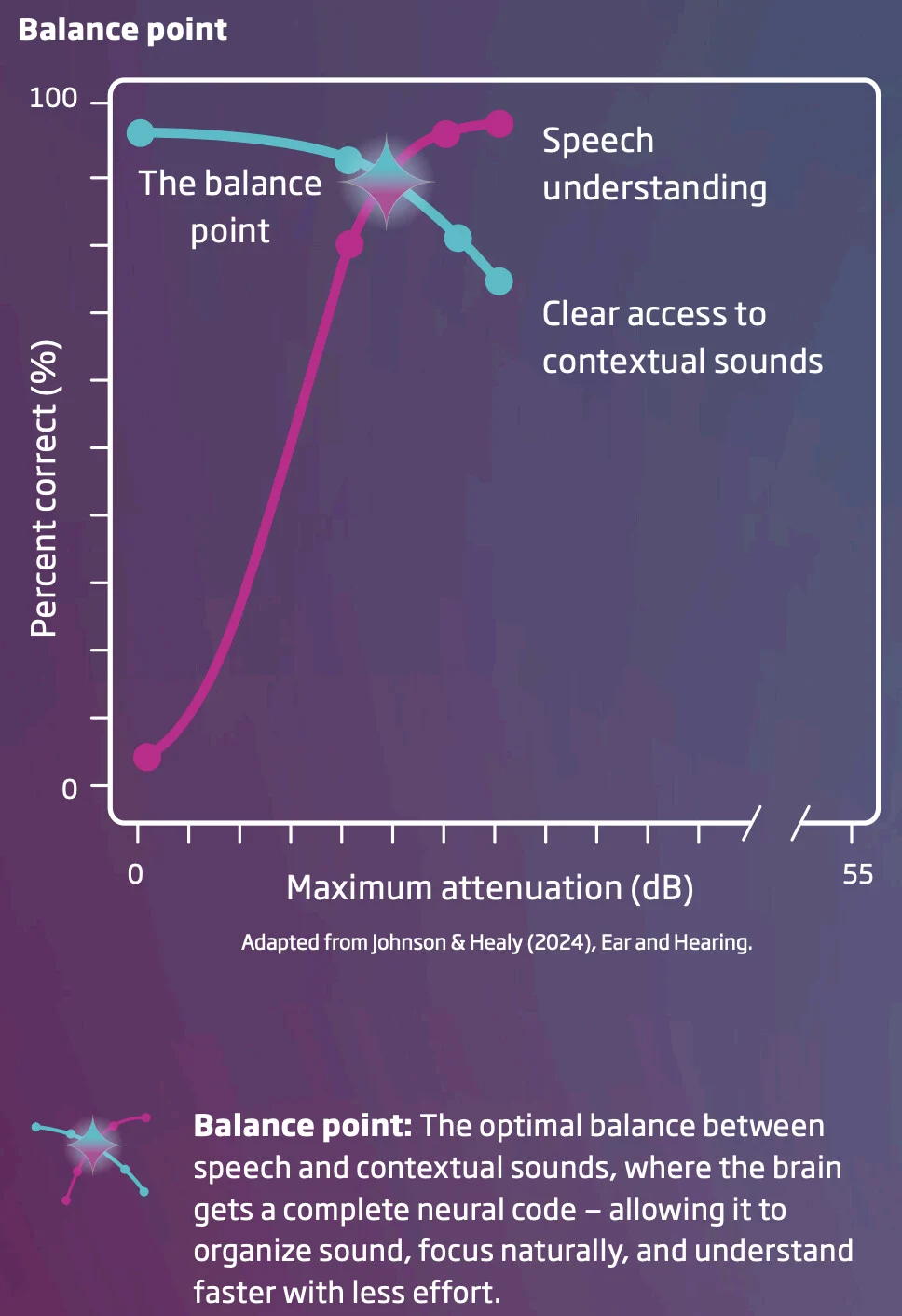
That doesn’t mean that Oticon is optimising this balance point better than anyone else. This is just the story that they’re telling to help promote their product.
You’re ignoring this member’s posts.

The only way to find out how the technology works , it to try them out . It has to be in natural environment . When you hear the marketing from the manufacturer , it is not enough .
You’re ignoring this member’s posts.

In reply to @Hearing_Potential
To be fair, and I do understand the marketing cynicism, they seem to have implemented this strategy with the dual approach, so it’s not just story telling. Although, what concerns me is whether this approach will be enough to achieve speech understanding in noisy environments. Is there a limit imposed by this strategy.?
You’re ignoring this member’s posts.
Sorry, what “strategy” have they implemented with their dual approach? Marketing is story telling, that doesn’t make the story being told untrue.
Signia devices also process speech and environmental information using separate signal processing streams and then recombines them and have done for a number of product generations, but they don’t use onboard to achieve this. This way of processing sound has resulted in meaningful improvements in sound quality and SNR1, so I would hope that Oticon might achieve at least the same degree of benefit.
You’re ignoring this member’s posts.
My understanding is that the strategy is to achieve that balance point, which you say is a “marketing story”. The whole point of separation of the dual is to achieve this balance. At least that was my understanding from Matthew Allsops video and their general blurb.
You’re ignoring this member’s posts.
The thing is, if you look at the graph I posted above speech understanding improves beyond the balance point. I think their strategy will be more complicated than just achieving the balance point as listening effort/fatigue also play a role and when you’re tired you’re less able to concentrate so removal of more background sounds may be beneficial. It also depends on cognition. People with poorer cognition need higher ’s to achieve the same level of performance. Children have less mature brains and poorer language knowledege thus they require a much higher SNR to achieve the same level of performance. We’ll see how Oticon present the information to clinicians. I don’t think there’ll be anything revolutionary with this product based on what I’m seeing so far.
You’re ignoring this member’s posts.
In reply to @Hearing_Potential
More detailed information about the various technology levels is available here. I still won’t be able to recommend below tech level 2 for this product when competing manufacturers offer much better performance in noise for the price given the relatively poor input dynamic range at tiers 3 and 4.
Wow, 113 dynamic range in Oticon Reveal 1 and 2. I wonder what it is like in the case of Phonak.
It seems there a balance point beyond which removing contextual cues impairs the brains ability to understand speech.
The larger , the more environmental sound should be removed.
You’re ignoring this member’s posts.
Wow, 113 dB dynamic range in Oticon Reveal 1 and 2. I wonder what it is like in the case of Phonak.
Phonak offer this (a high input dynamic range) at all levels of technology and have for a long time. It is a feature everyone benefits from and Demant brands are the only ones I can recall that make it a selling feature, which is a shame as I can never recommend their third and fourth tier products.
You’re ignoring this member’s posts.

 Croatia
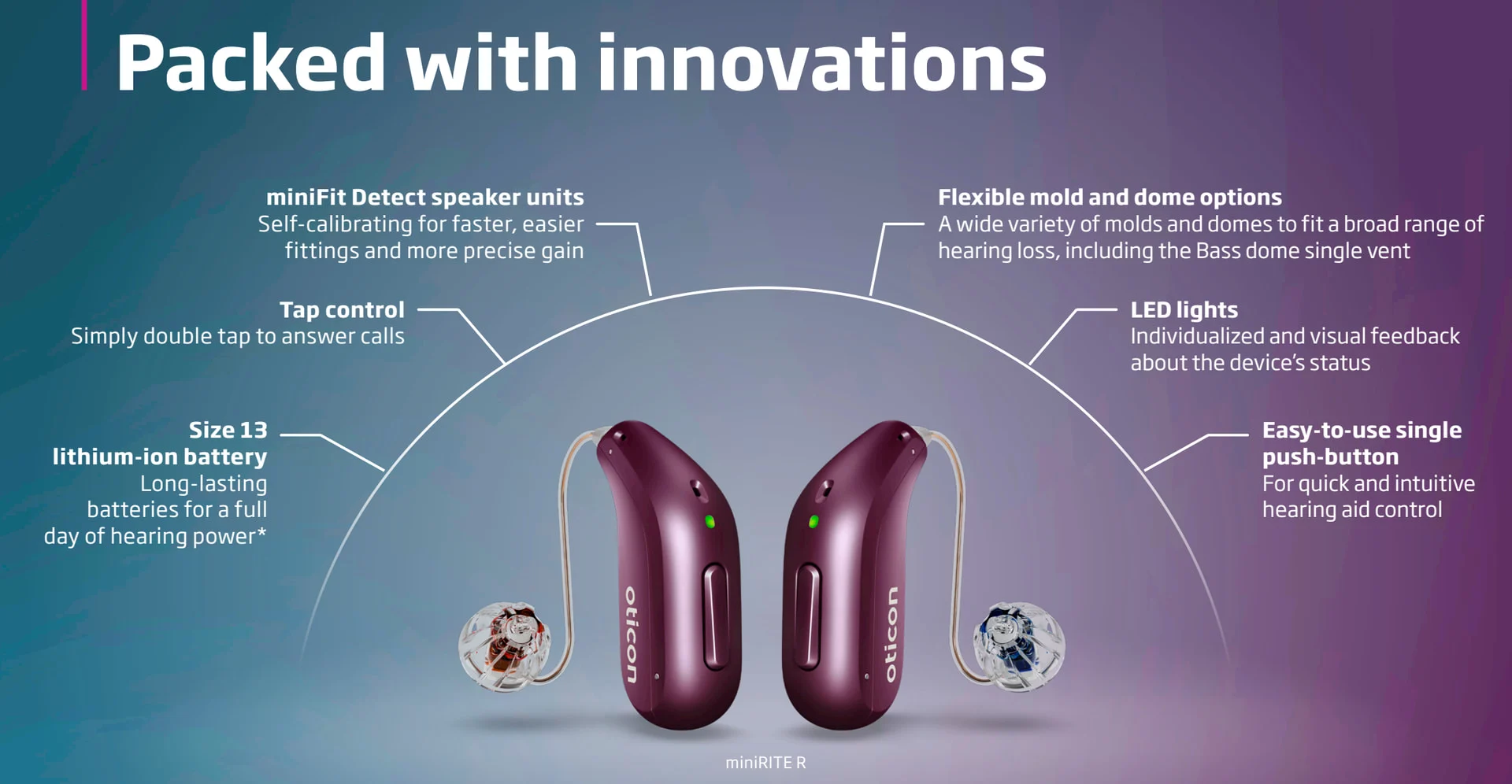
I’m looking at the oticon genie and I notice that the Reveal will not be rechargeable, but will use disposable 13a batteries.
You’re ignoring this member’s posts.
It uses a size 13 Li-Ion battery that is integrated and not user replaceable.
You’re ignoring this member’s posts.

So, that Johnson and Healy paper was interesting, but…I’m not sure interesting enough to truly be useful for oticon marketing. Granted, I skimmed, but my initial take away from the paper was that, on average, people with hearing loss need a higher signal to noise ratio than normal hearing individuals to be able to clearly identify BOTH speech and noise. Not revolutionary, but I think the actually interesting point here is: even in relatively QUIET situations, individuals with hearing loss need a higher for both speech and environmental sounds to be clearly identified, so perhaps there should be certain amount of environmental noise reduction on at all times, which is probably what oticon is trying to apply (and imply) if they are leaning into this study (e.g the hearing aid is trying to constantly maintain this balance).
The big limitation that pops out of the study is that they had ten people with hearing loss and 9 of them were mild/moderate. So their number, ~5.4 SNR, only really applies to that population. Are we to imagine that oticon has done internal studies to look at this more carefully? I bet…not much, but who knows. Are we to imagine that this idea is on their radar now and they are working with it in mind? I certainly would if I were them. The research tells us (based on my skim, please allow for error) the range of SNRs required for different types of sounds to be identified in the presence of speech (while still understanding the speech) for certain hearing losses. You can well imagine that if is moving towards being able to apply a specific SNR per sound per hearing loss, that could be useful.
Now I would also expect that there are certain hearing losses where their criteria, 95% accuracy for recognizing both the speech and the sound, will simply not exist and they’ll have to turn to maximizing speech alone with the possible exception of emergency noises.
You’re ignoring this member’s posts.
Are any of the current implementations per hearing loss? It seems not and we can’t really know as these algorithms are a black box.
You’re ignoring this member’s posts.
You’re ignoring this member’s posts.
Log in to reply to this topic.
Related discussions
Hearing Aids91 replies
Hearing Aids28 replies
Hearing Aids2 replies
Fitting Software Requests1.1k replies
Hearing Aids9 replies