Has anyone been to a high-altitude place (or already lives there)? Were/are there any side effects? How well did you hear then? Any issues with hearing aids or batteries? How did you deal with them?
Any tips on how to maintain hearing and hearing aids at high altitude are welcome.
I live at 6,000 feet, but since that's been true long before I got hearing aids I have nothing to compare it to. Posts here don't give me the impression that what I've experienced is any different than most people when they get and wear aids. It's been about 10 years for me and what I have now are my third pair.
If you live in a place high above sea level or spend time up in the mountains, you may notice a difference to the life of your hearing aid batteries. This is because the percentage of oxygen in the air decreases as altitude increases.
“At high altitude, there is less oxygen in the air, which may cause the battery to reach its endpoint earlier or lead to false low battery signals.” says Paul. “Combined with normally low temperature at mountain-high altitudes, the effects on your hearing device’s batteries could be quite remarkable.”
If you are planning to go somewhere that is of high altitude, it is recommended you take extra hearing aid batteries with you, just in case.
Desert and mountain destinations can create static electricity buildup in hearing aids. This causes crackling sounds or temporary malfunction.Keep a small bottle of anti-static spray for hearing aids in your travel kit. A quick wipe prevents static discharge. Your devices may also need more frequent cleaning in dusty environments.
High altitude itself doesn’t damage hearing aids, but the dry air can make ear canals uncomfortable. Use ear drops if needed, but keep moisture away from your devices."
Hearing Aids Performance in Hypobaric Environments
OBJECTIVE: High altitudes imply exposure to a decreased ambient air pressure. Such a situation may also alter the performance of acoustic transducers using vibrating diaphragms due to air rarefaction. This study aimed at analyzing the performance at high altitude of hearing aids () where mechano-electric and electro-mechanic transducers are used.
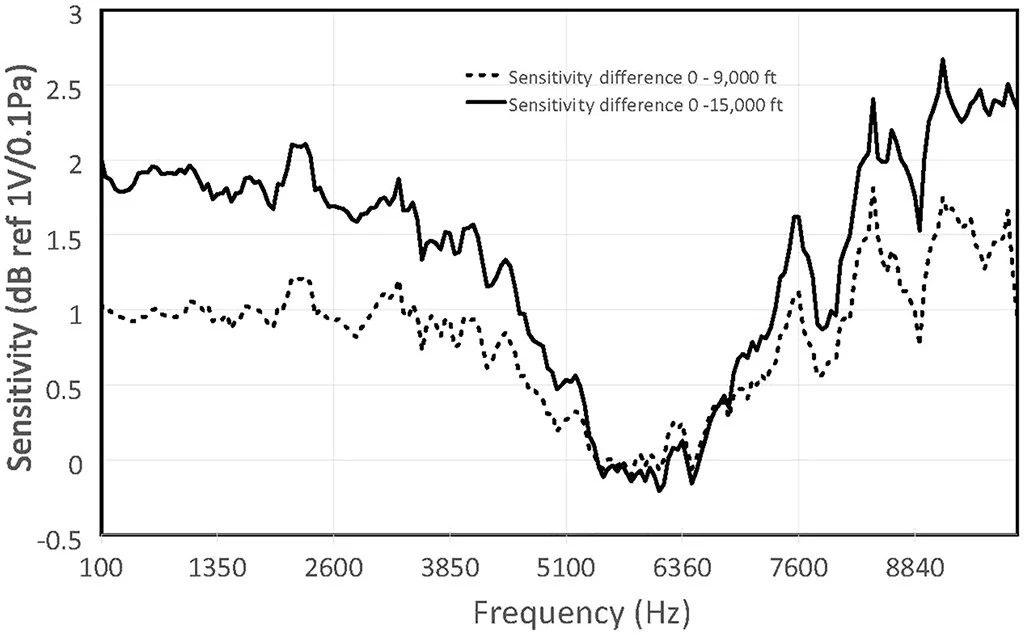
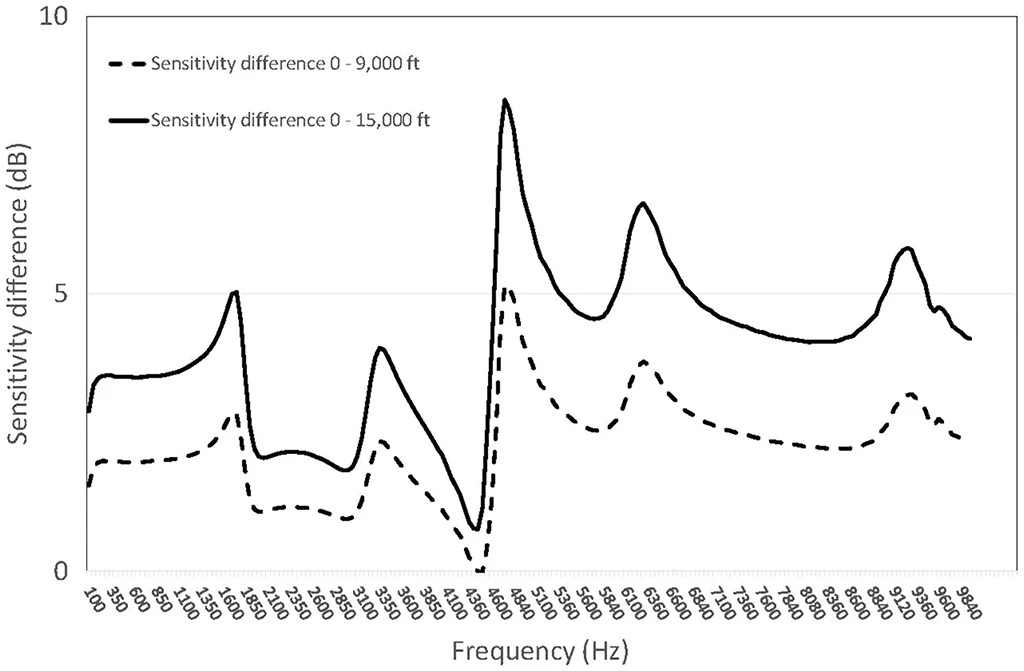
METHODS: A hypobaric chamber was used to perform two separated experimental sessions. In the first one two commercial models of HAs were exposed to a simulated altitude of 25,000 ft (7620 m) and to a subsequent rapid decompression profile, with a rapid climb (< 3 s) from 8000 (2438 m) to 25,000 ft. The second session separately analyzed the performance of microphone and receiver at an altitude of 9000 and 15,000 ft (2743 and 4572 m). Before and after the first session, the HAs were tested with an electronic ear while a dedicated recording system was used in the second session.
RESULTS: No HA damage or dysfunction was detected during the first session. In the second one, the microphone showed a mild decrease of its output, while the receiver exhibited a much higher reduction of its output.
CONCLUSION: Our findings highlight the safe use of HAs even under extreme environmental pressure changes. For altitudes exceeding 10,000 ft (3048 m), a recalibration of the HAs output via a dedicated program may be suggested.
Lucertini M, Sanjust F, Manca R, Cerini L, Lucertini L, Sisto R. Hearing aids performance in hypobaric environments. Aerosp Med Hum Perform. 2021; 92(9):738743.
Microphone output was significantly worse by up to 2.5dB at higher altitudes, so depending on your degree of loss an additional program may be needed to compensate for this change in sensitivity. If you're changing the altitude at which you live most of the time it may be a good idea to see an audiologist for re-verification of your settings. If you reside at a high altitude but are traveling to a low-altitude location having a manual program saved with the optimal settings for this environment may result in better sound quality and performance.
Receiver (speaker) output differences were highly variable across the frequency spectrum with a very peaky response. The study shows it is important to get your aids re-verified if you're relocating to an altitude above 10,000ft.
In terms of safety, the test at 9000 ft (2743 m) resulted in only minor changes in the receiver’s performance that wouldn't compromise safety, but larger altitude shifts may compromise audibility and user safety.
I'm a little surprised Rayovac would put out the statement that the percentage of oxygen in the air decreases as altitude increases. Maybe it is operationally a distinction without a difference, but the percentage of oxygen is constant throughout the atmosphere, but the density of the air decreases as altitude increases. So yes, there is less oxygen at higher altitudes, because there is less air.
High altitude can sometimes cause ear pressure, fullness, or temporary muffled hearing. Hearing aids generally work fine, but cold weather can drain batteries faster, so keep spares warm and dry. Taking gradual climbs and protecting your ears from extreme cold can help.
Rayovac didn't exactly say that "the percentage of oxygen decreased at higher altitudes," rather the statement of their representative was more ambiguous "less" referring to the relative density of oxygen molecules in the air around you, there being a greater distance between all molecules in a less dense substance and thus fewer oxygen molecules around to activate a zinc-air battery.
If you're changing the altitude at which you live most of the time it may be a good idea to see an audiologist for re-verification of your settings.
I'm afraid I don't have time to go have my hearing aids verified. I will be at an elevation of 11,550 feet (3,520 meters) for a week!! I have never stayed in a place that high!
I lettuce at 8500'and had my hearing aids fitted at 6700'. When I asked my diet at Costco about adjustments for altitude, they said none was necessary. As an engineer, I would think because of the reducer air pressure sound volume would be reduced. If you live at altitude it probably makes sense to have your hearing aids fitted as close to your living altitude as you can, but hardly worth worrying about for visits to the high Country.

 Luxor, Egypt