 Italy
You’re ignoring this member’s posts.
MED-EL announces TICI UNICO, the first totally implantable cochlear implant.
23 replies361 viewsLast reply

Hearing_PotentialProvider
TICI UNICO’s microphone sits beneath roughly 6 mm of skin, so incoming sound must pass through tissue before it can be captured and processed. The microphone is positioned above and behind the ear and connected by a lead to the implanted stimulator.
40hr battery life on a single charge (takes 1 hour) with an internal battery that is claimed to last 15 years before needing replacement. Bone conduction headphones are recommended for audio streaming.
You’re ignoring this member’s posts.
Hearing_PotentialProvider
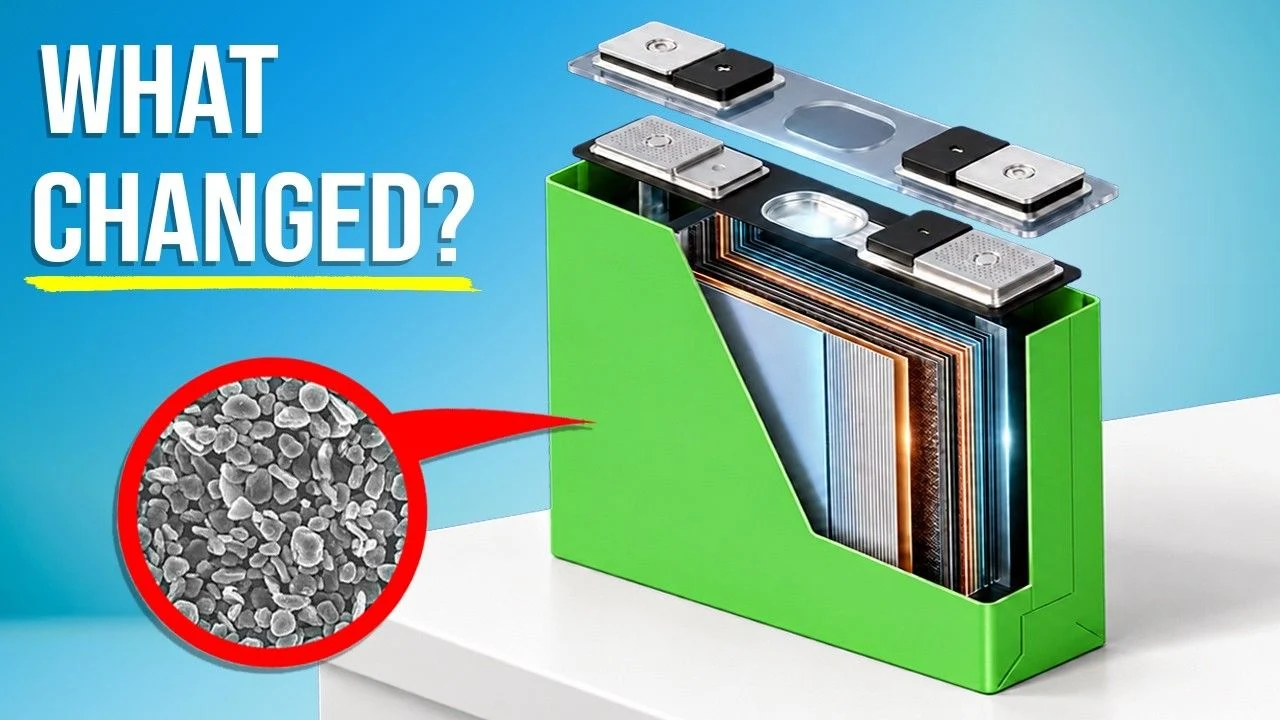 Ziroth8It's Here! The 15-Year Battery Hits Mass Production
This is an example of how some manufacturers are producing Li-Ion batteries that last for 15 years.
You’re ignoring this member’s posts.

 Melbourne
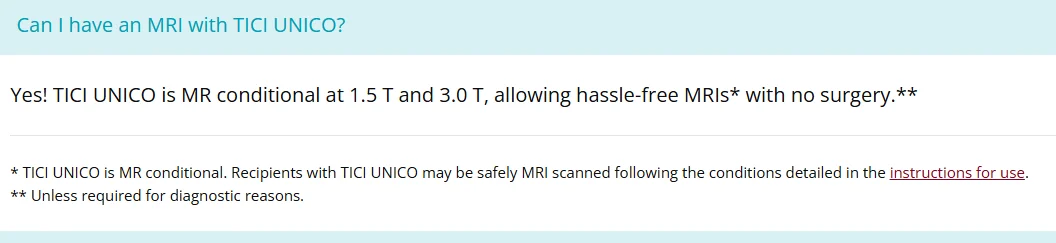
Battery life is what I picked up on as well. 40 hours is not 2 full days, that’s just a little over 1.5 days. That’s very inconvenient for those that are employed, having to charge your head when at work. If you charged your battery at the end of each day how would that affect the supposed 15 year battery life? Having to go through a surgical procedure to change the battery every so often does not appeal to me at all. How would an internal battery go if you had to have an ? I have an internal battery and I can’t have an MRI for any reason. I have to have the battery removed and magnet removed then they both have to be reimplanted again.
I would like a heck of a lot more info before I even thought about giving consent. While the & processors might be inconvenient to some I think I’ll stick to my BTE processor. If something goes wrong I can send my processor back to the manufacturer to be fixed. Where with this internal one you can’t send it back to the manufacturer to be repaired. Far too many questions would need to be answered.
You’re ignoring this member’s posts.
Hearing_PotentialProvider
Cochlear are now trialing their third generation prototype fully implantable solution. A lot of work is going into developing these products so that they meet performance expectations.
It'll be interesting to learn the battery technology that is being used. If its Li-ion I don't expect these devices to be used in children initially as they have a much higher incidence of head trauma resulting in implant failure. You would want to be sure fire risk was addressed and minimized and that the tech was proven.
You’re ignoring this member’s posts.
Hearing_PotentialProvider
The Med-EL Mi2000 was first implanted in a group of 6 users in 2020, so there are five years of real-world usage data that have led up to the release of this product.
You’re ignoring this member’s posts.
You’re ignoring this member’s posts.
Hearing_PotentialProvider
You can also use external speech processors with the TICI UNICO so when the internal battery reaches end of life it becomes a standard if you want to delay surgery to replace it. It also means that if the internal microphone is less than optimal you can still use mics on an external sound processor. This is probably the safest way to implement this kind of system.
You’re ignoring this member’s posts.

 Croatia
I think compromises are acceptable.
A surgery to replace the battery every 15 years isn't all that bad. People who use pacemakers and other mechanical implants also have to undergo periodic replacement surgeries. That’s why I don’t think it’s a major issue—the benefits are far greater: a normal life in society without stigma, and the ability to bathe without worrying about damaging anything.
I suspect this will be aimed more at premium users, given the complex mechanism that needs to be housed entirely within the body.
I also suspect this won't be implanted in children; they are still growing, and their bodies change too much for the internal components to remain compatible with that growth.
You’re ignoring this member’s posts.
A surgery to replace the battery every 15 years isn't all that bad.
I already have batteries that need replacing, these are life saving batteries. For me to add an extra battery just to protect my vanity is irresponsible of me. Life saving batteries are absolutely necessary.. Implanted hearing device batteries are not medically necessary to save my life .. So it just depends on how you look at the situation. Each to their own.
You’re ignoring this member’s posts.
Hearing_PotentialProvider
It doesn't look like this kind of fully implantable device is going to be accessible to existing recipients. Only existing Med-El users are eligible for contralateral implantation due to the significant differences in signal processing strategies and electrode design vs competitor products.
You’re ignoring this member’s posts.

 CHINA
I already have a semi-implanted cochlear implant, so even if fully implanted cochlear implants are released, they are not a necessity for me. From my perspective, if I switch to a fully implanted cochlear implant, it would require at least two to three surgeries. Many people also told me that this surgery carries considerable risks. It would involve removing my existing cochlear electrode array to replace it with the electrode of the fully implanted device, and a cavity needs to be created in the skull to house the internal battery. If I don’t switch, newer generations of the all-in-one processor I wear now, as well as the N8 used by other users, will become thinner, lighter, smaller and more aesthetically pleasing as technology evolves. Therefore, even with the stigma around hearing assistive devices, those of us with semi-implanted cochlear implants need to think carefully about this. After all, it is no small matter.
You’re ignoring this member’s posts.
A question has occurred to me. If the microphone is under the skin, doesn't it get covered over time by various bodily fluids? If it is covered by the skin, how can it be as efficient as an external microphone?
You’re ignoring this member’s posts.
Hearing_PotentialProvider
It isn't. The results are comparable to an external processor but not as good as one. That's one of the reasons why these devices have maintained external sound processor compatibility.
You’re ignoring this member’s posts.
 Poland
If you charged your battery at the end of each day how would that affect the supposed 15 year battery life?
It this is Li-ion that will affect positively. What destroys such batteries is deep discharge, which in this case will be difficult when charging every night.
If it is covered by the skin, how can it be as efficient as an external microphone?
The results are comparable to an external processor but not as good as one.
This is why Acclaim's approach (IIRC) is better for me. Is uses actuators, which get vibrations from ossicles in middle ear and transform that mechanical power into electrical.
Theoretically, you can even use Spheric Speech Clarity program, using hearing aid as an Acclaim's user 😅.
You’re ignoring this member’s posts.
Another reason why I believe Acclaim is superior is that, by using the natural ear rather than a microphone, it is better able to determine the origin of sounds. claims that their microphone is comparable to that of a conventional cochlear implant; I have written to them to confirm whether the TICI’s microphone can indeed identify the source of sounds, but I have received no response. Does anyone happen to know whether or not it is capable of determining where a sound is coming from?
You’re ignoring this member’s posts.

 Texas Hill Country
Does anyone happen to know whether or not it is capable of determining where a sound is coming from?
It takes two ears to have localization. Can not be done with one.
You’re ignoring this member’s posts.
You’re right, I phrased the question incorrectly: in the case of a bilateral setup with the TICI, are the microphones able to localize the source of sounds? By "source," I don’t just mean left versus right—which is obviously possible—but also front versus back and above versus below.
You’re ignoring this member’s posts.
Hearing_PotentialProvider
Another reason why I believe Acclaim is superior is that, by using the natural ear rather than a microphone, it is better able to determine the origin of sounds.
Yeah, I don't think any will do this well relative to hearing aids and natural hearing due to how speech processing strategies and electrical stimulation work. I think this is a marketing claim more than anything else.
You’re ignoring this member’s posts.
Invisible 's seem to be the next big thing, but I need to see,
More users and long term results (say one to two year plus)
Also hard to believe an internal CI (covered over with skin) will perform at the same level as an external CI.
I have no problem if battery has to be replaced say every 13 - 15 years (requiring surgery) but would have to be 100% guaranteed battery would recharge daily with no problems for 13 - 15 years.
Sometimes things look good on paper, then fall apart when its "show time".
You’re ignoring this member’s posts.
Log in to reply to this topic.
Related discussions
Cochlear Implants24 replies
Press Releases0 replies
Cochlear Implants12 replies
Cochlear Implants0 replies
Cochlear Implants30 replies