Anyway, my point is that I wonder if it had been an inexperienced audiologist and had she done REM and just blindly set the program based on my audiogram, would we have really landed on Target faster? Or would I have rejected the hearing aids?
Even inexperienced audiologists know that the targets are good starting point, but what people will accept as first time users is often a lot less gain than prescribed. This is part of the reason why manufacturers have automatic adaptation managers, so that gain can slowly be raised up to ideal levels across time as you adapt.
Without wanting to derail the thread, with my particular hearing requirements. I will say this. Yes, all audiologists do need to be aware that new hearing aid wearers require time and gradual scaling up to the correct volume.
However, in my case, I have two significant problems that most hearing aid wearers don't. My right ear sounds louder than the left (with hearing aids). I also have a problem with hyper acusis in the right ear where sound gets uncomfortably loud very quickly.
The biggest problem with lack of , for me is that I don't get enough boosting of the lower frequencies so I always had a problem with my left hearing aid always seeming to be too soft! Audibility was always an issue.
The audiologist is by far, the most critical factor in having good hearing, then REM. However, you need both! My ears are small, so REM seems to make a huge difference for audibility alone!
In addition to that, the choice of hearing aid itself is critical and I have come to appreciate and value the open sound philosophy of Oticon. I found other hearing aids, far too loud and in addition, their environment sensing programs are horrible. I hated that occlusion effect. My new audio uses , because (and this matches my own experience), I have better speech comprehension with NAL-NL2, than Vac+.
I don't want to derail the thread. I just wanted to say, that I do agree that the audio's skill is absolutely vital, but even my audio, whom I think is brilliant, says REM is absolutely essential. She was surprised by how much lower frequencies I actually needed according to REM and even that is still below what I actually need! Anyway, that is just my sample of one study on the effectiveness of REM.
The issue is not whether is better than nothing or whether it has value when used for children or the mentally challenged with limited communication abilities. The issue here is whether it leads to a better outcome than an informed interaction between a competent audiologist and a knowledgeable client.
their ignorance can be demonstrated by the fact that all the current evidence is against them.
Is it? See, the study being addressed in this thread. Remember that? My current audi is highly qualified; the best I've ever had. Extremely knowledgable. His practice is generous with their time and works for best fitting. When I brought up he said that he could do it, but he didn't recommend it in my case. Neither does my , that I've been seeing for years and who performed my Cochlear Osia surgery perfectly. I've easily seen 30 ENTs over the course of my life. I too have experience. All of my ENTs have warned against letting GPs and certainly HA practitioners poke around in my ears.
My current ENT is easily among the best. My current fitter is the best I've ever had, hands down. Neither of these two are lazy, ignorant or incompetent. exactly the opposite.
slander is simply a way to avoid trying to address the real issues, which are nuanced and complex.
My right ear sounds louder than the left (with hearing aids). I also have a problem with hyper acusis in the right ear where sound gets uncomfortably loud very quickly.
There’s a chance that the gain averaging employed by some manufacturers is putting some more power in to the low frequencies than you need on the right.
I’d be tempted with your loss to start from scratch, base both outputs on your Left Ear level and tweak up the mid-range area a fraction to see if it improves intelligibility vs. distortion. Also sitting the under 105dB will help to keep a lid on things and stop you running into recruitment issues.
however you want your care is fine obviously. your anecdotal experience doesn't trump all of the evidence. the science says work as a starting point to provide better outcomes. but more than that, if someone puts a sound pressure instrument in your ears, they have an ethical duty to measure what it's doing. if your audiologist doesn't see the value in a verification tool that tells them not only whether the hearing aids meet a prescription (based on decades of evidence) and also whether those amplified sounds are audible then that's their prerogative. and i'd be surprised if an doctor could tell you what REM even stands for.
When I brought up REM he said that he could do it, but he didn't recommend it in my case. Neither does my ENT, that I've been seeing for years and who performed my Cochlear Osia surgery perfectly.
Real-ear measurement is a tool for measuring the performance of air conduction hearing aids. It isn't used for bone conduction hearing aids because only a very small proportion of bone-conducted sound is converted back into an air conducted stimulus and it wouldn't be worth measuring it.
The fitting workflow for bone conduction devices requires behavioural in-situ audiometry as a pre-requisite for fitting. The fitting formulae for bone conducted aids have been developed specifically for bone conducted sound and are not the same as the formulae used for air conduction aids.
Simulated real ear measurement can be performed using a skull simulator, but is generally only done to assess the performance of the transducer of bone conduction devices where the end user cannot perform behavioural response testing i.e. children with neurodevelopmental issues. Skull simulators are expensive and the number of users with bone-anchored devices is so low that most clinics won't purchase one. They were also made commercially available more than a decade after bone anchored hearing aid first entered the market. To my knowledge, there isn't any evidence that these simulated measurements are more useful than the in-situ audiometry workflow as how can they replicate the characteristics of an individual users skull?
Your situation is a tiny niche that is unique, but the exception doesn't make the rule. It is an exception to it. It is a shame that you didn't ask your Audiologist and why wasn't recommended in your case. Please include your devices in your profile. Context like this would've helped me respond to you more directly to your circumstances from the beginning.
It is interesting that you say that. I noticed the problem with the volume differential only with Oticon. I never had the issue with Widex when I was trialing it, nor with Resound when I used to wear them.
I found that Vac+ was considerably worse for volume imbalance compared to , where it was present, but not strikingly so. Most of the volume imbalance seems to be higher frequencies, not lower frequencies which is strange considering that NAL-NL2 pushes the higher frequencies more.
We are doing as you suggested, although not from scratch. We have done , then , then she adjusted the left ear upwards (by experience and guesswork) as I said I was having audibility issues and right sounded louder than left. The last visit, we used the right ear as the base reference and adjusted the left ear UP to the right, not the other way around. This has almost completely eliminated audibility, but has introduced a loss of speech clarity, so I am going to go back and have all 17 Oticon frequency channels adjusted so it should hopefully change spectral balance back to what it was, but keep the audibility that I have gained.
In the past, with previous audios, I always had to adjust the left ear up, but never the right ear! To me, this says, the left ear is under fit and the right ear is amplified correctly.
sorry, I wasn't clear. I have an Osia bone conduction on my right side, but wear a pair of air conduction aids (signia Ax7s) that I wear for playing music--without the Osia. The Osia is absolutely great for conversation and non music, but it sounds pretty bad for music. So I'm strictly talking about fitting for my Signias in this thread, without the Osia. Signia alone. Otherwise, I would have course have mentioned the Osia. I've been around the block with hearing aids for decades. I know the difference between bone conduction and air conduction, and how is appropriate for one and not the other, and why. Oh and yes, I've worn hearing aids for decades before and after the Osia, which is a recent event. I know my way around BTE fittings as well.
@jeffrey, it's good to have good specialist, but it's not good to treat them like unwavering authority, almost god-like.
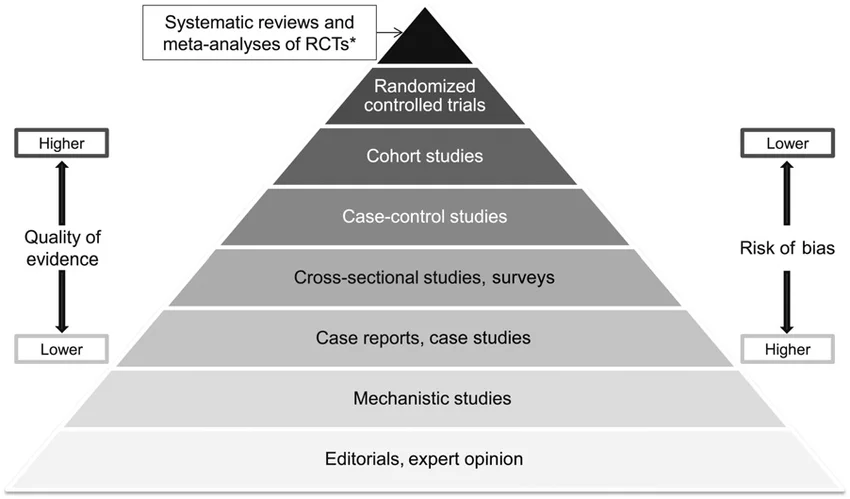
As you can see, "expert opinion" are part of the science, especially when particular issue is not covered by higher-grade studies. However it has the poorest quality of evidence, especially when we say about opinion of one or very few experts.
I don't know why you have problem to admit that there may be some things that your simply doesn't know about. An ENT is not omniscient, it's just human.
The issue here is whether it leads to a better outcome than an informed interaction between a competent audiologist and a knowledgeable client.
That doesn't take into account situations when patient don't know that can be adjusted better. And stays into, let's say, ~70% of HA potential for years.
This is like mine almost whole life experience - I though that I can't hear better because of HA limitations. Now I know I could have heard better. A large part of my life lost because of this.
I have an Osia bone conduction HA on my right side, but wear a pair of air conduction aids (signia Ax7s) that I wear for playing music--without the Osia.
You can add that info in your profile settings like mine Phonak Infinio Sphere 90 Ultra - look at icon to the right of my nickname.
The diagram attached to this post has come from what we know as "evidence based medicine." Applied to audiology, it might be a good system, but there are some caveats in general and they apply to all fields.
Ideally it would be a good system, unfortunately medical publishing and science has been corrupted by pharmaceutical companies and in many cases we cannot trust the randomized control trials and data is hidden or goes unpublished in order to hide negative results. In addition, public criticisms of studies and re-analyses of published results drawing different conclusion also fail to be published because of the influence of pharma. As a result we cannot trust the systemic meta analyses either. In such a situation, expert opinion becomes more important.
Linked below is an example from the founder of the Cochrane Collaboration which performs independent meta analyses of scientific research.
Interesting discussion. I read the discussion prior to going back and reading the paper. I was quite open to the idea that may not be as effective for unilateral loss fittings where the other ear is normal--that certainly seems like something that I haven't seen explored in research and this patient population is absolutely different. However, that's not actually what the paper is about. And then discussion ranges further afield about whether REM is important at all, which is also not really what the paper is about. And then I went back and read the paper and was left feeling like it was hard to draw any conclusions from it. Here are the things that jumped out at me:
"Group allocation reflected a change in routine clinical practice following the introduction of the REM system and was therefore not randomized."
"Throughout the study period, the same board-certified otolaryngologist personally performed the initial hearing-aid fitting, counseling, and subsequent fine-tuning for all 105 participants."
"Fitting was considered acceptable when the real-ear response at 65 was within ±5 of the target at three or more of these frequencies."
"The same otolaryngologist performed fine-tuning at these visits using patient-reported concerns and listening preferences as the clinical basis for adjustment. The magnitude and frequency-specific content of gain adjustments, program changes, and final programmed settings at the 3-month assessment were not retained in a standardized analyzable format."
This translated to me as: Guy implements REM for the first time and kind of does it, subsequently adjusts hearing aids the way he always has and then compares outcomes after that. Is this comparing an REM fitting to a non-REM fitting? I'm not sure.
The contralateral ear seems largely aidable. Why isn't it being aided?
This seems like an obvious group difference in which the entire REM group has "good" contralateral ears and a third of the non-REM group has "poor" contralateral ears. Whta does this mean? Did someone find in the paper where this was defined? How can this be the case when the mean contralateral loss is similar?
Paper aside, people in this discussion have been saying that without REM you get to the right place eventually. I'm not sure this is always the case. Often the case, maybe? Maybe not as often as you think. For contemplation, I have a patient right now who has been wearing hearing aids for years from elsewhere. They have a bilateral loss that is essentially a flat 55 dB. I could give them really good audibility for this loss. Their old hearing aids were giving them about 8% and they are rejecting my attempts to give them more. Their argument is "I hear what I want", which . . . that's not the worst argument? If you break your arm and then tell the physio that the only function you want back is to wiggle your fingers when they know they can get you to almost full function. . . I guess that's your choice, right? Feels a bit off, though, especially without informed consent. I explained to the patient exactly what I was seeing and they are going to try to work their way up to more audibility. If their previous provider had used REM and been able to explain to the patient exactly what was going on, would they be in this position where they can no longer tolerate background noises?
As for people doubting that one-and-done is really a thing with REM, I checked the follow-up to delivery ratio at our main clinic and it is 1.18 for the past year. We are a clinic that is very experienced with REM that provides at minimum one follow-up but then offers continued follow-ups until the patient is satisfied. 1.18 follow-ups per deliveries is a lot of one-and-done.
Finally, I think this discussion should probably not veer sideways into known antivaxxers like Gotzshe. Happily, the audiological research community is relatively small and non-prestigious and as a result is still a bit more disconnected from some of the proplematic aspects you can see in the publish-or-perish academic culture, if Gotzsche was even an unbiased skeptic which he is not.
Edit: I also wanted to add that if I was presented with a practitioner of any sort of healthcare who rejected what was widely seen as an important part of best practice, I would immediately become suspicious of their entire philosophy. As someone who believes in evidence-based medicine, I don't want my doctor to suggest I get my ears candled, get acupunture, or see a naturopath. Similarly, I don't want to see an audiologist who doesn't do REM or who sells tinnitus supplements.
I don't know why you have problem to admit that there may be some things that your ENT simply doesn't know about. An ENT is not omniscient, it's just huma
You seem to have a problem admitting that practitioners who disagree with you are actually well informed. In my case, as I've stated repeatedly, ALL of my /surgeons have warned me against letting GPs and techs poke around my ears. You've also suggested that my ENTs and audis don't know what they're talking about-with absolutely zero evidence. that's hardly a science based conclusion.
What you mean above is, 'I don't know why you disregard my advice and listen to your licensed doctors rather than doing what I tell you?'.
folks, that's not good advice.
You may want to re--read my early posts, concerning the architecture of my ear canals leading into my middle ears and mastoid and beyond.
Paper aside, people in this discussion have been saying that without REM you get to the right place eventually. I'm not sure this is always the case. Often the case, maybe? Maybe not as often as you think. For
I reckon that this is spot on....but I think a key here is what is the "right place"? Is the end goal speech understanding in whatever the patient calls his world? Or is it something else?
. 1.18 follow-ups per deliveries is a lot of one-and-done.
I reckon that a lot of one and done fittings are a result of a patient not knowing that it could be better....or a patient too lazy to call back.... or many other things like that....or maybe it's the broken arm that's satisfied with only wiggling fingers.... Not saying that they're all like that mind you...not at all. In my one and only experience so far with , I was honestly a little surprised at how close they were to where they needed to be. Not perfect...not even close.... but reasonably close to good enough.
I'm left thinking about two people I know. One a lifelong hearing aid wearer who routine wears only one of the pair, or takes them out when there's too much background distractions...basically a part time wearer. I remember several years ago when he got his new aids. For a very long time I remember him saying that he needs to go back and get them adjusted some day... I think he eventually did but it was something well more than a year later if I recall correctly. The other is also a part time wearer. He got a hold of his dad's old pair, had them fitted and never went back. He pretty much only wears them at family get togethers...Thanksgiving or whatever. They help a little but they don't sound right, are probably very annoying, and his brain isn't used to them.
Both of those are one and done. Neither of those are what I would consider successful. But neither of the failures are the fault of the Audiologists!
Edit: I also wanted to add that if I was presented with a practitioner of any sort of healthcare who rejected what was widely seen as an important part of best practice, I would immediately become suspicious of their entire philosophy. As someone who believes in evidence-based medicine, I don't want my doctor to suggest I get my ears candled, get acupunture, or see a naturopath. Similarly, I don't want to see an audiologist who doesn't do REM or who sells tinnitus supplements.
Yeah, I get your point on the surface...but I'm left thinking of things like stating drugs...
and the diabetes associations stating "Fruits: Wondering if you can eat fruit? Yes! While fruit does count as a carbohydrate food, they are loaded with vitamins, minerals, and fiber just like vegetables. Fruit can also help you satisfy your sweet tooth without the added sugar." Like they don't know that fructose is very bad...one of the worse kinds of sugar...um yeah of course, it's not "added" sugar. oh brother....
There's a ton of really bad info out there in the form of "common knowledge". Even medical journal studies funded by conflicting interests...ind information inertia is real.
So yeah, I agree that when a doctor goes against the suggested norms, it's worth questioning.... but it's not automatically wrong!
I'll admit I've only read posts here and there in this thread.
I've joined threads like this before as an advocate for , and I continue to think it should be explained so that people don't get the wrong idea.
In my view, REM is like a speedometer in your car. Like the speedometer would measure your speed to give you a relative idea of how fast you are going, a REM measures how much pressure is being contained between the acoustic coupling (earmold or dome) and the eardrum.
If someone came to me and said, I don't need a speedometer to know how fast I'm going, OK, that's fair. You could probably have an idea of how fast you were going without it, especially as an experienced driver who is driving in the same car along the same roads.
If someone said to me, speedometers should never be used because sometimes they aren't calibrated correctly, or sometimes they are off by a few miles an hour, or that the idea of measuring speed is stupid and that they should just drive at whatever speed they want.. I'd start to wonder whether there isn't a different issue that might not be related to speedometers in the first place.
REM is the gold standard because it identifies issues that are consistently missed without it. It does not replace every aspect of fitting the hearing aids. In the hands of someone who is against it, or is not skilled at what they are doing, it can seem ineffective or problematic.

 England, UK
 Wales, UK
 Poland