Naida UP has shorter frequency range than Dynamo and Xceed (up to 4 kHz at 120 Naida vs up to 6 kHz at 120 dB Xceed)
You’re ignoring this member’s posts.
This topic is closed.
63 replies8.7k viewsLast reply
Naida UP has shorter frequency range than Dynamo and Xceed (up to 4 kHz at 120 Naida vs up to 6 kHz at 120 dB Xceed)
You’re ignoring this member’s posts.

 Florida
You looking at this from the perspective of someone with normal hearing. In that sense you are correct in your assumptions. Someone with normal hearing - normal ear/hair cells needs protection from loud noises short term and long term. But someone with a severe to profound hearing loss is missing so much (incoming sound) already that it’s someone irrelevant what the incoming decibel level is.<…snip…>
So I guess it’s a case of “If you want to hear, these devices are going to further damage your hearing, but if you don’t use these, you won’t be able to hear anyway.” A catch 22 situation.
Have I got that right?
What I’ve always learned from the Hearing Experts is the maximum time per different levels of constant volume are:
85db = 8 hrs
88db = 4 hrs
91db = 2 hrs
94db = 1 hr
97db = 30 min
100db = 15 min
106dn = <4 min
109db = <2 min
115db = 30 sec
120db = instant damage
I play music for a living. I run the speakers at 85db so that I don’t hurt the ears of my audience. If they ask me to turn it up I will (the customer is always right) but then it’s not me damaging their ears. And in go my ear plugs (custom molded, high fidelity, musicians ear plugs).
I’m very aware of damaging volumes. I’ve always worn ear plugs when things get loud, but a 3 times misdiagnosed illness got my ears anyway.
You can run but sometimes you can’t hide.
Bob
You’re ignoring this member’s posts.

Me too, I am waiting for the new version of Phonak Naida that will hopefully come with direct Bluetooth connectivity with phones. Then I will try Oticon, Resound and Phonak UP hearing aids and decide which one to go for.
You’re ignoring this member’s posts.
Excuse me for intervention, but Resound has pretty high battery drain, and Phonak has short frequency range. Of course, you will decide which one to go for/
You’re ignoring this member’s posts.
Sigh! It is as if we can’t get one good package. I am really hoping that Phonak has better frequency range in their latest model. I will be trying Resound, Oticon, and Phonak UP hearing aids and then decide which ones sound better. The only negative I can think of is that the audiologist may get fed up with me for having to adjust all 3 devices for me to try out.
You’re ignoring this member’s posts.
You’re ignoring this member’s posts.

Welcome to the forum.
Posting your could help us help you.
You’re ignoring this member’s posts.
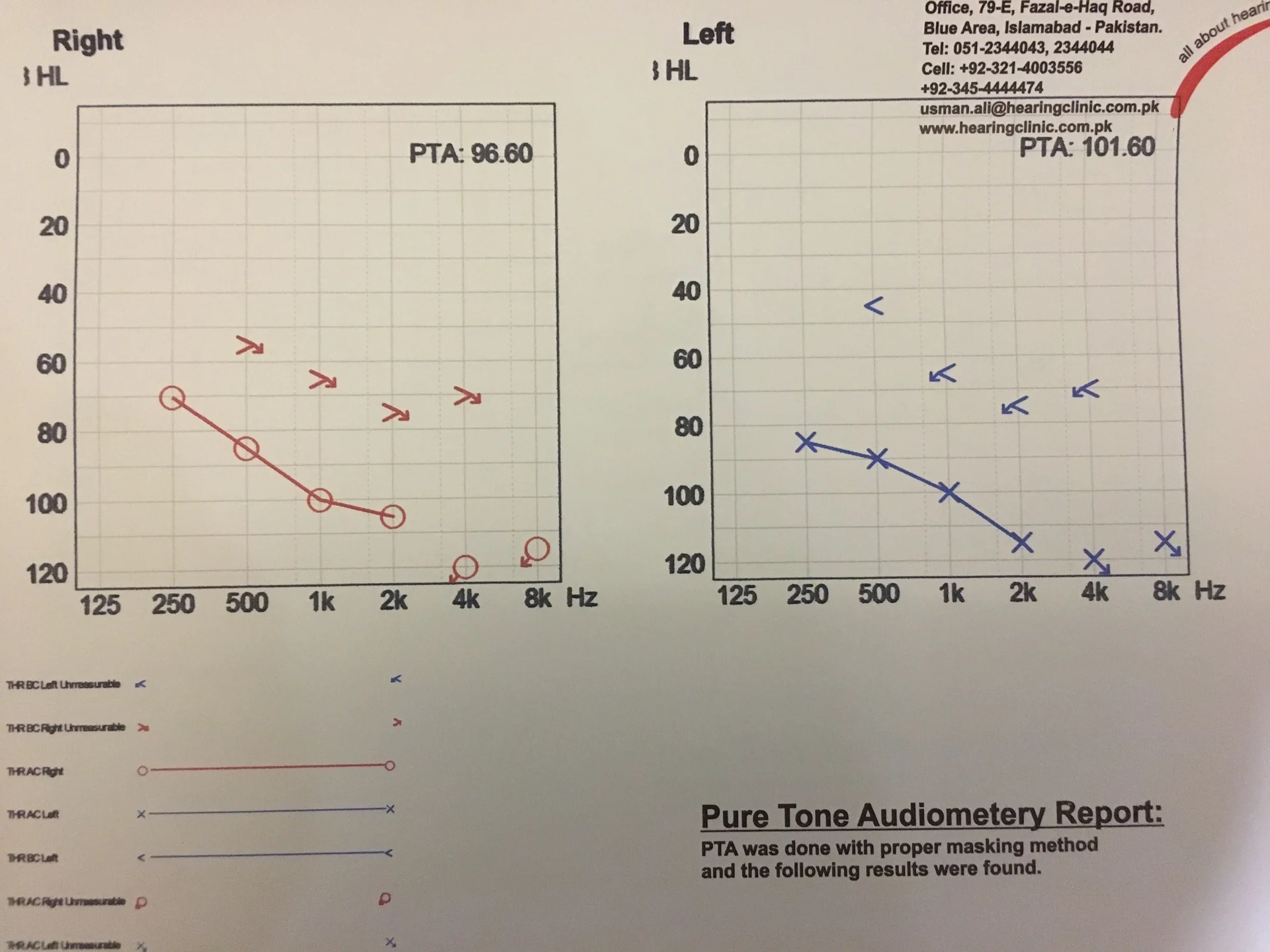
Thank you, friend! I’ve learned a lot already by the comments @anon33641277 left. I started wearing hearing aids since I was 5 years old and it seems that even after trying many devices, I still have a lot to learn. Glad to have found this community. You can see my attached, it looks really bad so UP devices are the only option I have. I didn’t want to go for implants due to infection/risks and getting locked down to one provider, and most importantly trusting that hearing aids will continue to improve as they have in the past.
You’re ignoring this member’s posts.
Thanks for the . If you want to enter it into your avatar here is a thread from the admin.
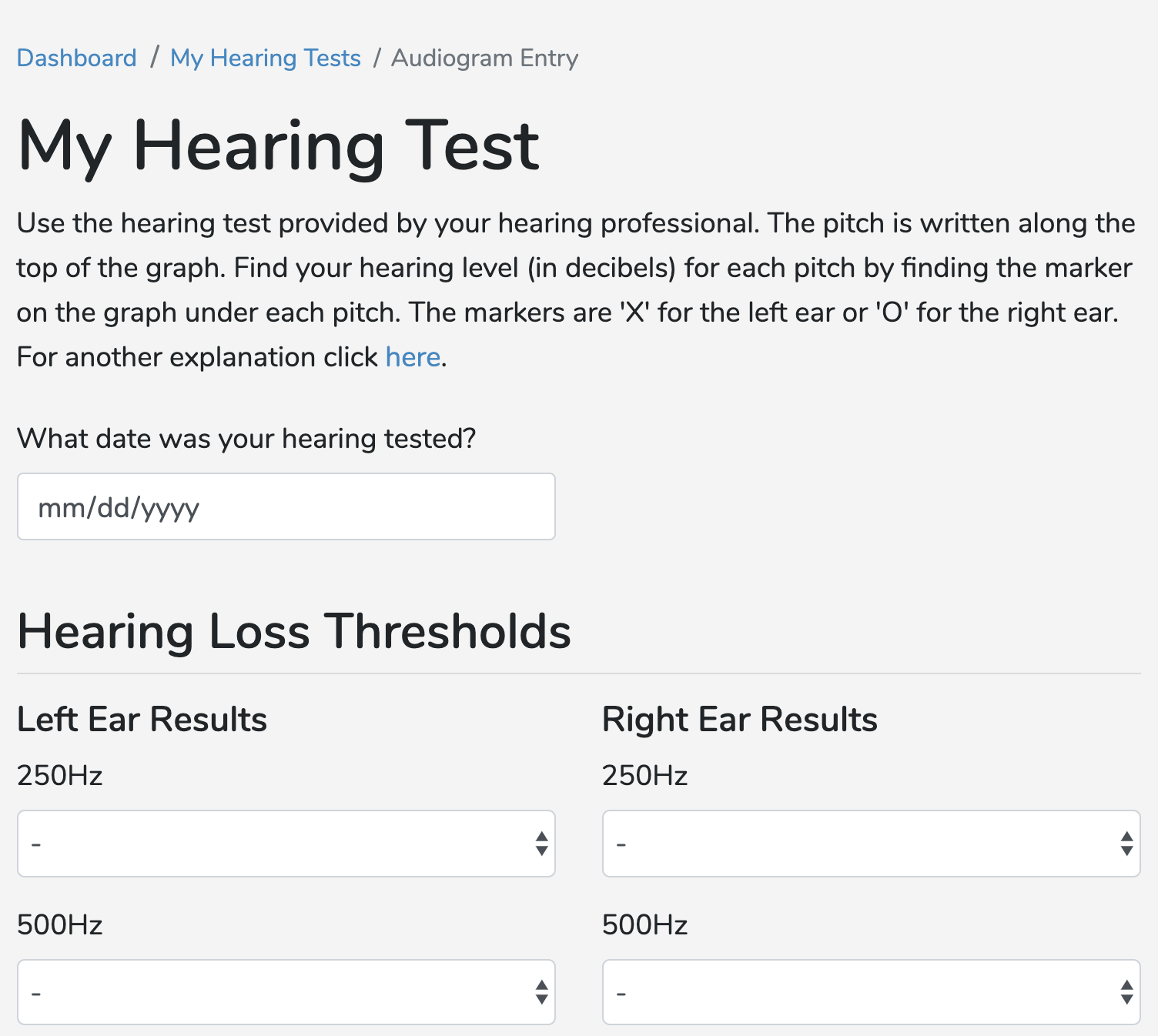
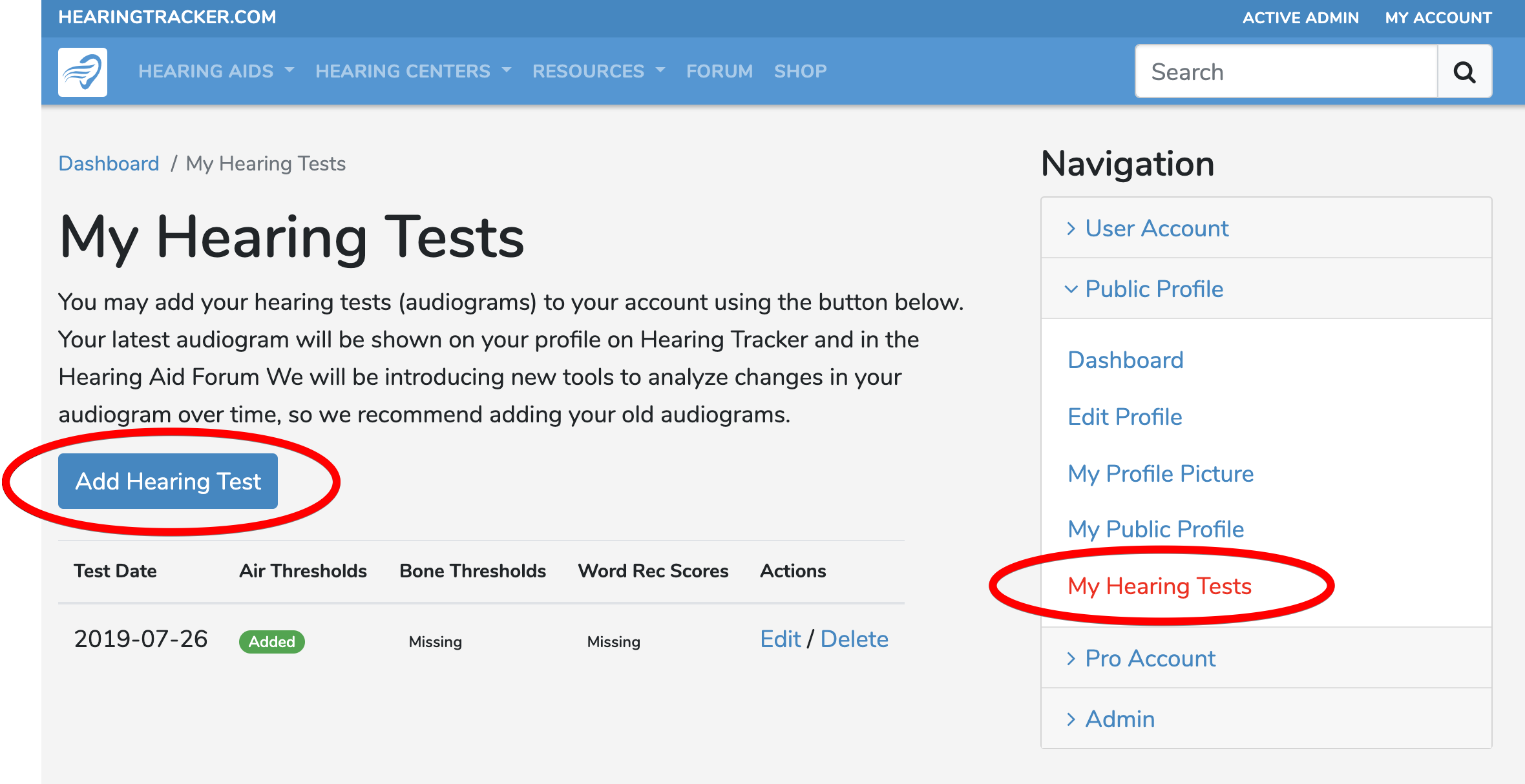
Just updated our page for adding hearing tests to the forum. Make sure you are logged in Go to My Hearing Tests You will see the page below Enter your audiogram and click the save button When you come back to the forum, you should have a headphone icon on your avatar and an audiogram on your profile. Thanks! [image] If you already have a hearing test on file, you will see the page below. Edit your current test or click the button “Add Hearing Test” to add a new test. [image]
Please take the information you get from members with a grain of salt. Some are incorrect.
For what it’s worth, you don’t need to add gain to frequencies you can not hear at. If you have dead frequencies you don’t need to put gain there, period. You may be able to use less powerful aids when you look at it that way.
You’re ignoring this member’s posts.
I see, so according to my , the last two frequencies, 4K and 8K are dead frequencies? Or are they so less that perhaps UP hearing aid may be able to pick up a bit and amplify the sound? I am using Siemens Nitro 701 SP hearing aids right now and not very happy with them. I think they have declined in quality after over 5 years of usage.
You’re ignoring this member’s posts.

You should definitely take my comments with a grain of salt, but I think you have a “mixed loss,” involving a conductive component. This has implications for how much gain is needed. I’m basing this opinion on a notable difference between your bone conduction and air conduction readings.
You’re ignoring this member’s posts.
And possibly 3000 hertz. Your could use more detail.
Yes, why put gain in areas you can not hear.
I am not familiar with your aids. Do they have ?
My hearing is gone in the upper frequencies. I use Phonak Audeo B90 aids right now with aggressive Sound Recover 2 settings. I can hear things I have not heard in many years. My lower frequencies are better than yours so that makes a difference in needed gain.
As MDB has stated, conductive loss could be much of the issue. Zebras is very familiar with this type loss.
You’re ignoring this member’s posts.
Very interesting insights from you and @MDB! I want to take advantage of the 2K and 3K frequencies because I can hear very faint sounds in these frequencies and I think just disable other higher frequencies since they look dead based on your suggestions. Both Audeo B and Audeo Marvel comes with UP receiver but the max it goes till is 100 so it’s useless for me. I need a UP hearing aid that goes till 120 or perhaps even a bit more so I can take full advantage of amplifying 2K and 3K frequencies. Until I wait for Phonak to release their latest version of Naida, are there any other hearing aids available right now suitable for me which have direct Bluetooth connectivity?
Interesting tidbit, I noticed that I can hear men better than women, no wonder it’s because my high frequencies are weak and women have higher frequencies when they speak. 
You’re ignoring this member’s posts.
Your description of women and men voices Leads me to believe that would definitely help you from what you are saying.
I hope some of the pros jump in on this. They give great help.
You’re ignoring this member’s posts.
Those frequencies are probably dead but Phonak has a good technology of transporting sounds from higher frequencies to lower frequencies. I don’t know how Oticon operates that but has something similar and effective.
You’re ignoring this member’s posts.
This is good to know! Thank you and @Raudrive you too! I have just one question related to transporting sounds from higher frequencies to lower frequencies - is this something we can do ourselves using an app? Or is it something an audiologist does? I was watching this video on Real Ear Measurement2 and I realized that no audiologist in Pakistan ever did this despite changing hearing aids 5 times in my life. This means I have been wearing hearing aids without the full potential to hear. This means most audiologists are incompetent over here. I may be visiting the US again soon, this time to Maryland. Are there any good audiologists on the East side of the US? Or should I pay a visit to Dr. Cliff of Applied Hearing Solutions all the way to Arizona?
You’re ignoring this member’s posts.

@TallRobocop & @MDB Just FYI, that is NOT a mixed loss - most of those responses for bone conduction have the arrow pointing away, which means there was no response at that level. With this degree of loss, a bone conduction response at 500 Hz and no other frequencies may be vibrotactile, meaning it was felt and not necessarily heard.
You’re ignoring this member’s posts.
Thank you! I know enough to know that there is a lot I don’t know. I also know that when bone conduction info is included it shouldn’t be ignored and my natural tendency is to just pay attention to air conduction. So by arrows pointing away, it’s a way of saying bone conduction was done, but we stopped here?
You’re ignoring this member’s posts.
It’s not always straightforward the down away arrows mean that they went as loud as the equipment will go. Bone conduction can’t go as loud as air conduction, so for people with more severe/profound hearing loss, it will look like they have that gap because the bone transducer just can’t go loud enough. (Again, responses can be vibrotactile at elevated levels, too.)
You’re ignoring this member’s posts.
That was very informative @speedy. Thanks, I learned something new. Glad I joined this forum. I noticed your tag says “Registered provider” and you’re from the US, do you have your own Audiology center? If yes, please read my last comment above, any suggestions/comments on that?
You’re ignoring this member’s posts.
Hearing Aids19 replies
Online Sellers7 replies
Hearing Aids30 replies
Forum Support7 replies
Classifieds0 replies
 Pakistan