they helped but didn’t really give me that good of speech understanding. During that time I did a lot of research and testing with audio generators to figure out why I could hear sounds and tones but not understanding speech. That is when I discovered that I had spots in my hearing that weren’t tested by the hearing test that was way off. Like 50 db loss at 1000 hz and 25 db loss at 1200 hz and 80:db at 1400 hz and at 1500 hz a 60 db loss.
Given that, I’d like – if possible, to know more or having some more hints about these discoveries, if that makes sense?! I find that it interesting and I want to eventually confirm or exclude if that can be something I deal with since the whole “I hear sounds” and I have recurrent issues with speech it’s quite relevant to me and my everyday experience.
In fact, the whole topic it’s really interesting to read as I’m looking for new after 6 years and the question about qualitative effective steps forwards is central in order to choose.
@buiononsense: Okay … I understand now. I’m tied up at the moment, but will share my experience with “dead spots” later today.
Just a quickie, however: I had to turn off “Speech Rescue” (aka ). Some of the very high frequency “sounds” that I don’t catch on the hearing test seem to provide info that my brain needs to correctly process consonants. My speech comprehension is much better with Speech Rescue turned off.
On the topic of “newest models being THAT much better” I found this hearing solution comparison chart47 at SFGate this morning. While I can’t say I agree with the overall results, I’m defintely BIASED.
Mainly, I’d like to see MORE of these kinds of comparisons and buyers guides for us purveyors of aids! Consumer Reports has done irons, rug cleaners, cars, blah blah, once in a while hearing aids, but I always find myself wanting MORE data, more user input.
Hope the link works, cuz sometimes SFGate takes articles DOWN after a day or so.
@1Bluejay: This article has absolutely no relevance to me, since it’s entirely subjective with no definition of performance criteria or testing methods. It’s just hearsay, IMO.
The ‘newest model’ in the Oticon range behind the More/own has 13 processors in it.
A couple for comms, a couple for feedback, a few for directionality and several for speech in noise. This level of parallel processing means that it can simultaneously perform tasks that would have to happen in series for single or dual processing devices.
As noted above this might make very little difference in 90% of listening situations: however in real terms, this allows the faster implementation of the based rules for speech in noise with greater efficacy.
Does this make the newest hearing aids ‘sound better’ ? Possibly.
Does it make them more likely to work in all situations? Not sure.
Does it mean your hearing is more likely to benefit from the accurately AI derived rules? Yes.
Just FWIW, I run a 2002 5-Speed car with an Auto-box in the Summer and a 2008 7-Speed car in the Winter. The Winter car is more efficient and great at cruising, but it makes a really lumpy downshift when it misjudges the torque loading as it pulls up the incline to our cul-de-sac. That’s a more refined/newer system making a rules based decision based on the information available to it.
Is the experience better in the 2008 car? Well I guess that depends on whether your reference frame includes the dodgy gearshift situation or not. By all other measures the later model is ‘better’ until it isn’t.
That information is impressive,however, I cant get enough gain from noise programs due to my low speech perception.
That’s why I bought an essential Up hearing aid.
I like your post about Oticon’s technology. I also like that their rechargeable batteries are replaceable, which means that after a few years they are designed to be working hearing aids instead of bricks.
A long time ago I ran an Austin-Healey and now I wear More 1’s. What does that mean? I dunno. But it sure was fun!!
First off my hearing loss is different from yours. My loss is part genetics and part military service connected. I was trained by the Navy to be an electronic technician/ troubleshooter. I learned quickly that I could troubleshoot anything is I had enough knowledge of what I was troubleshooting. You see I could hear tones, and sounds but couldn’t understand what people were saying. I kept trying to get my audiologists to explain why that was possible and never could get answers that made sense to me. So after going through 3 different audiologists with no answers I decided to take it on myself to come up with something, anything that helped me understand why I could hear so many different sounds but couldn’t understand speech.
Knowing test equipment and audio analyzers, I just started doing my own tone test with a good set of headphones. I discovered the differences in sound volume and even that some tones seems out of tune. I documented it and rerun the test with 3 different tone generators and came up with the same results. I showed my results to my new audiologist just out of school and she found it so interesting that she started test with me totally outside of the the normal hearing test.
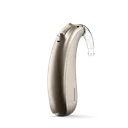
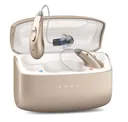
For me, Phonak Marvel 90 ’s with the 105db custom moulds, and the 13 disposable batteries, was a massive game changer, I could finally have cell phone conversations, and mostly hear what was being said, this was a first for me, the sheer connectivity of the Bluetooth connection was my sweetest moment in many a year, combined with TV Connector 2, I could watch films without subtitles, I had given this up years ago, yeah subtitles are fine, and you do get bye, but you also miss the little subtleties of the film dialogue, and plain text doesn’t always cut it…Fast forward 2 years, Phonak Naida 90 UP’s, after an initial hiccup, they weren’t set up correctly, they were very near, but not ideal…Yet! A free set of Phonak Marvel Naida SP 70’s, from the NHS changed all that, thank you NHS, they did , and changed me over to NAL NL2, and for me it was a massive improvement, a bit loud to start with, but fine once I acclimatized… Ditched, my Naida 90’s for a couple of months for the Naida M70’s, at this point, I have to say there is a big difference in sound quality of a aid, with sound coming down twin walled tubing, as opposed to a RIC, to me the quality of sound is much fuller, it just sounds so much better… It then dawned on me, if we could transfer, or export the settings from my Naida M70’s with the REM, and then import them into the Naida P90’s, (My private A.uD, had no REM equipment) as this was a better aid than M70’s, we might be on to a winner… So I fired up Noahlink Wireless, having little or no idea how I was going to achieve this, but I did see an import/export setting on many previous sorties in Target… And it took me about 10 minutes to figure it out, another 10 minutes to export/import to the better aids, and we were up and running with Naida P90’s, we had a result, and what a difference this made to the P90’s, we were now cooking with gas, and with all the different ’s (Assistive Listening Devices) I have, and I have many, I can safely say I hear better now than ever, and perhaps even better than I did before I went deaf 30 odd years ago, but only in certain situations… For me, this iteration of the Naida, has been the best ever, and I have had a few Naida’s in the past, but I got lucky, and transferred, another A.uD’s setting’s… As always, YMMV. Cheers Kev
I truly believe that the setup is very important. Lydia Kreuk audiologist was amazing. I always heard better when I left an appointment. My second audiologist didn’t have her skill. Both sold their businsses; that’s why I left Lydia.
I want hearing aids I don’t need to adjust. I want them to work.
Planned Obsolescence = !!!MONEY!!! and Not better Technology. Just ask the Cell Phone Producers and Sellers.
Medical Equipment manufacturers are just as GREEDY as cell phone, car, TV, toaster, and ‘disposable anything’ maker. My CPAP machine has had a message every time I turn it on now, for over 5 years, stating, “MOTOR LIFE EXCEEDED. CONTACT SERVICE PROVIDER”.


 Oticonian/Disposablyte


 Hot Springs Village, Arkansas

 Wales, UK



 Scottish Highlands