From an Engineering background what you’re saying is entirely possible, but from a financial/reputation background it makes no sense. Just look what’s happening with Sonova product out of Costco. Dispensers will not buy product that causes them more service work/effort; it just doesn’t happen.
Hearing aid design is all about increasing the performance of the product: reducing the noise, improving directionality, trying to keep wax out of the receiver and contaminants out of the mics.
This leads to two things: better product and product that people expect to work better even under more extreme environments.
TL;DR - I feel it is planned obsolescence. It feels like buying an iPhone every year for very small incremental changes that you may otherwise not use or benefit from, as opposed to switching hearing aids every 5 to 7 years for what I perceive to be a larger benefit. However, my loss is different to another persons loss, and they may see features that work for their losses compared to mine.
I feel like it is planned obsolescence. I find that having switched from Phonak Audeo B50’s to a more newer and premium product (KS9’s) actually showed me the benefits of hearing aids that could switch into programs automatically, mute the microphones when sound reached a certain threshold, and so on. It made me realize that premium products are what I should be investing in for better hearing care.
However - After having switched to a premium product and wanting to upgrade to the KS10’s, I’m left with the thought that from many peoples perspective, not much has changed between each year, and it’s just a race to the bottom or top with new features that sound new, but have very little incremental changes. It feels like an iPhone. Cool new features with one flagship feature, but very little actually changed.
I would hazard to say that unless your hearing aids have malfunctioned and are no longer under warranty, that you should consider changing your hearing aids every 5-7 years to really see a change in hearing aid technology. Keeping up with regular cleaning and maintenance of your hearing aids by replacing the wax traps or cleaning out the mold, and wiping down the surface of the hearing aid, throwing it in a UV cleaner/heater should help extend your hearing aids until something happens.
However, I accept that many people will see a feature on new hearing aids that becomes very helpful to them. In my situation, I’m still at a point where I’ve been stretching the life of my hearing aids until the very end when they stop working. I’ll do my , and keep up with my hearing aid maintenance, but as for programs and shiny new features, I’m otherwise satisfied with what I have.
I’m still at a point where I’ve been stretching the life of my hearing aids until the very end when they stop working. I’ll do my audiograms, and keep up with my hearing aid maintenance, but as for programs and shiny new features, I’m otherwise satisfied with what I have.
@JJTheJetPln: Thank you for your well-presented points - they are all well taken. At the end if the day, however, I find myself in your camp - the big annual or semi-annual hoopla is more marketing hype than real advantages for the .
Like most technology generally evolution rather than revolution. In the early years of digital aids the improvements over a time period were greater than now, an analogy is digital cameras.
Features from the top of the range models will filter down to the mid range. So taking the car analogy generally if you replace ones several years old with the current equivalent there will be some improvement or additional features so long as set up to give the best results for you. Whether worthwhile / worth the cost until replacement is essential has to be an individual decision, likewise upgrading to a model higher up the range.
I remember a few years ago on this forum someone’s (informed?) speculation was that the big manufacturers had years worth of technical improvements lined up and pretty much ready to go. But they were trickling out these improvements over several years and several model upgrades in order to maximize profits.
This makes sense to me from a business standpoint: if you include every innovation you have in your current release you’ll sell a lot of in that current year. But it might take you years of R&D (and reduced sales) to produce anything significantly better.
That’s why I was (and still am) interested in the Whisper brand: Whisper is a start-up with only one product. They are competing with huge conglomerates with multiple product lines.
If Whisper is going to survive they MUST produce a product that is significantly better and/or cheaper than their well-established competitors while still eventually becoming profitable.
Can they do it? I don’t know, but I salute them for trying. To me, this is the essence of the capitalist system.
My guess is that if the big manufacturers begin to feel threatened by Whisper they will make a buyout offer that Whisper can’t refuse. The founders will justifiably cash in and their corporate buyer will begin trickling out Whisper’s innovations. Same as it ever was…
Also this doesn’t make sense; ‘The Manufacturers’ aren’t one concern. That’s conspiracy nonsense.
They all have a ‘pathway’ of R+D ideas that mature at different rates, depending on what gets spent on the projects, where the market is headed and which other company is preventing uptake of a technology through patent.
The reasons why they aren’t ‘colluding’ to keep the latest tech away from the market are pretty simple; Profit and Differentiation.
If you have a good solution that works and puts your solution outside/ahead of the rest of the field, it will sell. If you can maintain that level of differentiation it will continue to be profitable. If you create a level of legend/desire around it even more so. The obvious example is Apple.
In hearing aid terms, Widex held pretty much the same role in the early 2000s. I’d say the spoils were more even in the last decade. Nobody seems to have pulled out a massive lead in the 2020s yet. If one of those companies was ‘sitting on’ game changing tech, you can bet your backside that they would be throwing everything at it. Getting it patented and in manufacturing as soon as possible.
They all have a ‘pathway’ of R+D ideas that mature at different rates,
@Um_bongo: The fact that the hearing technology inside modern hearing aids has to be deemed a success, but the performance of the rechargeable batteries inside my Oricon More1s is dismal, by comparison, suggests to me that the companies are not doing their own battery R&D. Is this a fair assumption? And if not, why is such an important aspect of the total device architecture as rechargeable battery performance being farmed out? Why am I paying a premium price for second or third rate battery R&D in Oticon’s “pathway”?
[Addendum: I hope that you realize that my questions are not directed at you, personally. I , rather, hope that - perhaps one day - an Oticon employee or spokesperson will actually offer us a response, here on the Forum …]
@Um_bongo: The difference that I see is that these other components are all fit for purpose when delivered to the market in the finished product. Today’s Oticon More rechargeable batteries seem to be rather a “work in progress”.
That’s acknowledged by the battery drawer, which in effect points to their Engineering accepting that the battery tech isn’t quite as good as they would like. A replaceable consumable version is the result.
A shame that Resound, Phonak and a couple of others didn’t think of going that way too.
I’d like a rechargeable that ran 48hr+ with continuous connectivity, but they made a trade off with that shell size.
That’s acknowledged by the battery drawer, which in effect points to their Engineering accepting that the battery tech isn’t quite as good as they would like. A replaceable
@Um_bongo: That’s exactly correct, and thanks for pointing that fact out. I’m really not so rabidly anti-rechargeable/anti-Oticon Engineering as I may sometimes seem.
But I fault Oticon for diluting an absolutely brilliant hearing aid with unspoken battery issues that have been allowed to become “The elephant in the room.”
Not sure what was happening at first with my aids after I got them back, but the battery life is improving which sounds strange. And seeing my aids haven’t been updated to 1.4.0 I am not having any connectivity issues even while using the app.
Looking at Oticon, they appear to be integrating improving battery tech on a different cycle than their usual upgrade cycle. I expect that the firmware upgrades are significant in this respect too. We’re already on the 3rd or fourth iteration since the original Zeni-power.
I’d suggest we’re in the area of whether we let a good solution be the enemy of the perfect.
I , rather, hope that - perhaps one day - an Oticon employee or spokesperson will actually offer us a response, here on the Forum
I worked for a company with sophisticated SW products for a while back in the tech bubble ~20 years ago. I was even in support, 3rd tier. I was in the engineering division for one of the products. We had to be extremely careful not to gain attention in the public fora. Lightning could strike if we were recognized as more than just smart about a product. Then it wasn’t helpful to anyone. Any discussion about where the product was going, what features it would have, etc, all had to be handled by those who wore the public face of the company. Those who did stuff like on-site training or support knew how to say they didn’t know. When I was on the phone with a customer, we had redirecting speech to keep the discussion on track to solve the problem at hand. We probably have some folks here who work for these companies. But I’d be shocked if anyone other than a public relations person came forward.
But I’d be shocked if anyone other than a public relations person came forward.
@WhiteHat: I’d be surprised, also, but I live in hope. I personally think it would be to Oticon’s advantage to be more forthcoming about what they’re doing to address their several, concurrent klusterflubbs.
I think Blacky tics all the boxes. Does the later aid offer something new? Maybe it does, but do you need it?
I have the Phonak Marvel and noted that the Paradise offers enhance functionality, functionality but not necessarily better. I ‘think’ I might like it but don’t think it would be cost effective to upgrade.
One thing that Paradise offered was as a true - H=Health. I think it offered heart rate and other ‘useful’ things. But I think users that wanted a better HA - H=Hearing were unimpressed. The new aids also heralded and improved App, an improvement near universally condemned and since modified.
If the new aid offers a significant improvement with features that you need then by all means change.
I’d be surprised, also, but I live in hope. I personally think it would be to Oticon’s advantage to be more forthcoming about what they’re doing to address their several, concurrent klusterflubbs.
Never driven an Audi with an early DSG box over 70,000miles then?
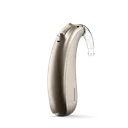
You guys are free to read my ongoing comments about Phonak Lumity. They are definitely a major step up from previous versions of hearing aids. Especially when it comes to hearing in noisy environments.
So yes…the newest models do occasionally bring profound improvement…if you buy the top version.

 Wales, UK
 Brampton, ON, Canada


 Midlands UK

 Hot Springs Village, Arkansas

 Grantham, Lincolnshire, UK