Best leave this kind of judgment to science, not to subjective guesswork
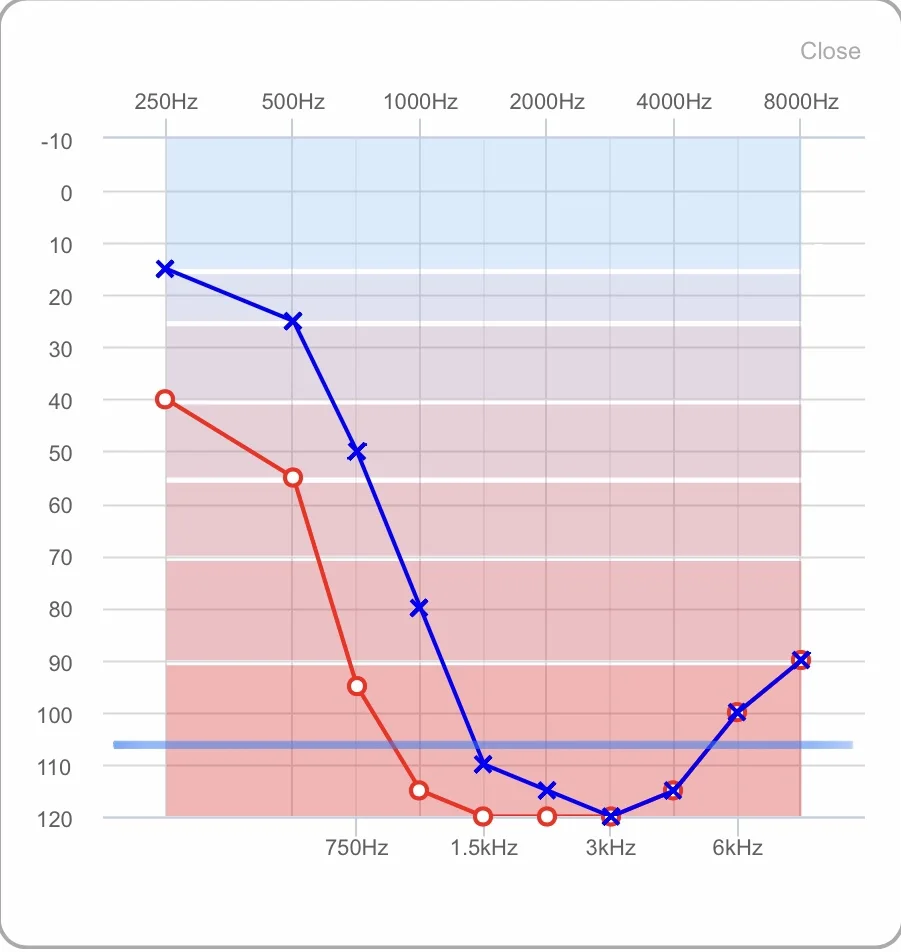
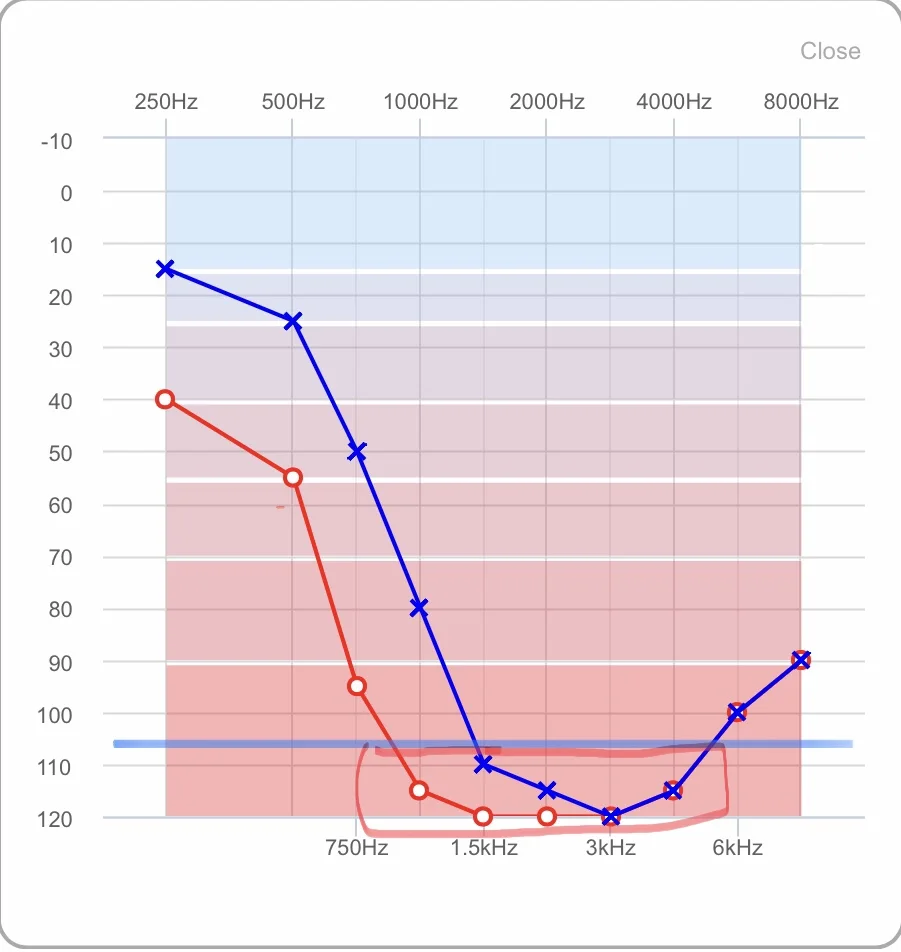
It’s not actually that well defined. Different clinicians use slightly different descriptions. As far as I know there is no rise-over-run criteria for the application of the word “steep”. The OP’s loss is normal sloping to severe, or also possibly mild sloping to severe for clinicians who ignore 250 when describing. I’m not sure I’d go out of my way to add “steep” to any of the above . There was a poster in another thread whose loss drops from 25 at 500 Hz to 110 dB HL at 1000 Hz and I’d call THAT steep.
In terms of ease of fit. . . that can be pretty variable based on the individual as well. There are “hard to fit” elements that have to do with the interaction between the ear anatomy and the slope for fitting the hearing aid (venting/occlusion) and “hard to fit” elements that have to do with the expected limits of function even when aided. You can make a vague assessment that any loss less than 65 dB , in the absense of particular ear conditions (e.g. meniere’s), is mostly a result of cochlear outter hair cell loss, whereas anything greater than 65 dB HL is more likely to involve inner hair cells and supporting cells.The expected outcome of the latter is that things like poor clarity, cochlear distortion, , and generally a harder time hearing even with amplification are more likely. So you can adjust your “hard to fit” slider relative to how many thresholds are above 65 , but then there are always individuals that defy your expectations–struggle with what seems like a milder loss or get normal aided speech-in-noise scores with a 90 dB HL cookie-bite (I have that patient). Calling someone “hard to fit” can discourage them or validate them, depending on their experience.
Given the individual nature of hearing, I think the struggle is always to find a shared language that we can use to explain what is easy for us and what is hard for us so that we can help each other out. Even growing public awareness of these differences for “normal” hearing people is, I think, valuable. For example, I have “normal hearing” loved ones who cannot carry on a conversation in the car with the radio on. If I manage to remember that and pop the radio off when we start talking, they clearly feel considered and valued and we have a more positive interaction.
I know I can be a bit of an optimist, and also go off on tangents with coffee on Saturday mornings, but I think in my lifetime I’ve seen some positive shifting in our wider human culture towards compassion, which I think is a good direction. My father, product of an older generation, seldom complains about medical issues that cause him pain, I suppose because of a culture of being “tough” and not whining. And yet, if he does tell us it helps us to reach for compassion, help him a little extra that day, understand that if he leaves early it isn’t because he doesn’t want to spend time with us, etc. I think there is absolutely tremendous value in individual grit, but also tremendous value in communication and community collaboration. People don’t help if they don’t know how and when to help. So discussions of both what is hard for us AND what makes listening easy are valuable.
You’re ignoring this member’s posts.



 Tennessee


 Malaysia