You’re ignoring this member’s posts.
Oticon More next generation?
This topic is closed.
345 replies11.5k viewsLast reply
 Central Virginia
You’re ignoring this member’s posts.

tenkanProvider
Yeah I guess,as there’s always a first…but “more” importantly why don’t they focus on one thing that is far “more” annoying Feedback, the reason for it happening is simple, however even the best mind’s in the world seem incapable of a real solution.
You’re ignoring this member’s posts.

I thought there were big improvements with feedback management. I’m guessing there is still a way to go? Does feedback occur more with steep low to high frequency losses? Or just across the board?
You’re ignoring this member’s posts.

They did have an improved feedback prevention introduced back in the release of the OPN S which carried over to the More called OpenSound Optimizer then renamed MoreSound Optimizer for the More. It’s the single most important improvement they made going from the original OPN to the OPN S.
It’s a proprietary feedback technology that focuses on feedback prevention rather than feedback reaction when a potential for feedback occurs. The technology watches for a potential energy buildup that can result in feedback and inserts rapid breaks into the buildup to break up this feedback energy. This allows them to get more signal to noise ratio because they can now avoid using an old feedback reactive strategy which is to suppress amplification. So much so that they claim one may be able to go to open dome now from a fitting before (to prevent leaks that can cause feedback) thanks to it.
Unfortunately there’s a side effect to this new technology, which can be heard and found annoying by some users as fluttering/wobbling sounds. As a workaround, they changed the firmware to allow users to reduce the audibility of the rapid breaks, but as a compromise, the feedback prevention effectiveness is reduced.
You’re ignoring this member’s posts.
tenkanProvider
It can be across the board, obviously the more severe profound guys are most at risk, the thing with all those “feedback management” being offered they interfere with the speech pattern, and all manner of things, what we need is total elimination, as in some kind of microphones that…well that just can’t produce a feedback loop, some kind of team of scientists in acoustics/physics would be needed for a breakthrough tho!
You’re ignoring this member’s posts.
Thanks for the heads up.
I have Oticon Dynamo 8 - which has the Inium Sense feedback shield. I went for a recent tune up with the NHS and had the audiologist increase the volume by 6db across the board. I experienced more feedback and they said the only way to eliminate it would be to have completely closed moulds i.e. no venting.
I am used to feedback from growing up with analog aids but yeah - I can see it hasn’t been eliminated.
You’re ignoring this member’s posts.
You’re ignoring this member’s posts.
Thanks for the heads up.
I have Oticon Dynamo 8 - which has the Inium Sense feedback shield.
The Oticon Feedback Shield is the traditional feedback management technology used by Oticon that employs pretty much the same strategies used by most mfgs. It has a 3 phase approach. One is a slight 10 Hz frequency shift. The other is a phase change. And the other is amplification suppression.
The slight frequency shift can result in some fluttering/warbling sound heard especially on pure tone because the actual sound and the amplified sound combined has some cancelling windows created.
The amplification suppression cause loss of headroom for amplification, resulting in lower signal to noise ratio in the frequency areas where potential feedback can occur.
The Feedback Shield process begins with your using Genie 2 to run a white noise test across the frequency spectrum to determine the potential areas of feedback. Then the amplification headroom is reduced/suppressed in the frequency areas where feedback is detected in the white noise test.
The OPN S and the More didn’t do away with Feedback Shield. It’s still available and can be enabled if desired. For some patients with severe hearing loss, the new MoreSound Optimizer feedback prevention is still not enough, in which case the traditional Feedback Shield can be enabled to be used in conjunction with the MoreSound Optimizer.
You’re ignoring this member’s posts.
tenkanProvider
It has a 3 phase approach. One is a slight 10 Hz frequency shift. The other is a phase change. And the other is amplification suppression
Always good information from you on these matters, it’s a little easier to understand compared to some of the stuff put out.
You’re ignoring this member’s posts.
You’re ignoring this member’s posts.
You’re ignoring this member’s posts.
tenkanProvider
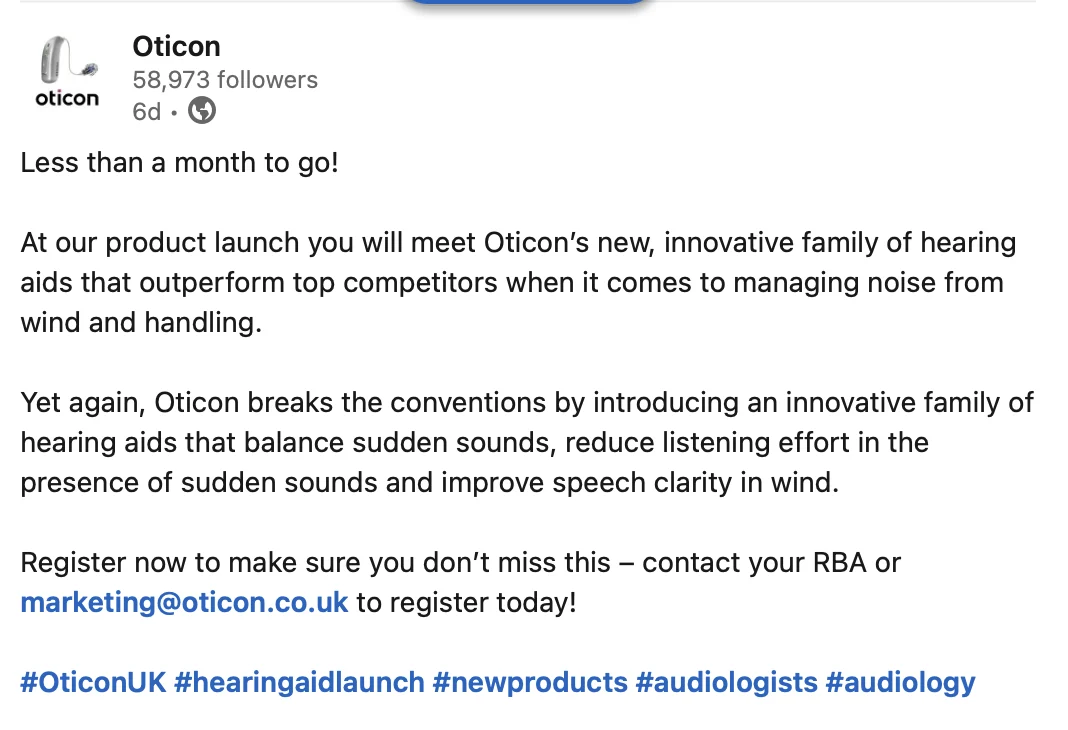
I hope their offering “more” then just reducing listening effort for sudden sounds and speech clarity in wind! They’d need something else for when ones are used for majority of the time, those don’t seem that important.
You’re ignoring this member’s posts.
You’re ignoring this member’s posts.
You’re ignoring this member’s posts.
You’re ignoring this member’s posts.
You’re ignoring this member’s posts.
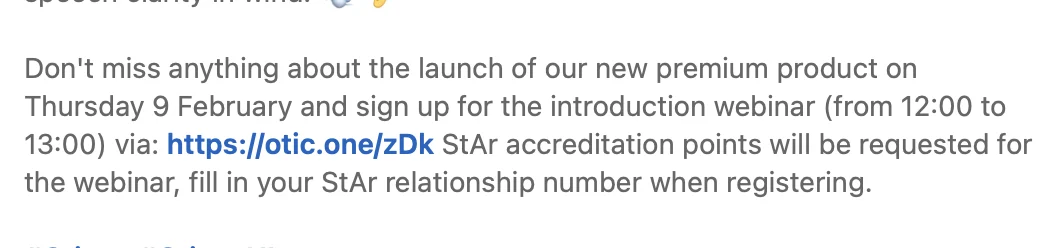
I’m glad they mentioned it’s a “premium product.” That statement reminded me not to feel bad about ordering my More2 set right before this product intro; I wasn’t planning to pay extra for the “premium” level anyway! The only way the new product intro might have impacted my purchase is if it moved the More 1 down a notch to the “advanced” level in the eyes of the insurance company.
BTW, I think I was the first one to mention “S’more”! 
You’re ignoring this member’s posts.
You’re ignoring this member’s posts.

You’re ignoring this member’s posts.
Related discussions
Hearing Aids9 replies
Hearing Aids50 replies
Hearing Aid Batteries4 replies
Fitting Software Requests514 replies
Fitting Software Requests1.1k replies