Not necessarily so. My replaced the battery in one of my Oticon OPN S1 while I waited for something like USD $150.
You’re ignoring this member’s posts.
This topic is closed.
35 replies2.8k viewsLast reply
Not necessarily so. My replaced the battery in one of my Oticon OPN S1 while I waited for something like USD $150.
You’re ignoring this member’s posts.

I agree. but that is no longer possible with the Intent version. I heard that they also soldered it to the chip and made it difficult to change the battery.
For some reason, everyone will switch to such a practice.
Probably because the battery is better protected from moisture, so that more technology can be inserted, it is not interested in as much space as the battery drawer.
You’re ignoring this member’s posts.

As discussed in another thread, such practice (soldering rechargeable batteries) may soon be illegal (in the EU at least, but then probably worldwide):
“Starting in 2027, consumers will be able to remove and replace the portable batteries in their electronic products at any time of the life cycle.”
New law on more sustainable, circular and safe batteries enters into force
The new law will ensure that batteries are collected, reused and recycled in Europe and will support the shift to a circular economy.
Not yet clear if that law will also apply to medical devices, though.
You’re ignoring this member’s posts.
This is true for all / hearing aids regardless of battery style. In many cases they just grab a new unit, which is why for some repairs you’ll be notified that your serial number has changed. The only styles that can have individual parts replaced are custom in-the-ear styles, but even those are becoming quite modular.
Ultimately, like any business, keeping multiple generations worth of stock on hand is very expensive for hearing aid manufacturers, and so they phase out stock as soon as possible.
You’re ignoring this member’s posts.
For some reason, everyone will switch to such a practice.
Same reason as it happened with cellphones, making things impossible to repair and programmed obsolescence.
You’re ignoring this member’s posts.
Do you want a smartphone that will have a battery that can be changed every day or when the battery fails so that you can separate it at the service and replace it with a new one?
I wouldn’t want a smartphone like before. there were more problems.
Otherwise, let me brag. I have a Xiaomi MI9Tpro, it’s been more than 4 years, and last year the battery broke,. I bought another battery on ebay, and I gave the repairman money (20 euros) to replace it with a new one.
I didn’t want to replace it myself because I don’t have the equipment to melt the glue and new glue for the lid.
That’s why I’m a little skeptical about going back to the old way, to big covers and batteries.
I’m not sure how it will work when it comes to a foldable smartphone?
You’re ignoring this member’s posts.
Going back to not having battery range anxiety because I have a swap battery in my wallet that I can change in less than 30 s? Not having to carry around a bulky powerbank and cable? Buying a new battery for 10-15€, knowing it is the right one at first sight, and changing it in less than 30 s with no tools?
Sure I want that!
I never had a problem, and I don’t care if the phone has to be 2 mm thicker.
The only problems I see is for the bottom line of manufacturers not being able to force you to change your phone every 3-4 years.
Like my Nokia N900 which I bought in 2009, changed the battery 3 times, and did not retire, still working, until 2019 because my wife insisted in giving me a new phone (and ok, it was becoming painful to browse the web with it). Or my wife’s Samsung Galaxy V, from 2014 until 2021, two battery changes.
I want that, and I fully support the EU legislation on the matter.
You’re ignoring this member’s posts.
Not True. I just had both of my 3 year old audibel 2400 Edge (Starkey brand) aids internal batteries replaced at Hearsource. They open the housing and replace the internal batteries. Cost $249 each though. Works great and I hope they last another 3 years.
You’re ignoring this member’s posts.

I just got the rechargeable batteries replaced in my Phonaks under warranty. They came back with the programming intact and still the original serial numbers.
Do I really believe that they just removed and replaced the batteries!!!
You’re ignoring this member’s posts.
does the same apply to Genesis? I heard that he will be more difficult to replace.
You’re ignoring this member’s posts.
I think any rechargeable battery can be replaced, but the more difficult it is, the more they will charge for the replacement. I will not buy another aid with replaceable batteries until they last more than 2 or 3 years. There is no reason the aid manufacturer can’t build the rechargeable battery into an assessable door so it can be easily changed out.
You’re ignoring this member’s posts.
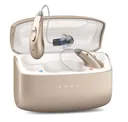
There is no reason the aid manufacturer can’t build the rechargeable battery into an assessable door so it can be easily changed out.
Difficult to make that door IP68 though: Oticon (particularly) struggled to stop wicking of moisture/sweat into the battery compartment in the last generation. So, we lost that accessibility in this generation.
Serious question: can you access/swap AirPod batteries ?
You’re ignoring this member’s posts.
 Worthington, Ohio
It would be very difficult to make rechargeable hearing aid batteries easy to replace. We are no speaking cellphone, laptop or tablet size devices. No one is going to be replacing their own pacemaker battery. I am sure that medical devices are not included…
You’re ignoring this member’s posts.
Replacing the rechargable battery in the prior gen Demant models (More, Real, etc) is easy - just as easy as replacing the receiver.
You’re ignoring this member’s posts.
You’re ignoring this member’s posts.
You’re ignoring this member’s posts.
Hearing Aids81 replies
Hearing Aids417 replies
Question and Answer16 replies
Hearing Aids20 replies
Hearing Aids14 replies
 Croatia
 Geneva, Switzerland

 Ontario
 Wales, UK