Next morning, upon cranking said car, the stereo was alarmingly loud. I’m getting a similar sensation with my new hearing aids.
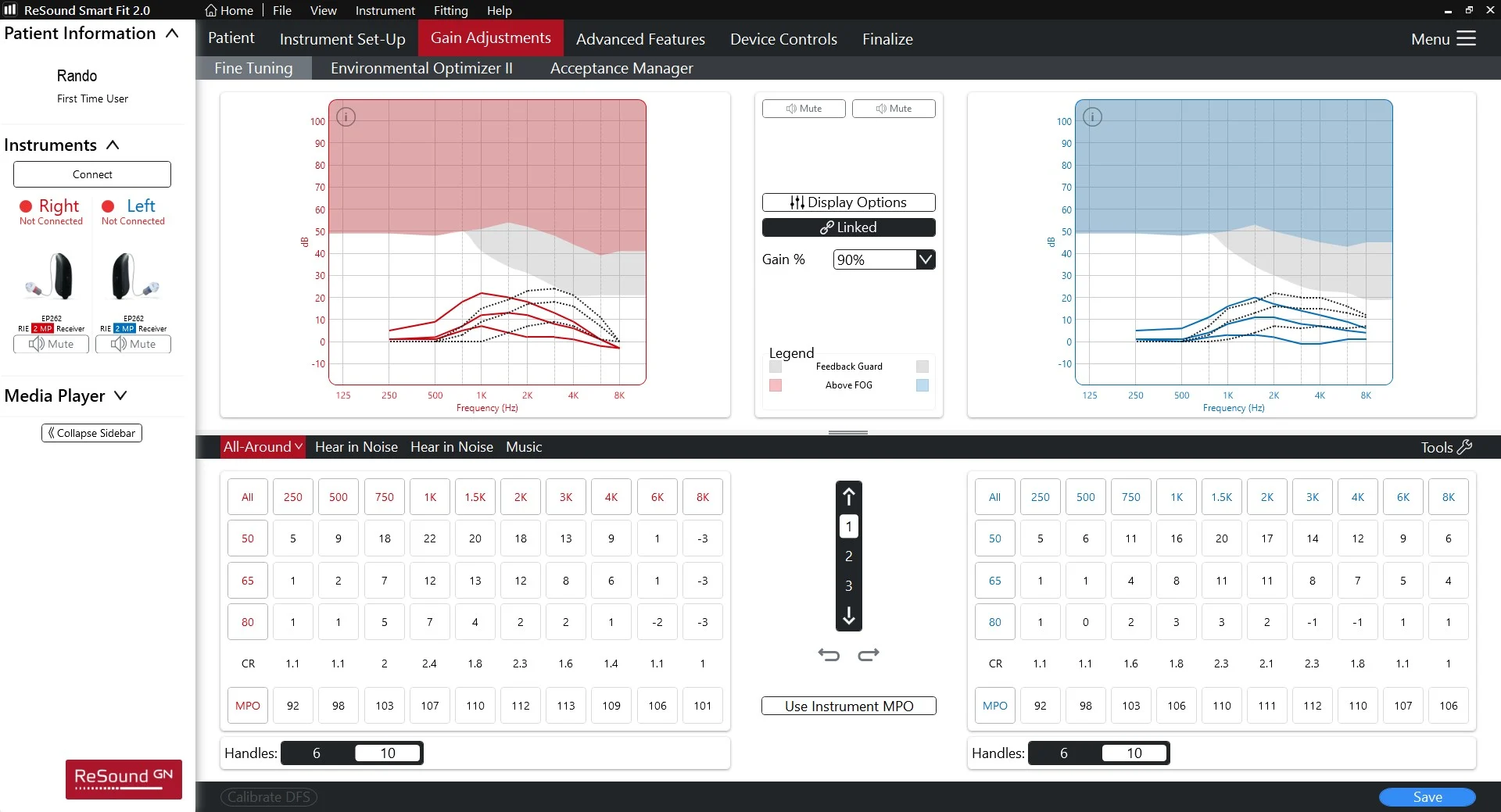
Does the hearing aid amplify that 2000hz sound above 50db by reproducing a sound at 110db or whatever the uncomfortable threshold is set at? How is all that calculated, and is my hearing aid going to make me have more hearing loss?
Now I know that the sounds being loud is a part of the compression ratio, and excess ratio can become problematic. I can get used to that one, but the fan noises may need addressing. Once the noise reduction kicks in, fans cause 2 problems. One is a static like hiss, and the other is that at a slight distance from the fan, the noise reduction cycles on and off, resulting in a noticable pattern which could be annoying.
Generally, that phenomenon many typically-hearing people are very familiar with of getting in the car in the morning and thinking, “Geeze, that radio is loud!” is a fatigue issue. As we are more fatigued throughout the day, listening becomes harder and turning up the volume often makes listening easier. Listening fatigue is compounded when you have hearing loss.
I think MDB already explained squishing the sound into your dynamic range well, and in regards to exactly what the presctiptive targets are doing it started out historically with the 1/3 gain rule and progressed over time to a fair bit of math to prescribe gain at each frequency based on your level and type of loss as well as the degree to which that frequency is important for speech and contibutes to loudness perception. So you can think of it as replacing roughly a 1/3rd of what you are missing but actually a bit more complex than that, but essentially trying to maximize audibility while managing a more limited dynamic range. It absolutely used to be the case that linear, analogue hearing aids could damaging your hearing and still sometimes causing damage can be something to worry about in with users who have profound loss and love powerful gain, despite wide dynamic range compression. However, we have good evidence that hearing aids appropriately fit to pediatric targets will not damage hearing over time and adult targets are significantly softer than pediatric targets. So unless you prefer your hearing aids to be set above pediatric targets, you don’t need to worry about increasing hearing loss from hearing aids.
But my regular refrain is: Don’t forget about the ear and the brain, it’s not just about adjusting the hearing aid. When you live with a hearing loss your brain gets used to a certain amount of auditory deprivation and when you replace the sound the brain re-adjusts over time, a little bit but not really like rehabing a muscle and being able to lift heavier weights over time. So it’s not always a great idea to think too hard about re-adjusting the hearing aid immediately (particularly downwards, reducing audibility), because it may well be that you don’t need to adjust the hearing aid at all, you just need to wait on the brain to adjust. However, we don’t have strong data on what the extent of that is and how long this adjustment takes. I would say anecdotally that there is, on average, significant adjustment within the first 4-6 weeks, and then to a lesser extent continued adjustment within the first few years, faster or slower in certain individuals. But adjustment is also different depending on the type of sound. In general, our perception of what is a “moderate” or “loud” volume is a lot more flexible than what our perception of “soft” is, which is heavily influenced by damage to the ear. That is, one of the jobs of the outter hair cells in the cochlea is the perception of soft sounds, and when those cells are dead we don’t really get soft perception back. So sounds that are moderate, like a lot of speech sounds, often sound too loud when you first get hearing aids and over time start to sound natural again, but sounds that were always truly soft, like the sound of your fingers rubbing against one another, are either audible or not through hearing aids and will never quite be perceived as soft as you remember. Those you either get used to (less like you get used to lifting heavy weights and more like you get used to a painting hanging on your wall) or you adjust them out. But by adjusting them out you may also lose critical soft sounds in the same frequency area, like soft consonants.
So if you are new, just focus on consistent wear for the next 4 weeks and then see what they sound like to you then, because it may be significantly different than they sound when you start out.




 Hot Springs Village, Arkansas