Venting
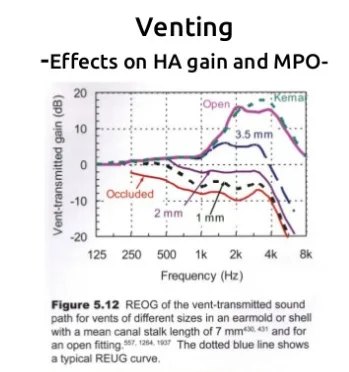
There are three major types of vents found in a hearing aid shell or earmold: parallel, diagonal, and trench. All three vents are designed to accomplish the same thing, which is to provide some reduction of amplified low frequency sound—that is, allow low frequency sounds to leak out of the ear. Venting also allows for some pressure relief, which results from bone-conducted sound getting trapped in the closed-off ear canal when a tight-fitting hearing aid is inserted into the ear canal (the sound is generated from the condyle area of the mandible, which is located close to the ear canal). This problem is especially apparent when patients talk or chew.
The most commonly used vent is the parallel type; however, there are instances when a professional may have to substitute a different style vent. It is easy to forget that the vent type can have a significant effect on the reduction in low frequency energy, as diagonal vents reduce low frequency energy more than parallel vents with the same internal diameter. This is illustrated in Figure 2, which compares the same hearing aid with identical acoustical settings. The only change is the style of vent.
Source: Earmolds: Practical Considerations to Improve Performance in Hearing Aids15







 Texas Hill Country