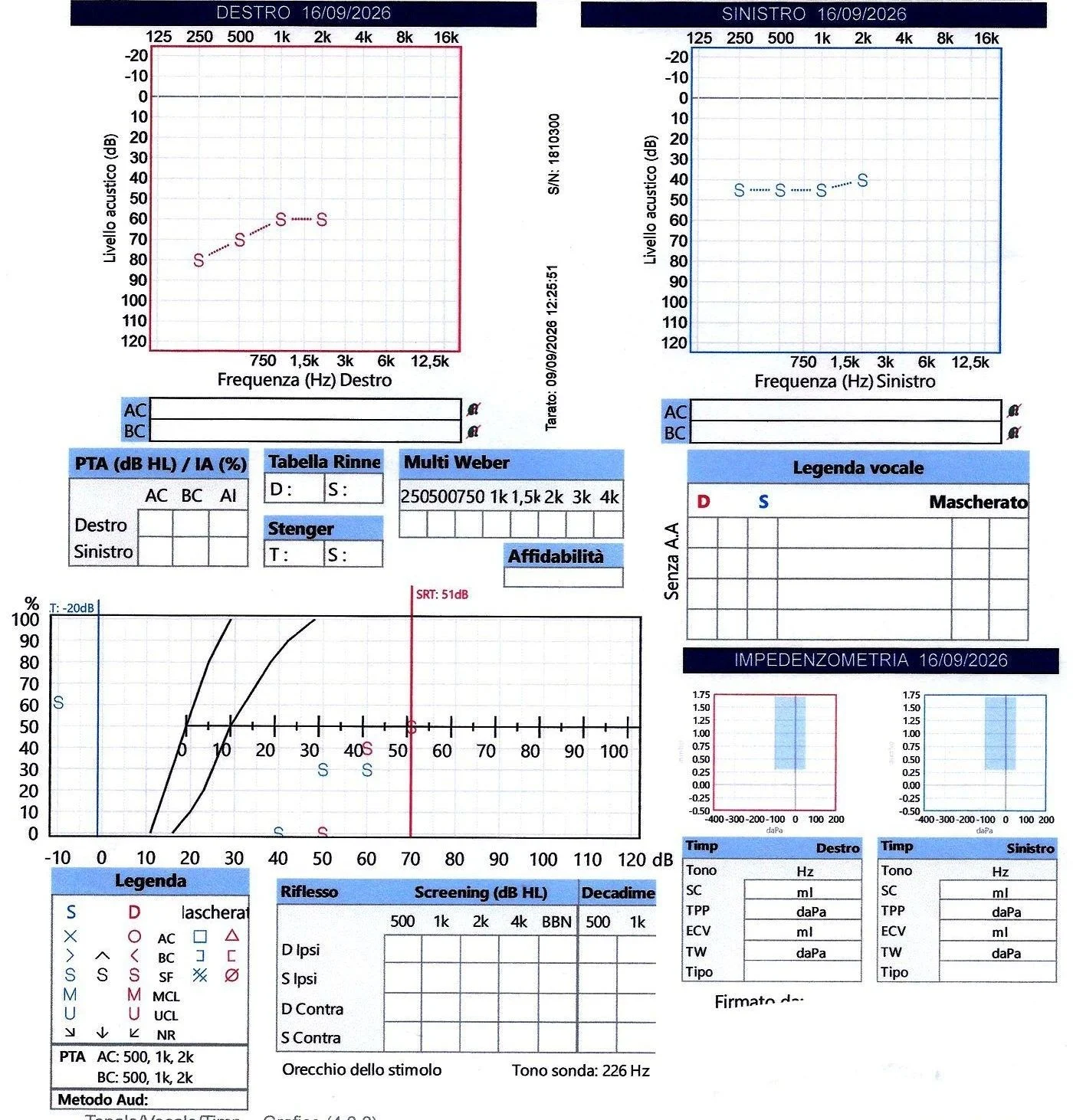
I brought my elderly relative to a public hospital for a "hearing aid benefit evaluation" comparing two pairs of hearing aids. Sound-field pure-tone and speech audiometry tests were performed while wearing the devices. From the beginning, I clearly stated to the hospital audiologist that I wanted to know the word recognition score () percentage at different intensity levels with both sets of hearing aids, in order to determine which pair provided better speech discrimination and at which sound levels.
The audiologist performed 3 sound-field tests; below are the results:
1) Unaided:
Sound-field Pure-Tone Audiometry: Threshold at 75 (Left Ear), 90 dB HL (Right Ear).
Sound-field Speech Audiometry: Speech discrimination capacity of 50% at 70 dB bilaterally.
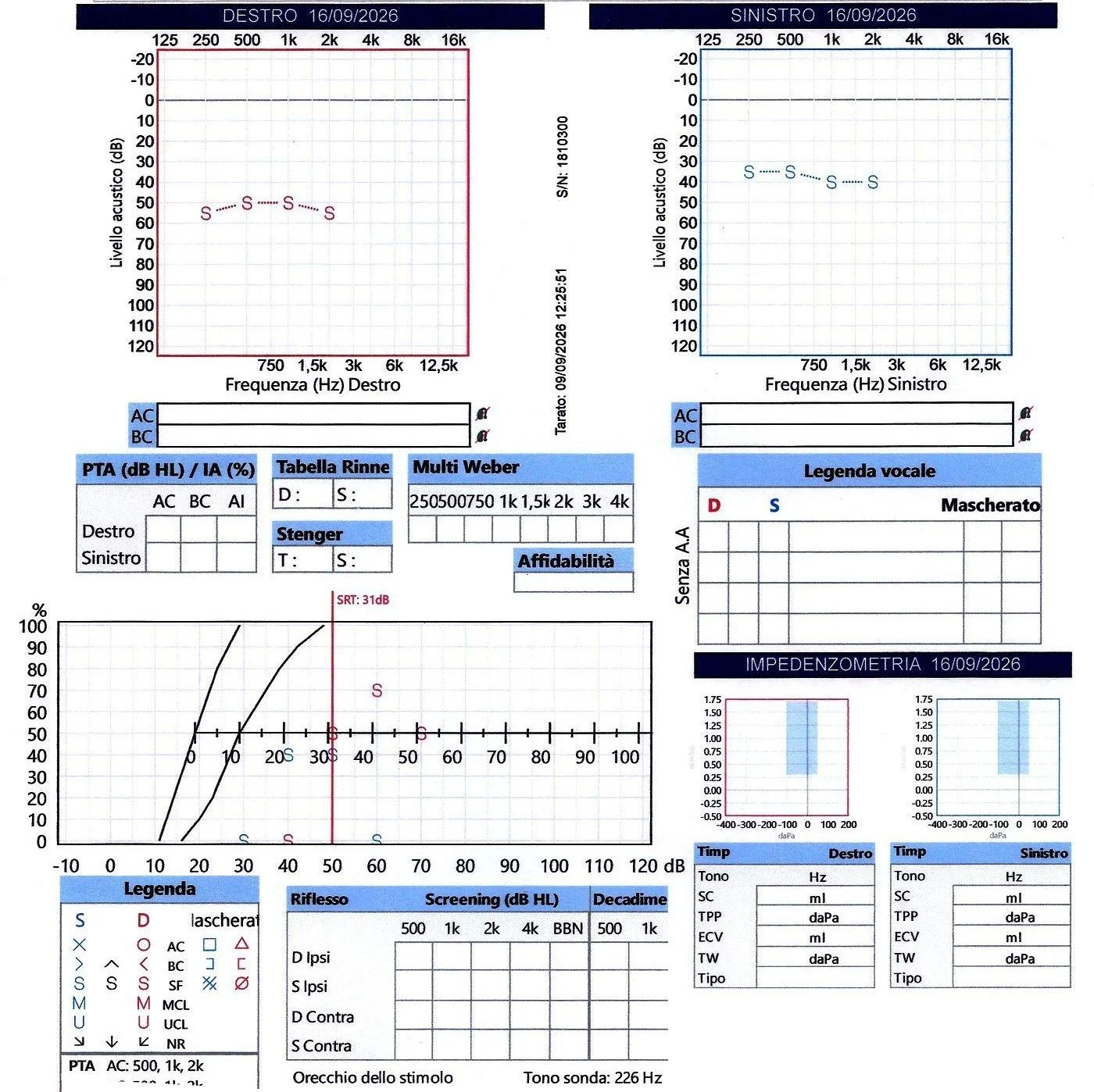
2) With Unitron Moxi Blu B9-R with UP receivers in custom earmolds:
Sound-field Pure-Tone Audiometry: Threshold at 45 dB HL (Left Ear), 60 dB HL (Right Ear).
Sound-field Speech Audiometry: Speech discrimination capacity of 50% at 70 dB HL bilaterally.
SEE 2nd POST (I can't post more than 1 image per post).
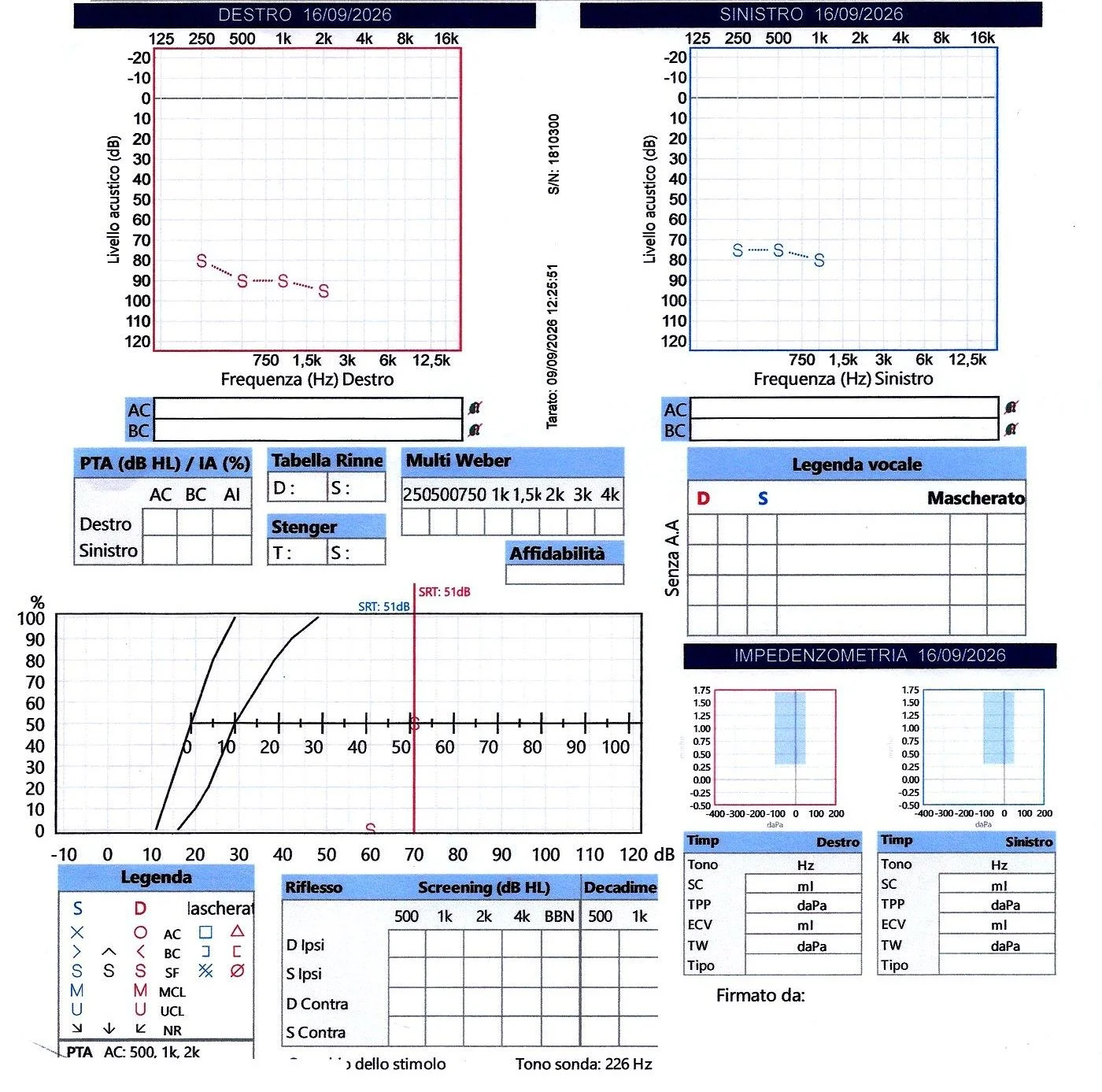
3) With Phonak Naida Lumity UP L50 with custom silicone "koki" (full-concha) earmolds:
Sound-field Pure-Tone Audiometry: Threshold at 40 dB HL (Left Ear), 50 dB HL (Right Ear).
Sound-field Speech Audiometry: Speech discrimination capacity of 40% at 40 dB HL (Left Ear), 70% at 60 dB HL (Right Ear).
SEE 3rd POST (I can't post more than 1 image per post).
My questions:
a) The tests with the were conducted on one ear at a time, I mean not a single test was performed with the patient wearing both left and right hearing aids simultaneously. When I asked for clarification, the audiologist stated: "Analyzing one ear at a time yields a more precise result." However it's a fact that HAs are worn simultaneously in real life! What is the clinical utility of two separate monaural free-field scores? Furthermore, afaik modern HAs utilize wireless ear-to-ear (E2E) communication to constantly exchange acoustic data between the left and right devices, eg. if a signal originates from the right side, the right HA captures and amplifies it for the right ear, while simultaneously transmitting data to the left HA so that it can dynamically attenuate or shape the output on the left side.
b) Last March we had headphone speech and pure-tone audiometry performed at a different hospital and these were the results. That speech graph was easy to read, but I am struggling to interpret the speech audiometry graphs printed on these three new reports. Could someone explain how to properly read these speech diagrams?
c) How can we compare speech discrimination scores when the devices were tested at different presentation levels?
I mean:
Naída BTE: L = 40% @ 40 dB, R = 70% @ 60 dB
Unitron RIC: 50% @ 70 dB bilaterally
Is it guaranteed that testing the RICs at 60 dB would yield worse discrimination than at 70 dB or does speech recognition not strictly follow a linear pattern with sound intensity? I can't understand what methodology the audiologist followed here!
d) Comparing the unaided speech test (50% @ 70 dB) with the Unitron Moxi RIC test (50% @ 70 dB), there is zero difference at 70 dB, so this means wearing the Moxi RICs provides no measurable improvement at this level. Our hearing care professional who programmed them claims they were set to maximum volume (105 dB fitting range). How is this possible acoustically or clinically?
Based on these test results, can any audiologist or hearing care professional advise if (and to what extent) switching from RIC to BTE Ultra Power is beneficial in terms of speech understanding?
You’re ignoring this member’s posts.