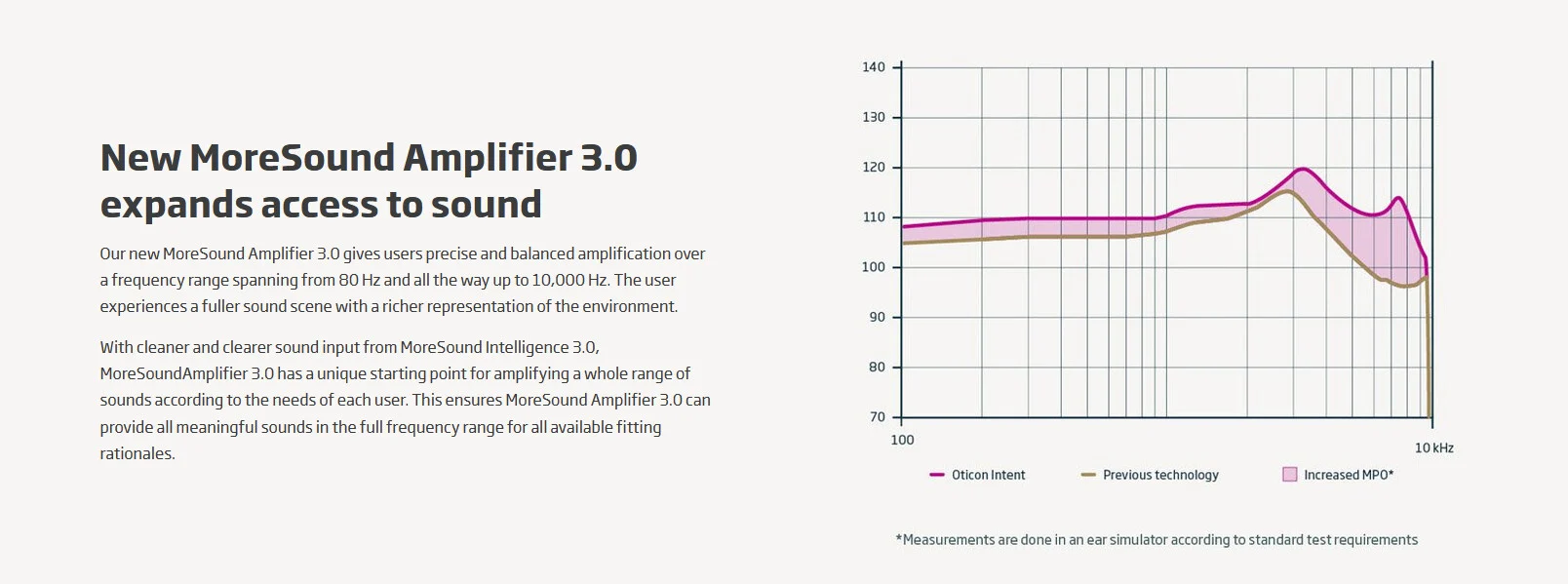
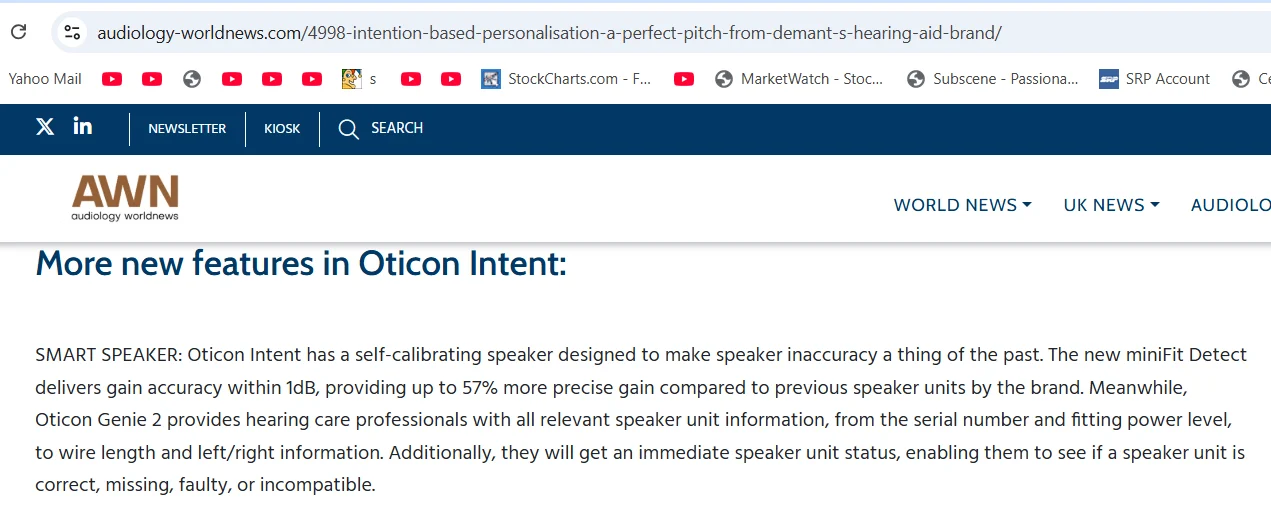
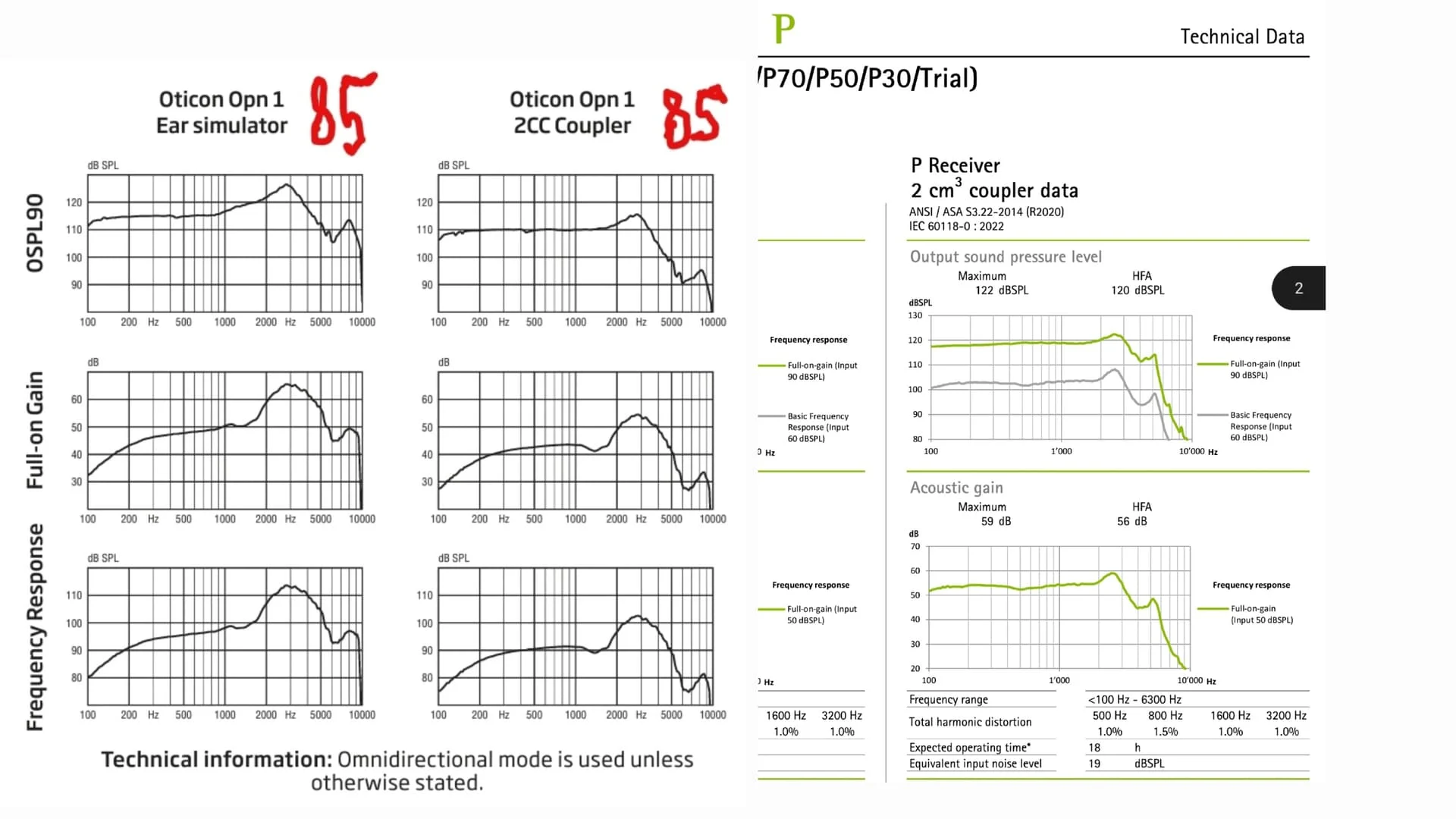
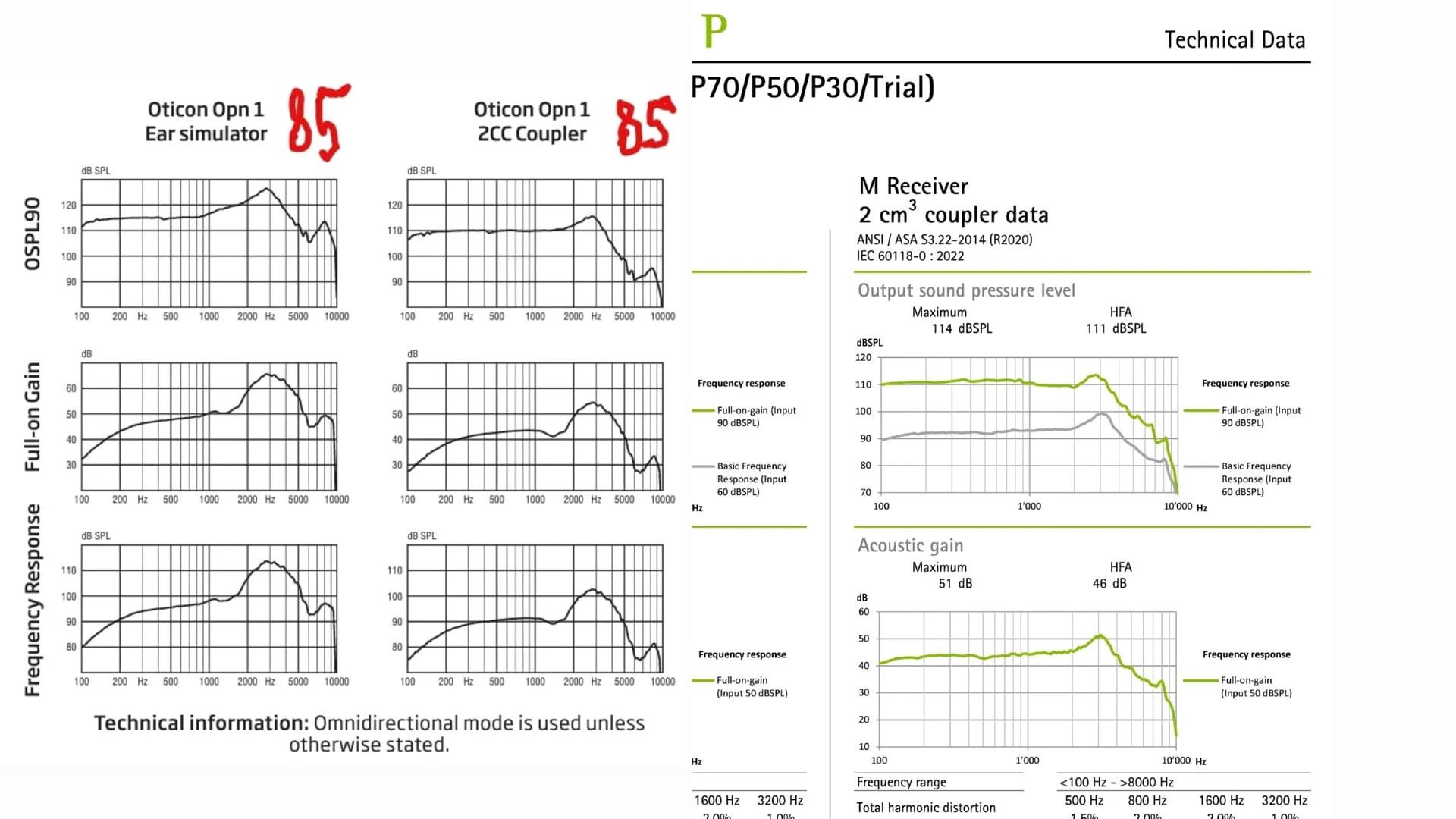
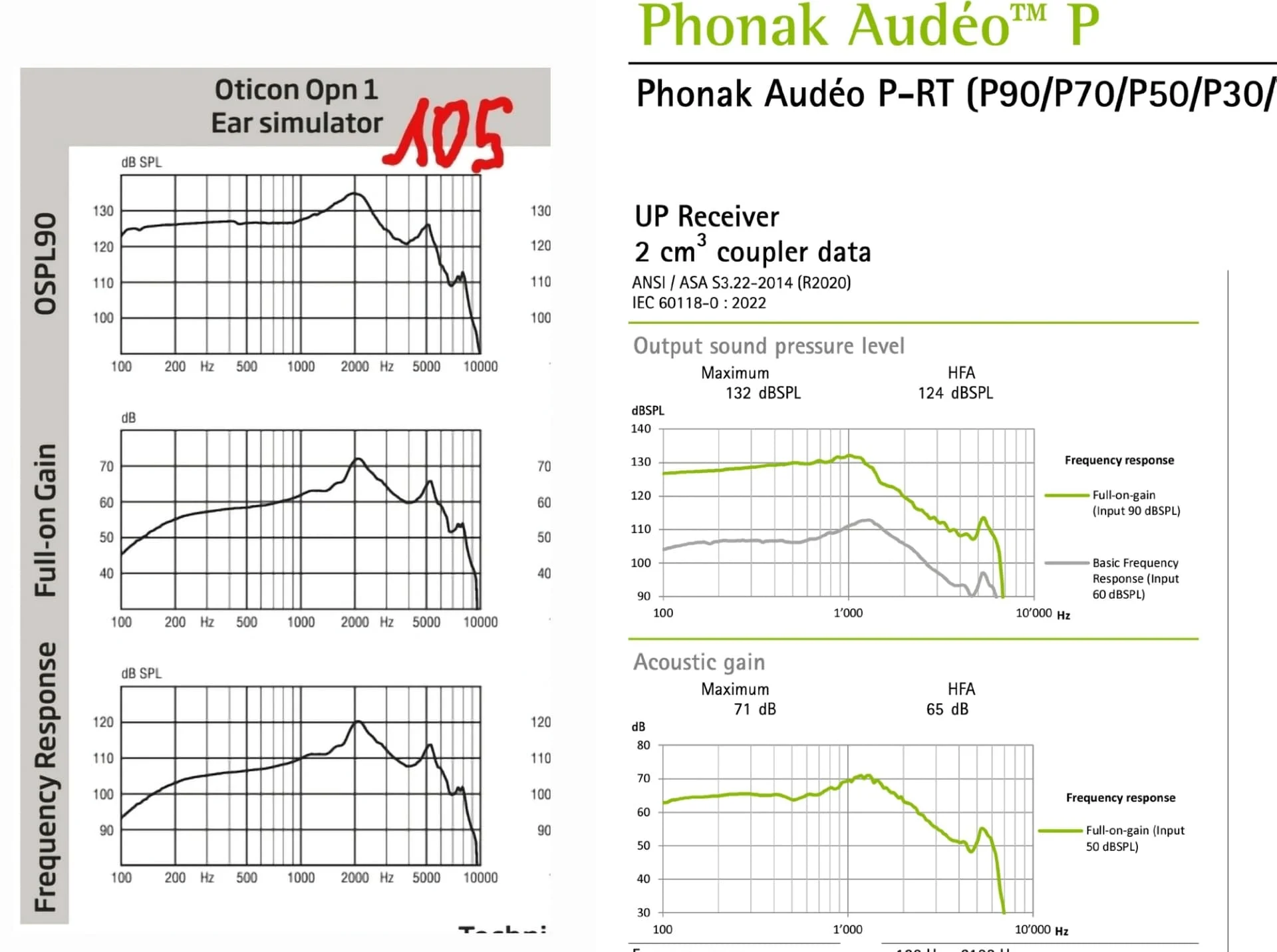
Great find here, @flashb1024 ! It’s highly likely that this is one of the benefits of abandoning the conventional (generic) receiver and adapting a newly proprietary self-calibrating receiver. There might have been new improvements in this new receiver to become more sensitive at the high end of the frequency spectrum to deliver more highs than before. But even if the new physical receiver is not that much better than the old receiver type, just the electronics alone added to it to allow self calibration now, to dynamically inform and let the electronics in the hearing aids know exactly how to drive it to achieve not only more accurate results, but maybe also more powerful results on the high frequency ends, might be the trick to get the amplification where they want to be.
It might be better electronics in the MoreSound Amplifier 3.0, but I think if they can use better electronics now on the Intent, then why couldn’t they use better electronics before as well? That’s why I think the trick is probably more about this new idea of adding self calibration circuitry into the receiver that makes it better by being able to be more amplified on the high end.
However, this begs the question of “since when” have Oticon hearing aids been touted to have better high frequency performance than the other brands’? Only since the Intent, or since even before the Intent? If the later, then it’s not in the physical receiver because all brands use the same generic type receiver more or less. So then what is it about the Oticon sound that appears to give the perception of better high frequency sounds? It’s most likely in the electronics, and the most pertinent functionality that might give better amplification is in the MoreSound Amplifier block. Oticon has gone through 3 iterations of MSI so far. The More has MSI 1, the Real has MSI 2, and the Intent has MSI 3. The significance going from the MSI 1 to 2 is really just the addition of the Sudden Sound Stabilizer, which is included as part of the MSI 2 in the Real. The MSI 3 seems to have claimed to have a higher dynamic range than MSI 2 in the Real. That might be attributed to the improved self-calibrating receiver design that allows more accurate amplification that can also now acquire a little bit more gain along with it as well.
So if people are already starting to notice better high frequency response since the More, which I don’t really know whether that’s true or not, but if it is, then let’s try to see what it is about the MSI 1 that might do this. Right off the bat, Oticon claims a 6-fold increase in sound resolution going from the Velox S platform of the OPN S to the Polaris platform of the More. The hallmarks of the MSI 1 as outlined by Oticon is in its “rapid” and “high resolution” amplification system. The strategy used is to have the MSA 1 process sounds through 2 different paths, a 4-channel path and a 24-channel path. They look at the incoming signal and if it’s a fast modulating signal in both amplitude and frequency (like voices), then the signal is prioritized to be processed in the 4-channel path. If it’s a slow modulating signal in both amplitude and frequency (like noise), then the signal is prioritized to be processed in the 24-channel path. This setup allows them to be able to do a better job of amplifying the sound regardless of whether it’s speech or noise because they route the sound to the most appropriate path to be processed effectively. I guess less channels allows them to apply more processing power to each channel, which is more apt to handle more dynamically modulating sounds (like speech) with more power per channel to do its job. On the other hand, more stationary sounds (like noise) wouldn’t require as much processing power, so they can break up the sound into smaller chunks of 24 channels and still do an effective job of processing them with less power, but with more channels to have more fine tuning control of them as needed.
Anyway, how does this strategy give you better amplification in the high frequencies? I don’t really know, and it’s not obvious to me. So maybe the perception of better high frequency amplification really recent came around with the introduction of the Intent, where, again, it’s most likely thanks to its new self-calibrating receiver design allowing the amplification to be more accurate, which in turn might allow Oticon to be able to be bolder in doing amplification and thus extending the dynamic range of the amplification, especially on the high frequency ends as shown in the chart from @flashb1024 's post above.



 Poland
 SoCal