
You’re ignoring this member’s posts.
[Phonak] How to avoid streaming music volume to adapt to external environment sounds
This topic is closed.
29 replies2k viewsLast reply

TryphonAuthor
Hello, missed you asked also to me.
Yes : Whistleblock has an effect also, I disabled it too.
(In fact I ended by disabling everything and created a special program when I eat to avoid whistling when I eat (jaw movement causes that) It is a slight annoyance, but audio is far more natural / dynamic imho)
You’re ignoring this member’s posts.
 Poland
(In fact I ended by disabling everything and created a special program when I eat to avoid whistling when I eat (jaw movement causes that) It is a slight annoyance, but audio is far more natural / dynamic imho)
If you’re interested in improving your experience with feedback, ask your to make a new earmold from:
- An impression from high-viscosity silicone,
and
- Keeping your jaw open during the whole process of filling your ear canal and curetting. (Reportedly, one needs to have a bite block to create a 2.5 cm jaw opening between the incisors. Someone correct me if I am wrong.)
(and, depend on preferences):
- silicone-made earmold, not acrylic.
I have read a lot about earmolds and venting recently, and I realized I have HUGE soft tissue dynamics between the first and second bends of the ear canal. I didn’t know about it because I was underfitted, and the Paradise 90-RT has good active , so I didn’t hear feedback but unknowingly might have experienced poorer sound quality when WhistleBlock was active.
So, I am also going to try to order a new earmold with a longer canal stalk and the receiver closer to the eardrum.
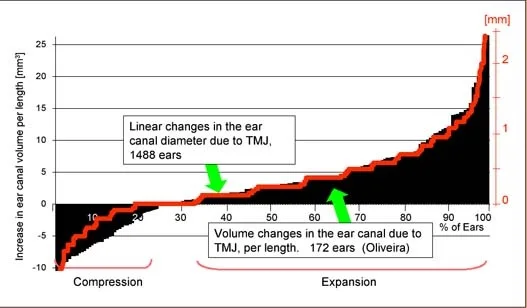
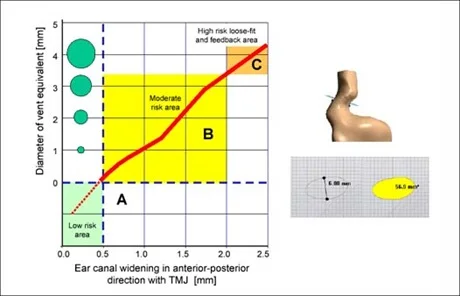
Based on the graph below I have dynamics of upper 10% (1 to 2mm difference of width between closed and open jaw):
Source:
Ear canal dynamics: Facts versus perception : The Hearing Journal3
An abstract is unavailable.
You’re ignoring this member’s posts.
Whistleblock has an effect also, I disabled it too.
Tried to disable WhistleBlock to zero in Target software, but I MUST have at least 1/20.
You’re ignoring this member’s posts.
 NL
Thank you very much for the interesting article.
I’m a bit struggling with the reproducibility of their measurements.
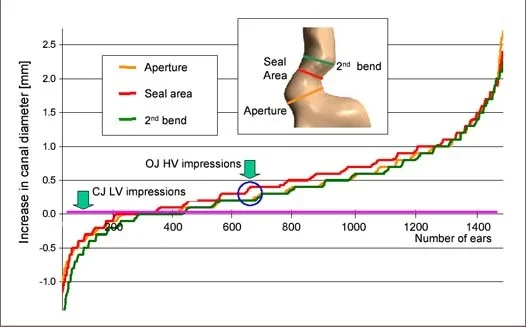
As they state “The diameter of the canal area was measured with a caliper in the anterior-posterior plane at three areas on each impression. The areas were: the aperture, mid-section, and second bend”. I do not see how you are able to define this as such. There are anatomically only the coronal, the sagital and the transverse plane.
You can measure but not as such shown in the pictures on the places they call “ canal aperture, the acoustic seal area, and at the second (medial) bend”. So what they suggest (fig 2) is more that they measured the max diameters at those places, but not in an a-p plane as this would rotate in the space?…
But who cares, it’s probably only me who tries to understand what they mean.
Conclusion of importance is that there will be a relationship in volume and length and form of the hearing canal and the acoustical implications in relation to the behaviour of sound.
Hope to hear about your personal findings in doing your future test with longer molds.
You’re ignoring this member’s posts.
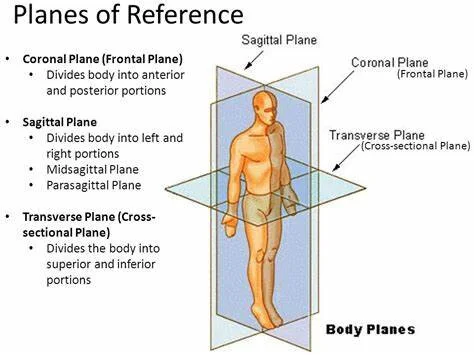
As a doctor and knowing that you are a radiologist, I fully understand that you want to interpret the term “anterior-posterior” literally as the same anterior-posterior as in the anatomical saggital plane (as seen in the picture above). You have done this many, many times in the past in your work.
However, I think that measuring with this strict definition of the plane is unnecessary and makes it difficult to compare measurements.
.
I think that more practical approach is:
- Place a centre axis in each of the 3 parts of the ear canal (sorry, very rough, 3 black lines = 3 axes):
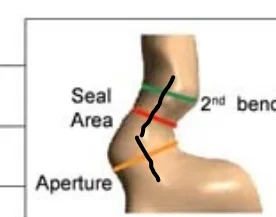
- Measure the soft tissue dynamics in each of the 3 sections, perpendicular to the axes, but where the changes are most pronounced, not necessarily in the ideal anatomical/radiological plane from front to back, with the front at 12 o’clock and the back at 6 o’clock relative to the human body.
However, I appreciate your clarification.
You’re ignoring this member’s posts.
TryphonAuthor
Thanks to you @Bimodal_user for your reply.
By coincidence I am going to do an earmold today, I will to as you say with jaw during the process to improve the quality.
(I think I have a slight thing compared to you anyway, but interesting to know)
You’re ignoring this member’s posts.
perpendicular to the axises
Thanks @Bimodal_user. The way you describe it here that’s the only right way in my eye’s to do it indeed, but they tell something different in their paper. So I was wondering if I was missing something maybe because of the approach or my age… And I realize science doesn’t stop.
(After retirement in my country at least you’re not allowed to call your former profession so that’s how I feel. What they couldn’t take is my MD PhD, LOL)
You’re ignoring this member’s posts.
but they tell something different in their paper. So I was wondering if I was missing something maybe because of the approach or my age…
I think they were simply not very precise in their description and were unaware of strict medical planes or forgot to think about them.
(After retirement in my country at least you’re not allowed to call your former profession so that’s how I feel. What they couldn’t take is my MD PhD, LOL)
This is quite shocking. In my country, the physician title is a lifetime designation, but it is somewhat different from a medical license (literally, the “right to practice”). Retired doctors can practice unless they have had at least a five-year break from it, then they must pass the exam.
You’re ignoring this member’s posts.
By coincidence I am going to do an earmold today, I will to as you say with jaw during the process to improve the quality.
I am glad that my advice could be useful right away
(I think I have a slight thing compared to you anyway, but interesting to know)
Surely, you’re in the fortunate 50% with <1mm dynamics.
Keep us informed about effects.
You’re ignoring this member’s posts.
Related discussions
Hearing Aids10 replies
Uncategorized9 replies
Hearing Aids168 replies
Hearing Aids70 replies
Hearing Aids4 replies