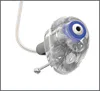
Nowadays (thanks to the excellent feedback managers available in newer hearing aid models) earmolds and/or power domes are often only necessary for patients with moderate or worse low frequency losses. Most patients with only high frequency losses can be fit with air-domes or other open-fit styles that do not seal the ear canal.
This means that if you’re being fit with power domes or earmolds the reason for doing so is most likely to allow the hearing aid to provide enough low frequency amplification to meet your needs. Most patients interpret this low frequency amplification as “volume” (whereas high frequency amplification would feel more like “crispness”). If you feel the power domes are providing a similar level of “volume” to the micromolds, you’re not having a problem with them working out of the ear, and they’re not giving you any feedback problems then you should be okay with them.
When either is required, I often err on the side of fitting with molds VS domes with my older patients due to a number of other considerations. When I’m working with someone younger or someone with good dexterity who doesn’t mind a little added complexity I may try using power domes first and see if the fit is sufficient. With earmolds you can be fairly confident they’ll stay in place and offer an effective solution. With power domes they work great when they stay in the ear and seal off the canal just right, but can create a lot of problems when this isn’t the case.