
 Auckland, New Zealand
You’re ignoring this member’s posts.
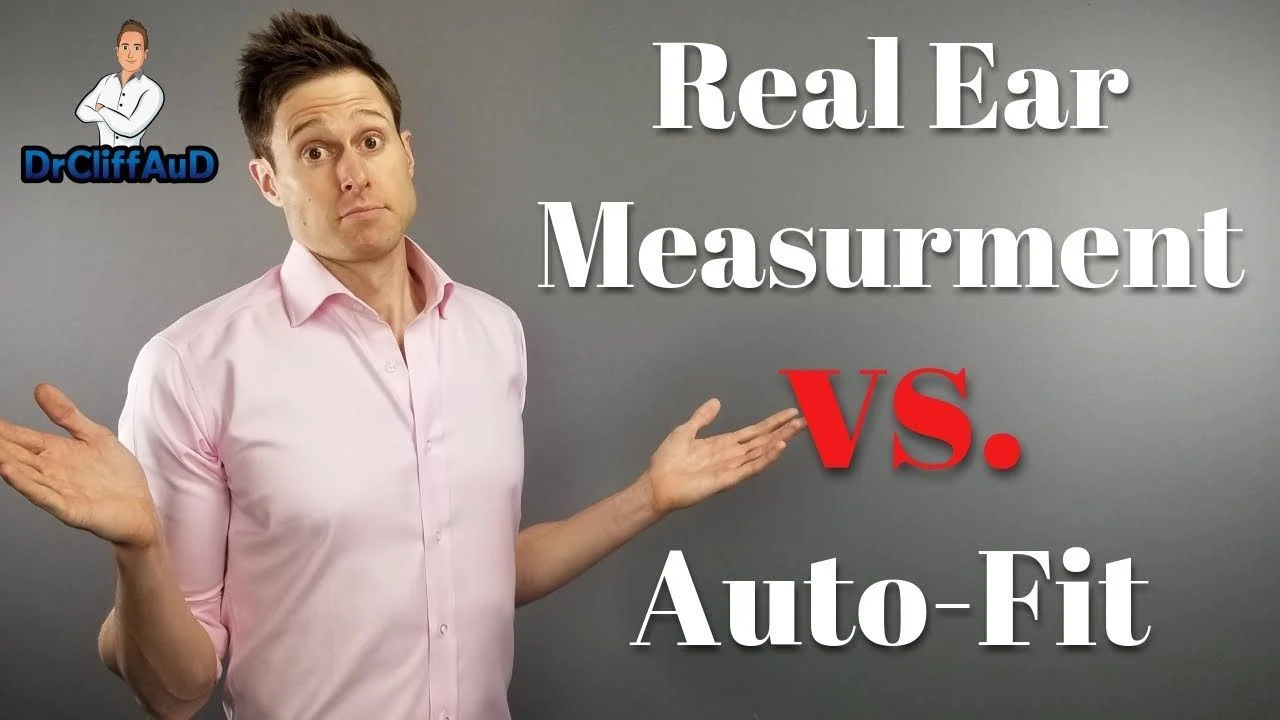
Real Ear Measurement vs. Auto Hearing Aid Programming
This topic is closed.
17 replies4.9k viewsLast reply

You’re ignoring this member’s posts.
This should be required listening for all members. I had my first real ear fitting at Costco recently. I feel I’ve been cheated prior to this last fitting!!! I would never allow a fitter to fit me without real ear from now on. Imagine I’ve been spending $200 for my fittings and no one did this. What a ripoff.
You’re ignoring this member’s posts.

Seems to be saying Nal NL2 is the only effective prescription. All of the proprietary prescriptions reduce the gain in the higher frequencies to increase comfort to satisfy customers at the cost of effectiveness.? Maybe I misunderstood.
You’re ignoring this member’s posts.

Is there more than one way to perform real ear measurements? My previous audiologist programmed my hearing Oticon OPNS1-R aids using the fitting rationale. For , he used a computer-like screen (Verifit?) with a recorded message about “carrots,” and I could clearly see the graph where my hearing aids needed to be adjusted to the meet the target (i.e., overlapping lines on the graph).
Another audiologist programmed the aids with the Oticon proprietary VAC+ fitting rationale. He uses a different REM machine that looks like a large speaker. The recorded message is nonsensical and sounds like a foreign language. I could see the graph on his computer screen, and I was significantly underfit in the higher frequencies (5-8K) with the VAC+ rationale. The audiologist basically adjusted the graph to overlap in the 2-4K speech zone, and then there was a big drop off in the higher frequencies where the lines did not overlap. Why such a difference from the NAL-NL2 REM graph?
Should the hearing aids be set to target perfectly at the first visit, or do the lines start to match up over time as the patient acclimates to the hearing aids and adjustments are made? Are there instances when the targets will not be met immediately, especially in the higher frequencies? Thanks.
You’re ignoring this member’s posts.


The second method you describe matches the process used at the Costco I go to. The equipment they use is called Aurical Freefit16.
The VAC+ fitting formula is a proprietary one from Oticon. I am not familiar with it, but it probably does not match the formula. The difference you noted is probably in the formula differences.
Not sure they can ever fit using perfectly, but they should get it as close as possible at the first visit. You are not part of the measurement process in any way except that you are providing the ear canal. They are just measuring the sound level in your ear canal and comparing it to the the level specified by the fitting formula. That is why they put those tiny microphones in your ear canal behind the hearing aids. There is no reason for it to change over time.
That said, it is fairly common to set the target curve lower for a new user, and then increase it at future visits, as they get used to wearing aids.
You’re ignoring this member’s posts.
Thanks for your reply, @Sierra. Actually, I’m familiar with and all it does, etc, I was hoping that one of the audiologists who visit the forum could comment on the different methods/machines used and if one system is preferred over the other. Personally, I think the Verifit possibly allows for more accurate REM and tweaking, but I’m not an audiologist.
You’re ignoring this member’s posts.

“Real Ear” such as VeriFit measures the “hardware”. Including your ear-hole, but nothing past eardrum. This won’t ever change, unless the ’s program is changed (or something goes bad, or there are changes in the ear bore- both unlikely).
The “target” is a matter of opinion. The several academic studies have lofty goals for speech balance. I think the problem is these sound “harsh” and displease users. The HA companies take theory as a starting point but bend some “comfort” into the curves.
The “target” is somebody’s opinion on a good curve for an average user (of given and experience etc). The well-known targets are not “wrong”. But they are not perfect for everybody. Hearing and understanding is a very personal thing.
You’re ignoring this member’s posts.

The clinic I go to does and they adjust to . I asked about other formulas and they were quick to tell me that they only use NAL-NL2. I found out very quickly that aids programmed in such a manner wouldn’t work for me. When I got them hooked up at home, I tried -5 adult, and it sounded better to me, so that is what I went with. I also want to try the Phonak formulas as well. One of my criticisms of the VA is that they seem to take a cookie cutter approach. They don’t activate SR, and once they complete the REM, you are out the door and good luck. Of course you can go back if not satisfied, and I intend to do just that at some point. But given the experiences I have had so far, I don’t have my hopes up. On the other hand, they do see an enormous number of people, and I don’t think they can reasonably be expected to spend a great deal of time on any one patient. My clinic seems to be pretty inflexible in a lot of areas, but others have posted that they got excellent treatment by the VA. I guess it varies according to which clinic you use. I do think REM is a valuable tool for the audiologist, and helps insure a more accurate fit. I don’t think it works in every case though.
You’re ignoring this member’s posts.
is just a tool to check and adjust the gains vs the target. It is not a particular setting. One of course would use REM with NL2 or . Both are subject to the real world variability of the ear canal and how it impacts the sound levels actually achieved at the ear drum.
I think the most variability in a source of a hearing aid is the fitter. There are good ones, and not so good ones. Sounds like you got a not so good one at the you went to.
You’re ignoring this member’s posts.
My ears are fitted with the Phonak Naida V90 SP and programmed to current under Adaptive Phonak Digital Contrast. I have tried the v5a Adult for more gain but it increases the past 132.
I asked a local audiologist for a precise fitting using and she quoted 300 dollars per ear. I could set the MPO to be no more than 130 to be safe.
You’re ignoring this member’s posts.
Are these the proper steps to fitting using fitting formula and : 1) Try the different fitting formula available and chose the one that appears to help your hearing the most. 2) Use REM to fine tune the fitting of the formula.
Another question: Will the REM data change based on the fitting formula used? In other words, is only one REM measurement required until your change or your hearing changes? TIA for your help.
You’re ignoring this member’s posts.
TrueBritProvider
Excellent answer.
Finally, someone else who realizes that are NOT a magic bullet.
They DO detect broken hearing aids and cables/tubes … BUT … all this stuff should be working anyway for a new aid. Also, you don’t need this high tech system to detect a duff hearing aid!
The target volumes that REMs check for are just theoretical goals … and there are several versions of these goals so which is the RIGHT one?
Also, as noted above, the REM does NOT test any part of YOU!
IMHO, REMs are essentially marketing theatre for the audis.
The more flashing LEDs, color screens and tinkering with probes etc the audi does the more nurtured the client feels.
The used car business is the same - a very clean showroom plus highly waxed cars plus free coffee and friendly discussion mask the crap transmission or engine of the car you are looking at.
End users who INSIST on audis using REMs show that the ploy works.
It’s clearly worth it for an audi to spend $10,000 on a glitzy REM system to show his/her ‘expertise’ …
You’re ignoring this member’s posts.
Also, as noted above, the REM does NOT test any part of YOU!
I outlined elsewhere why this argument makes no sense. You didn’t clarify what I might be missing.
You’re ignoring this member’s posts.

@TrueBrit you are begining to sound like a broken record. At least take the time to write a new post outlining your issues with instead of copying and pasting your worn out argument.
You’re ignoring this member’s posts.

I guess my hearing loss isn’t normal, while my Audi at the always starts with the test to make sure the ads can do what the manufacturer claims, then the real adjustments begin to get my aids to where I can understand speech. When the adjustments are finished if you compare the two results they look not even close to the same. The REM test a lone makes people sound like Donald Duck or Minie Mouse
You’re ignoring this member’s posts.
may note be a silver bullet, but personally I would prefer to do business with an audi that chooses to have every available tool at their disposal to help me hear better.
You’re ignoring this member’s posts.
test will make your hearing prescription closer to the gain targets. Most audiologist and use manufacturer first fitting procedure which won’t be equal to REM. I asked my local audiologist for REM if not buying aids from her and she quoted 300 US dollars per ear!
You’re ignoring this member’s posts.
Related discussions
Audiologists and Hearing Aid Dispensers4 replies
Hearing Aids162 replies
Hearing Aids54 replies
Fitting Software Requests892 replies
Hearing Aids144 replies