So with older aids, say five years plus, what part of the usually stops working first?
Receiver? Microphone? Signal Processor?
You’re ignoring this member’s posts.
3 replies194 viewsLast reply
So with older aids, say five years plus, what part of the usually stops working first?
Receiver? Microphone? Signal Processor?
You’re ignoring this member’s posts.

Battery of course  ( if rechargeable )
receivers (which are consumables)
mics (clogging due to poor maintenance or dirty environments).
The rest:
Modern aids are SOC (system on chip) (I’ve no no clue about analogs). This means the processing units, memory, communication radios, memory , I/0 controllers are integrated in one piece of silicon (just like an iPhone) . If one component dies , the whole SoC has to be replaced. SOCs have a very long life unless damaged by impact or corrosion .
You’re ignoring this member’s posts.
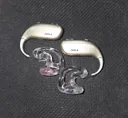
My old Phonak’s failed after eleven years of use due to SOC I suppose. I still have a couple pairs of analog aids from the years of 2005 and 2009 respectively which still work.
You’re ignoring this member’s posts.

It depends on the maintenance, brand and form factor of the aid. Moisture and wax have historically been the major cause of problems with devices. Sonova brands in my country are now offering 6 year warranties on new devices because they’ve largely solved the moisture problems with improved housing designs and paralene coatings and the wax problems with easyguard domes.
You’re ignoring this member’s posts.
Log in to reply to this topic.
What the forum has been talking about this week.
Fitting Software Requests894 replies
Uncategorized452 replies
Fitting Software Requests516 replies
Hearing Aids106 replies
Fitting Software Requests1.1k replies
 San Francisco