
 San Francisco
You never do, your comments are among the most valuables in this forum
You’re ignoring this member’s posts.
154 replies6.3k viewsLast reply
You never do, your comments are among the most valuables in this forum
You’re ignoring this member’s posts.
Last Thursday I had REM. There was REUG, REOG and REAG 50, 65, 80 dB (showed as REIG). No 's" sound and RESR at 90 dB though. I didn’t have my LDL measured anyway.
I will post about it in another time, I don’t want to hijack this topic.
You are not hijacking the topic. Discussions on are very much on topic and I found what you and others have said regarding what to do in REM very interesting. I have made a note to ask the new audio (when I go to see them) about things like “s” sound etc - as it’s not enough to just test beeps at different volumes for REM. How well we hear s, f etc is vitally important.
You’re ignoring this member’s posts.
The UK is not much better. I would say that 90% of audiologists don’t offer by default and even fewer actually have REM facilities. I think a change in law is required to force audiologists to buy the REM equipment and do the tests - although even that is not perfect. I have heard of cases in the NHS where they do REM, because they are obligated to by law, then completely ignore the REM results and then program using the insitu or sensograms or whatever audiologist use to verify the fit without REM.
You’re ignoring this member’s posts.
It verifies /s/ audibility or, if /s/ is not audible, allows for the correct setting of . Sounds like a hiss. Not specific to pediatrics although probably more common among pediatric audiologists. Has been available directly through the verifit for a number of years, and has been recommended for much longer (prior to it being available in the machine we were just plugging in a USB with the calibrated /s/ wav file). I’m not sure about other systems.
You’re ignoring this member’s posts.
Should we all be asking for this /s/- or only those using ? Are there other sounds used in specific contexts?
You’re ignoring this member’s posts.
Are there other sounds used in specific contexts?
I doubt it. “S” is specific because it is the highest-pitched consonant, ranging from 6 to 8 kHz and partially even higher. So it’s probably the hardest speech sound to recognise. Many have had problems achieving proper target gain in that range, especially in the past.
Thanks, @OcramSagev for your warm encouragement!
You’re ignoring this member’s posts.
I want to say yes? But the pessimistic side of me thinks they’ll probably just look at you like you grew a second head. If you are activating then yes, but I wonder what clinicians are using to decide whether or not to activate frequency lowering if they are not verifying /s/ audibility?
Realistically, I will often know when I for sure have it and the then I am really just verifying it for proper documentation. But I know because I HAVE been verifying it for a decade. I suppose other clinicians are using…hitting prescriptive targets or not at 4khz to decide to activate it? And then using patient report to try to set the strength. BUT, the brain will sometimes adapt to frequency lowering from one minute to the next after eight to twelve weeks of wear–like, it sounds shushy and then suddenly the brain gets it and it doesn’t anymore. If they don’t know how it’s set, how do they know when to adjust to comfort and when to push to the patient to try to adapt?
is right. /S/ is right up there, so if you’re getting that and otherwise hitting targets you’re getting most. I’ll sometimes check /sh/ if the patient can’t reliably discriminate those to help try to pull those precepts apart a bit. But those are really the only two calibrated phonemes we use. /p/ /f/ and /th/ audibility depend heavily on highs, but really until technology advances in that area, audibility of those sounds for many sloping losses is just…a wish and a prayer. Those all look pretty clear on the lips though.
You’re ignoring this member’s posts.
How can checking /s/ be helpful for those with good high frequency loss or is that not applicable to those patients?
@Neville do you check /s/ on all patients?
You’re ignoring this member’s posts.
If you are activating frequency lowering then yes, but I wonder what clinicians are using to decide whether or not to activate frequency lowering if they are not verifying /s/ audibility?
As a “supposed musician” I’ve kept away from this since self programming. However, since @Zebras has helped me to have it disabled in streaming and unlinked additional programmes, I’ve enabled it in my speech programmes. It’s very subtle, but in my Sky Naida L70s I’m getting very good speech results, using “calm situation”. I used to have “Music” as startup, but that’s now for Music, and set more like DSLv5 Adult. SR2 is disabled in music.
You’re ignoring this member’s posts.
I do yes. But as I said, there are patients where I probably don’t really have to because I know they are getting great high frequency audibility, I just do it as part of good record keeping in those cases.
You’re ignoring this member’s posts.
I’m going to ask about this next time I have . Is there an approach you would suggest for making the request and gauging the response?
Do you think REM for NAL-NL3 will make this aspect of REM obsolete?
You’re ignoring this member’s posts.

It’s best practice if you’re using but far from standard practice in most countries for most audiologists.
You’re ignoring this member’s posts.
The clinician will need a system with a calibrated ‘s’ stimuli in it to start with. Audioscan verifit has one built into current products, but not necessarily the verifit 1 (it depends on the version). It will also need to be selected from the setup screen in the verifit as it’s not a default stimulus option.
If they’re using otometrics aurical freefit then the nearest option is the ling sound ‘s’ in the freefit screen. I think /s/ and /sh/ stimuli are available on the interacoustics affinity compact from memory. I don’t think its an option on Med-Rx devices and I haven’t tried any others.
It takes very little time to measure an /s/ and/or /sh/ stimulus. This is A Comprehensive Guide to Fitting Frequency-Lowering Hearing Aids - Article 288724 which may be helpful to your clinician if you need it. This is just one feature of a hearing aid that clinicians need to understand and differs between each manufacturer so you can appreciate reading it how much training an audiologist has to go through in order to understand and optimise the performance of hearing aids for each individual who needs a feature like this.
You’re ignoring this member’s posts.

I don’t think its an option on Med-Rx devices
No, but you can run a s/sh comparison in Live Speech mode (or phonemes): that’s calibrated on your v/u input level.
Once the client is running a steep loss into a 4KHz dead-spot; it’s also often about expectation management with high fricatives and plosives, especially in background noise.
You’re ignoring this member’s posts.
I don’t think its an option on Med-Rx devices
No, but you can run a s/sh comparison in Live Speech mode (or phonemes): that’s calibrated on your v/u input level
Do you think thank ‘s’ sound from Phonak Target software calibrated to 65 would be appropriate for the ‘s’ test? However, it’s not constant ‘s’, it’s rather interrupted ‘s - s - s - s’.
There is also another Phonak software - phoneme perception test, but I don’t know what is true, what is marketing stuff:
Phoneme Perception Test | Phonak4
The Phoneme Perception Test was designed to improve your client’s speech intelligibility.
You’re ignoring this member’s posts.
“S” is specific because it is the highest-pitched consonant, ranging from 6 to 8 kHz and partially even higher. So it’s probably the hardest speech sound to recognise. Many HAs have had problems achieving proper target gain in that range, especially in the past.
By the way, this is why I am pleasantly surprised by the broader frequency response of the Infinio SDS 6.0 UP receiver.
In “simulation” in Target it could theoretically provide even 10-15 (in Target ‘dBs’) more gain in 6 kHz compared to P receiver. I am very interested to test it.
You’re ignoring this member’s posts.
Possibly good for some A:B comparison results that can be plugged straight into Target. It has a few bits that I’m a little shady of: namely the fact that it’s bespoke Phonak and uses Free-Field. Also apparently the stimulus is a bit of Random speech.
My general stance on part-word speech scoring has already been established on these pages.
You’re ignoring this member’s posts.
Okay, so I had -based fitting done with the MedRx device in the previous week. Two days earlier, I took some hearing tests, but the results were strange — I had a better tonal than ever before (after many blank responses where there were no sounds, the examiner only put the points when I was 100% sure, so it’s strange).
In gray there is the line consistent with the most audiograms in my whole life (I had 8 kHz in 60-70 ).
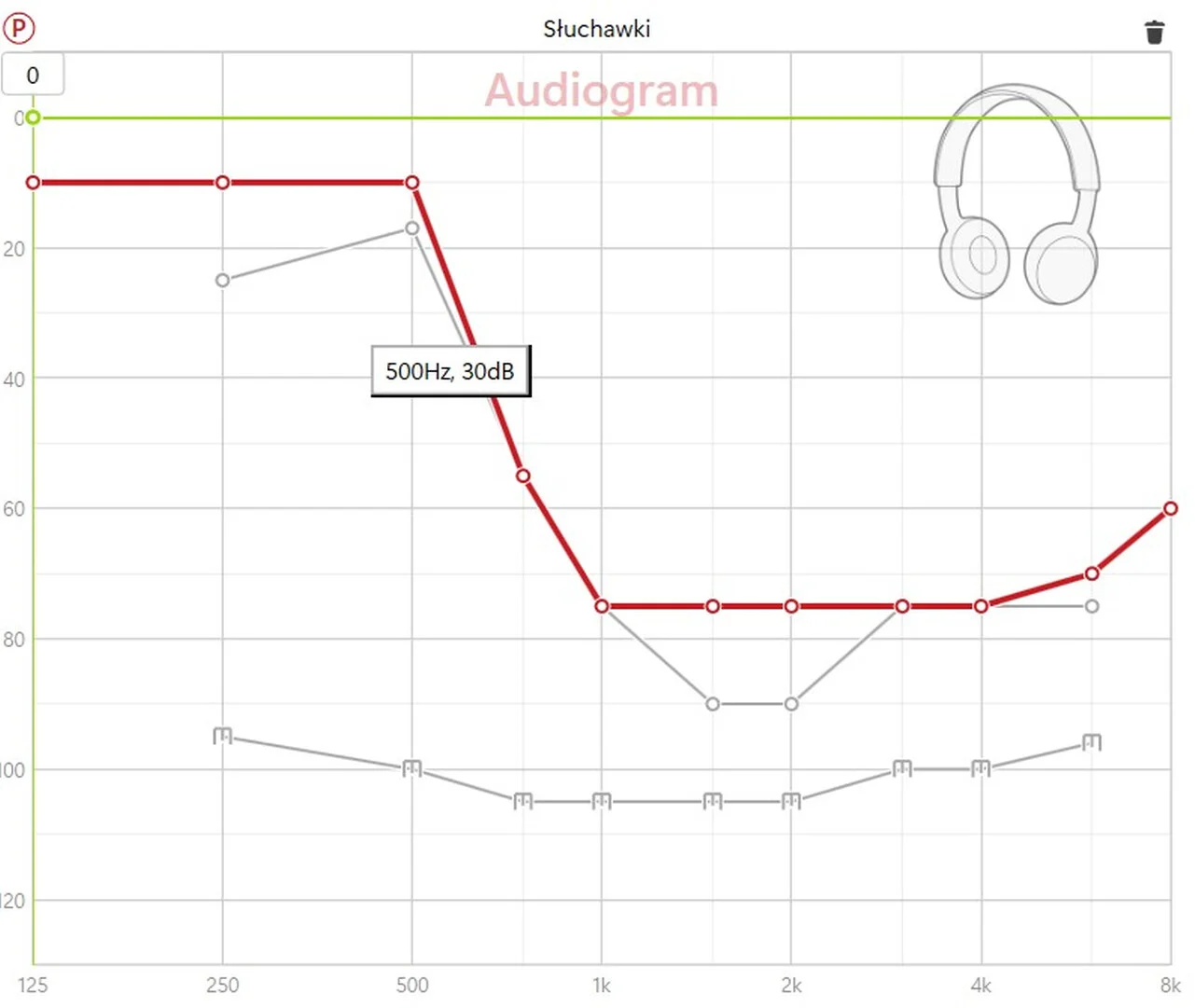
I wanted to try 5.0 pediatric, because:
I had REM performed 3 times:
My questions which arised after REM:
Why, after using the REM with both the Paradise and the Sphere (both with DSL), am I off target with the low frequencies up to ~400 Hz, especially to 180 Hz?
- Is it because the 0.9 mm vent in Paradise allows LF to enter?
- On the other hand, the NAL-NL2 fitting is almost perfect. Perhaps this is due to the imperfect REOG in the NAL attempt?
Are the REM results suggesting which vent I should use? Or should I not use a vent at all? This is probably the most important question, because I’ll soon be sending my titanium earmould to be remade with changing from P to UP receiver (main cause of complaint is AOV vent in Sphere cShell instead of ordered 0.6mm).
I’ll consider getting UP receiver with silicone earmold in another place than Phonak manufacturer “for science”.
There is my graphs before REM-based fitting:
My pre-REM fitting:
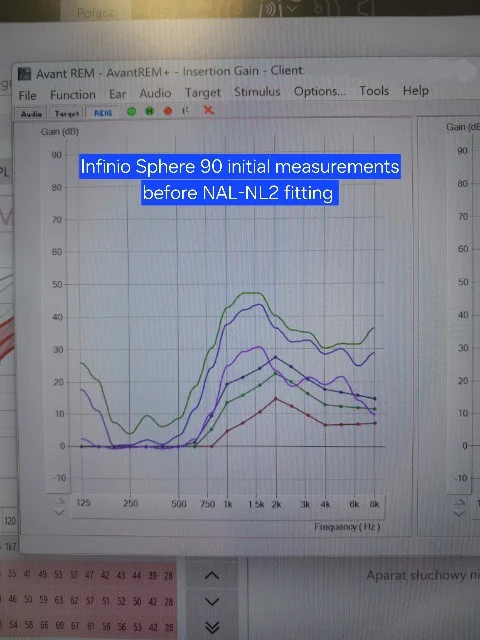
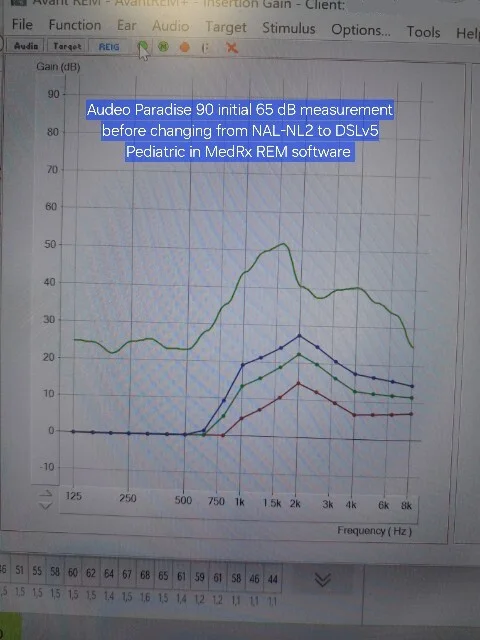
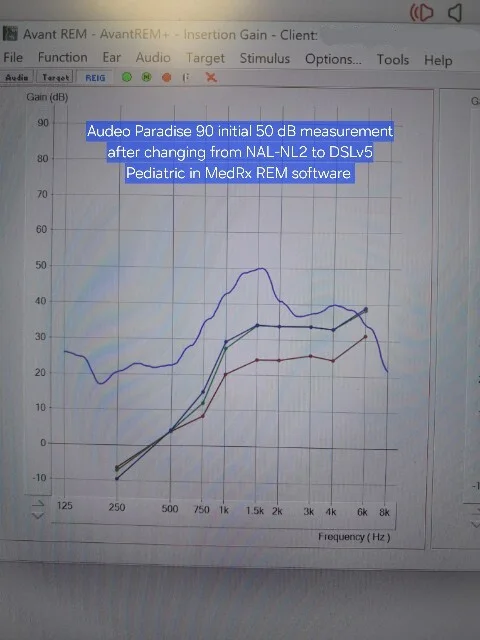
Sphere in the NAL-NL2 measures (left) vs. DSLv5 Ped (right):
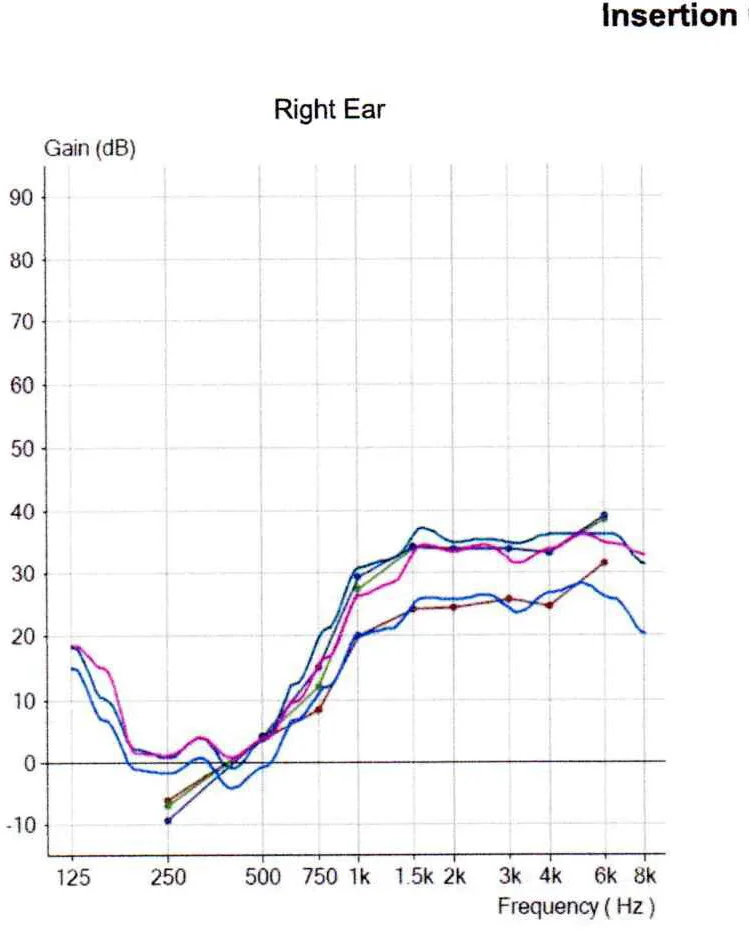
The NAL-NL2 was very clear, but extremely quiet, so I requested an increase in the gain at all frequencies in all Gs by +9 steps in Target Software. We didn’t change anything in the DSL case because we didn’t want to affect the proportion of gains (there is practically no space to increase the gain in the 3.5–8 kHz range alongside the rest).
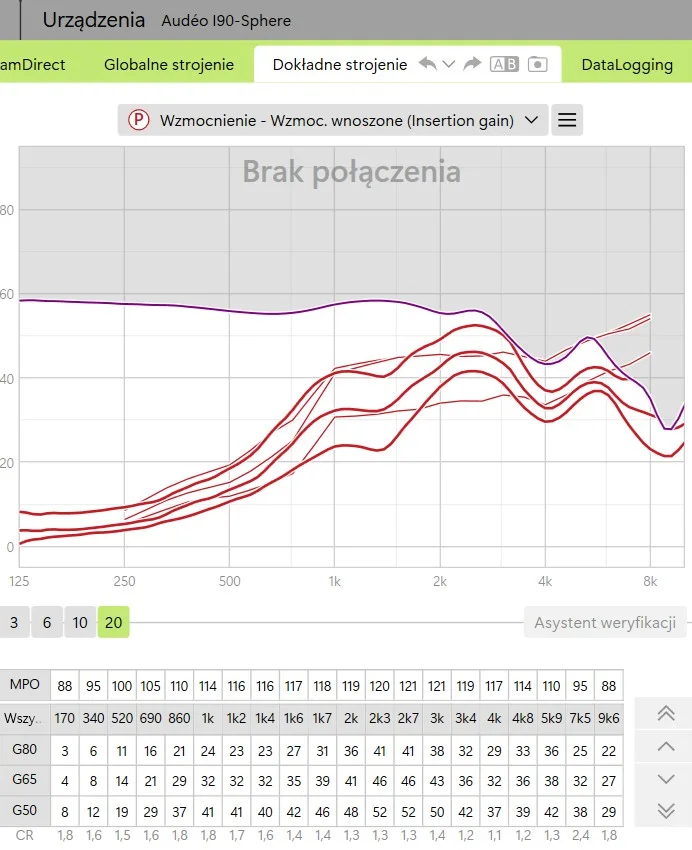
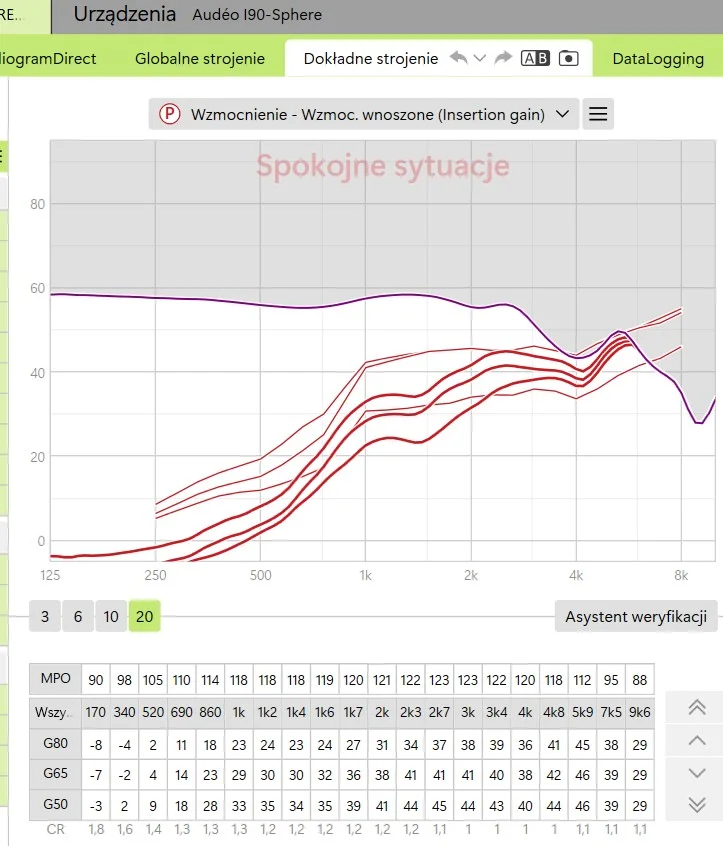
The right (DSLv5 ped) was also too quiet for me though, probably due to too little gain in the lowest freq.
Now I try the NAL-NL2, but consider to add not only some LFs, but also HFs, like @OcramSagev some time ago.
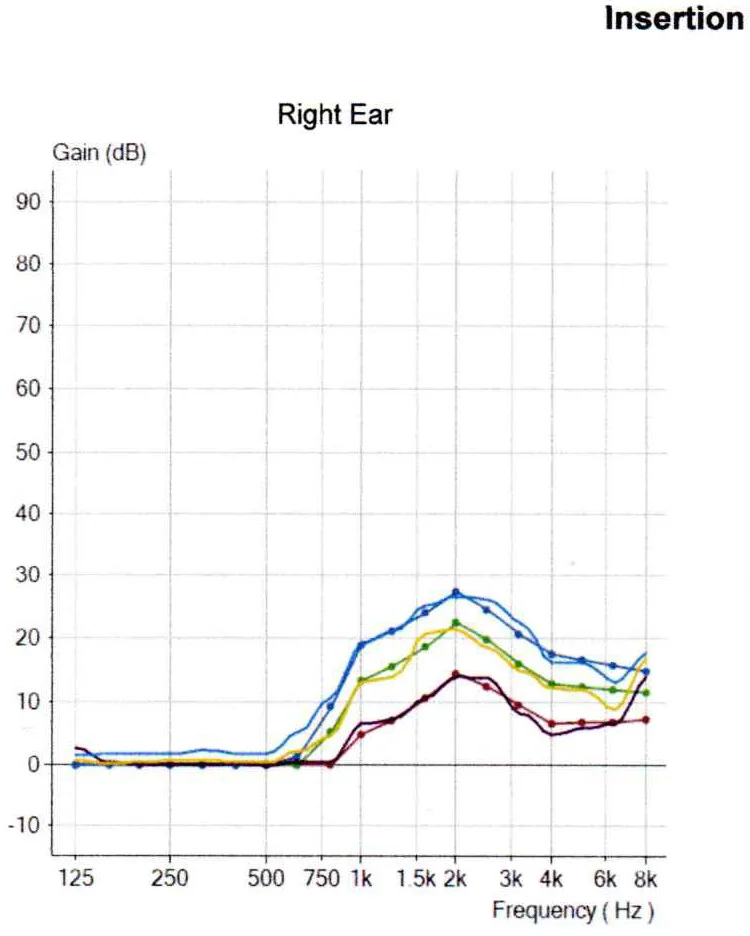
For comparison, the Paradise 90-RT is on the left and the Sphere 90 is on the right (the same as above). Both are on the DSLv5 ped and P receiver. The only difference is acoustic coupling.
cShell titanium 0.9? mm vent vs. Unitron power domes:
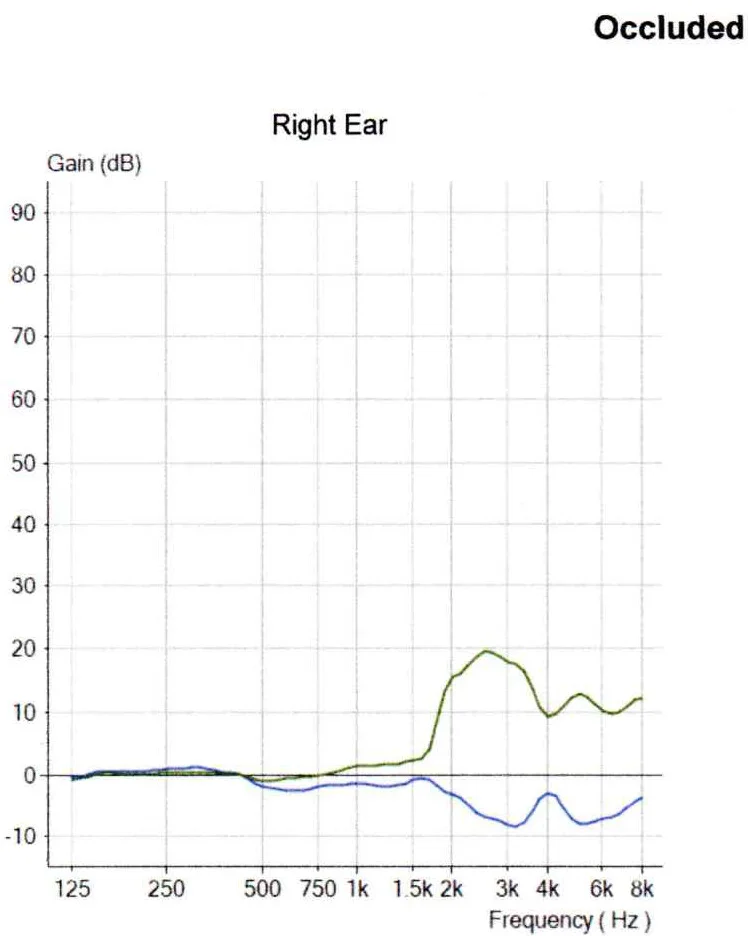
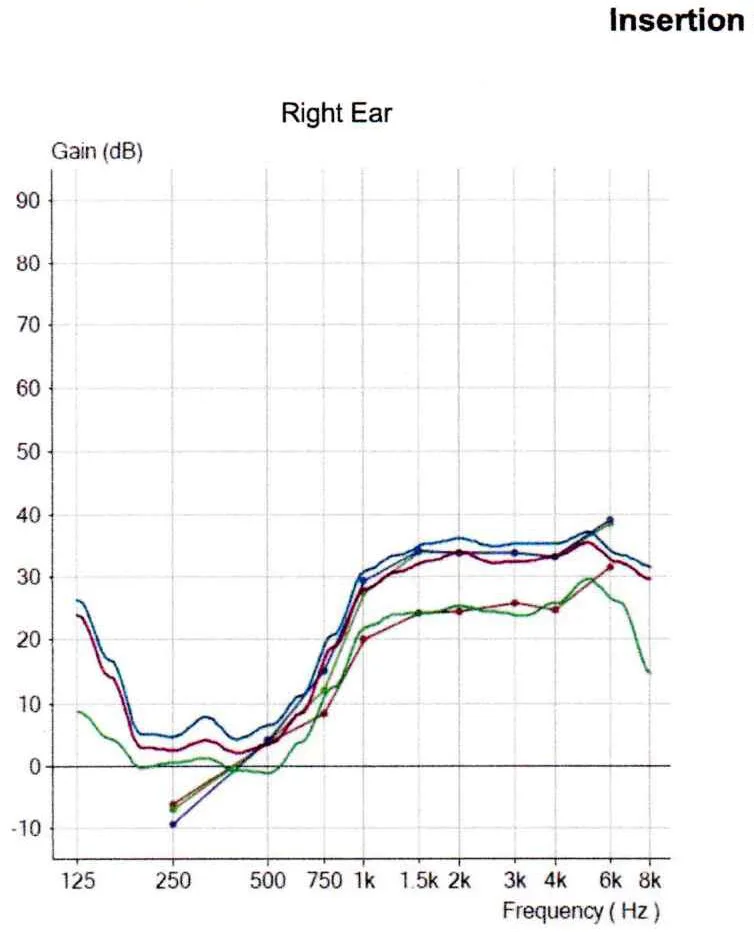
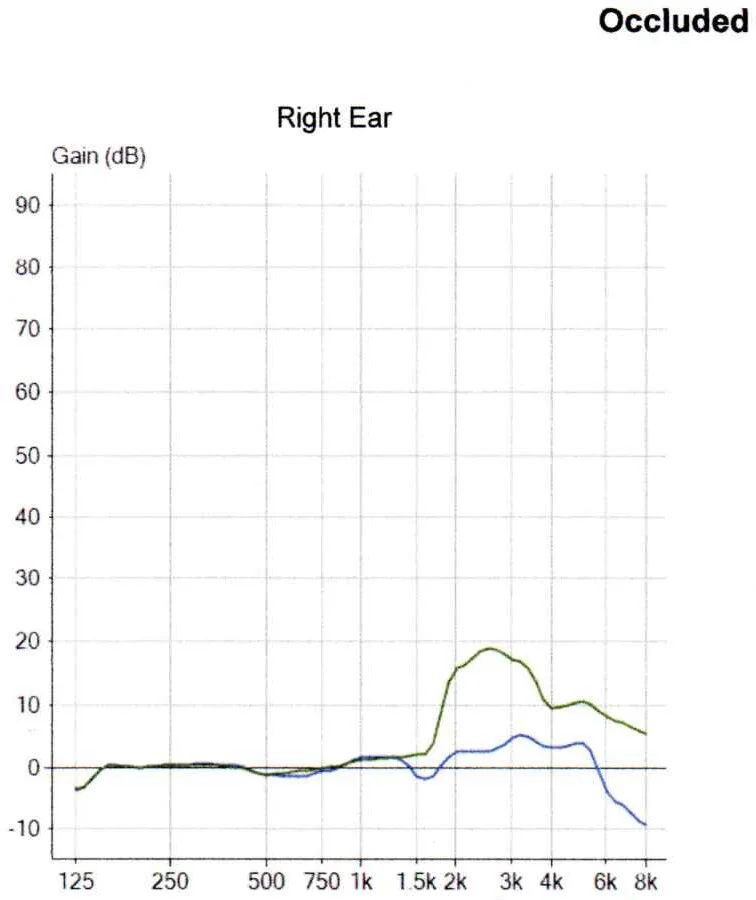
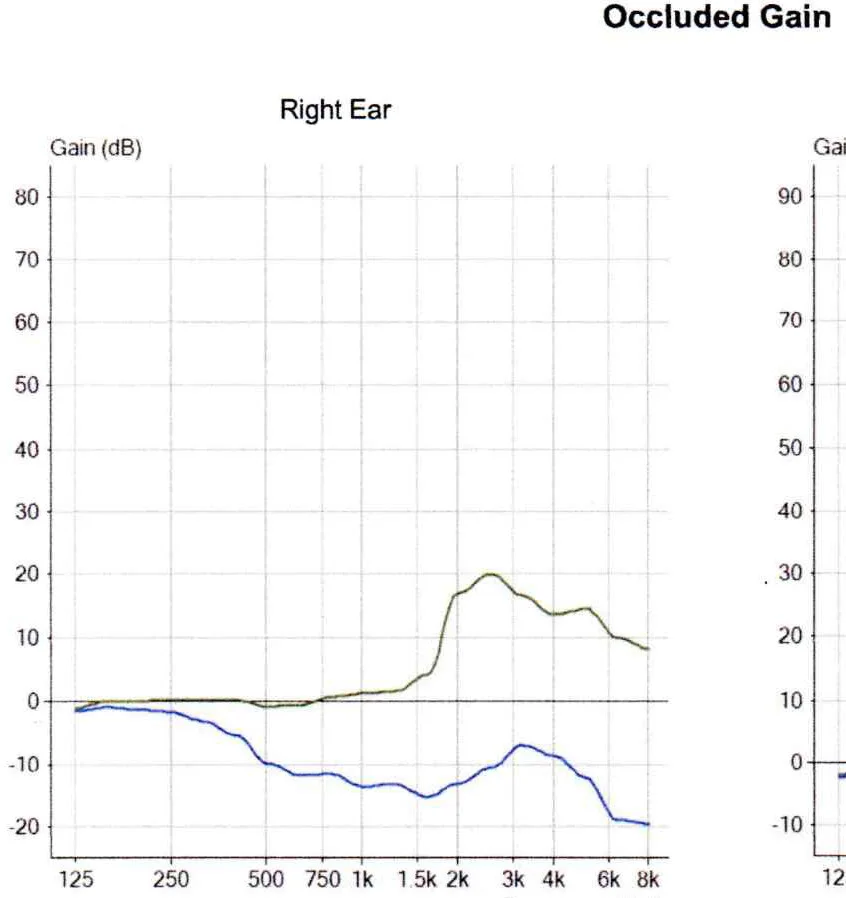
As you can see, both have strange IGs, especially up to 180 Hz, in less extent to ~400 Hz.
Effects in Target (no modification after REM -based fitting). They’re a bit incomparable, because I have unchecked “Use estimated vent (…) from feedback test” I’ll provide correct comparison later.
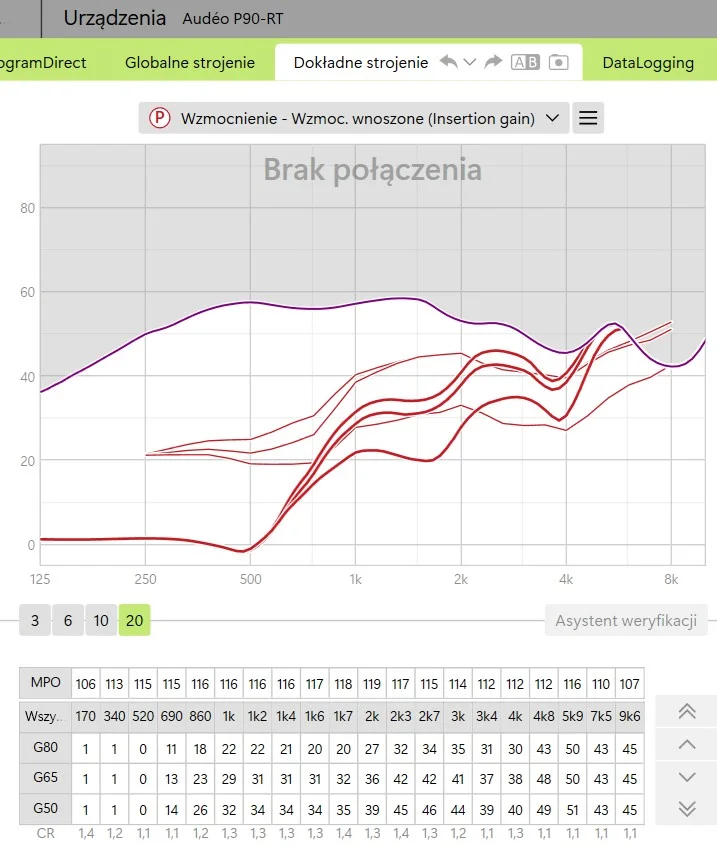
I’ll still try them out, but the question I asked above still arises. I am strongly considering the titanium cShell with UP for a better frequency response, especially in the 6–8 kHz range, and for greater headroom. Vented or no-vented?
IMPORTANT: the P receiver in Power Domes can be placed deeper in the ear canal. Therefore, before REM, it can be perceived as louder than the receiver in the cShell, as it is closer to the eardrum. This is why I need a smaller vent – to have a longer cShell with the receiver outlet closer to the eardrum than in my recent AOV, for example.
My coclusion is I probably need 2nd chance with REM with new or previous audiograms, where I have a bit poorer low frequency hearing. Perhaps that is cause of awfully quiet fitting.
You’re ignoring this member’s posts.

Yeah well if you guys actually think that your hearing is gonna be magically restored because you got done, then it just goes to show how easy it is to “sucker punch” anyone, but don’t worry we’re very close to having verification done in real time with just the using the basic receiver supplied, too bad REM can’t actually “hear” what I hear or what the brain is processing.
You’re ignoring this member’s posts.
Hmmm. No one, including pros, shows as magical wand which solves everything. Perhaps I emphasised it too little, but it is the procedure, which depends on greatly from doing properly previous steps like .
I simply didn’t want to prolong the post, but there were a few other things:
After saving original REM fitting, I just changed my audiogram in the Target, making it poorer in the LF (125-500) and 1.5-2 kHz. (to the gray line in the screen). Then allowed Target to make changes based on the audiogram results. The initial results are quite good. he result is quite good in the first impression. I’ll test it.
The music reception improves significantly, especially when playing notes over 400 Hz. Sound is fuller, more sweet. I’ll try the @OcramSagev move to add some gain at 6-8 kHz in my fitting.
My comfort walking next to the loud streets (70-80 in DecibelX) improves greatly.
I got to know objectively that my Unitron power domes have indeed more earplug effect than cShell titanium 0.9?mm vent, which I use for my Paradise.
Anyway, it is good point to start. Even with the drawbacks like much sensitivity to the incorrect audiogram now I have much less guesswork when experimenting with . It’s important, because I was tired to try infinite possibilities in the settings and I’ve even developed a bit of a loathing for entering to tge Target software.
You’re ignoring this member’s posts.
Log in to reply to this topic.
Hearing Aids6 replies
Hearing Aids7 replies
Hearing Aids5 replies
Hearing Aids104 replies
Fitting Software Requests155 replies
 England, UK

 Poland
 Wales, UK