This is a brilliant idea, WH! Your suggestions have been very helpful so far (last one was the Google Maps one). I tried to use the “Use Fine Tuning From” command and selected the Media Music program to impose over to the Media Speech program, and it seems to copy over the original gain curves, but not the altered gain curves. So I had to do a bit of adjustment to match the 2 as closely as possible.
I’ve had some dislike about how tinny sounding the speech streaming gain curves sounded before in default, so I had no qualm about copying the music curves over to the speech curves to make it fuller like in music.
Afterward, I no longer notice the “jumps” around anymore, but I haven’t been streaming again THAT long yet so far to test it out more thoroughly, so the jury is still out. But I’m optimistic.
Did you find the speech or music streaming to be best all around? If one does all streaming best set the other up like it. Take difference out of the picture.
Speech and music streaming had the same issue years ago. My hearing back then wasn’t all that good and music wasn’t a priority. Hopefully you can find a happy medium.
Sorry @raudrive indeed I missed your same suggestion in this post! My apology! For some reason the word “mirror” triggered me, but I should have picked up on “set the other up like it” just as well.
I think at the time I saw your suggestion at first, I thought I liked the Speech streaming profile enough to leave it alone, so I didn’t really want to make them sound the same. But in between your suggestion and WH’s suggestion, I had a change of heart and found the streaming Speech to be a little too tinny for my taste. So when WH’s suggestion came after yours, I already started having a pre-notion that I should change the streaming speech profile more drastically to be as warm as the music profile.
Hah, Hah!! You never heard EDM? Electronic Dance Music is the most popular Electronic music, but any genre which relies on primarily synths are considered Electronic.
As far as the NonSense streaming issues, doesn’t Phony allow you to stream in the normal Music, and other selected programs, like Oticon does? I certainly would not rely on some algorithm to choose for me.
That was always my main complaint about Phony, as compared to Oticon. Also, as you stated, Oticon allows you to hear all the sounds, and subtly, transparently adjusts the settings.without hunting through what it “Thinks” you should hear.
I know everyone loves their Spheres, but I’m not ready to give up my independence for a boost in !
Oh OK. I guess Electronics music is probably a super set of a lot of other types of music like New Wave, New Age, Pop, etc. Synthesizers are so ubiquitous for music making these days. I never heard of Electronic Dance Music before, but I must admit, I’m getting old and kind of out of touch of the music scene already.
No, although the Oticon streaming will follow the gain profile of the program that you’re in just before you switch to streaming; the Phonak streaming doesn’t work like that on the other hand. They have 2 streaming profiles (namely for Speech and Music) and AutoSense OS will pick between one of these 2. I do think that it’s more versatile to just utilize the gain profile of the current program being selected like how Oticon does it. But that would make it very confusing for Phonak users because their AutoSense feature can jump around between their different program selections, so this would make streaming sound jump around accordingly as well → not a desirable effect.
I’ve had a chance to be at a crowded doctor’s office waiting room today, with lots of people sitting around as well as chatter at the check-in desk. So this was a good time to try out my Spheric SILN mode. Yeah, OK, I could hear how the background noise is kinda suppressed and sound kinda warbled up, while the speech around me seems to come through more. But then when I switched back to the Auto program, AutoSense kinda toggles back and forth between Comfort Situation and Speech in Noise, depending on when the waiting room had less chatter (Comfort Situation) and more chatter (). I must say that SIN did a very good job already in this case, and speech actually sounded more natural in SIN than the speech processed/generated in Spheric SILN. And the SIN noise was just simply suppressed rather than becoming “warbled up” like with Spheric. Meaning that the SIN from AutoSense delivered a more natural result compared to the more synthetic sounding result of Spheric SILN.
I should clarify that the scene at this waiting room sounded “busy”, but not an absolute “cacophony”. And that’s probably why SIN is good enough for “busy”, and I guess Spheric SILN would probably be more effective in a “cacophony”. By the way, I did changed the activation level in AutoSense to trigger Spheric SILN at 0 (the lowest available level). instead of from the default of 10 (out of 20) However, AutoSense still didn’t activate Spheric yet in that waiting room, even at this lowest activation level.
When I manually forced it to the manual Spheric program (that I copied over), it showed that my remaining battery hours estimate was 9 hours (my batteries were probably around the low 90% at that point). I think Dr. Cliff was saying that before the Ultra firmware upgrade, he could only get 7 hours for Spheric instead. Another difference is that I had the settings of the SIN program maxed out on Noise Block and Soft Noise Reduction and SoundRelax. But I left the Spheric settings at the default values at those settings, which were Weak SoundRelax and 0 Soft Noise Reduction. There’s no NoiseBlock parameter for Spheric. I guess that’s because the reserves the right to set it as how it thinks is necessary and does not allow the user to set this parameter.
I know a lot of Phonak Sphere users say they prefer to use the Spheric program the whole time if they could, if battery weren’t the issue with it. This included Dr. Cliff, by the way. But my personal opinion is that SIN sounds more natural to me than Spheric, so I wouldn’t prefer to use Spheric all the times, but only when there’s a cacophony in an extreme environment. Hopefully one of these days, I’ll be able to find myself in such an environment to truly evaluate Spheric SILN to its full potential.
Good observations! Yes…the background noise in Spheric mode sounds warbly and wonky. That being said, it has improved with the Ultra firmware and speech is really sharp and clear. This is a blessing when you are in an extreme noise environment. I’ll take synthetic over natural sounding if this means I can actually have conversation in a very noisy restaurant or pub.
I know everyone loves their Spheres, but I’m not ready to give up my independence for a boost in SIN!
I think that has been the contention between the 2 camps all along. One camp doesn’t want to be at the mercy of AutoSense, and the other camp doesn’t mind AutoSense if they can achieve the holy grail in the form of the Spheric Speech Clarity.
My greatest dissatisfaction of the Phonak Sphere right now is not AutoSense, however. I think it’s OK and not as disruptive as it’s purported to be. The only disruption about it is my (initial honeymoon phase) wanting to know which program it selected at any given moment in time just out of curiosity. So I constantly multiple click to the Adjust button just to find out what program is selected, then have to click back out and then pass judgement on whether that was the appropriate program that AutoSense had selected for it or not. If I just leave it alone to do do its job, it probably will work quite seamlessly to me. Except for AutoSense OS for streaming, which I did find it to be truly disruptive enough that I had to find a workaround for it.
Having said all that, the most disruptive and disappointing experience I have with the Phonak Sphere is how my own voice is treated. In a calm no noise situation, it may sound great. But if Noise Block is activated to the max to suppress noise, my own voice gets suppressed as if it were the same noise itself (although it’s not). Meanwhile other people’s voices seem to sound fine (because their voices are detected as speech, hence treated differently). I know this because if I turn off the noise source (like a max ventilation fan going on in a car), then the noise suppression stops, and my own voide seems OK and unsuppressed again.
The question is why my own voice cannot be treated as speech and come across clearly just like other people’s voices in the car? It’s annoying as hell when you can’t hear yourself talking clearly just because there’s a noisy fan going on, and it’s not the noisy fan that overcomes your own voice, but it’s because the suppression action by the on the noisy fan that gets your own voice suppressed along with it. What’s even worse is that there’s no workaround for this because it’s dynamic. No fan noise → good own voice. Max fan noise → suppressed own voice.
At first, I thought my own voice was an all around issue and I could just adjust it with the Auto Fine Tuning feature for the “Own Voice” parameter and that would solve it for good. Well, you can adjust it to sound as good as how you want, but in loud noise, it doesn’t matter how good it sounds if you can no longer hear it.
I don’t have this issue at all with my Oticon HAs, however. Never even have to think twice about making any changes to my own voice with Oticon.
the SIN holy grail in the form of the Spheric Speech Clarity
The holy grail is constrained by physics. You just can’t reproduce something that isn’t there. I mean, if the signal-to-noise ratio isn’t in your favor, no hearing aid can work miracles. Moreover, there are so many different types of hearing loss, personalities, expectations, and preferences that a holy grail for some could just as easily be a nightmare for others.
Your observations reminded me of the time I tried the Lumitys against my Mores. AutoSense (I think it was version 6) was okay at first, but toward the end of my trial it was really starting to get on my nerves!
Hey Mr. V, Remember all the discussions, and difference of opinions we had when MSI was introduced on the More?
You argued that Oticon was wrong to set the NNS Difficult to 8dB when 10dB was available.
Remember I called Oticon support and queried their tech, who responded with the explanation that the more you increase the gain to a higher value, the more you increase distortion of the background sounds, and introduce unwanted effects!
Spheric does the exact same thing we were getting with Oticon 3 years ago!
And that limitation Phonak imposes on streaming is as bad as Oticon sticking us with MyMusic, and removing the legacy program!
But at least you can create a custom music program with a different fitting rationale with Oticon.
Good luck with your Spheres, and MyPhonak app which is a nightmare.
Now that my Intents are updated (As promised by Oticon) to support , and already being enabled with LEA (which Phoank may never get around to implementing), I’m really enjoying high quality streaming from my phone, and pc (with the Oticon Easy LE Adapter), and the Avantree C82 Aura USB dongle!
The Companion app has all I need for EQ, and the Auracast assistant.
Sorry to rant, but aside from Roger, I don’t see any value to switching. YMMV.
Hey Mr. V, Remember all the discussions, and difference of opinions we had when MSI was introduced on the More?
You argued that Oticon was wrong to set the NNS Difficult to 8dB when 10dB was available.
Remember I called Oticon support and queried their tech, who responded with the explanation that the more you increase the gain to a higher dB value, the more you increase distortion of the background sounds, and introduce unwanted effects!
Spheric SIN does the exact same thing we were getting with Oticon 3 years ago!
Of course, I remember that discussion. I didn’t see any reason why to not max it out to 10dB, because in my mind, I was never made aware by Oticon anywhere that the higher noise suppression you go, the more distortion you get on the speech.
BUT, even so, don’t forget that the idea that Oticon sold us is that they will ONLY apply the right amount of noise reduction needed, and never more. So if what they say is true, then regardless of whether your max is 8 or 10 dB, if only let’s say 6 dB is needed and 6 dB is applied, then you should only get the level of distortion that’s inherent to the 6 dB level, not the distortion inherent to the 8 dB max or the 10 dB max anyway.
Unless what Oticon support meant is that if you set the max to 8 dB instead of 10 dB, then even if only 2 dB SNR is required and applied, the inherent distortion at 2 dB is still just as bad as the max 8 dB level, and this inherent distortion at 2 dB would be WORSE if the max were set to 10 dB, then there’s something terribly wrong with this model, because therefore if you want the cleanest SNR at 2 dB, you should be using the lowest possible value for the max dB at 6? Then how would this make the 8 dB or 10 dB max useful for anyone? Setting the max dB level should not cause more distortion at the lower dB SNR. It would only cause more distortion at the max dB set.
So from this logic, my recommendation to use the max of 10 dB is still a sound recommendation, and Oticon support’s logic is flawed. What they’re saying is we give you up to 10 dB SNR available for use, but we only want you to use 6 dB or 8 dB top, because at 10 dB distortion will sound terrible and it’ll make us look bad. But what if you need the 10 dB, and are willing to put up with the lower quality speech sound so that you can at least understand it? Of course there’s a trade-off, but if at 8 dB max, it’s still so noisy that you still can’t understand the speech. But at 10 dB the speech sounds lousy but at least understandable now, are you going to deny yourself the option to use the 10 dB just because Oticon doesn’t want to look bad and want you to stop at 8?
Now, w.r.t. the Spheric SILN, yes, they do have to sacrifice on speech sound quality to achieve the higher SNR too, not any different than Oticon. But there’s one major difference between them. Oticon cleans up the speech, but they still preserve the noise in between the short pauses between the speech, like how people would pause if there had been comas and the periods in between what they say. And as soon as they stop speaking, the noise is restored right away, albeit maybe a bit suppressed level, but the noise (surrounding sounds) is not lost completely. In this respect, you still have the benefit of not losing out on not being able to hear the (more relevant) non-speech sounds that you might want to hear around you (the open paradigm benefit). But at least speech is cleaned up to be more understandable to you. So you have both benefits, the open paradigm co-existing with the understandable speech. But it still requires a mental focus on what you want to hear (speech), and a mental focus on tuning out what you don’t want to hear (maybe some of the noise, but not all the noise), and the mental ability to differentiate to sort them all out.
With the Spheric SILN, on the other hand, the noise is almost completely “scrubbed”. Although you don’t hear a complete silence replacing the noise, but you hear the noise as “warbles”, not as clear and preserved but suppressed like with Oticon (for their open paradign), but the noise is “scrubbed” enough so that it’s not competing with speech anymore. It helps make speech a lot more distinguishable and the subdued warbled noise is really no longer competing against speech anymore. So with the Spheric SILN, it doesn’t require a more tasking mental focus like with Oticon to sort the sounds out and focus on what you want to hear and ignore what you don’t want to hear, and be able to pick up on the different cues of these sounds to help you learn to differentiate them.
A crude analogy is preparing a food table. Oticon helps the user sees the steak more clearly front and center on the table, but the user can also see 20 other various food items around it and they’re accessible if the user wants to eat them. Phonak, on the other hand, with Spheric SILN, lets you see the steak front and center, but the other food items are all covered up so you don’t have to even try to find the steak among them. So all in all, it boils down to preferences and trade-off. If you just want to find the steak to eat and not bother with any other food, then go with the Spheric SILN. But if you want the steak but want to know what else you can enjoy, then go with Oticon. You might get distracted by the other foods on the table, but if you focus to the center of the table, you’ll find your steak.
That’s why me having an Oticonian background, at the doctor’s waiting room, it was noisy but not a cacaphony, so I still prefer Speech in Noise instead of Spheric because it sounded cleaner, at least with the noise. But I can see how in other worse situations, the Sphere can be quite valuable for me. The most challenging environment I’ve ever been in is in the entrance area outside of an auditorium during intermission. People crowd out there in a very narrow entrance space, almost shoulder to shoulder, for a drink or a smoke or conversation, with everybody talking over each other. In a situation like that, I’m fairly sure that the Oticon aids with their open paradigm won’t hold water to the Sphere. It’s manageable if you want to find steak on a table that has a dozen other food items. But it’d be very different if you want to find your steak on a huge table that has 100 other food items.
In my personal experience, both brands perform poorly when noise exceeds 75dB.
Phonak feels marginally better than Intent around 60-70dB. However, with Sphere mode enabled, I completely lose sense of sound directionality… whereas Intent retains this spatial awareness. Could this be due to high latency in Phonak’s Sphere mode? (Users in another thread tested latency reaching 17ms with Sphere mode enabled!).
Setting aside the comb effect, I perceive a slight desynchronisation during face-to-face conversations when Sphere mode is active. Though theoretically, the human brain only detects dialogue desync at latencies exceeding 20ms. Perhaps my frequent arcade gaming contributes to this sensitivity.
The Oticon team could certainly learn a thing or two from Phonak. One audiologist I encountered once remarked, with a hint of derision, that Phonak’s apps are rather gimmicky. (To some extent, I agree). Yet perhaps this is precisely why Oticon hasn’t delivered that “wow” factor for me: when you can instantly activate or deactivate certain features (e.g., sphere mode) within the apps during noisy environments for real-time comparison, the personal experience far surpasses returning home or visiting clinics for adjustments followed by field testing! Moreover, when you focus intently on such comparisons, your speech comprehension naturally improves.
I concur with Volusiano observation that Oticon’s seemingly weaker performance in noise may not be purely technical, but rather linked to its Open Paradigm design philosophy.
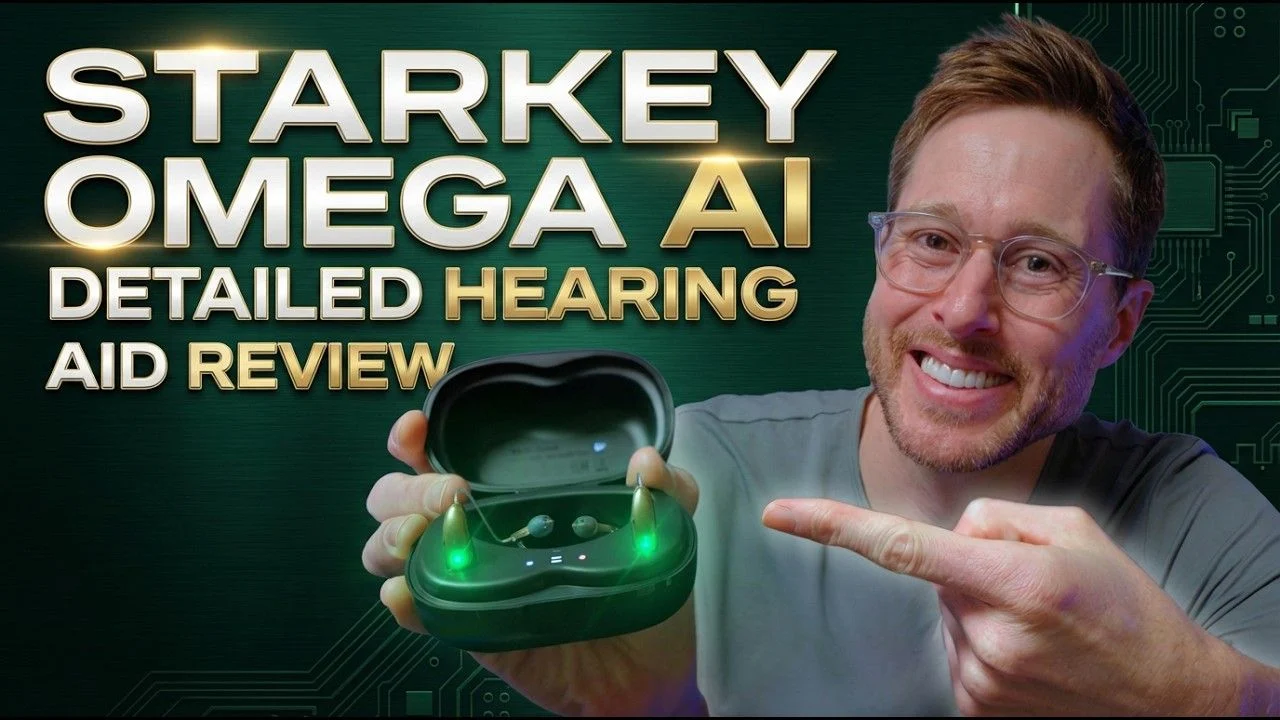
Consider Dr Cliff’s latest Omega Ai 360 review – it features characteristics reminiscent of Intent…?
As my audiologist has repeatedly emphasised, in audiology, clarity and comfort represent a trade-off. The audiologist’s role is to calibrate the optimal balance for the user based on their hearing loss, characteristics, and preferences. Similarly, the differences between products from major brands aren’t necessarily confined to technical variations between brands, but rather stem from differing design philosophies. To date, all hearing aids fall far short of what I consider the ideal hearing aid.
The holy grail is constrained by physics. You just can’t reproduce something that isn’t there. I mean, if the signal-to-noise ratio isn’t in your favor, no hearing aid can work miracles. Moreover, there are so many different types of hearing loss, personalities, expectations, and preferences that a holy grail for some could just as easily be a nightmare for others.
Your observations reminded me of the time I tried the Lumitys against my Mores. AutoSense (I think it was version 6) was okay at first, but toward the end of my trial it was really starting to get on my nerves!
Love your insights, keep them coming!
Yeah, for sure no kind of hearing aids can help a deaf person or somebody who needs cochlear implants. We’re not talking about a holy grail that can defy the laws of physics here. The holy grail here is just something that everyone seeks to help them hear speech better in noise. For folks who find the Sphere can do this for them perfectly, then they’ve found their holy grail. For folks who don’t, then the Sphere is not their holy grail yet.
AutoSense might have been the Achille’s heel of Phonak in terms of adaptation for folks who don’t like to have a machine dictate to them what the best program should be. Oticon kind of liberated these folks from being program-bound by offering a one for all program paradigm (beside music, as always), in addition to their open paradigm. And that’s why Oticon has become one of the most popular brands in the market.
But it’s always different strokes for different folks. Not everyone subscribes well to the Oticon open paradigm. I think many folks with severe low and mid frequency loss (with much less audible compressed hearing range left) seem to struggle more with the Oticon aids, and they find Phonak aids to work better for them. I think the more aggressive suppression of noise in favor of speech by Phonak works better for them, because the Oticon open paradigm doesn’t suppress noise outside of the tight window for speech as aggressively, and therefore it makes it harder to differentiate and isolate and sort out the neigboring noise near the (cleaned up) speech. The presence of this neigboring noise (when speech isn’t going on) is still too much for them to handle. They just don’t want to hear anything else beside speech when it gets too noisy. So Oticon is not a good fit for them.
The Sphere takes this Phonak’s stronghold to another level. It’s not just about traditional noise suppression like before anymore, because there’s only so much you can do with that. But now the helps make it about noise elimination, not suppression. Well, not completely elimination, but they’ve transformed the loud noise into somewhat of a “warble”. Maybe the warble makes it more easy for speech to “jump out” at you, because there’s really no more suppressed noise to fight with, but only warbles to fight with, and perhaps that can be more easily differentiated and ignored than noise.
So what’s transformative with the Sphere here is that it’s not a fight for improvement anymore. That fight is still in the Speech In Noise program that Phonak has as part of the AutoSense programs, and it’s probably about as good as it gets by now. What has now been taken to a next level thanks to the Sphere , is the morphing of noise and speech by AI. Phonak used AI to morphed the noise into something more easily filtered out by the human brain, the diminished warbles. And the DNN AI takes in the speech, makes a copy of it after it’s been cleansed from the noise, then combine the (now diminished) warbed noise back into it, to recreate the resulting sound scene. In the process of recreating the cleanse speech from the original speech, if the original speech is diffused with more noise, then it’s harder to scrub it cleaner, hence the quality of the recreated speech is not as good as the original, as we observed.
Oticon did a similar thing with their DNN, but in a different way, because Oticon has to preserve their open paradigm. So the Oticon DNN takes in a sound scene, breaks out the various sound components from it, and recreates the original sound scene by reassembling the sound components back together. But in the process, it now has been able to identify which components are speech, and which components are non-speech. So in the rebuilding process of the original sound scene, it can take over control of the volume levels of the individual sound components and re-adjust them accordingly to achieve the best rebalanced sound levels of everything, but now the volume for speech prioritized over other volumes. With this, Oticon can even organize attributes from this recreated sound scene into parameters that can be given as controls by users in Genie 2. After all is said and done, you’re left with a recreated but still quite well preserved sound scene that still adheres to the open paradigm, but nevertheless with a new rebalanced sound mix that can give priority to speech over everything else.
Phonak, on the other hand, is not bound to an open paradigm like Oticon is. So it’s free to create a DNN that does not need to accurately recreate a sound scene by breaking out sound components and reassembling them back together. In reading the Phonak whitepaper, they simply said that they use sound “samples”, and they don’t elaborate on how they implement their DNN. Oticon, on the other hand, clearly said that they use sound “scenes” for their training, and also state that they capture sound components of the sound scene, and rebuilt them. For example, they refer to rebalancing the volume of the sound of a seagull in its recreated scene.
The bottom line is that the Sphere DNN is not shackled by an open paradigm like the Oticon DNN is, so it does not need to worry about how to break out sound components of a sound scene and rebuild them accurately with a new sound balance, like how Oticon does it. So the Sphere DNN is more free to just focus on the speech part and treat almost everything else as noise. This can make the job so much simpler and is probably why the outcome of the Sphere DNN is superbly effective. To the point where many folks feel like they’ve found the holy grail for themselves. Not for everyone, just for themselves.
Disclaimer: I have no insider industry knowledge on how Oticon or Phonak imlement their DNN. Everything I said above are just guessworks based on what they reveal on their whitepapers and marketing materials, combined with some rudimentary knowledge of how a DNN should work, to form some educated opinion of what I guess might be happening inside their DNNs.
Consider Dr Cliff’s latest Omega Ai 360 review – it features characteristics reminiscent of Intent…?
I saw that video from Dr. Cliff. The marketing-centric part of it (in which Dr. Cliff just rattles out all the new characteristics and supposed improvement features of it) is interesting to learn. But it’s funny that when it came to his personal opinion between the Edge and the Omega, himself having worn both already, he said he didn’t notice much difference at all in terms of performance improvement of the Omega over the Edge. So it seems like the Omega 360 is still just an incremental improvement over the Edge AI.
However, with the Phonak Sphere and the Oticon Intent, IIRC, Dr. Cliff said that he would break his traditional recommendation that a successive model is just incremental from the previous model, and would heartily recommend them as a worthy upgrade from their previous models.
But yeah, I guess the 360 is reminiscent of the Oticon open paradigm to me. Oticon has already subscribed to this paradigm back in the OPN days (2016?), and Starkey just came around to it by now?
When testing the Phonak Sphere, I knew kicked in because I manually enabled it. Consequently, I heard that when DNN activated, the noise transformed into what you described as a “warble” (in my experience, not only noise but also some speech carried this warble effect).
When testing the Intent, I couldn’t ascertain its operational status via the apps. However, whenever I heard that characteristic sound, I knew the DNN had kicked in. On the Intent, this sound is louder than on the Sphere.
I suspect this is a side effect of DNN, regardless of brand. The manufacturers are aware of it. That’s why both brands allow users to manually balance the DNN intensity, rather than offering a simple on/off feature.
Oh, you hear warbling on the Intent as well, Ray? Sorry I don’t have the Intent, I only have the Real. I must say I don’t notice any warbling on the Real even in a noisy restaurant. But then the Real is on the Oticon 1.0, but the Intent is on the DNN 2.0. Maybe the warbling is exclusive on the DNN 2.0 only? Or maybe if it’s under a lot of noise suppression, which my Real hadn’t had a chance to be subjected to that extreme yet.
So in the rebuilding process of the original sound scene, it can take over control of the volume levels of the individual sound components and re-adjust them accordingly to achieve the best rebalanced sound levels of everything, but now the volume for speech prioritized over other volumes
Great insight @Volusiano — thanks for summarizing that for us. Perhaps the main difference between the Reals and Intents lies in the resolution with which this information is reassembled. Like we talked about before, the Intents make it easier to focus on what I want to hear in the soundscape (at least compared to my Mores). Given my mostly conductive loss, the Intents work really well in noisy places.
When testing the Intent, I couldn’t ascertain its operational status via the apps. However, whenever I heard that characteristic sound, I knew the DNN had kicked in. On the Intent, this sound is louder than on the Sphere.
I haven’t noticed any warbling on my Intents, but now that you’ve mentioned, I’ll pay closer attention to it. I did notice, though, that there’s a balance to be found between NNS, comfort, and speech clarity/sharpness. Less NNS tends to mean more discomfort and fatigue, while more NNS brings comfort at the expense of speech comprehension, as things start to “warble” a bit (oh, now I see it!). I keep NNS lower (around 6 ), which is probably why I haven’t figured that that was some sort of warbling effect!
Yes, I heard it. But I’m not certain if it’s the same as what you described.
I upgraded from the Phonak Marvel 50.
Having grown accustomed to Phonak, I naturally chose the Phonak Sphere for testing.
On my first day trying the Sphere, I initially thought the sensation was due to feedback suppression (I tested with a custom mould, and it only occured in sphere mode). After a week’s trial, I decided to try the Oticon Intent for the reasons mentioned earlier. I didn’t ask my audiologist to alter any settings.
When trialling the Intent, this sound reappeared in certain high-noise environments, making me somewhat sceptical. My audiologist confirmed my setting was at maximum, and feedback tests showed no issues.
The frequency of occurrence with the Intent was lower than with the Sphere (or perhaps I had simply become accustomed to it?). On the Intent, this effect was more pronounced with mid-to-low frequency noise.
I shall attempt to describe the sensation: the noise resembled the mechanical clatter of an old train passing by, where the sound is segmented by the gaps between carriages. You hear a continuous sound, yet portions of the audio/noise are distinct, segmented segments.
When trialling the Intent, this sound reappeared in certain high-noise environments, making me somewhat sceptical.
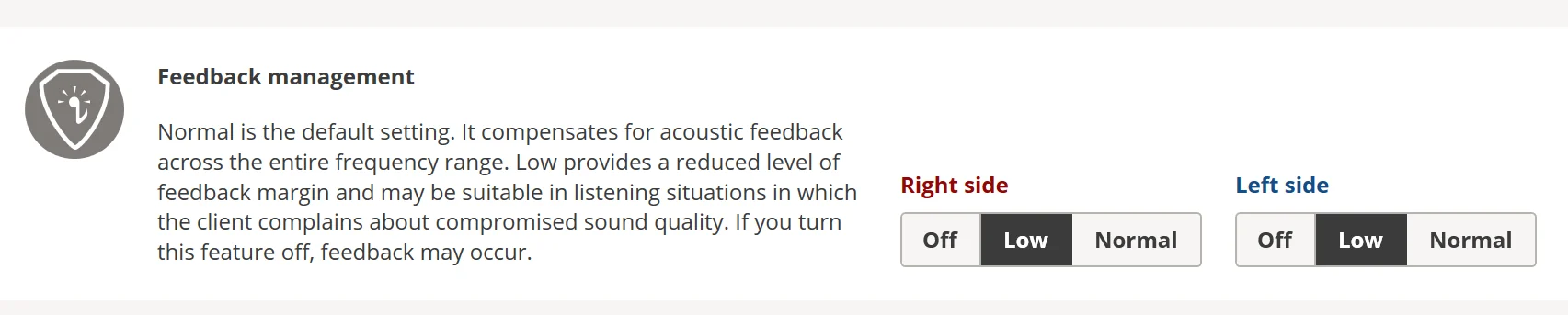
OK, I don’t think I hear this — but I’ll pay attention from now on. Just to clarify, if you don’t mind: maybe you’re referring to feedback management? That’s a known issue with the Intents, or really any Oticon hearing aid for that matter, as far as I remember. I always keep it set to “Low” because “Normal” tends to act up in a way similar to what you described.
I don’t know about that… So, as I said, when I first encountered this sound with the Sphere, I also suspected it was a feedback issue. However, I didn’t discuss this with an audiologist at the time.
I also had a similar sound when using Intent, but with the following characteristics:
This sound appears in phonak Sphere mode, but not in general mode or noisy environment.
I used PowerDome when trying on the Intent, and the sound still appeared after using CustomMold, although the overall feedback seemed improved. The feedback suppression kick-in feeling when using PowerDome is somewhat different. Now in high noise conditions, it feels like the release time of each vowel is shortened.
For Intent, I’m using normal feedback management. Perhaps I should try adjusting feedback management to low to see if there’s a difference.
I wouldn’t prefer to use Spheric all the times, but only when there’s a cacophony in an extreme environment. Hopefully one of these days, I’ll be able to find myself in such an environment to truly evaluate Spheric SILN to its full potential.


 Texas Hill Country

 Toronto, Canada