Why are there so few comments about Signia? I am trying the Pure (the lastest high end one) and would like to hear comparisons from people who’ve tried that model and also Oticon and Phonak Sphere. Especically now that the Phonaks got their Ultra firmware upgrade.
My last pair were Oticon More. My audiologist really likes Signia, but I’m not sure yet. There’s a nice app function that lets you shut off the microphones selectively, for example, silencing noise from the rear, and that helps in very noisy cafes and in small rooms with a lot of reverb and echo. But otherwise I think the Oticon more was better–plus, it had a “find my” feature that helped when I lost one on a sidewalk. Signia has no locator function. Thanks!
Actually Signia (Rexton) are discussed a bit, you may find some posts by using the search button from right here on hearingtracker, I’m glad your liking your Pure C&G, yes your Audiologist can set your up differently depending on what your preferences are, most people find different brands sound quite different between them, how’s your Bluetooth streaming, you can use Wunderfind or similar to find Bluetooth devices, try not to lose them, fit a canal lock to help with this.
Hi tenkan.Bluetooth is ok. I’m just not convinced that the Signias are really the best experience for speech in noise. I can’t do much of a trial, because I get them from my excellent US audiologist, but live abroad, and I’m in a tight trial period. I go back to the US next month for a week, and either stick with the Signia or take a leap of faith with Oticon Intent or Signia Sphere. Her patients have not had as much luck with Phonak over the years, she says, and she prefers the warmer sound of the SIgnia vs Oticon. She also doesn’ like the much bigger size of the phonak, though maybe that’s a good thing. Easier to find if misplaced. And…when people see my , they are more tolerant of me butchering their language, and they try to speak more clearly.
Her patients have not had as much luck with Phonak
This sounds very suspicious to me -The problem with many audiologists is that they’re also salespeople, and if they need to meet a quota or earn more money from a brand, they’ll push for that. In my opinion, a good audiologist should lay out the options and let you decide which one you prefer without giving what I call “empty recommendations” (I call those recommendations like “trust me, I know” or “many of my patients don’t like it” or “based on the , this is the brand I recommend”, “I don’t fit patients with xxx domes because they don’t like them”). I like facts.
I strongly recommend trying out as many aids as possible before making a final choice. Sound preferences are highly personal, and what one person loves, another might dislike. For instance, I personally don’t care for the Signia sound at all. You will not know which one you will like best until you try them. I understand the travel restriction but try at least a model (b).
“She also doesn’ like the much bigger size of the phonak”: Sounds like she is really trying to steer you away from Phonak IMO – It’s your ear, not hers
I should not be criticizing your audiologist, but the comments you posted make me suspicious.
And, if you are traveling and there is a Costco there, you can get the Rexton Reach for $1600 (which is identical to the Signia C&G) , 6 month return policy, unlimited adjustments and supplies
Yes, I agree that the advice from the audiologist sounds odd. I was surprised by the Phonak comment; so many people on this forum are excited about the Phonak Spheres, and the comment doesn’t match that at all.
I’ve got Signia (Owned by W S Audiology) Pure Charge & Go and am very happy with them.
The audiologist can make nearly infinite adjustments in order to suit them to my particular needs. For me, this resulted in outstanding performance. I only have 3 programs available now. (Universal, Tinnitus Masking and Noisy Environment.) The audiologist can put more if I desire.
Nearly all of my hearing loss and many tonal gaps are in the brain, not the ears. Therefore, troublesome frequencies are very slightly shifted to another frequency by the devices- while still leaving the original frequency stimulated by sound through the devices. This will, in time, train my brain to find new neural pathways for those sounds. After the first few months with the Signia, the brain has started compensating, allowing me to hear some sounds without the aids which I previously could not hear at all. Few- but it’s a start.
The Own Voice Compensation took time to “settle in”. The audiologist had me wear them for a couple of months, the re-tested me and adjusted. Now my own voice no longer sounds like a chipmunk.
is fine. If I fumble and don’t put them in before they turn on, there might be a very, very quiet fraction of a second feedback before the Signia kills it. (They can be programmed with a longer On Delay if I choose.) They also are amazing with wind noise. If I hear wind noise, the tiniest shift of the head position stops it. The tinnitus “masking” is so-so. It simply makes a white noise (or noise of my choice) to distract me from the tinnitus. It doesn’t cancel it.
The Universal program is nice. I can “aim” the direction that I want the hearing aids to listen- from full circle to full behind me or any where in between. (One does this with the phone. There is a circle and you swipe where you want the focus- left, right, all around, back, partly one way, partly another…)
The domes I have are the soft, silicone ones which have slots so I can hear ambient sounds. They are fine if I don’t push them in too deeply. If too deep, I get suction cup sounds when moving my jaw.
The bluetooth is good and bad. I think the “bad” is the fault of my phone. The phone can’t stream to the devices because it’s is not compatible with the FCC’s 2019 mandate. (So much for Lenovo Motorola playing by the rules.)
The “good” on the bluetooth is how strongly and flawlessly the hearing aids connect to my computer. I can stream sounds, alerts, music, videos, etc. to the aids and there are some adjustments I can do on the computer. (Volume of each ear individually, change programs & a few others.) Also available is the ability to play background sounds- sort of like tinnitus masking but more choices.
TV does not stream without a middle man device ($$)- but a newer TV can. (No bluetooth on the old Roku TV)
The phone app is not so great. Besides not streaming (my phone’s fault), anything I set with the phone (for example tinnitus mask volume, direction to listen, ear ear separate volume) are all sent back to default when I turn the aids or the app off. Unfortunately, the app crashes a lot. And, it’s Activity Tracking is silly. I walked 12 kilometers the other day and the tracking showed that I walked 230 steps that day. Wear time shows 1 or 2 hours a day, no matter how long I wear them.
Signia said that all of their devices will be compatible with . When = ?
I think the key is to wear them as-received for a long time- months perhaps. Then have the programming adjusted to suit. The audiologist’s plan for me is the first couple of months adjustment, then again in 6 months, then again a few months later.
Another helpful idea is to wear them for many hours most days, but do take breaks from them once in a while. Lots of people have told me this, including audiologists.
Summary-
The devices are great. The app, not so much great!
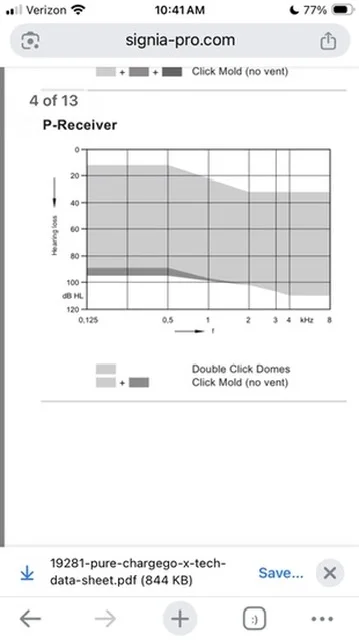
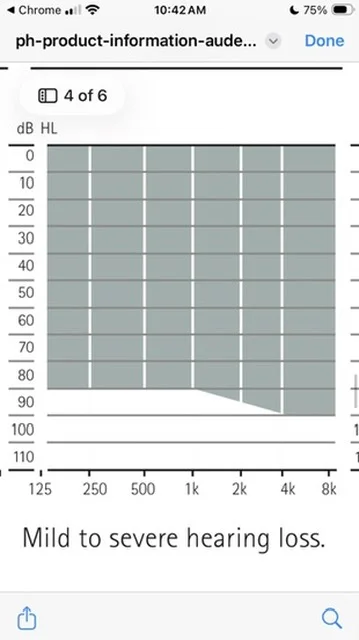
Also, Signia can amplify in the 4 kHz and higher range by a few more than Phonak. They may be better able to accommodate steep sloping high-frequency loss. I prefer Phonak’s sound, but nothing wrong with Signia at all.
My shows the max insertion gain I get with Audeo Lumity is about 50 at 4 khz and with the SIgnia Pure AX I get about max of 58dB at the same frequency. Furthermore, their fitting ranges with power receivers confirm a bit of a higher fitting range for high frequency with the Signia. It’s not dramatic but it’s real.
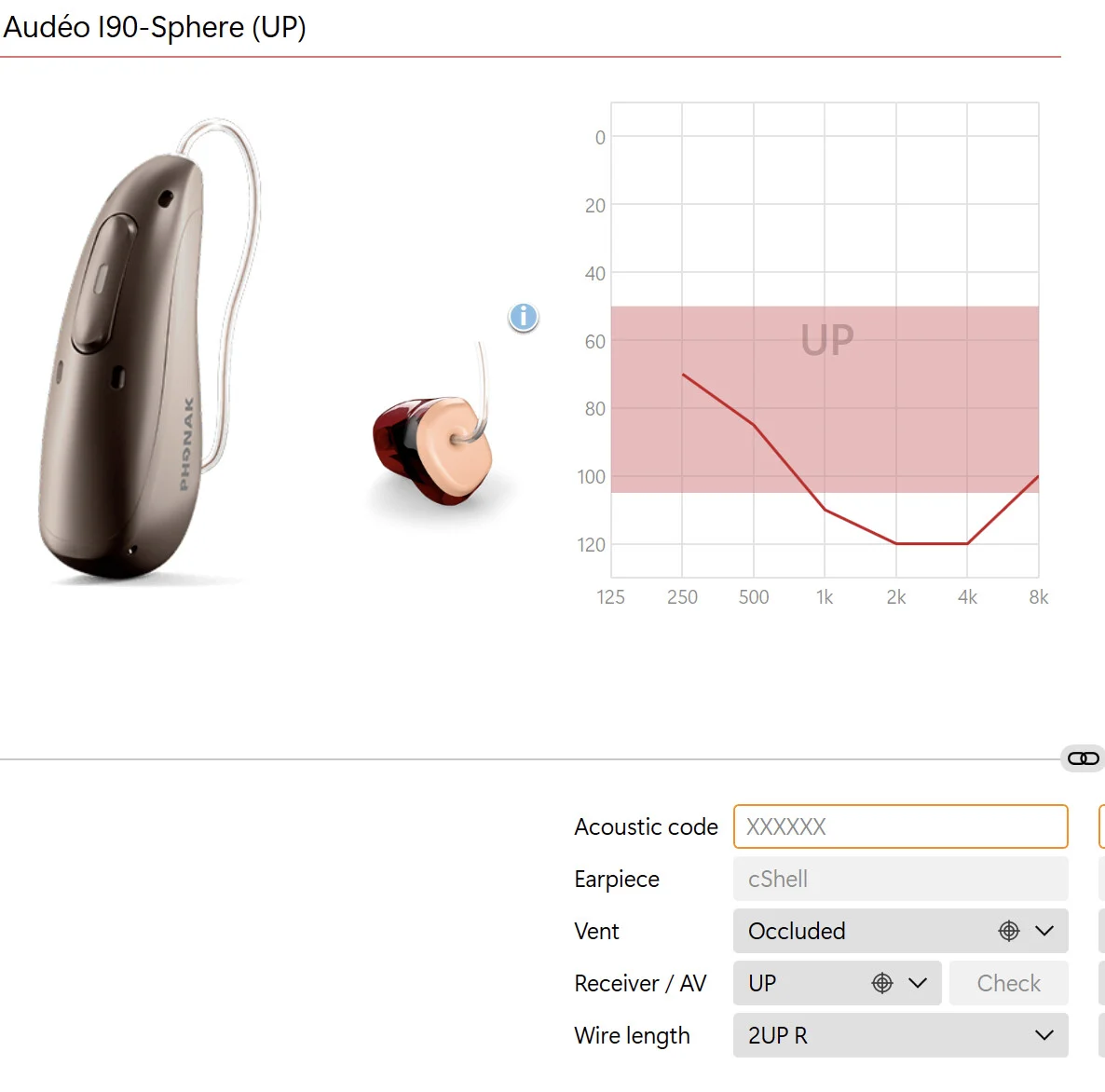
The following charts would suggest that in edge cases, Signia may be better for people with severe high frequency loss. Most people would do fine with either though, except for a few percent of outliers on either side of the hearing loss distribution curve. I’m unfortunately approaching the degree of high frequency loss that I may need to completely switch to Signia in the future, or go to Naida, but I’d prefer to stick with rather than brand loyalty.
Folks I have tried to understand the excitement really I have but I can’t figure out what it does for the average guy? “once the technology becomes widely available” if this requires a financial investment it might a be a long time.
Current Auricast-ready Hearing Aids
f Auracast-ready hearing aids that are prepared for seamless audio streaming once the Auracast technology becomes widely available. These models are equipped to take advantage of future firmware updates, enabling them to connect directly to a variety of public and private audio sources.
Ezoic ReSound Nexia – Known for advanced Bluetooth capabilities, Nexia’s models such as Micro and are ready for Auracast, featuring powerful directionality and speech comprehension technology designed for challenging listening environments. Jabra Enhance 20 – This model is engineered with Bluetooth in mind, making it a potential leader in future Auracast streaming updates. Signia Integrated Xperience (IX) – Equipped for future Auracast functionality, Signia IX models include modern hardware designed to handle shared audio streaming when fully activated through firmware updates. Oticon Intent and Philips HearLink 50 – Both of these hearing aids feature LE Audio readiness and will support Auracast for more flexible streaming of public audio once the technology matures. Cochlear Nucleus 8 Sound Processor – Although primarily a cochlear implant processor, the Nucleus 8 supports Auracast for users needing cochlear devices. Phonak Infinio – Phonak’s Infinio series features a forward-thinking approach with LE Audio compatibility, ensuring that they’re ready to handle Auracast’s dynamic streaming capabilities as the technology becomes more widespread.
These devices reflect the industry’s movement toward a streamlined and adaptable audio experience, where Auracast technology could bring a more inclusive and accessible future for all hearing aid users. As Auracast expands, this list will likely grow, ushering in a new era of accessible, wireless audio streaming.
Auracast is setting the stage for the next generation of universal audio streaming. If you’d like to explore how this breakthrough fits with the full range of modern accessories, don’t miss our ultimate guide to hearing aid accessories and tech.
If I am reading this right you really can’t compare gains at a particular frequency between brands. The fitting algorithms play a huge part in what gain will be targeted. My understanding.
And as Tenkan said. You don’t need a UP receiver for your hearing loss. Almost do not need a P receiver either.
If you did round-dancing, you would understand why.
In addition, TV streaming is much cheaper then using the dedicated manufacture’s streaming device. Sport bars can have multiple TVs going and you can select the one you want to listen to go directly into your hearing aids. Museums sounds, tours, lectures and so on go directly into your hearing aids.
Use a USB dongle, and you have access to your computer’s sound output.
I agree is already here and beneficial for those that have Auracast enabled aids.
I use Auracast on a daily basis to connect my aids directly with my TV, my laptop and my tablet. I use three different Auracast transmitters, each of which cost less than £50. They all provide easy to use, solid connection and high sound quality. The TV streamer I use cost £45 compared £200 for the hearing aid manufacturer’s device.
The growth in Auracast broadcast in public and business environments will be driven by the fact that this is not a technology limited to hearing aid users but available to anyone via Auracast compatible earbuds/headphones. Those manufacturers holding back on implementing /Auracast are doing themselves and their customers a disservice.
I use Auracast on a daily basis to connect my aids directly with my TV, my laptop and my tablet. I use three different Auracast transmitters, each of which cost less than £50.
Brilliant, yeah it’s far cheaper and as it’s been noticed from other members Phonak is one company that’s stalling.. their proprietary stuff including Roger is at real risk of becoming obsolete within a very short time.



 San Francisco




 London