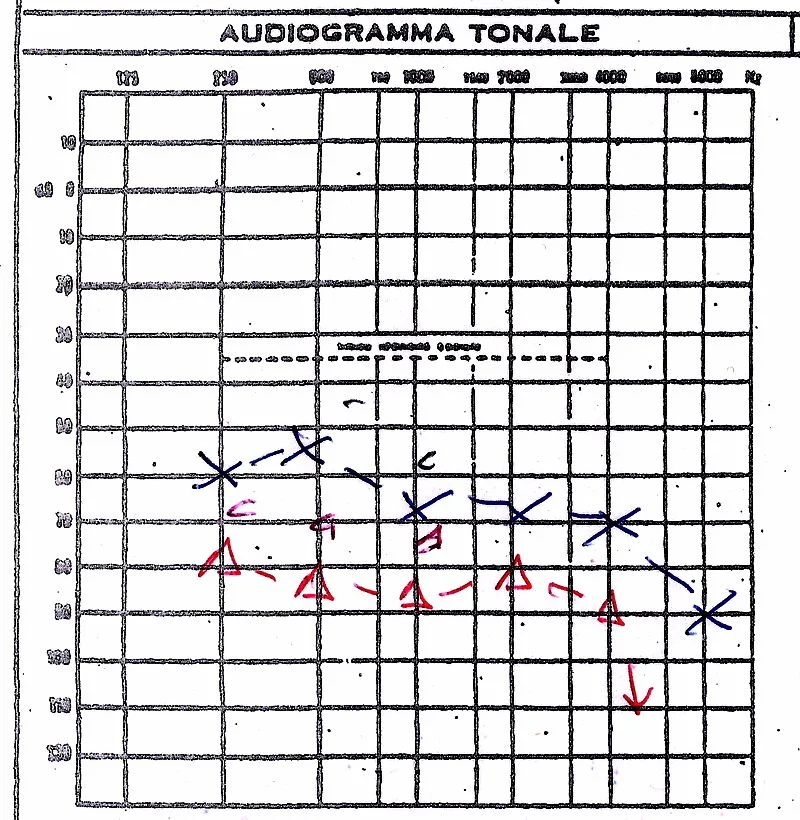
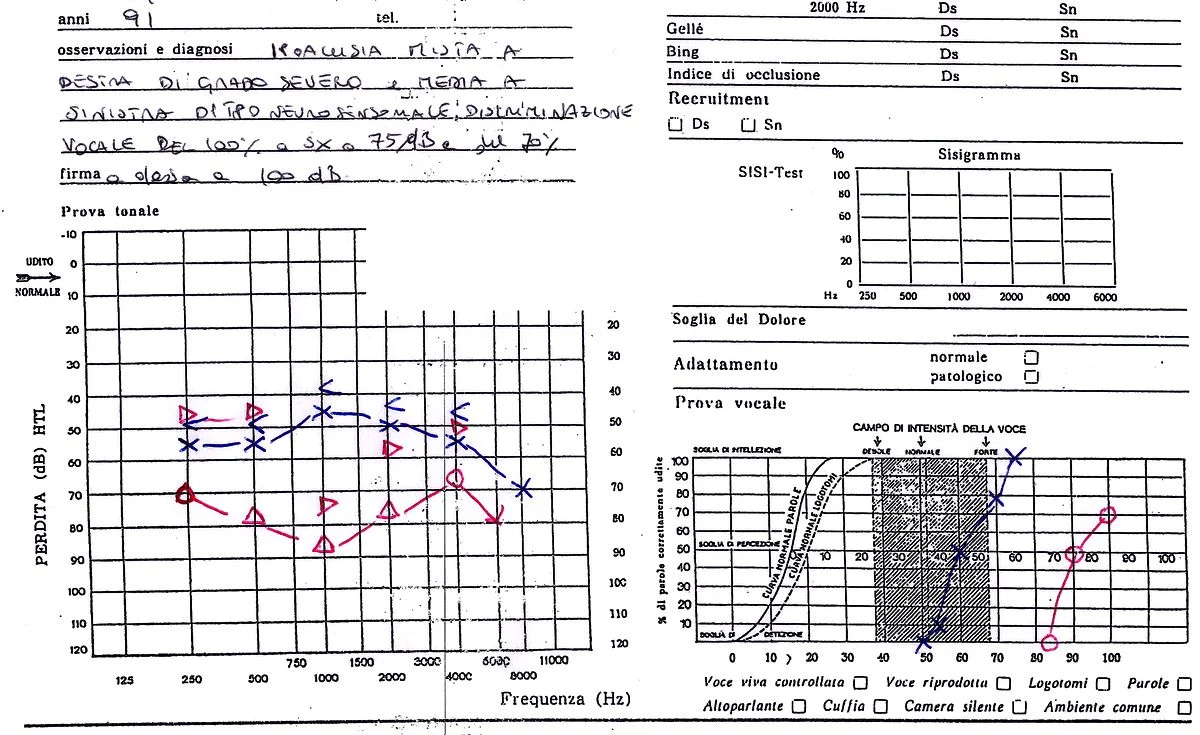
An old relative of mine is about to move from with max-power receiver embedded in custom earmolds to max-power HAs, again with custom earmolds. She currently makes & takes phone calls by streaming via bluetooth directly to her RICs, and this will remain the same with the BTEs. At the moment, phone listening via bluetooth is not optimal, while face to face listening is very poor; that’s the reason for switching to max-power BTEs, which should improve her face to face speech intelligibility.
She’s going to evaluate BTE models from the same brand and very likely on the same electronic platform, so the /chip should be identical. I therefore assume that management (codec, bandwidth, gain mapping, streaming processing) in the new BTEs will be the same as in the current RICs.
The current RIC custom earmolds have a specific feature: the right one is larger, fills the entire concha, and has a vent, while the left one is much smaller and without vent. I assume this is because the right ear has a more severe , however the audiologist told me that the earmold SW determines shell size and venting after all “data” are entered and there’s no way to explicitly request and obtain no vent in the earmold manufacturing SW. Is that true? My concern is that a vent in the new BTEs earmolds may introduce a slight loss of effective acoustic output, since part of the amplified sound can escape through the vent instead of reaching the eardrum, especially in power fittings.
The only thing I know for sure is that moving from RIC to BTE will increase available acoustic power but will worsen perceived audio quality. Face to face listening will therefore certainly be “different” and hopefully better but what I’m wondering is whether, all else being equal, I mean same electronic platform HAs, same phone, same type of custom earmolds, it’s more predictable what will change in bluetooth phone listening. I’m especially interested in feedback from those who have personally gone through a RIC → BTE power switch.
I’m asking in order to understand whether the investment in new BTE HAs is justified also in terms of improved phone call performance, or whether little or nothing will change in this specific aspect.
You’re ignoring this member’s posts.



 Wales, UK

 Texas Hill Country