
 Texas Hill Country
My residual hearing was tested about a month ago at roughly 75 dB.
I am sorry but this makes no sense to me. Could you explain this differently?
You’re ignoring this member’s posts.
72 replies516 viewsLast reply
My residual hearing was tested about a month ago at roughly 75 dB.
I am sorry but this makes no sense to me. Could you explain this differently?
You’re ignoring this member’s posts.
If I take off the cochlear implant processor on my implanted right ear and can wear a hearing aid instead, reaching a hearing level of 30 dB with a word recognition score above 70%, I would prefer to use a hearing aid.
Have you ever had tested your implanted ear without turned on?
I don't know what do you mean saying "hearing level 30 ".
I think it's better to have tonal (air +bony thresholds) performed on the bare CI ear without sound processor amd without hearing aid.
You’re ignoring this member’s posts.

My right ear has residual hearing of 75 , tested roughly one month after cochlear implant surgery. I want to wear a hearing aid again. However, I will not undergo explant surgery unless there is an 80% chance of success, because I need to get on with my life.
You’re ignoring this member’s posts.
I hope that after explanting the implant and wearing a hearing aid, my hearing can reach 30 . I would much rather use a hearing aid. I have done hearing tests, but I can only understand the and cannot interpret other test results.
You’re ignoring this member’s posts.

In the short term, there's nothing stopping you from discontinuing usage and switching to a hearing aid. In the long-term you need ask your audiologist if there are any issues with component degradation it is goes unused. Using it for an hour a day in private might be a way of mitigating these. Removing the implant for the reasons you've described exposes you to unnecessary risk and is unlikely to be recommended.
You’re ignoring this member’s posts.

I understand that the implant causes you a lot of psychological discomfort, and I respect that you want to go back to hearing aids. I went through something similar when I was younger. I experienced the stigma of wearing hearing aids, so I understand how difficult it can feel to have a device that makes you feel different.
For me, that feeling changed completely over time. Nowadays, I actually think of my hearing aids almost like fashion accessories, and I don't feel embarrassed about them at all.
That's why, before having the implant removed, I wonder if it might be worth talking to a psychologist who has experience with cochlear implants, hearing loss, or medical devices. Not because I think your feelings are "all in your head," but because it might help you understand what is causing the discomfort and whether your feelings toward the implant could change over time.
I'm not saying you shouldn't have it removed. That's ultimately your decision. I just think that because removal is a significant and potentially irreversible step, it might be worth exploring this aspect first. If you still feel the same afterward, at least you'll know you've considered that side of it as well.
You’re ignoring this member’s posts.
I hope that after explanting the implant and wearing a hearing aid, my hearing can reach 30 dB
Still, you didn't explain what do you mean writing "30 " or "75 dB". Is it for one specific frequency? It makes no sense for me.
If you had already severe hearing loss in your bare Ci ear, it is unlikely to have better hearing after explantation. It's high probability to have residual hearing destroyed just because of procedure of explantation, which comes with unnecessary risks.
And that ear with high probability will be unusable even with hearing aids.
Usaeful hearing isn't just only thresholds. It's also practical speech understanding.
Why explanting cochlear implant if you simply may not use the sound processor and use hearing aid normally, maybe after some adjustments, preferably with REM?
It doesn't make sense to me, because internal part is completely unnoticeable. If you want use hearing aid, you simply use it instead of sound processor and explantation is unnecessary.
You didn't answered to my questions, which gives me an impression you may be in somewhat crisis situation. You are repeating much sentences of the same meaning.
Perhaps it would be good to talk with someone who you trust? I don't know how it's interpreted in your culture, but in ours (I mean Poland or Western) taking psychological help isn't something to be ashamed.
I am not malicious. I just try to help, but that's doesn't mean I don't consider your explantation idea as very, very dangerous for your further health and quality of life, because of completely destroyed hearing by explantation procedure.
You’re ignoring this member’s posts.
A doctor told me at the hospital the other day that I cannot wear a hearing aid on the implanted ear unless the implant is removed. I didn’t know that.
That's completely untrue. Just don't wear sound processor and take hearing aid instead. However, hearing aid should be adjusted to your new of right ear.
You’re ignoring this member’s posts.
Still, you didn't explain what do you mean writing "30 dB" or "75 dB". Is it for one specific frequency? It makes no sense for me.
I suspect 30dBHL was his average aided threshold with a hearing aid on that side. I suspect was recommended due to his poor speech understanding of 60% correct.
You’re ignoring this member’s posts.
Okay, I see now that her loss is flat line, so it's perhaps rough approximation of average hearing loss.
I suspect 30dBHL was his average aided threshold with a hearing aid on that side.
For what I know (maybe wrong), aided thresholds are very tricky and much less reliable compared to or test box measures, because it can engage some features like antifeedback mechanism etc.?
With sound processors feedback problem is non-existent so in their case it's useful measurement.
You’re ignoring this member’s posts.
In reply to @Hearing_Potential
Thanks for your help suspecting. As a layman I was clueless what the OP was describing.
I still suspect errors. Pardon my humor.
You’re ignoring this member’s posts.

@jiajia I don’t know if any of the other professionals here, giving you answers above have mentioned this option.
You don’t have to have the array removed, it can be deactivated, by your audiologist. By having it deactivated and trying a hearing aid on this ear. If your hearing without the drops significantly more over the next decade or so, the array can then be activated and remapped. IMO the risk to your remaining hearing in CI ear could be damaged further with removing the array.
By doing it this way you’re saving yourself further surgery when/if you need to have your CI array reactivated sometime in the future.
Good luck to you.
You’re ignoring this member’s posts.
You don’t have to have the array removed, it can be deactivated, by your audiologist.
According to the limited research I've done, this isn't required and the internal components will remain stable over time. All the OP needs to do is cease using their sound processor. They can start using it again at any time provided the rechargeable batteries for the sound processor don't fall into a state of deep discharge.
The internal components don't contain batteries of any type and are purely passive so can remain without charge for a long time without degradation due to the silastic covering.
ReMAPing may be required if it has been a very long time since last use.
They should check all of the above with their audiologist to be sure.
You’re ignoring this member’s posts.
Yes, I also have a sense of rejection toward hearing aids, but after getting the cochlear implant, I actually miss how compact hearing aids are. I decided to get the because I wore hearing aids for three years and tried three different models. Even after countless fittings over those 3 years, I still suffered headaches and dizziness, likely due to poor tuning. That’s why I made up my mind to undergo cochlear implantation.
For me personally, I would only consider explant surgery if there was an 80% chance of preserving my residual hearing. If the risk is high and removal could leave me with permanent disability, I will not go ahead with this surgery.
If I could wear a hearing aid while keeping the implant in place and make use of my residual hearing at 75 , I would accept it even if the outcome is not perfect. My residual hearing in the right ear was tested at 75 dB about a month ago. I wonder if you can understand how I feel.
You’re ignoring this member’s posts.
Thank you。 What I mean by hearing level of 30 is: after I remove the external sound processor of my right cochlear implant, I hope I can reach around 30 dB with a hearing aid on that ear. This is my goal.
I haven’t verified whether this is actually possible. One doctor told me it cannot be done. Many of you also pointed out explant surgery may lead to permanent disability, so I will not consider explant surgery for now.
Thank you all so much for your analysis and advice. I still have my life to live. I cannot impulsively remove the implant just because I dislike wearing the external processor.
If I could keep the internal implant in place and still wear a hearing aid to make use of my 75 dB residual hearing, that would be amazing. My hearing loss is flat. The 30 dB target is my own expected estimate; I haven’t actually tested this outcome yet.
You’re ignoring this member’s posts.
In reply to @Hearing_Potential
According to the limited research I've done, this isn't required and the internal components will remain stable over time. All the OP needs to do is cease using their sound processor.
Exactly this. Fully agree.
They can start using it again at any time provided the rechargeable batteries for the sound processor don't fall into a state of deep discharge.
You woke up bad memories in me😅😂 ~10 years ago, I managed to buy a rechargeable battery on sale with a price lower by 1/3 (from ~320 USD equivalent in PLN to mere ~220 USD).
It was at a time when my knowledge of batteries was low, from the days of Ni-Mh battery, I known nothing about Li-ion technology.
Happy with the promotion, I hid this battery in a drawer without charging it, because my previously used battery was OK, I bought only spare.
After half year I tried to use new battery at it was completely dead - even unable to be charged. I haven't used it even once since I bought it.😭
ReMAPing may be required if it has been a very long time since last use.
That was my case. After putting sound processor to the drawer for ~6.5 years (2016-2022) I had to have a new mapping done.
You’re ignoring this member’s posts.
It feels amazing to be understood. It makes me realize I’m not the only one fighting this condition. I believe time will ease my mental discomfort.
Thank you for your advice. I plan to book an appointment with a psychologist soon to talk through these feelings. A big part of my struggle is how I feel about the device visually, though most people around me don’t find it unusual at all.
So many professionals have told me explant surgery is not recommended and I shouldn’t remove the implant. I guess this is my reality, and I need to come to terms with it.
You’re ignoring this member’s posts.
Still, given you have impressive results with speech understanding with and sound processor (100%...! Wow!), maybe consider N8 instead of K2?
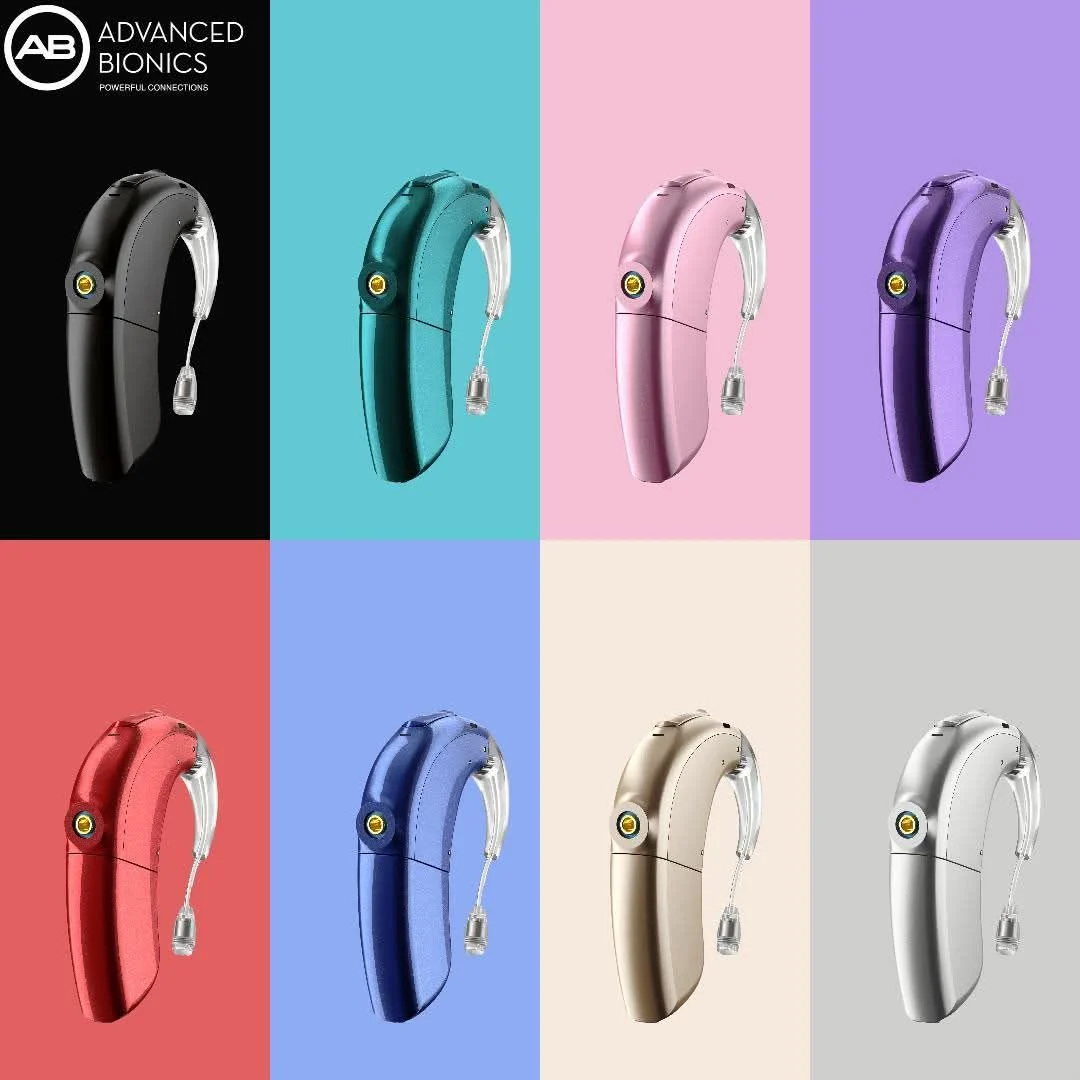
Speaking for appearance, you can choose different colours, or make it more cool like in cases below:
Too bad you can't have sound processors from Advanced Bionics, they are particularly beautiful (@1Bluejay was delighted):
You’re ignoring this member’s posts.
In reply to @Hearing_Potential
It would be amazing if I could wear a hearing aid while keeping my internal implant in place. I’m going to see a professional audiologist tomorrow with my hearing aid to try adjusting it for my ear after cochlear implantation. I want to give it a go. If the hearing aid works, even if its performance is a little worse than the cochlear implant, I think I can accept that.
Thank you so much for analyzing and explaining this issue to me, and also telling me all the risks. I really appreciate your help. If the hearing aid works well after tomorrow’s adjustment, I will be so grateful to all of you.
I’ve been on this hearing journey for five years, and it has been exhausting. Sometimes I struggle with hearing, sometimes I dislike the appearance of the device. There have been all kinds of difficulties along the way. It has really been a tough road.
You’re ignoring this member’s posts.
They do look lovely. But I have the Australian Cochlear K2 all-in-one implant. When I decided on the surgery, I thought this all-in-one processor wasn’t bulky. I didn’t expect that once I actually wear it, it feels rather thick instead of slim, and it brings some weight and pressure on my head. I can tolerate this physical burden; my head can handle the weight. However, the psychological barrier still causes me some discomfort.
You’re ignoring this member’s posts.
Log in to reply to this topic.
Cochlear Implants17 replies
Cochlear Implants10 replies
Cochlear Implants7 replies
Hearing Aids2 replies
Hearing Aids21 replies
 Poland
 CHINA
 Croatia
 Melbourne