Windows could support if Microsoft licensed it and implemented a driver. I doubt that will happen. It’s more likely that Microsoft will implement a driver for a SIG hearing aid protocol when it becomes available.
You’re ignoring this member’s posts.
This topic is closed.
83 replies8.4k viewsLast reply
Windows could support if Microsoft licensed it and implemented a driver. I doubt that will happen. It’s more likely that Microsoft will implement a driver for a SIG hearing aid protocol when it becomes available.
You’re ignoring this member’s posts.

True. And I too doubt that it would happen.
And with Microsoft’s enthusiastic support of Android since the failure of Windows Phone, I too think that Microsoft’s implementing a Microsoft supported driver for the SIG will probably happen.
You’re ignoring this member’s posts.

Windows could support ASHA if Microsoft licensed it and implemented a driver. I doubt that will happen. It’s more likely that Microsoft will implement a driver for a BT SIG hearing aid protocol when it becomes available.
Isn’t it the manufacturer of the device or component that usually makes the driver?
You’re ignoring this member’s posts.
Technically, you are of course correct, Daryl. But if you look at what actually works where, I think that’s all that’s important to users.
Bluetooth Classic works with Android phones, iOS iPhones, Microsoft Windows 10 computers, and Apple computers.
(Made For iPhone) only works with Apple products.
You’re ignoring this member’s posts.

I don’t know about Windows, but with Android (don’t know if it technically uses drivers or not) it certainly seems to be the manufacturer’s perogative whether to implement a feature or not. This is where we’re at with . It’s an open standard, but only one hearing aid is using it and it’s used in only the latest phones from Google and Samsung. Agree with @darylm that the use of “proprietary” on the forum has become meaningless. It means related to an owner or ownership. Instead it’s become more like a political slur.
You’re ignoring this member’s posts.

Instead it’s become more like a political slur.
Yup. It’s my political slur against all things Apple for the fact that they’ve always been a closed proprietary world.
I will continue to use it as a slur. Turns out it’s factual though. I like facts.
I wouldn’t say bluetooth is proprietary in the same way UL or CSA aren’t proprietary. Or IEEE. Or .
You’re ignoring this member’s posts.
I would agree that calling Made for iPhone proprietary is factual. Calling Phonak’s system “non-proprietary” is not “factual” if one is using dictionary meaning of the word.
You’re ignoring this member’s posts.
Since we’re splitting hairs…it’s not Phonak’s system. They licensed a standard from a non-profit standards body. That body doesn’t make a product that only their standard works on.
I think it’s a stretch to say it’s proprietary but I concede that it’s dictionary. So you wanna use the term and technology called bluetooth? Well then pay us. But it’s open.
So you wanna say your product is UL listed? Well then pay us. But help yourself.
From the wikipedia page:
The Bluetooth Special Interest Group is the standards organisation that oversees the development of Bluetooth standards and the licensing of the Bluetooth technologies and trademarks to manufacturers. The SIG is a not-for-profit, non-stock corporation founded in September 1998.
You’re ignoring this member’s posts.

I have not checked but is Phonak claiming patent rights on their method? Are they publishing standards that other hearing aid manufacturers could use to implement the system? If they are claiming patent rights and not sharing the technology then that is about as proprietary as it gets.
You’re ignoring this member’s posts.
I believe Phonak’s Sword chip which enables the use of Bluetooth Classic is patented. I haven’t seen any evidence that Phonak is willing to share. This is different than Google’s which they seem perfectly willing to share. Unfortunately as of yet, there aren’t many takers.
You’re ignoring this member’s posts.
It would seem that the Phonak approach will remain unique to Phonak then. My expectation is that will emerge as the standard for Android then. Probably more and more hearing aids will adopt the standard, as well as more and more Android phones. Going to take some time though…
You’re ignoring this member’s posts.
If that will be the case then I can see Phonak reaping the benefit of being the only approach that allows for connection to all devices that can use Bluetooth Classic. And that appears to be, at this time, literally all devices whether they be Android, Apple or Microsoft.
My devices are Android and Microsoft and I’m not going to change devices. Phonak Marvels, after a year, are still the only solution for me.
You’re ignoring this member’s posts.
Why should they share the Sword chip tech? Does anyone else? No. They are using the open standards licensed to them from the SIG. That’s as far as that needs to go. Certainly everything else in there can be proprietary to them, and I’m fine with that, but the standard is not. What’s that term…brand agnostic. A manufacturer uses an open technology that agrees and works with other disparate manufacturers using the same open technology. Dell and HP are fierce competitors but their products can talk to each other using these same open standards. And both with the Marvels.
You’re ignoring this member’s posts.
If that will be the case then I can see Phonak reaping the benefit of being the only approach that allows for connection to all devices that can use Bluetooth Classic.
Perhaps in the short term. The other manufacturers that currently use will have to make a decision as to whether they develop their own unique solution like Phonak, or if they will just adopt in addition to MFi. my guess would be that they will get on the ASHA bandwagon. How does the saying go? “It is difficult to make predictions, especially about the future!”
My thoughts are that choosing your hearing aids based on your cell phone is letting the tail wag the dog. Much easier to change the tail!
You’re ignoring this member’s posts.
My thoughts are that choosing your hearing aids based on your cell phone is letting the tail wag the dog. Much easier to change the tail!
Some people become quite attached to their dog. 
You’re ignoring this member’s posts.
unique solution like Phonak
And I would say this is not a unique solution. They’re only currently unique in that they’re the only ones to have chosen not to drink the Apple koolaid. But their solution is plain old open standard bluetooth.
You’re ignoring this member’s posts.
Drivers are layered. It’s fair to say that the lowest level driver is usually provided by the hardware manufacturer (e.g., Intel or Broadcomm), but the hooks into the operating system are done by Microsoft.
You’re ignoring this member’s posts.
@TraderGary You’re changing the subject. You made the statement about and being proprietary, not me. They are all proprietary, as I explained.
You’re ignoring this member’s posts.
You don’t have to guess what Resound and Oticon will do. They already said they will support both. The only question is what Phonak and the others will do.
You’re ignoring this member’s posts.

Somewhere in the forum, too, is a post or two saying that Starkey has committed to supporting , too. So that’s at least 3 of what used to be The Big Six.
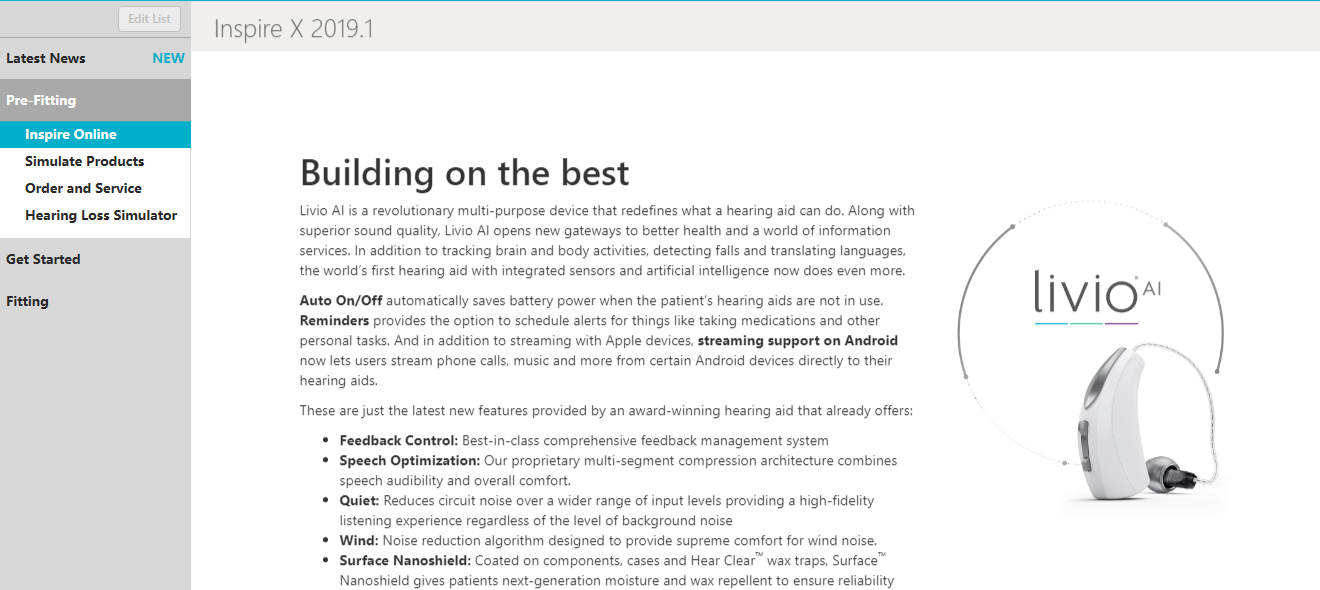
Starkey China branch just issued an announcement today, After upgrading the firmware through the 2019.1 fitting software, Livio and Livio AI will streaming support on Android. This is the description in the fitting software [image]
You’re ignoring this member’s posts.
What the forum has been talking about this week.
Hearing Aids168 replies
Fitting Software Requests511 replies
Hearing Aids71 replies
Fitting Software Requests134 replies
Hearing Aids48 replies
 Atlanta, Georgia, USA