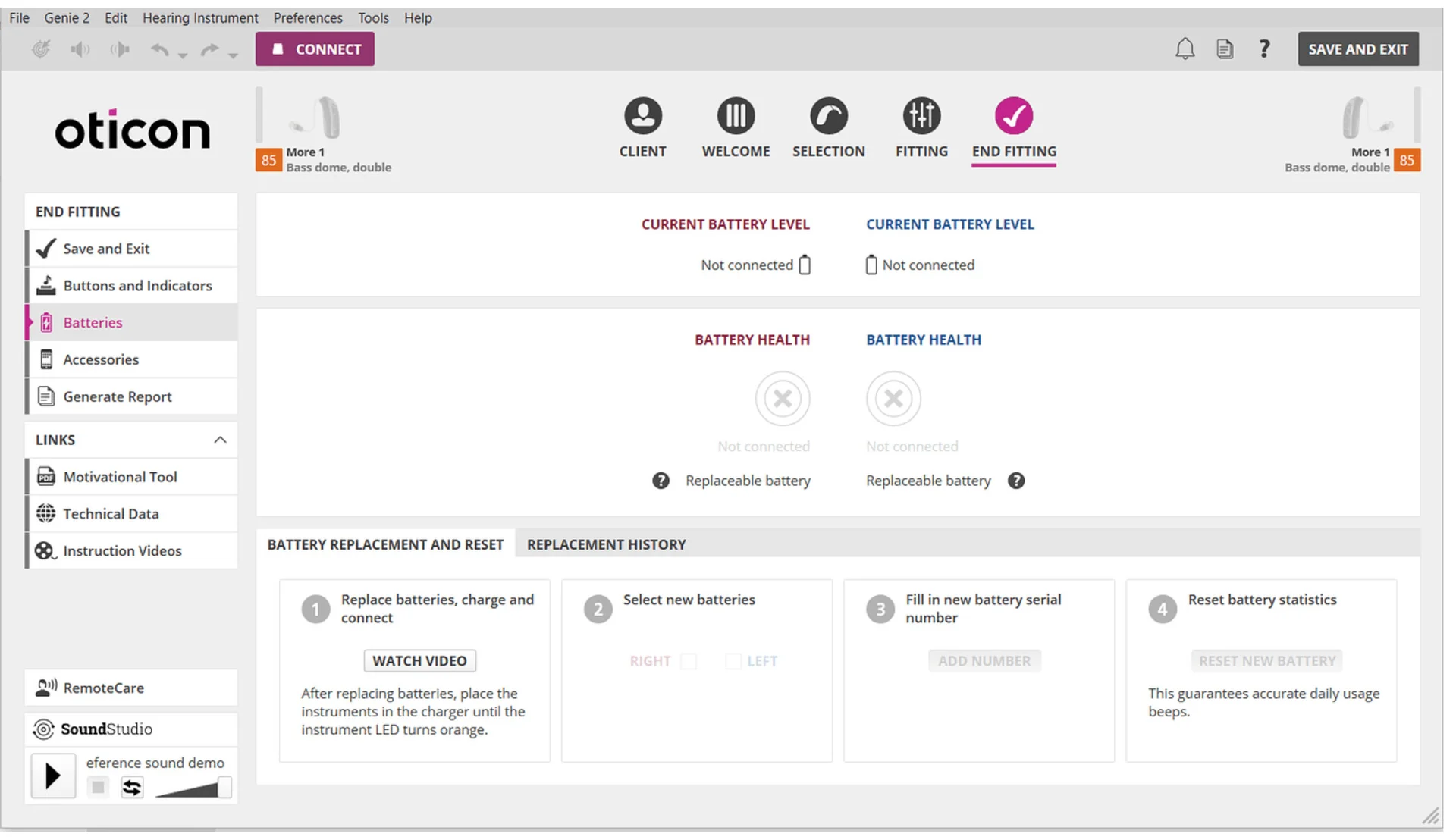
Generally for Lithium-ion batteries, completely discharging the battery is bad for its longevity. Keeping the battery in a fully charged state for a long time is also not good for its longevity, but probably not as bad as completely discharging it.
But it seems like the manufacturer has the discretion to build buffer zones around the charging system to allow the battery not to be completely drained nor fully charged, if they want to. Of course the drawback for having these buffer zones is that you don’t get to utilize the full capacity of the battery. In situations where the full capacity is needed and the battery system can’t be over-designed / over-sized to be able to afford having buffer zones, then the users get the short end of the stick.
It seems like you can probably spend 16-hour day on a More battery with plenty of juice to spare, such that Oticon should be able to afford put in buffer zones to prevent complete discharges or full charges if they really want to. Or at least give the users some option to be warned if they pass buffer zones. But apparently Oticon chose not to do any of that and allow the possibility of run-away discharging to occur. That’s shame on Oticon.
Everyone should be remember to require new batteries just before their 3-year warranty is up, then after that, be very mindful to not allow full discharges if they can.




 Oticonian/Disposablyte
 Hot Springs Village, Arkansas