What would an optimal compression ratio be around? I read somewhere else that it shouldn’t be higher that 3.
You’re ignoring this member’s posts.
This topic is closed.
18 replies1.8k viewsLast reply
What would an optimal compression ratio be around? I read somewhere else that it shouldn’t be higher that 3.
You’re ignoring this member’s posts.

Think it depends on how sensitive you are too loud sounds.
My friend has something beginning with H where she gets pain when sounds are too loud.
She now prefers a really high compression ratio to help with this.
Took her a while to get used to it but she’s now wearing her hearing aids a lot more now.
You’re ignoring this member’s posts.
You’re ignoring this member’s posts.
You’re ignoring this member’s posts.
You’re ignoring this member’s posts.

It depends on how much conductive element there is as well as the extent of the loss, plus the degree of recruitment.
Pure conductive losses can cope with pretty linear gain (compression of 1). Severe losses with more recruitment will require higher levels of compression.
Compression values over 3 yield some odd temporal sound artefacts - so that’s why devices are limited to this figure.
You’re ignoring this member’s posts.
Does low compression ratio mean louder sounds?
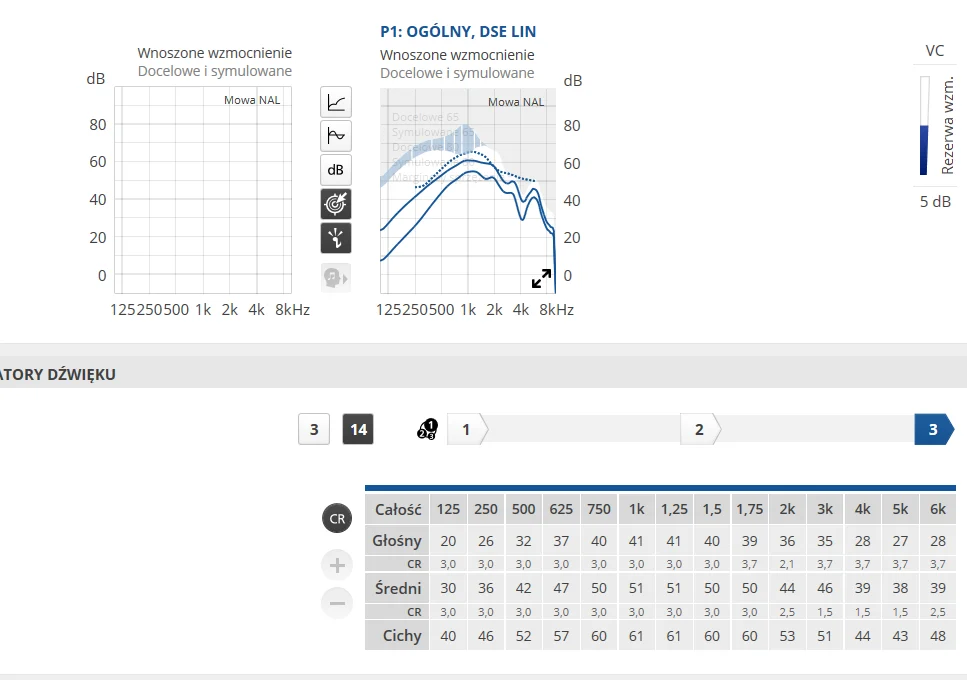
For my ,compression ratios in the target are as follows.
Phonak rationale : Low range:2,3 , Mid range: 1,8 , High range: 1,7
NAL NL2 rationale: Low range:1,6 , Mid range: 1,5 , High range: 1,1
Which one would you suggest?
You’re ignoring this member’s posts.
You’re ignoring this member’s posts.
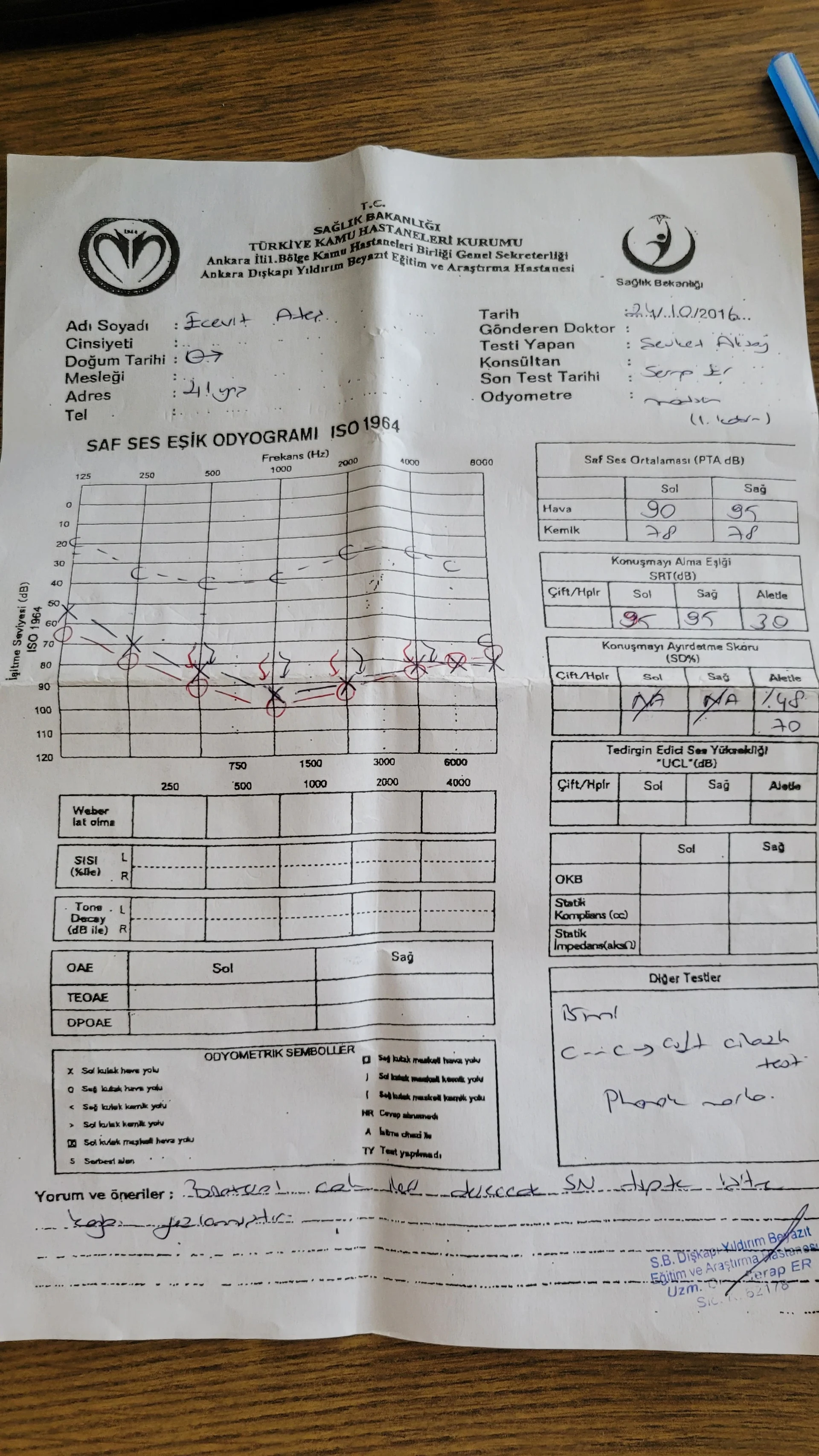
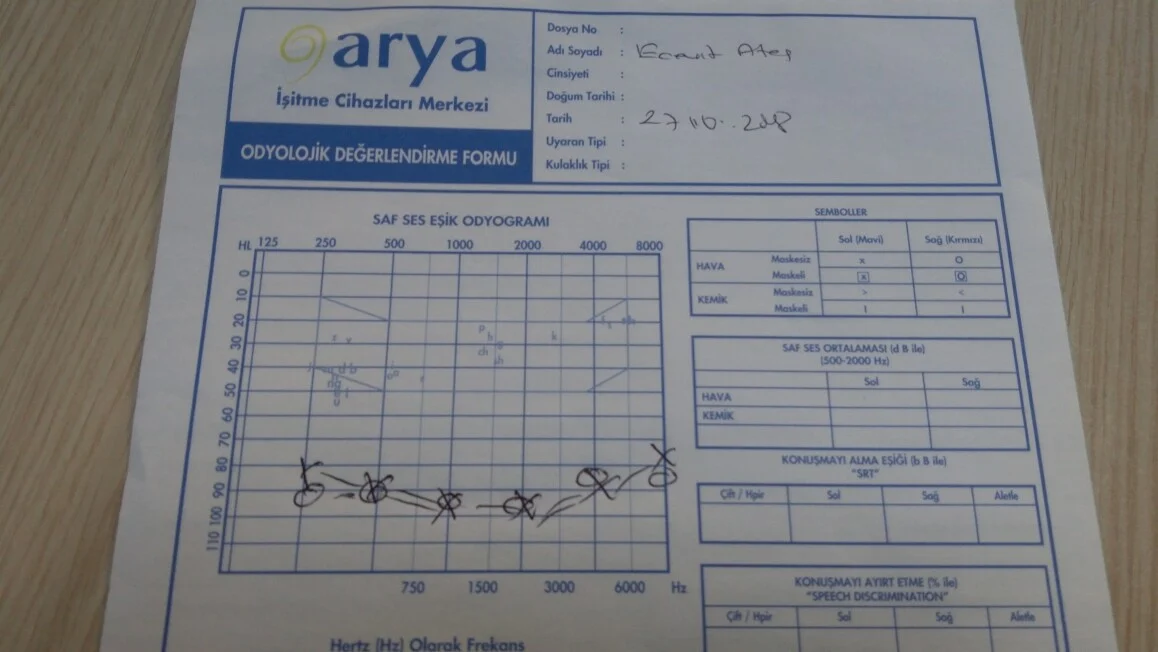
If that’s a question for me: that chart doesn’t give your Bone Conduction results for both ears.
Without this info, the ratios are simply a guess on the part of the manufacturer’s implementation of the amplification prescription for each of those rationales.
40 db+ of bone gap would be practically linear: while full SN versions of that loss would require considerable compression.
You’re ignoring this member’s posts.
You’re ignoring this member’s posts.
That’s better. You have a sensorineural (SN) loss, which means that you’d certainly benefit from fairly significant compression. Assuming your uncomfortable loudness levels aren’t too reduced, bringing up the gain of the quietest sounds so they are clear, while letting the SW sort out the louder sounds would seem feasible.
The basis of this ‘problem’ is that 120dB of ‘dynamic range’ needs to be stuffed into your residual 40dB or so. The trade off is higher compression.
You’re ignoring this member’s posts.
Thanks. Do you think the compression ratios I mentioned before wouldn’t be sufficient?
The C symbols in the were results with wearing my older aids.
You’re ignoring this member’s posts.
You could probably go to higher values at lower input levels G50 to improve the audibility of quieter sounds. Currently the aided values aren’t that great to be honest ; you’d still be missing a lot of the quietest speech.
Get them wound up (more G 50 gain, accurate ULL) in a second program to see if you can benefit from the level improvements before encountering artefacts in the sound. It’s only by doing a real world A;B comparison that you’ll know if it’s going to work for you. Obviously I can’t see your Real Ear Measurement response; so you need to be a little bit judicious, that’s why I’d try it as a second program first.
You’re ignoring this member’s posts.
Thanks.
I didn’t have hearing test with my current aids but they are louder than the old ones so I may expect to get slightly better results if I had a test. I had the test in 2016 to see if I’m a cochlear implant candidate and the audilogy specialist said that I was . I was reluctant to go to cochlear route for some reasons.
I can try your suggestion when I get my new aids, phonak naida paradise UP 30. Would that increase compression ?
You’re ignoring this member’s posts.
As you have the Target software, why don’t you try it and see what happens with the compression?
You don’t have to physically connect Aids themselves but make sure you select the right Aids on the software.
You’re ignoring this member’s posts.
Could someone explain what compression is and how to set acceptable values?
Below my settings, the selected formulas are DSE LIN, Lecture, Speech in Noise, DSE LIN. I have not set the compression, it sets the program automatically based on the hearing test?
In my opinion, Nal-Nal1 and 2 do not help with speech understanding, while the current settings are good for speech understanding during a family gathering in a large group.
You’re ignoring this member’s posts.

I’m likely way oversimplifying, but compression is applying more gain to soft sounds than loud sounds. The purpose is to keep loud sounds within an acceptable limit. It’s expressed as a ratio, with 1 being no compression, also called linear. “Acceptable” is in the ear of the beholder.
You’re ignoring this member’s posts.
You’re ignoring this member’s posts.
You’re ignoring this member’s posts.
Hearing Aid Self-Fitting (DIY)1 reply
Hearing Aid Self-Fitting (DIY)12 replies
Fitting Software Requests1.1k replies
Fitting Software Requests512 replies
Hearing Aids104 replies

 Wales, UK