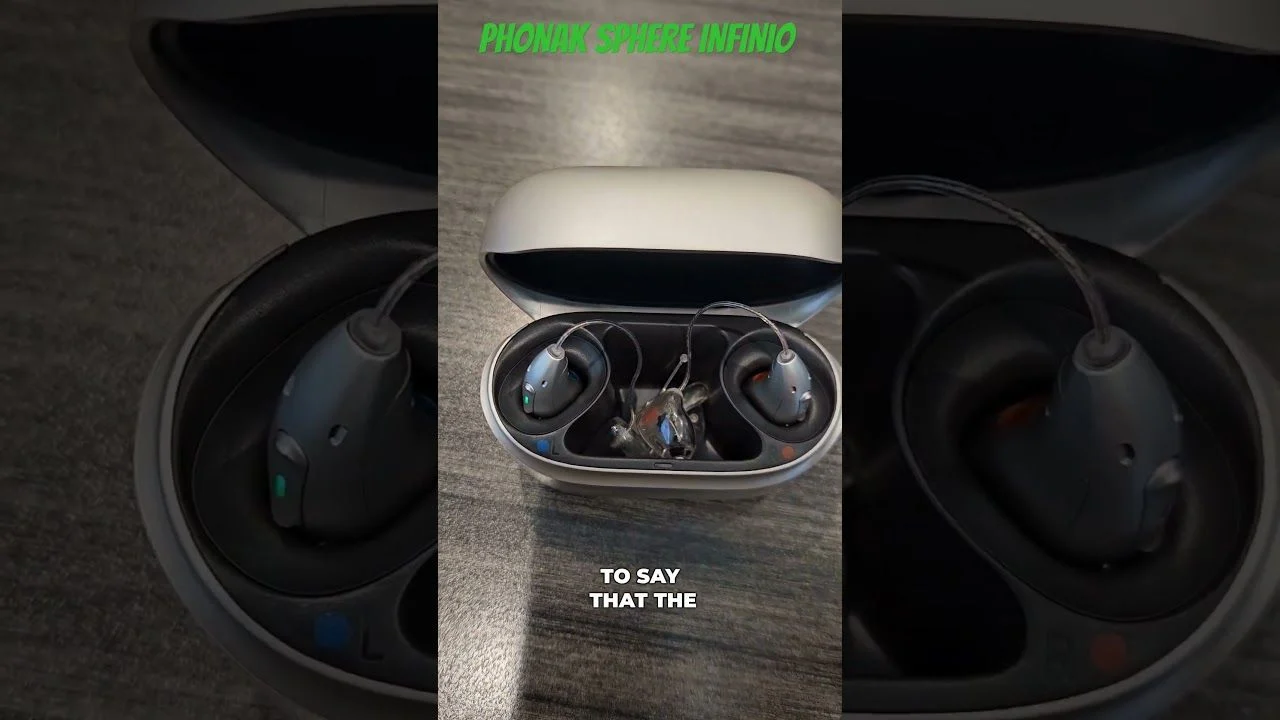
Poland
I knew that, but I thought it was interesting 
However, seriously, last time I was really worried about the industry drive to make smaller and smaller / at the expense of e.g. battery life.
You’re ignoring this member’s posts.
This topic is closed.
682 replies33.8k viewsLast reply
I knew that, but I thought it was interesting
However, seriously, last time I was really worried about the industry drive to make smaller and smaller / at the expense of e.g. battery life.
You’re ignoring this member’s posts.
What’s most interesting to me with the Sphere is the potential that could represent the first meaningful step change in hearing aid technology in a long time.
When I first started wearing analog , my audi adjusted the gain of each channel manually with a small screwdriver. The big step change after that was digital. The ability to have significantly more channels—each individually controlled—was a drastic improvement in speech intelligibility.
But since the transition from analog to digital, the improvements have seemed to be more incremental. Directional microphones, auto program switching, Bluetooth, improvements to noise reduction algorithms, rechargability… they are quality of life improvements, but none has matched the jump from analog to digital.
I’m going to be very interested to see if AI will be on par with the jump from analog to digital. I suspect it will be in the long run, but TBD on how much that is realized in the Sphere. I hope to get to try them out in a few weeks…
You’re ignoring this member’s posts.

Knowing nothing about MEMS except what this article posted by @Bimodal_user reports, it would seem to me that this new technology could be easily provided for existing by just replacing their receivers and not requiring an entirely new HA. Am I missing something?
You’re ignoring this member’s posts.
it would seem to me that this new technology could be easily provided for existing BTE HAs by just replacing their receivers and not requiring an entirely new HA. Am I missing something?
Yes, because:
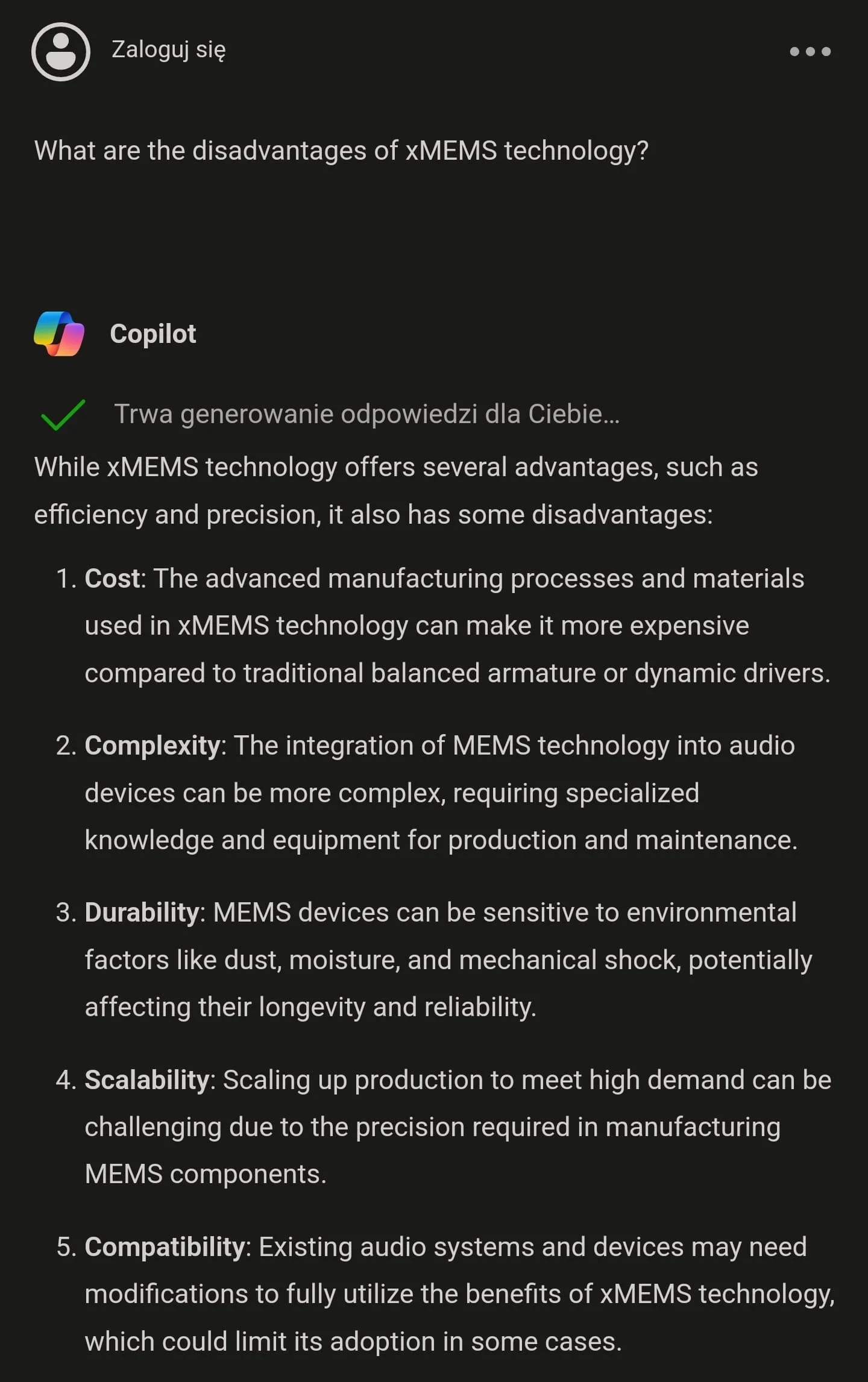
Recent BA (balanced armature) receivers technology is proven.
Production lines are accomodated for recent BA receivers.
Manufacturers’ orders and commitments.
Amortization of R&D and production lines cost.
Cost of licences for xMEMS? (probably)
Reportedly still excess energy consumption by xMEMS.
You’re ignoring this member’s posts.

just replacing their receivers and not requiring an entirely new HA. Am I missing something?
You assume the electrical drivers for the receivers are compatible. The might have radically different voltage/current characteristics, how sensitive the device is to the power applied. There is some possibility it would work, but I would be surprised.
WH
You’re ignoring this member’s posts.
You’re ignoring this member’s posts.

@ryanb
Your comment is really helpful.
I’ve used hearing aids for 20 or so years.
When I received my Phonak Audeo Paradise P90R’s I was very grateful. However, battery life was really awful. Setup was worse.
For my last two sets of Phonaks I thought the key to hearing better was to turn up the volume. This set of Paradise P90R’s were defective. They’ve been replaced. The setup was awful. I thought we had all fallen into a rabbit hole with directional microphones, auto program switching, bluetooth and noise reduction. All were caused by the dispenser who had not set them up properly.
When I have trouble hearing I change the waxguards in my 4.0 Power Receivers. It always helps, but only for 4 or 5 days. Then I change them again. I’ve been promised new 5.0 Receivers. They’re long overdue. Please Phonak Canada–I need 5.0 power receivers.
Sincerely,
DaveL
edit: I’ve always had my ears checked when I visit my audiologist or hearing instrument specialist. they have all said my ears were clean, with no wax buildup.
You’re ignoring this member’s posts.
You’re ignoring this member’s posts.
I work in tech and deal with on a daily basis. I truly believe we are just in the beginning of an exponential growth pattern of AI driven platforms. I think over the next decade, we’re going to see massive leaps in processing power for hearing aids and other devices. You can take a look at what companies like Nvidia are doing with using AI to generate entire frames and upscaling to put out 4k video at high frame rates for a fraction of the cost. They also have AI tools that completely remove background noise from calls (both incoming and outgoing noise). You can literally have a lawn mower in the room with you and the person on the other side would never know.
Right now a bottle neck is simply power consumption (as we’re seeing with this first gen product from Phonak). But chips continue to get smaller and power requirements continue to get lower. I for one want to support this growth and have a trial tomorrow for the Spheres with the full intention of buying them if they’re half as good as the video examples that are out.
But to your point, I think we’re starting to see a major shift in the industry and the end result for all of us should be significantly better noise reduction in these coming years!
You’re ignoring this member’s posts.

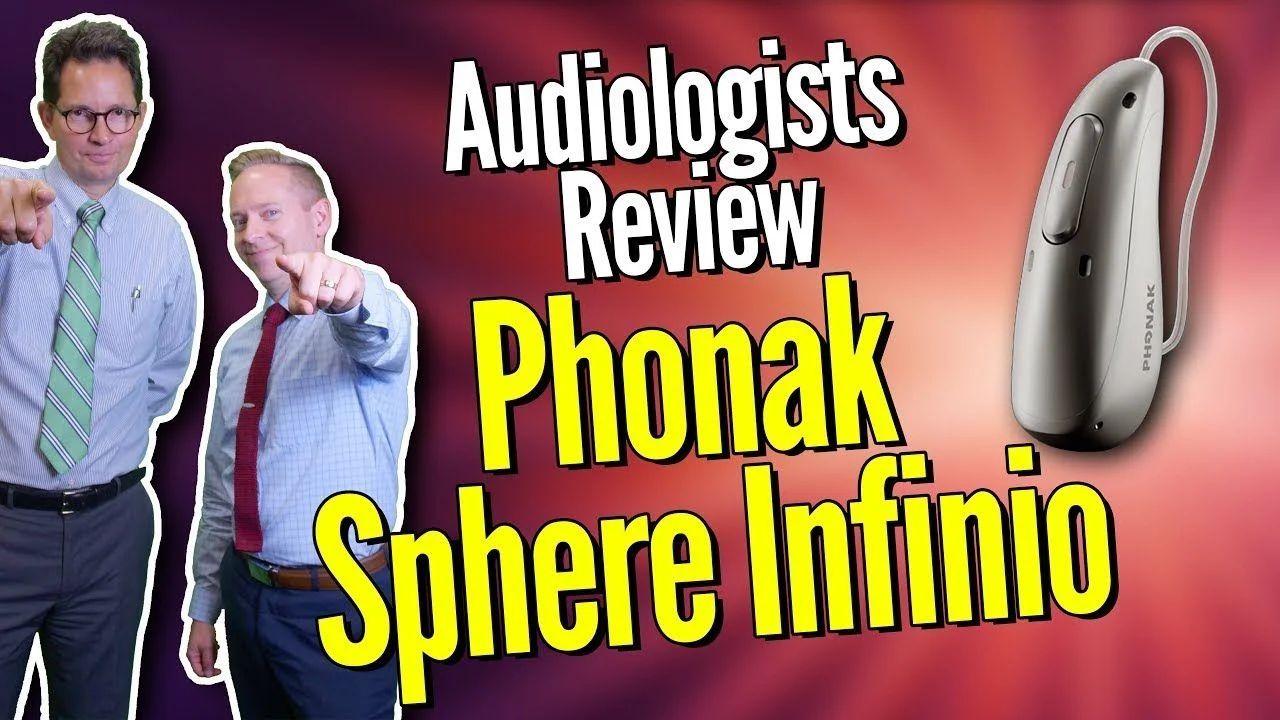
One of the audiologists talks about his own impressions of wearing Phonak Audeo Sphere, his experiences in different hearing conditions.
You’re ignoring this member’s posts.
Hey Greg,
Just curious if you are letting your hearing aids run in auto mode, or are you manually adjusting based upon the environment?
Thanks for feedback!
You’re ignoring this member’s posts.
When you say noise reduction use, do you have to manually turn it on, or can you let it decide auto?
Thanks for feedback! I’ll be getting my Spheres to trial in about 2 weeks, too.
You’re ignoring this member’s posts.

I guess I’m a little more skeptical of how rapidly this is going to develop. I think the main way to deal with the power issue is going to be using a smaller process size. Hearing aid manufacturers have tended to use much bigger process sizes than smartphones, presumably because of cost. Finding process size info on hearing aids is challenging, but Phonak was groundbreaking with their Sword Chip when they lowered it to 28nM from 65nM. At the time, phone process size was around 5-7nM. From what I gather, it is tremendously expensive to develop chips on very small processes. Smart Phone manufacturers deal in enough volume to make it profitable. I’m not sure about manufacturers. Hope I’m wrong.
You’re ignoring this member’s posts.
I am guessing the accelerometer is key for the algorithms to guess/anticipate that you are trying to listen to a different target, and adjust who/what direction to amplify. I don’t think they’ll be dumping that, they’d rather continue to improve the utilization of the accelerometer, otherwise they are just putting all your eggs on battery life & streaming. You might aswell just get disposable battery hearing aids at that point, because I think the algorithms will lose their efficacy to the point that it isn’t useful.
You’re ignoring this member’s posts.
So I see there is a 3 hour limit, which is probably fine, since we likely don’t find ourselves in a very loud environment requiring good speech clarity for much more than that.
Just wondering how much battery life this hearing aid has after you use up those 3 hours? Lets assume usual autosensing & listening & occasional loud environment is taking place, minus streaming?
Now how about you use 3 hours of AI, and you’re streaming a lot. How much can you stream before the battery dies?
Those are the big questions for me. I don’t mind charging every night, I am in the habit of daily charging my phone and compilot anyways.
You’re ignoring this member’s posts.

Somewhere in this thread it was mentioned you don’t have to limit to 3 hours and the battery life was mentioned 12 hours I think.
You’re ignoring this member’s posts.
So I see there is a 3 hour AI limit, which is probably fine, since we likely don’t find ourselves in a very loud environment requiring good speech clarity for much more than that.
I heard that Automatic Spheric Speech Clarity kicks in when the noise level is > 69 .
I am disappointed that Phonak did not provide such information about when a particular program from AutoSense OS is switched on.
Just wondering how much battery life this hearing aid has after you use up those 3 hours? Lets assume usual autosensing & listening & occasional loud environment is taking place, minus streaming?
Now how about you use 3 hours of AI, and you’re streaming a lot. How much can you stream before the battery dies?
See other two topics:
Hi New to the group but here are my thoughts on the Sphere 90 version. I have been using the trials for a few days and have been testing them everywhere I can. They are hands down the best aids I have tried. I am currently using power domes to get the full effect. I have been wearing them about 14 or 15 hours a day and still have 50% battery life left. Give them a try I think for those that are in loud environments a lot it will really help. Below are some of the comments I sent to my Audi…
and:
Hi everyone, I’m based in Canada and picked up these new Phonak Audeo Sphere Infinio (I90) from my audiologist last week for a trial. About Me: new DIY user currently wear Phonak Audeo Lumity Life 90 (RIC) based in Canada previously used phonak RICs and Starkey custom IIC hearing aids Prior to Sphere Trial: Phonak Audeo L-RL 90 with titanium c-shell mold receivers Phonak Charger Case Go (built-in battery for 3 full charges) Wear RICs for 14-16 hours a day Stream over 6-8 hours on average …
You’re ignoring this member’s posts.
That’s very helpful thanks.
I’ve never used myPhonak app, I don’t have a new enough .
I am wondering if the app allows me to program enable/disable sphere by tapping button on HAs 2 or 3 times or something like that? Autosense works wonders enough for me 80-90% of noisy situations, so I might just be selective with when autosense isn’t sufficient.
I’ll know in 2 weeks! Haha
You’re ignoring this member’s posts.
I heard that Automatic Spheric Speech Clarity kicks in when the noise level is > 69 dB.
I am disappointed that Phonak did not provide such information about when a particular program from AutoSense OS is switched on.
How do you mean? Lumity speech in loud noise program also kicks in at 69 at either ear. I think in the paradise it had to be 69 in both ears and back in the venture audeo I think it was higher at 73 iirc.
You’re ignoring this member’s posts.

Is anyone wearing these devices?
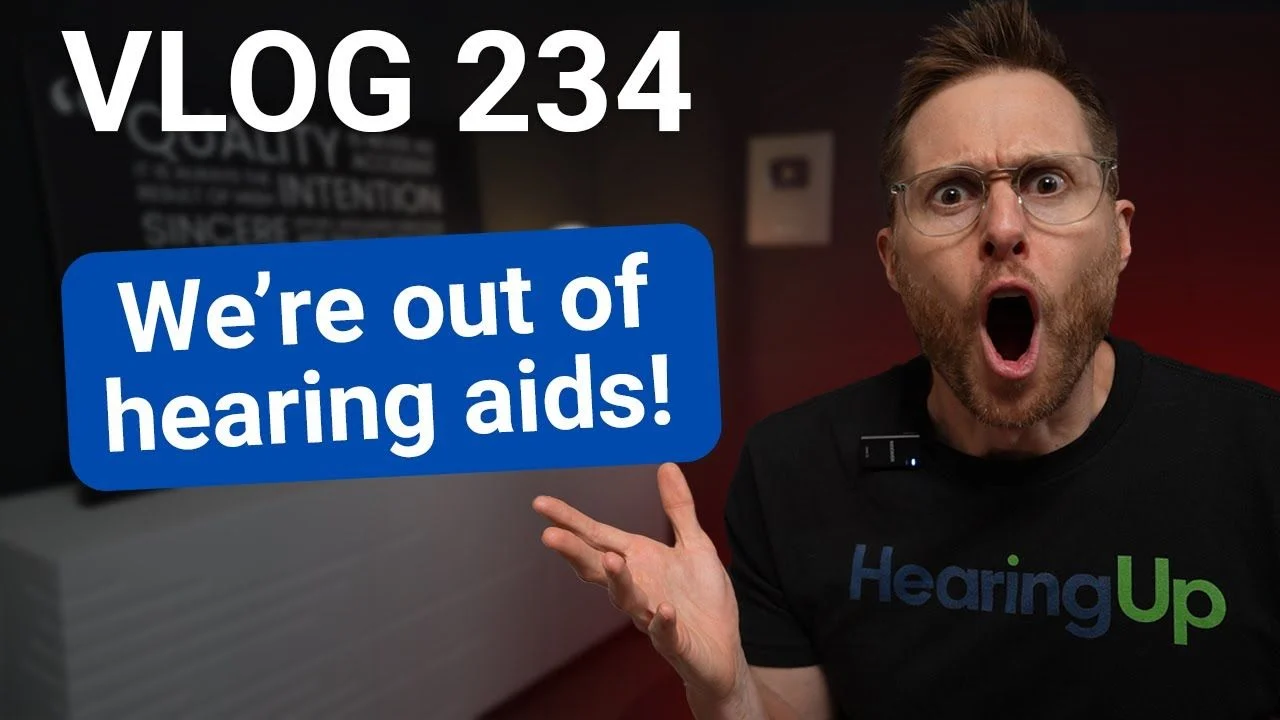
Dr. Cliff saying there is a shortage of Phonak Sphere Infinio
You’re ignoring this member’s posts.
Classifieds0 replies
Hearing Aids88 replies
Hearing Aids16 replies
Hearing Aids168 replies
Hearing Aid Self-Fitting (DIY)23 replies
 Boston, MA
 Canada (Toronto) YYZ
 Croatia