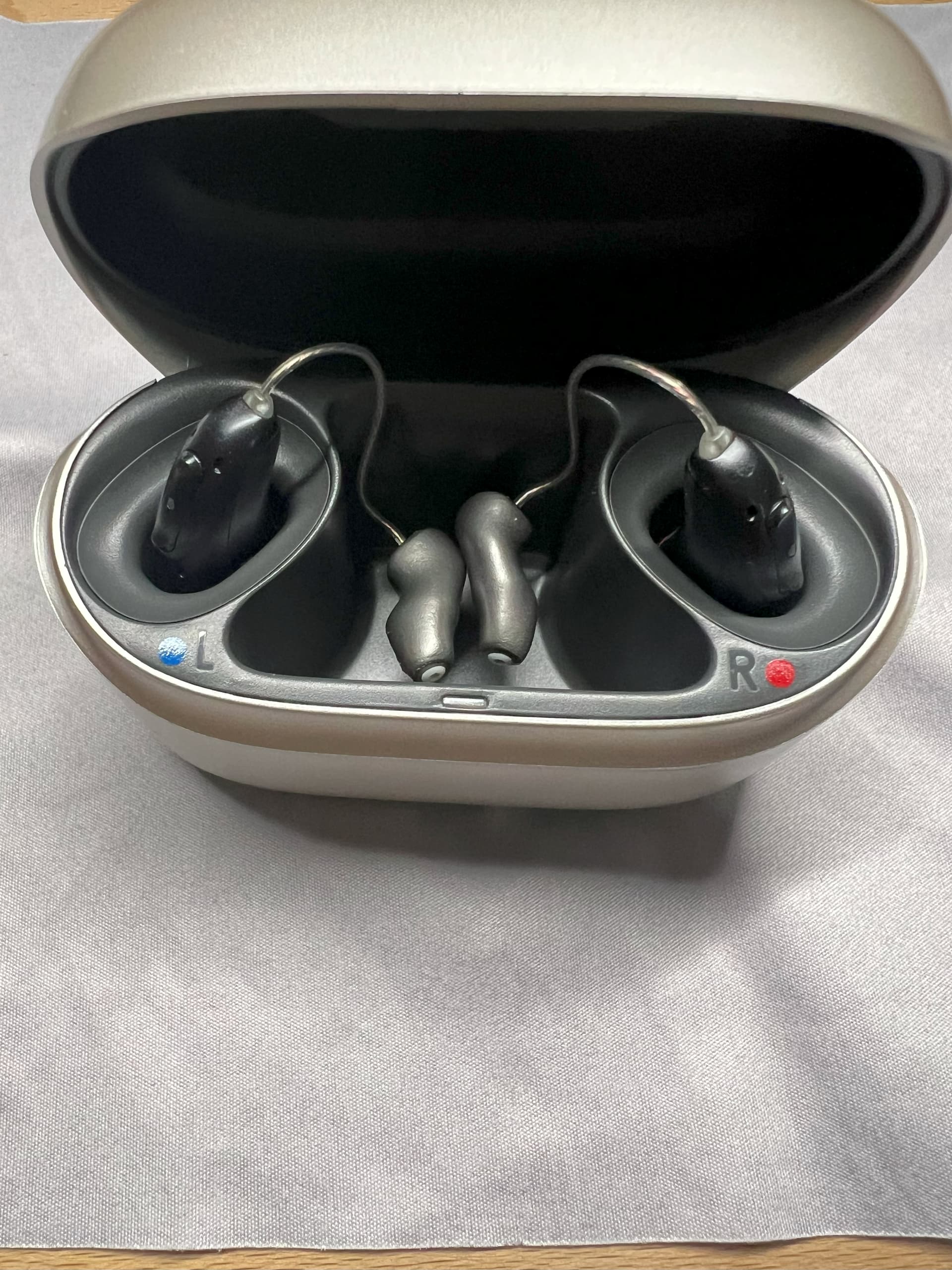
Thought you may said that which is why I wont raise my hope. Ive been eyeing up on Lumity or wait BTE Sphere which i believe its coming out soon.
You’re ignoring this member’s posts.
999 replies59.8k viewsLast reply
Thought you may said that which is why I wont raise my hope. Ive been eyeing up on Lumity or wait BTE Sphere which i believe its coming out soon.
You’re ignoring this member’s posts.
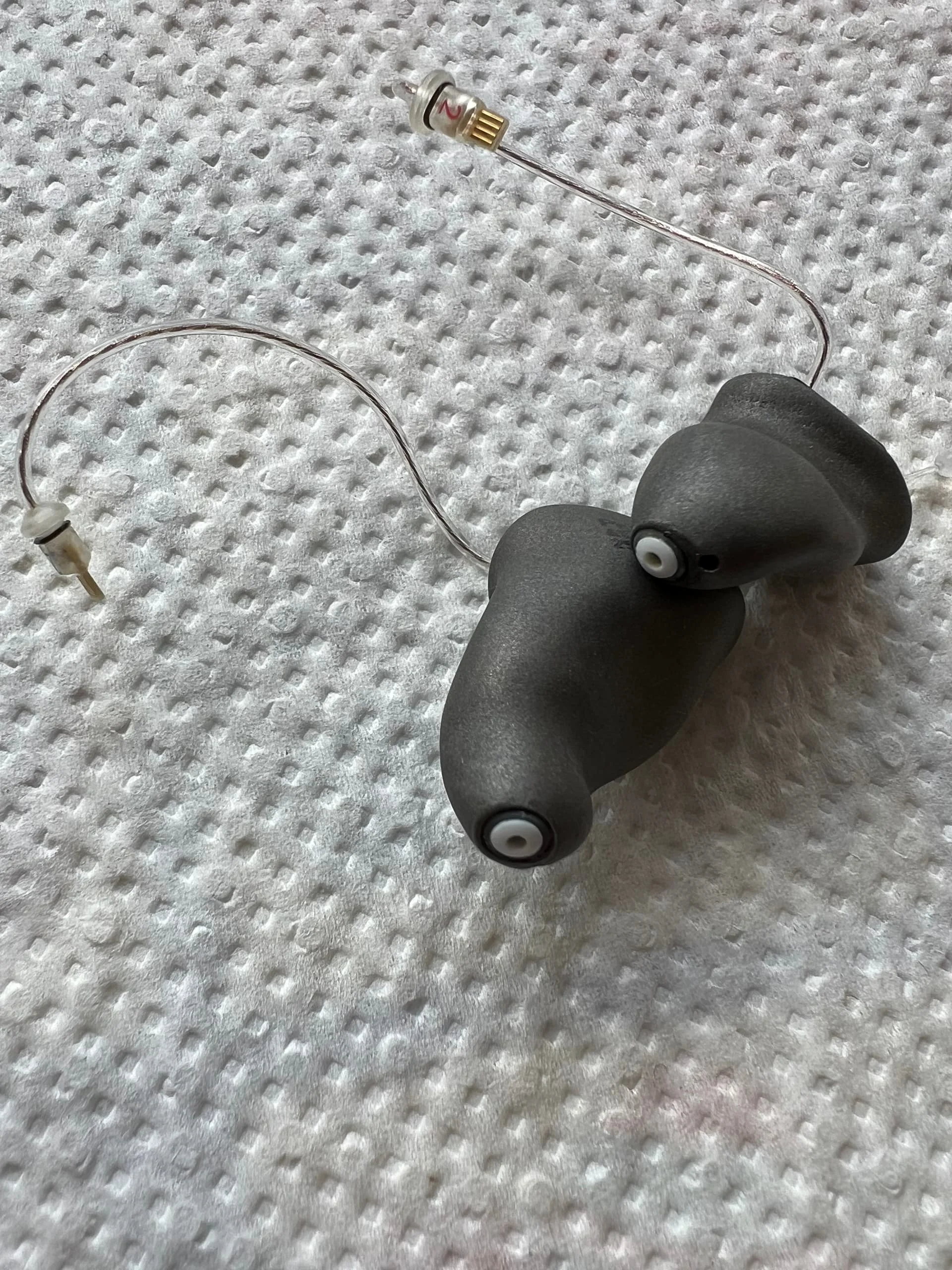
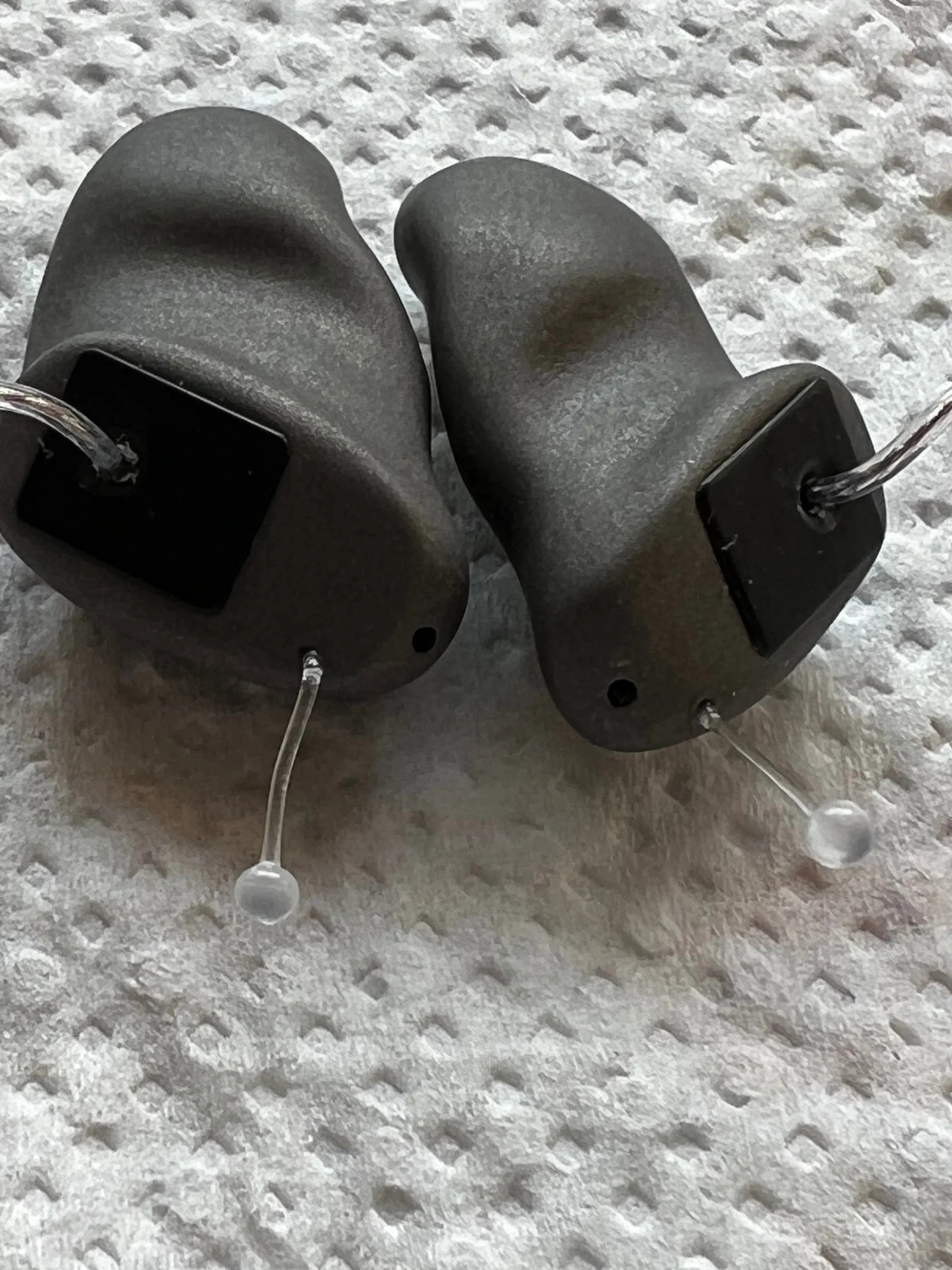
As promised, my titanium earmolds with Ultrapower receivers.Made by Phonak.
You’re ignoring this member’s posts.
You’re ignoring this member’s posts.
You’re ignoring this member’s posts.

My Spheres arrive early next week. Am upgrading from Marvel (bought six years ago, though Phonak gave me a new pair right before the end of the three-year warranty when they were sent in for a checkup). Hoping that it’s as much of an upgrade as it’s sounding like (pardon the pun). I haven’t read the entire thread yet (started at the beginning then jumped to the end), but will keep plowing through it looking for helpful tidbits. The Spheres cost a fortune, as we all know, but I do tend to go 5-6 years between pairs, and I try to think of times when I’ve said something like “I would pay good money to be able to hear better in loud places.” 
Thanks to @JordanK and everyone else in this thread for their experiences so far.
You’re ignoring this member’s posts.
Wow, remembering your , they’re perfect! Now I am not surprised that you got much benefit from Spheres. I see probably 0.6 mm vents, but their acoustic mass is even bigger due to length—noise definitely has a hard time passing!
I have a few questions:
Are these your first titanium cShells? Or were there previously failed ones that required remaking, e.g., too shallowly placed?
In what way did your audiologist make the earmold impression? With an open-jaw technique? Or two impressions—one with an open jaw and one with a closed jaw?
Are they with a rough surface? If so, did you have any difficulty inserting them?
I returned my cShells to be remade. I hope I also get them long!
Another example of longer ones:
I just tried to see if the titanium cShells (lumity life) can fit in the new Sphere case, and at least mine do. I’m sure the experience may be a little different for others with larger molds. [spheregocase]
You’re ignoring this member’s posts.
No, these are not the first titanium .( Yes 0.6mm ) The first ones were manufactured incorrectly. They were too loose and too short. The impressions were made using the open-jaw technique only. I chose the titanium with a rough surface because they stay in place better during chewing and laughing. Insertion is only slightly more difficult.
My titanium C-shells have a special feature: they were made longer and almost touch the eardrum. From what I can hear, this has been a great benefit, as the sounds enter closer to the eardrum.
You’re ignoring this member’s posts.
Do you have a specific tool to change the earmolds of the hearing aids without having to risk tearing the cable in between?
You’re ignoring this member’s posts.
Hi, a quick question,
Since the autosenes program switches between modes on its own (silent, vehicle, noisy speech, etc.), do you perform a test for each mode (because in the target program you can see different values for each mode the device goes through) or do you perform a REM only for the quiet speech program and does it “project” it onto the other modes?
I feel that in noisy speech mode (not sphere mode), the compression is not good, and I’m wondering if I need to do a REM test for each mode
You’re ignoring this member’s posts.

do you perform a REM test for each mode (because in the target program you can see different values for each mode the device goes through)
I’ve never had a test, but I doubt that it’s fixed to any of the Autosense programmes. To me it’s an adjustment to your base input.
It sounds to me that the problems you’re experiencing just need the gains, and program options, adjusting in that particular element of Autosense.
You’re ignoring this member’s posts.
You can do either. Typically it gets done for the calm program and projects, although there are noise targets available in some of the rationales and it can be useful to do it on the noise programs and make adjustments in that direction. An easy mistake for new clinicians is to do it ONLY to the calm program and not have it project, you just have to be off by one click. However, often if that mistake has been made the sound can get pretty pumpy.
You’re ignoring this member’s posts.

I think that’s the case with my dispensing person
And perhaps with the fellow who helps me now. I’ve found the saved programs aren’t useful after a “tune up” session.
You’re ignoring this member’s posts.

I feel that in noisy speech mode (not sphere mode), the compression is not good, and I’m wondering if I need to do a REM test for each mode
I had the same compression issues. My audiologist solved the issue by going from M receivers to P (Power) receivers. Gave the Sphere’s more headroom and lowered the compression in a number of the programs.
Jordan
You’re ignoring this member’s posts.
Do you have a specific tool to change the earmolds of the hearing aids without having to risk tearing the cable in between?
You mean disconnecting from housing? In the case of Infinio, no tools are needed. A pin pusher is required for my older Paradise.
If you want to disconnect (I recommend doing this seldom to decrease the risk of loosening the connector):
1.Simply grab your wire between your index and thumb (index finger under the wire) near the connection.
2. Make sure you do not bend or angle the cable; the vector of pulling should be as perpendicular to the joint as possible.
3. Pull.
No, these are not the first titanium C-shells.( Yes 0.6mm ) The first ones were manufactured incorrectly. They were too loose and too short. The impressions were made using the open-jaw technique only. I chose the titanium with a rough surface because they stay in place better during chewing and laughing. Insertion is only slightly more difficult.
Thanks for the clarification. It seems my shown cShells are probably “in-between” open and closed jaw impressions. I managed easier insertion when I put the cShell in with more with a twisting movement rathe simply pushing.
My titanium C-shells have a special feature: they were made longer and almost touch the eardrum. From what I can hear, this has been a great benefit, as the sounds enter closer to the eardrum.
Lower residual volume of the ear canal before the eardrum due to long earmold definitely helps to achieve more gain. One should be a bit lucky to not have a twisty or bendy ear canal; fortunately, it’s not your case. I appreciate the earplug effect of that coupling as well…
You’re ignoring this member’s posts.
I heard that rationale has a different approach to noise program gains than quiet programs, so it is not an automatic copy from the latter?
You’re ignoring this member’s posts.
You’re ignoring this member’s posts.
You’re ignoring this member’s posts.
Insert a finger into the ear canal, with the fingertip pointing downward and slightly forward, to open the canal fully. Then close the jaw. You will then feel the movement of the ear canal between the first and second bends, generated by part of the temporomandibular joint.
You’re ignoring this member’s posts.
I hope NL3 is out soon
I’ll be back to NL2 in a few days when I get my new c-shells
You’re ignoring this member’s posts.
A curiosity: does the Sphere mode also activate during streaming?
Currently with my P90s I listen to the TV with the TV connector but in situations of speech in noise I have difficulty understanding, so I got this curiosity
You’re ignoring this member’s posts.
Log in to reply to this topic.
Hearing Aids3 replies
Forum Support7 replies
Hearing Aids6 replies
Hearing Aids104 replies
Hearing Aids13 replies
 NL
 Poland
 North West UK

 Italy