I want to try the ActiveVent receiver but I see the fitting range for them has 250 - 1k frequencies at 40 db hearing loss.
mine is worse from 45-60 (see my )
do you think it could still work for me?
You’re ignoring this member’s posts.
This topic is closed.
20 replies480 viewsLast reply
I want to try the ActiveVent receiver but I see the fitting range for them has 250 - 1k frequencies at 40 db hearing loss.
mine is worse from 45-60 (see my )
do you think it could still work for me?
You’re ignoring this member’s posts.

I would think you would want an occluded fitting via a custom mold with a small vent. Do you feel occluded when using more closed fittings?
WH
You’re ignoring this member’s posts.

No, per Phonak, you are not a candidate. They are very specific about it. The reason is that the ActiveVent acts like an open domes when open, which tend to leak sound at low & mid frequencies (you need help in this range). What kind of domes do you use now?
ActiveVents targets are those with high frequency loss (again, because the open setting of the ActiveVent)
You’re ignoring this member’s posts.
i’ve had skeleton molds my whole life and i see on the one i have now there’s the tiniest little hole, couldn’t even fit a toothpick in it. doesn’t feel occluded not sure what that even feels like. on the new molds my audiologist made me it has a huge hole. wonder if it’s why i can’t hear well.
You’re ignoring this member’s posts.
I have used skeleton molds with a tiny hole my whole life… . switched to recently and it’s Cshell acrylic with a very big vent.
You’re ignoring this member’s posts.
No idea why they would have ordered your moulds with a large vent; given your low frequency hearing I’d expect a 1.2mm vent would be fine.
You’re ignoring this member’s posts.
People who get the occlusion effect with hearing aids typically have good low-frequency hearing and may find their own voice sounds louder, hollow, or like they’re talking in a barrel. This is not your case.
Now I am curious (and confused): If you wear molds and you have no occlussion, why are you asking about the ActiveVents, which are designed for people who get occlusion?
You’re ignoring this member’s posts.
I am in my mid 20s. I have had hearing loss my whole life. I’ve used the same Phonak Sky M70M for the last 7-8 years. I hear perfectly with them, but they are getting old. It is on these hearing aids that I had the skeleton molds.
On the new hearing aids (Infinio Sphere i90) I have seen 3 different audiologists over the past two months and I can’t hear at all with them. Very poor conversational understanding. But anyway, it’s on these hearing aids that I have an acrylic mold with a large vent. I heard that the ActiveVent receiver would make music sound better but I am assuming that it’s not a good fit for my hearing profile I guess.
I did try messing around and programming the hearing aids for myself (but did not save the settings) just to mess around with them, and I found when I switched to v5a Pediatric I heard MUCH better. I could hear my own voice again. I’ve used that fitting my whole life and don’t know why the audiologists aren’t taking that into account. I am down nearly 6,000 dollars and still can’t hear even a fraction as good as I did with my old Sky’s.
But… the molds don’t even fit right anyway so I am considering getting titanium and trying to figure out if I want a vent or no vent.
You’re ignoring this member’s posts.
Got it. Since changes in your programming are not helping, you are looking to see if changing the molds will help.
You had pediatric with a pediatric prescription. DSL5 pediatric gains are substantially greater than the DSL5 adult ones per pub attached (link below) and, that is what you are used to. The fact that lower gains in the adult model don’t work for you does not surprise me after reading the article attached.
You can try to look at the Sky programming and copy that to your Spheres (if you haven’t done so). However, the big question is: How do audiologists transition patients from pediatric prescriptions to adult ones? I don’t think the answer is to randomly try different molds and find which one works better. And I don’t even know if a pediatric model can be used forever on an adult.
IMHO, This is something that goes beyond the knowledge of knowing how to use the software or trying different molds. I would go back to the audiologist that charged you $6000 and push for a solution (Yes, I know you said you have tried). After all, you paid to have that solution delivered. I think the key question to ask is: How do I transition from a pediatric model to an adult model (or is it ok to continue using the pediatric Rx). I don’t think doing this yourself is optimal.
028_0221_02_focus_37.pdf (659.4 KB)
You’re ignoring this member’s posts.
@OcramSagev, the link shows 404 error, could you check this?
@monke, I feel strange that you have small vent throughout your whole life and it isn’t simply continued with Sphere. You probably have AOV (Acoustically Optimized Vent).
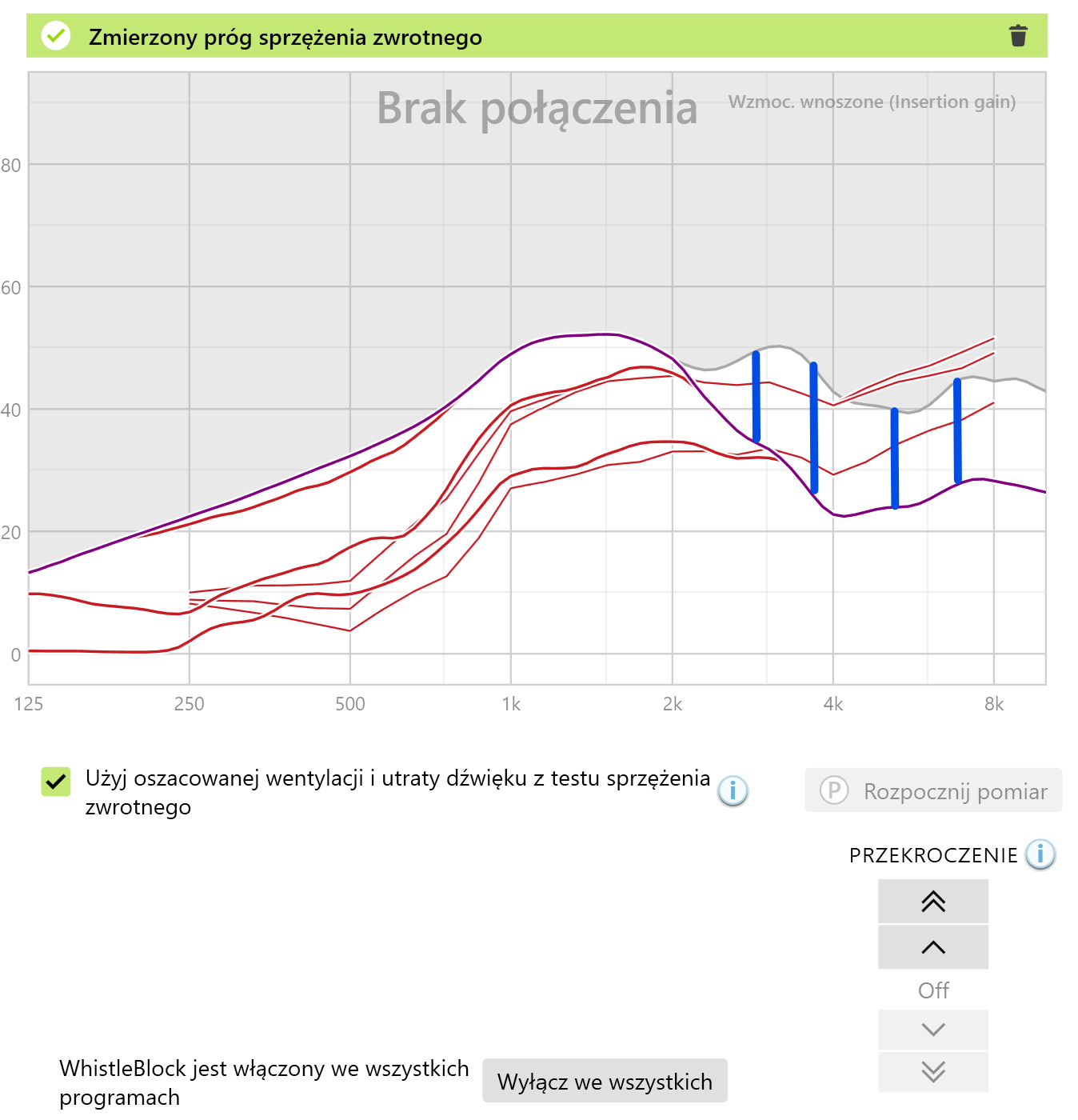
It is HIGHLY probable that vent is your problem, because of leaking out low frequency sounds and very low feedback threshold which makes impossible to set proper gain in mid- and high frequencies without feedback.
ActiveVent isn’t for you, it’s too open (equivalent of 3mm diameter) in open state.
Please look for the cShell/earmold with smaller diameter (I don’t know whether your Phonak Sky has 1.2mm or smaller). The smaller, the better until you don’t get the occlusion effect. Ask your for remake.
Bottom line: after changing earmolds/cShells the new in needed.
You’re ignoring this member’s posts.
You’re ignoring this member’s posts.
You’re ignoring this member’s posts.
Interesting – so that answers one of my questions: DSLv5 pediatric can be used in adults. This info helps the OP. Good to know
I found out about pediatric because when I was programming my Phonak in the past, I chose DSL pediatric (by mistake) instead of the adult. My started “screaming” and I was surprised to see the big difference in gains.
You’re ignoring this member’s posts.
Please give more of your experience with and how you came to use it. How old are you? Are you self-fitting? Have you used it for many years? Interested.
You’re ignoring this member’s posts.
I’ve been using it up until now (age 24). Every other program feels ridiculously quiet. Guess I am accustomed to it!
You’re ignoring this member’s posts.
You’re ignoring this member’s posts.
This has been fascinating! Thanks, everyone, for sharing your knowledge and experiences about vents, occlusion, molds, and programs/settings. 
You’re ignoring this member’s posts.
Please give more of your experience with DSL and how you came to use it. How old are you? Are you self-fitting? Have you used it for many years? Interested.
I don’t have much fair experience with 5.0 Pediatric, because I has still power domes, which means I am underamplified due to low feedback threshold. The power of the DSL 5.0 formula is more gain at abot 4-8 kHz.
I will receive my titanium cShell with 0.6 mm diameter vent 19 Aug. I am 36 yo. DIYer since Sept 2024. Until March I was in .
I came to DSL 5.0 Pediatric, because:
I have hearing loss (the same) since I was 4 (note I has my first when I was 12) so I assume if I were more lucky I would receive HA with that fitting formula.
NAL-NL2 relies most on the mids, which is the weakest part of my better ear (cookie bite). DSL 5.0 Adult and Pediatric relies more on about 4-8 kHz range, so it could be theoretically better to use that potential.
After reading “Speech Mapping and probe measurement” by Gus Mueller, IIRC, that DSL 5.0 could be better for sloping loss.
I have on the poorer ear, which gives very good and loudbhigh frequency impression. I need some loudness equalization in that frequencies, so I suppose the DSL 5.0 Adult would be better than NAL-NL2, and Pediatric even better.
However keep in mind that Pediatric is the same as Adults, but with 10dB more gain across all frequencies.
Some of my explanation here:
Indeed it is, especially to 4 kHz, assuming a ±5 dB deviation. Gus Mueller shows this in his 2017 book about speech mapping and probe microphone measurement (information about it is in the article)… I’ve chosen DSL 5.0 Pediatric for mainly three reasons: I have had hearing loss since age 4, so if I had been fitted with hearing aids using best practices, I would probably have been using DSL 5.0 Ped for 30 years. I have a cochlear implant in my left ear, which provides excellent high-frequency…
and here:
Glad you enjoyed it! I also recommend the book by the interviewee about speech mapping (from 2017). He describes the differences between particular fitting algorithms. Out of curiosity, what made you choose the VAC+ earlier? Perceived comfort? Adding a point about choosing between NAL-NL2 vs. DSL 5.0—I theorize that it depends on whether you will benefit from more high-frequency amplification in DSL for loudness normalization. In turn, this depends on whether you have dead regions in the high-…
You’re ignoring this member’s posts.
There is also:
I must test the DSL 5.0, regarding my sloping audiogram and what I have just read: "(…) In practical terms, loudness equalization [like NAL] procedures usually require less gain for soft sounds than loudness normalization procedures [like DSL]. In a steeply sloping loss, for example, the equalization method typically provides less audibility of soft speech for the high frequencies. There hasn’t been a lot of definitive research on the topic but, in general, it’s been found that true normalizat…
You’re ignoring this member’s posts.
As you can see, I probably will not be able to get rhe full amplification, even with closed coupling, because of the receiver limit:
I must use the earmold. I have the biggest power double domes possible, and can’t obtain proper high frequency gain due to feedback: [image] The feedback threshold is the purple line. I have drawn blue vertical lines, which shows lost potential of the M receiver. In that case it is definitely possible that Sphere could be ever worse than cheap HA with achieved every target gain.
You’re ignoring this member’s posts.
Hearing Aids6 replies
Hearing Aids27 replies
Hearing Aids26 replies
Fitting Software Requests1.1k replies
Fitting Software Requests513 replies
 Rural New England
 Wales, UK
 Poland
 This has been a very interesting discussion.