Hearing Aid Battery
Safety Information
Information for patients,
parents and carers2
This leaflet explains the importance of storing
hearing aid batteries safely and the action
to take in the unlikely event a battery is
swallowed.
Hearing Aid Battery Safety Information
Button batteries are small, round batteries that come in many
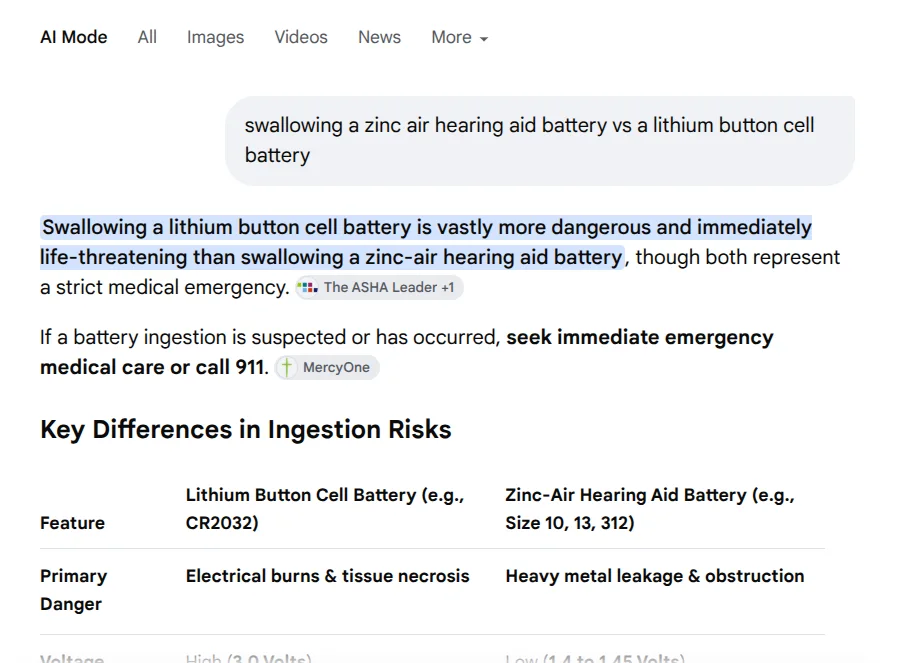
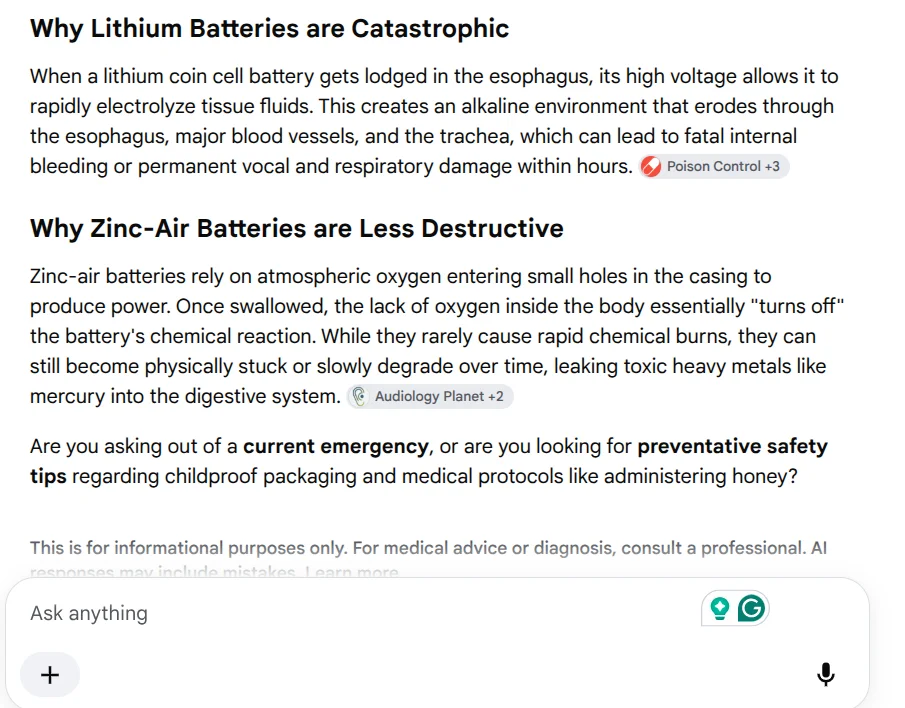
different sizes and types. Lithium button batteries are the
ones used in hearing aids and are the most powerful. If a
lithium coin cell battery gets stuck in a child’s food pipe, it can
cause catastrophic internal bleeding and death within hours
of being swallowed.
It is therefore important to keep all spare and ‘dead’ hearing
aid batteries and any objects with easily accessible lithium
coin cell batteries out of children’s reach, and to act fast if you
think your child may have swallowed one.
Children most at risk are between 1 and 5 years, but younger
and older children can also be at risk.
What happens if my child swallows a battery?
In our experience, it is very rare for children to swallow
batteries. But if a button battery - particularly a lithium coin
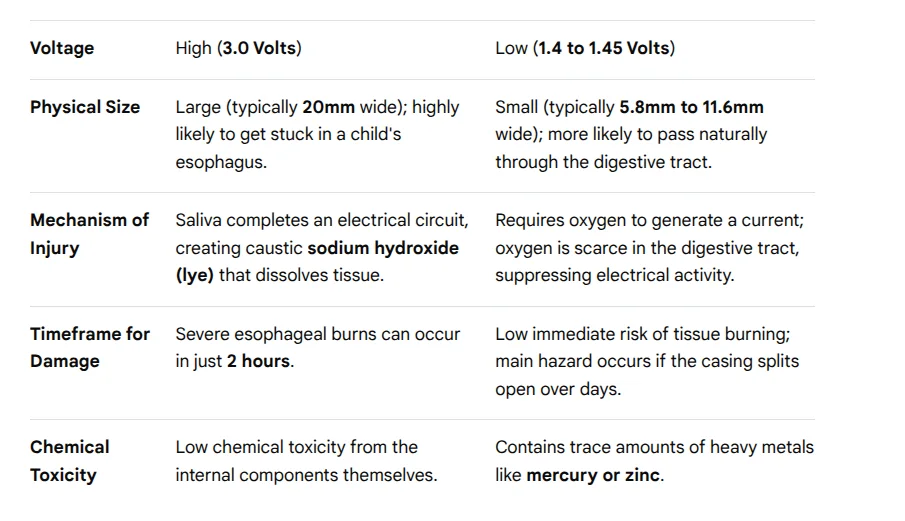
cell battery - gets stuck in the food pipe, energy from the
battery can react with saliva to make the body create caustic
soda. This is the same chemical used to unblock drains!
This can burn a hole through the food pipe and can lead to
catastrophic internal bleeding and death. The reaction can
happen in as little as two hours.3
Button batteries are also dangerous if they get stuck in a
child’s nose or ear.
If your child accidentally swallows a battery, please take them
to Accident and Emergency immediately. It is important that
they are treated as a medical emergency.
• Take them straight to the A&E department at your local
hospital or dial 999 for an ambulance.
• Tell the doctor that you think your child has swallowed a
button battery.
• If you have the battery packaging or the product powered
by the battery, take it with you. This will help the doctor
identify the type of battery and make treatment easier.
• Do not let your child eat or drink.
• Do not make them sick.
• Trust your instincts and act fast - do not wait to see if any
symptoms develop.
Prevention
To prevent a battery from being accidentally swallowed, keep
batteries out of reach of children. All children under the age
of 5 should be fitted with a tamper resistant battery door on
their hearing aids. These can also be supplied to older children
if you feel that your child (including a sibling of the child
with hearing aids) may be at risk of swallowing a battery. The
tamper resistant door will make it more difficult for the child
to be able to remove the battery from the hearing aid.
• Keep all spare batteries in a sealed container in a high
cupboard.• Get a tamper resistant battery door fitted.
• Put ‘flat’ or ‘dead’ batteries out of children’s reach straight
away and recycle them safely and as quickly as possible.
• Teach older children that button batteries are dangerous and
not to play with them or give them to younger brothers and
sisters.
To have a tamper resistant battery door fitted please
contact us
Telephone: 0113 2063888
email: leedsth-tr.hearingandbalance@nhs.net
Or contact your teacher of the deaf who will be able to change
the battery door for you.
Please follow this link for further
information in regard battery safety
www.capt.org.uk/button-battery-safety/
What did you think of your care?
Visit: www.leedsth.nhs.uk/patients/support/feedback-
complaints/friends-family-test/
Scan or click the QR code - Your views matter
LN004870
Publication date
08/2026
Review date
08/2029
© The Leeds Teaching Hospitals NHS Trust • 3rd Edition Version 1
Developed by: Andrea Darby - Audiologist
Produced by: Medical Illustration Services • M I D code: 20260618_007/RC



 North Carolina

 Poland



 England