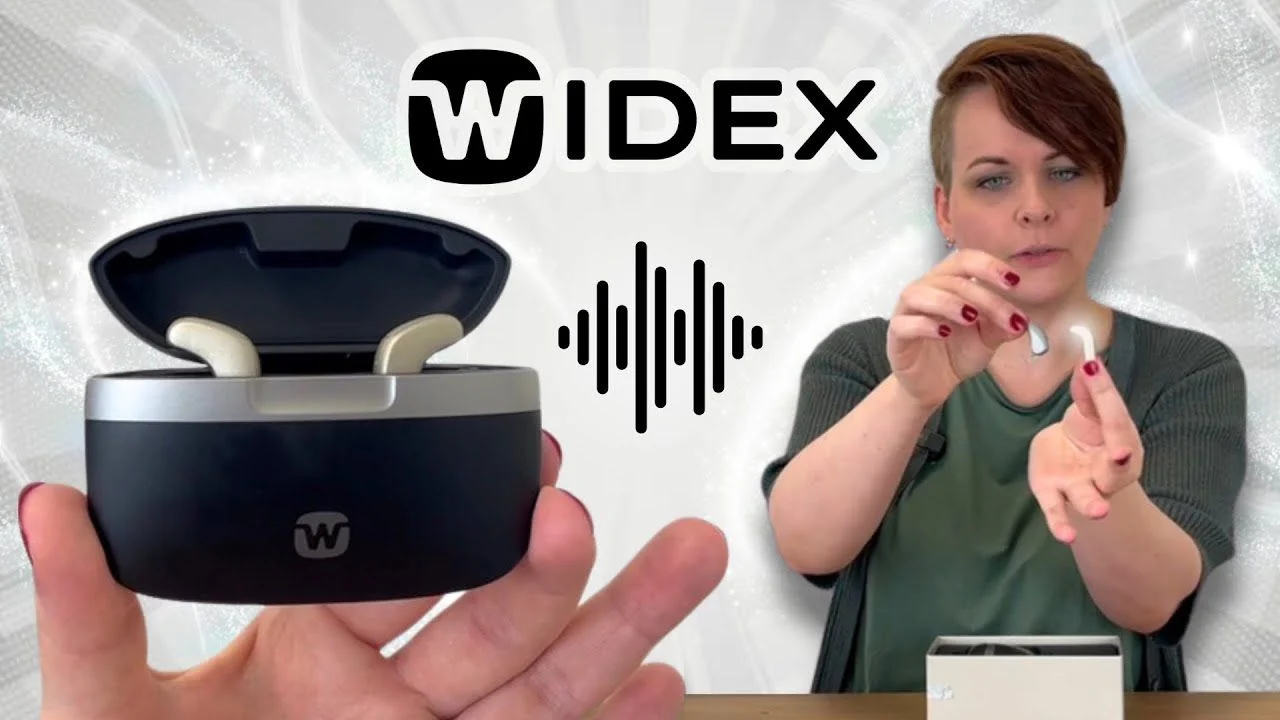
The Widex cloud programming software requires login credentials that only official Partners have. This means I cannot self-program the Allures.
What a disaster. I suspect this results from pressure by audiologists who are worried about being cut out by endusers using . Going against the trend. I would never ever in my life buy such .
RE: Hearing Aids and the hype, I’ll refer you back to the 2020, 2022, 2023, 2024, AI hype marketing and let you make you own decsiion as to how effective the manufactures claims have been. Not just Widex but the entire industry. It’s a very difficult problem sorting voices you want from those you don’t, and I doubt that any hearing aid regardless of technology will do well until they include a camera, which won’t be anytime soon.
The Widex PureSound program is superior to every other brand for music for two reasons.
It turns off most of the extra processing that interferes with music (compresson, noise reduction, feedback suppression ) and lets the actual sound get through.
Audio latency in this mode is only 0.5 milseconds. All other brands the latency is 6.0 milseconds or more. In a live music situation or for performing musicians, that delay is totally unacceptable. The Widex latency is so low it is impercetable.
At the Widex 440 level some combinations of /receiver extend frequency up to 10khz or 12khz. Most brands only go to 8khz.
All other brands the latency is 6.0 milseconds or more. In a live music situation or for performing musicians, that delay is totally unacceptable
Love the magic of music, but in 6 ms sound travels about 2 m. To reverse the argument: Not sure if music sounds any better if the recommendation is that musicians and audience must huddle together in a 2 m radius or smaller… Orchestra performers nor conductors do not seem to bother either about such distances/delays.
I seriously doubt yet another new chip and another hyped AI algorithm will change that. Why? Because I have spent a lifetime in research in AI and the voice vs noise environment is so complex and difficult because most of the noise you want to elminate is voices and no amount of AI will be able to differiniate the voices you want to hear from those you don’t without an additional sensor (a camera), which isn’t happening anytime soon.
Have you ever tested Phonak Audeo Infinio Sphere or Starkey Edge/Omega or Oticon Intent? Your opinion here is simply incorrect. If you read the forum here are many review that stated that AI denoising is even life-changing.
In my case I finally can participate in restaurants or social gatherings (more difficult, but now reachable).
Of course, there are people who have got less benefits, but it’s necessary to keep in mind:
Their “ceiling” in quiet percentage. No AI will help if WRS is poorer.
How occluded is their fitting - if less = more open fitting, no AI or even “quantum” technology (this is metaphor) will help if noise get to the eardrum unprocessed by the through the large vent or openings in domes.
Fitting of the HA, including verification. These are many cases when HA sounded like crap and weren’t beneficial much until REM-based fitting.
I think it is still not mature enough. So far, the Widex Allure has failed to resolve issues with its dynamic range function. I have tried turning it off, yet it still automatically adjusts the dynamic range, causing the volume to drop automatically when I listen to music, which is extremely uncomfortable for me. I do not want this feature at all. Although the Widex Allure provides an option to disable it, the setting seems to have no effect.
Good to know. I currently have the SmartRic 440 too and will be keeping them until something much better comes along…like better speech in noise. The noise just gets amplified along with the speed so I usually just have to resort of Comfort mode and not understand much. But at least my nerves are not fried from the noise being amplified too much.
Yes it happens to me playing guitar with either universal or puresound but not with a custom saved program, which seems to lock things in. Playing can suddenly just get very muted, losing treble, if you happen to play something a bit louder and it seems to come back eventually. Don’t know if this is the dynamic range effect you are talking about or just the SmartRic sensing “noise” and cutting back on that.
It’s a very difficult problem sorting voices you want from those you don’t, and I doubt that any hearing aid regardless of technology will do well until they include a camera, which won’t be anytime soon
A camera isn’t good enough either (what if you listen to people behind those you are looking at?), but an EEG might do…
To be exact, sound travels 1.13 feet (about 34.3 centimeters) in one millisecond, but distance is irrelevant. That requirement isn’t for casual listening. it’s for performing musicians and their timing. Try playing drums or flute or harmonizing vocals that are delayed 6ms, talk about frustrating…. And yes, if you are performing with others you need to be within a certain distance or…. So, you ask… how do stage performers that are far apart stay synced??? (electronic audio monitors is the answer) because electrical impulses that carry sound (light) travels exactly (299,792.458\) kilometers in 1 millisecond. And yes, even seemingly small distances matter in listening to live music. That’s why time delays are carefully calculated and accounted for in live sound setups of any significant venue / audiance size so that multiple loudspeakers can be synced. Otherwise as you say, the audience would have to be huddled into a small group.
I wear Widex because no other brand even tries to match their live music capabilities, but as far as excitement about these marketing hype annoucements I refer you to the SmartRIC marketing promises made in 2024 with this Widex video. And every brand does this hype job, every release, It’s just business, but talk is cheap and easy. Results matter.
Although the Widex Allure provides an option to disable it, the setting seems to have no effect.
Perhaps it’s because your dynamic range is very diminished looking at your ? I don’t know, what style you have (/?) nor what receiver power and vent diameter do you have, but I hope that you have the most powerful receiver possible for getting enough .
And every brand does this hype job, every release, It’s just business, but talk is cheap and easy. Results matter.
Yep,and it’s well known by most of us here on the forum, I’ve used Widex in the past and I couldn’t even notice the difference between ReSound, Signia when it came to music, sounds the same to me..
And every brand does this hype job, every release, It’s just business, but talk is cheap and easy. Results matter
Yes, but you speak regarding music because you’re professional in that field. For most users the most important thing is coming back to social life, so they want from mainly improved speech understanding by increasing . It’s issue where shines.
I don’t know your , perhaps you have relatively mild hearing loss, which gives you much flexibility. For what I know (correct me if I am wrong), PureSound is not for my hearing loss.
I followed the moment of release of SmartRIC. I really liked the L-shaped housing giving ~1.5dB higher SNR due to the better alignment of the microphones. I even have written that it’s pity that Phonak Infinios haven’t got that shape, which would be useful especially in Infinio R (non AI) model, but in Sphere (AI model) also.
Because the question will be asked, what is the best hearing aid for music and/or for musicians? And the current answer will always be Widex because of the huge difference in time delays with all other hearing aids which even if you are not a performing artist, unless you completely shut out external sound your ear will receive the live sound from external which tries to mix with the delayed processed sound from your hearing aids resulting in phase distortion which cause tinny, robotic voices, echo, etc, artificats in music (and also in other sounds), Also all the digital processing in most hearing aids causes the “comb filter effect” as they convert analog into buckets of digital frequencies so that “” can process it. And I dispute you claim that “most People” don’t care about music. Instead most hearing aid users have given up on music and realize the vendors don’t care.
There’s a defininte difference between Resound and Widex (and I have both sitting here on my desk) simply because of frequencey response. Resound 150hz to 8khz, Widex 100hz to 10khz and for some recievers 12khz. That’s huge in musical terms, unless of course you have profound high frequency loss in which case the power receivers don’t go above 8khz. AND all vendors make you pay for the top end to get such things, for example Widex cripples the freqency reponse of the lower tier 330, 220, 110 and only gives it to you for the 440 tier. REsound, Oticon, etc. all do this upselling. And remember there are really only 5 major manufacturers of . The “Big Five”: Most experts define the industry as Sonova, Demant, WS Audiology, GN Hearing, and Starkey. for high quality hearing aids, and they rebrand those products under various names.
Oh yeah I’m well aware of the specifics, been in this game a long time, it’s just I didn’t notice anything at all different when using them, no one really hears 12kHz unless your very young or “pitch perfect” but no seriously, I couldn’t tell playing on my Denon with Wharfedale speakers.

 Geneva, Switzerland
 Poland