More fluff less stuff. All this crap is like merringue on a pie, mostly air. It’s the app that really matters. Give me control of the that Senheiser has for their momentum earbuds and I’ll have something I can make really work.
Widex cripples the freqency reponse of the lower tier 330, 220, 110
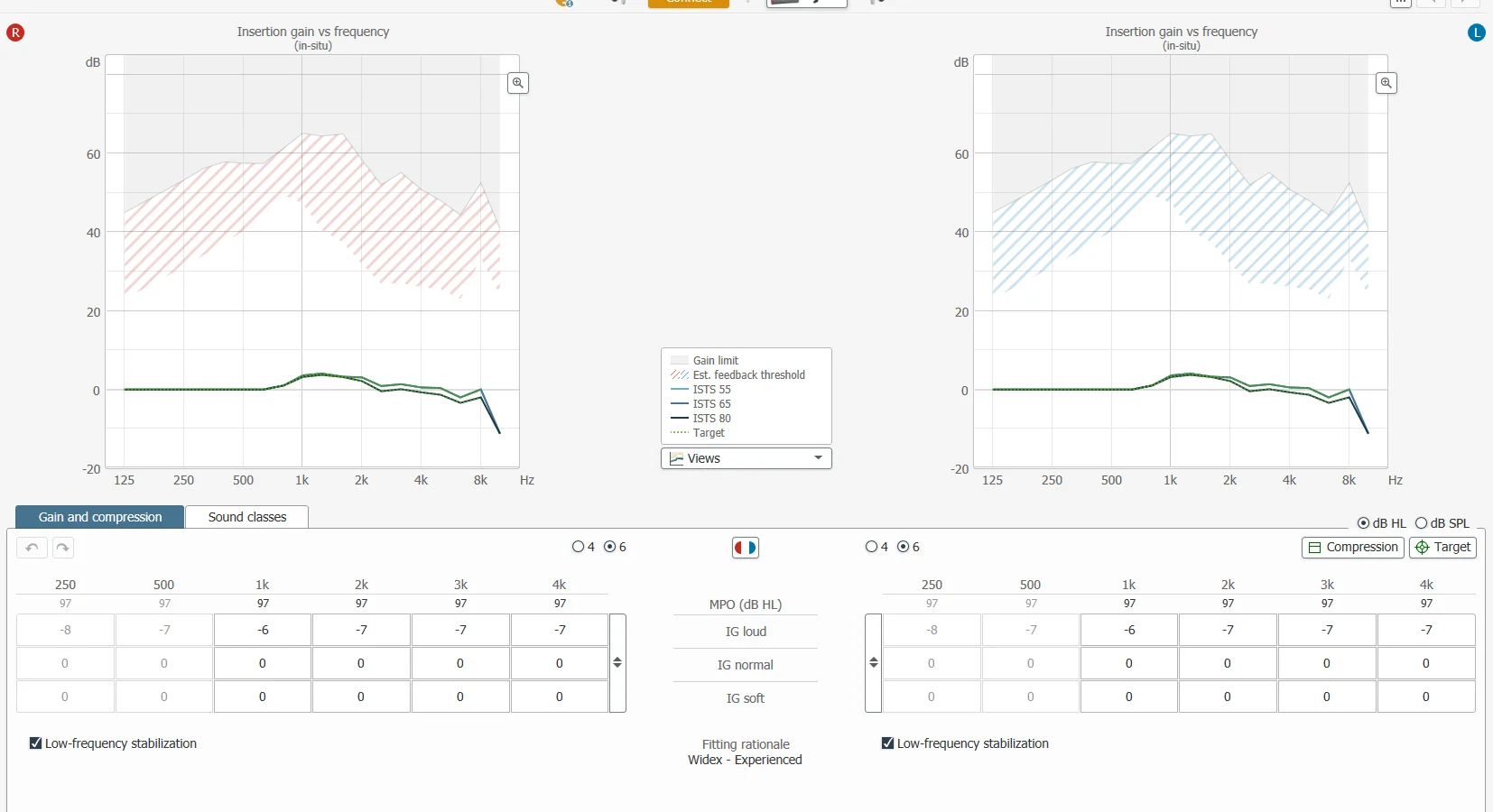
This is not correct. The V.2 receivers are the same as the 440. What the lower tiers have is fewer tuning “bands” that restrict the programming (there are tricks that you can do to tune the ones that are not shown). Below is an example of the SmartRIC 110 - You’ll see the same frequency range 100Hz → ~8500Hz as the 440.
completely untrue, When you are young you hear up to 20khz. I’m as you say “old”, but I can well still hear past 12khz with aids, for example with Apple Airpods Pro 2 used as approved hearing aids. That;s why a lot of people are amazed when they try a Widex 440 level with the PureSound program. They had forgotten what they had been missing. But of course every hearing loss and situation is different and there’s no panacea.
completely untrue, When you are young you hear up to 20khz. I’m as you say “old”, but I can well still hear past 12khz with aids,
Actually it’s quite true, but regardless you say you can hear well past 12kHz, you’ve tested this? you might be the exception ; ) are you referring to the Widex Allure your using, or others? There’s limits to what the can process.
Of course I tested this. I have 32 bands of EQ and a s signal gneerator and send and cut any frequency I want between 30 hz and 20khz. Your audiologist won’t test this because they only care about voice so they only test up to 8khz. Why in the world would you think everyone can’t hear above 10khz? Only because you can’t or your audiologist doesn’t care?
Why in the world would you think everyone can’t hear above 10khz? Only because you can’t or your audiologist doesn’t care?
You’ve misunderstood,No one has said " no one could" hear past 10kHz, and yes, correct the industry primary focuses on speech, which is what are developed for, so great that you place more importance on your music and any sounds above 12kHz, no one would criticize you there, but the majority obviously don’t or can’t go there..have you tried bird watching I wonder.
It’s a very difficult problem sorting voices you want from those you don’t, and I doubt that any hearing aid regardless of technology will do well until they include a camera, which won’t be anytime soon
I think there are also privacy issues with the camera. I don’t want to be constantly filmed. There is also a problem with processing power, energy consumption and heat production when processing a video source compared to an audio source alone. This wouldn’t be resolved for a long time.
Also all the digital processing in most hearing aids causes the “comb filter effect” as they convert analog into buckets of digital frequencies so that “AI” can process it.
As @tenkan said, we are well aware of it. Some time ago, I even advised using a more occluding fitting due to his problem just with comb filtering, which was finally resolved.
The most perfect would be xMEMS receivers, but there is problem with their too high energy consumption.
Sorry I am unclear. Assumptions like what? You mean an assumption that loss in the extended high frequencies is common over the age of 30?
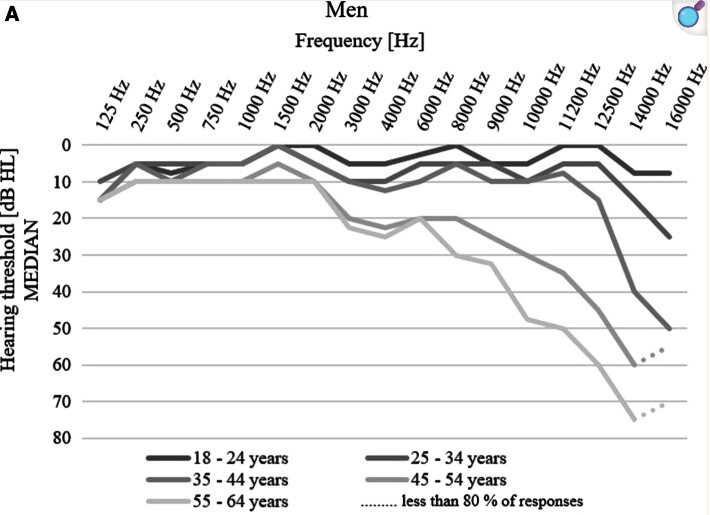
This is the average hearing loss in groups of male participants over various age groups. These participants specifically were selected because they reported “no hearing difficulties”:
[image]
It is of course an average–I’m in my 40s and have hearing in the normal range from 8-20 kHz. I agree that we get a lot of information up there at the high end to su…
There are some audiology practices who perform extended high-frequency . This is more validated clinically and scientifically way to check someone’s hearing loss.
There is also very interesting article from HearingTracker about extended high-frequency hearing test (EHF):
Indeed, again, we are still moving within the technological and energy limitations of hearing aids.
The choice of a sampling rate of 24 kHz for most hearing aids (which allows for a bandwidth of up to 12 kHz according to the Nyquist-Shannon theorem) is a compromise between clinical benefit and hardware limitations.
There is also technology constraints with balanced armature receivers, which are first and foremost constructed for reproducing speech as much as possible, but they are not so good in playing music such as dynamic drivers.
yes, correct the industry primary focuses on speech, which is what HAs are developed for, so great that you place more importance on your music and any sounds above 12kHz, no one would criticize you there, but the majority obviously don’t or can’t go there..have you tried bird watching I wonder.
Indeed. For most of us music is important but not as important as the opportunity to participate in social life. Even my teacher from music school said that.
@bhughes_99, if you’re into fidelity of sound, you might want to check out EarLens, especially the 2.0 version. It’s got a pretty innovative way of transmitting sound with a broader frequency response, but its wireless features are a bit outdated. However, I am not sure if it is still supported. And it’s pricey.
I have normal hearing at 12khz and I’m 45. I suppose in some circles that’s still very young.
There are other options besides a camera to point the hearing aids at who you are talking to (apart from traditional beam forming). You could train the to specifically identify your loved one’s voice. Signia is already working on using the gaps in your speech pattern relative to those around you to try to detect who you are in conversation with. There’s ongoing R&D on in-ear eeg sensors that might allow for an attention measure. Rather than a camera you could use a gaze tracker. I’m sure other clever people will think of clever things.
I am currently trialing Allure 440s. This suggests to me that the “firmware” upgrades that people were expecting that includes the Tinnitus Zen Fractal tones will be scrapped. It suugests to me that no upgrades will be issued for the current model. I’m wondering if I should be waiting until November for the new Allures.
(1) I don’t purchase products based on promises of future features. Look at the Apple/Siri debacle and the current Phonak situation with /.
(2) The Allure will have more features , or at least that’s Widex is saying .
Widex has announced that a redesigned tinnitus program will be available in the fall. However, they haven’t specified if it will be the same as the Zen program.
Something big is returning to Widex this Fall 2026 – a beloved tinnitus management feature, redesigned and reimagined for the future of hearing care. As we continue to develop this innovation, don’t...
I got Spheres to replace my Widex Moment Sheer 440s. Like you, I found the Phonak ‘Spheric speech …’ an improvement over any of my previous aids, but I still use my Widex for music, I am a guitarist. I have been unable to get the same music performance from my Phonaks. My hearing loss is moderate, however.
“By the way on the Widex app, the assisted “your sound” feature is pretty much a gimmic. It seems ot only adjust the equalizer which you can do much more easily yourself.”
I am trialling the new Allure AI at the moment.
I am interested to know how you reached the above conclusion as that’s not what the manufacturer claims.
Sure, I can see that it makes EQ adjustments but how do you conclude that it does nothing more?
Although not ideal, you can artificially increase gain at a frequency by adjusting that threshold on the Sensogram. I have found it very useful when doing real ear with sub-440 devices.
Why sub-440 devices? They benefit more from some curve smoothing that comes about from the gain bump? I’ve been thinking about tweaks I might test by smoothing my fitting a little as cookie bite can lead to a bit of a jump up and then down.
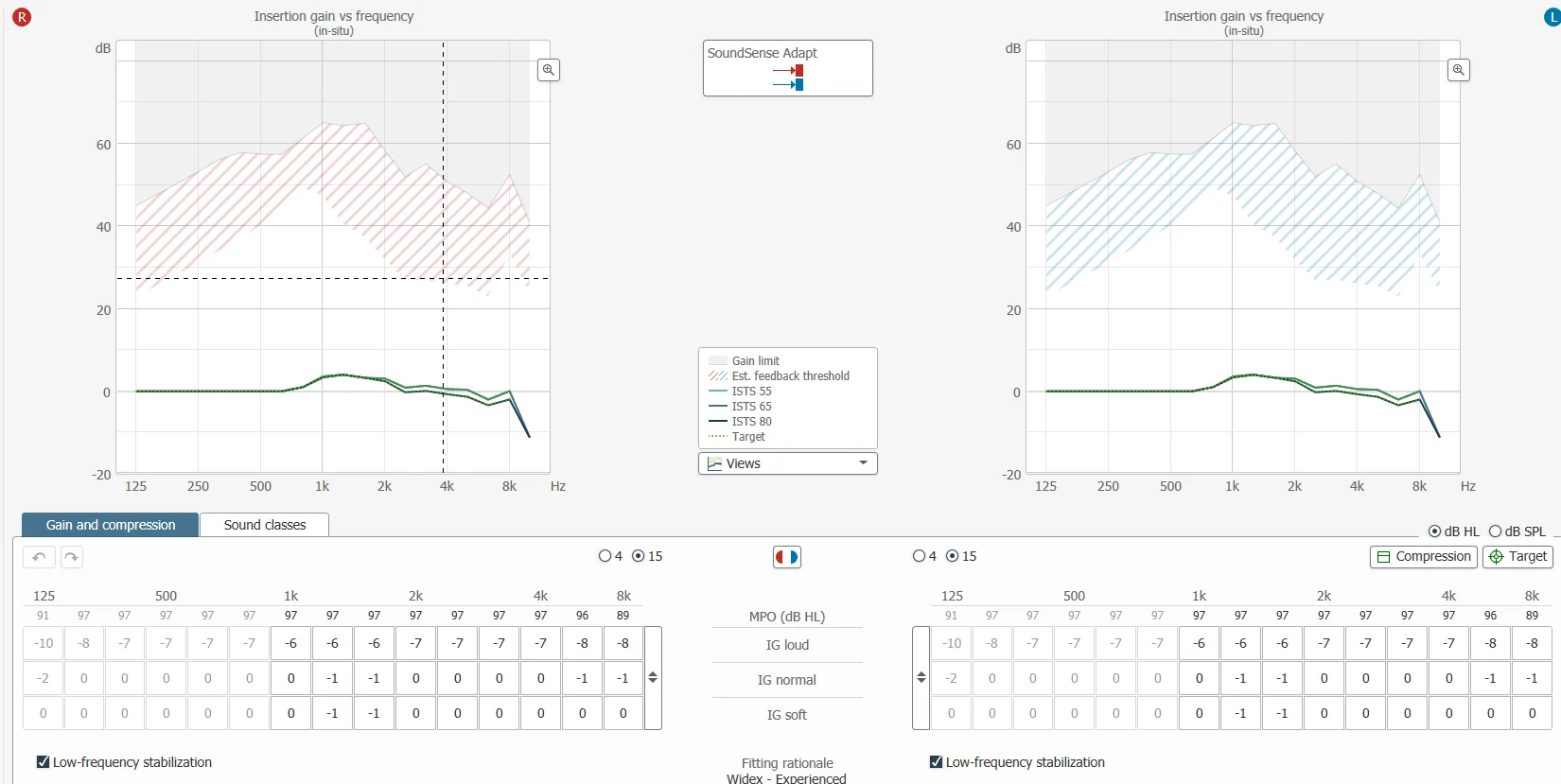
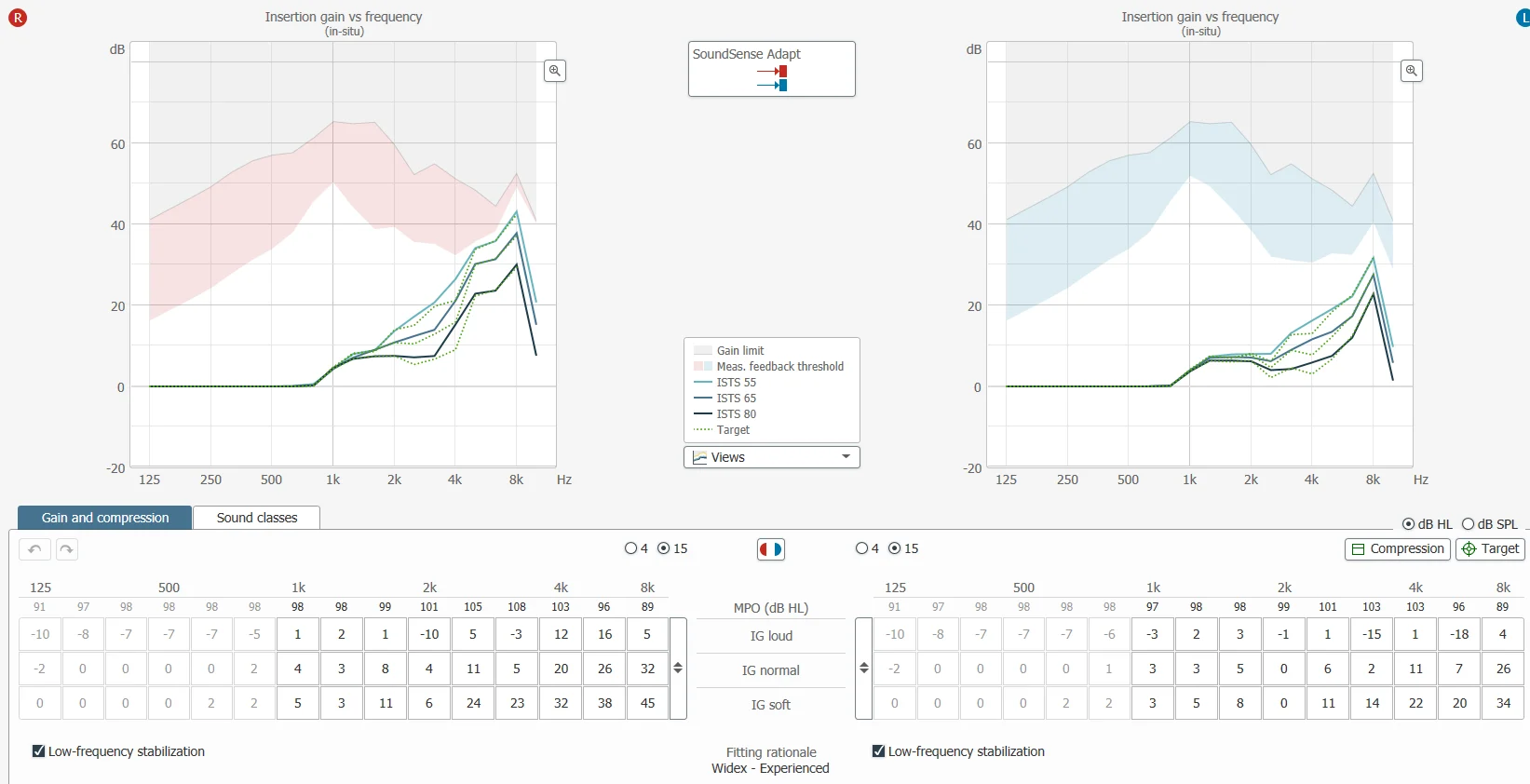
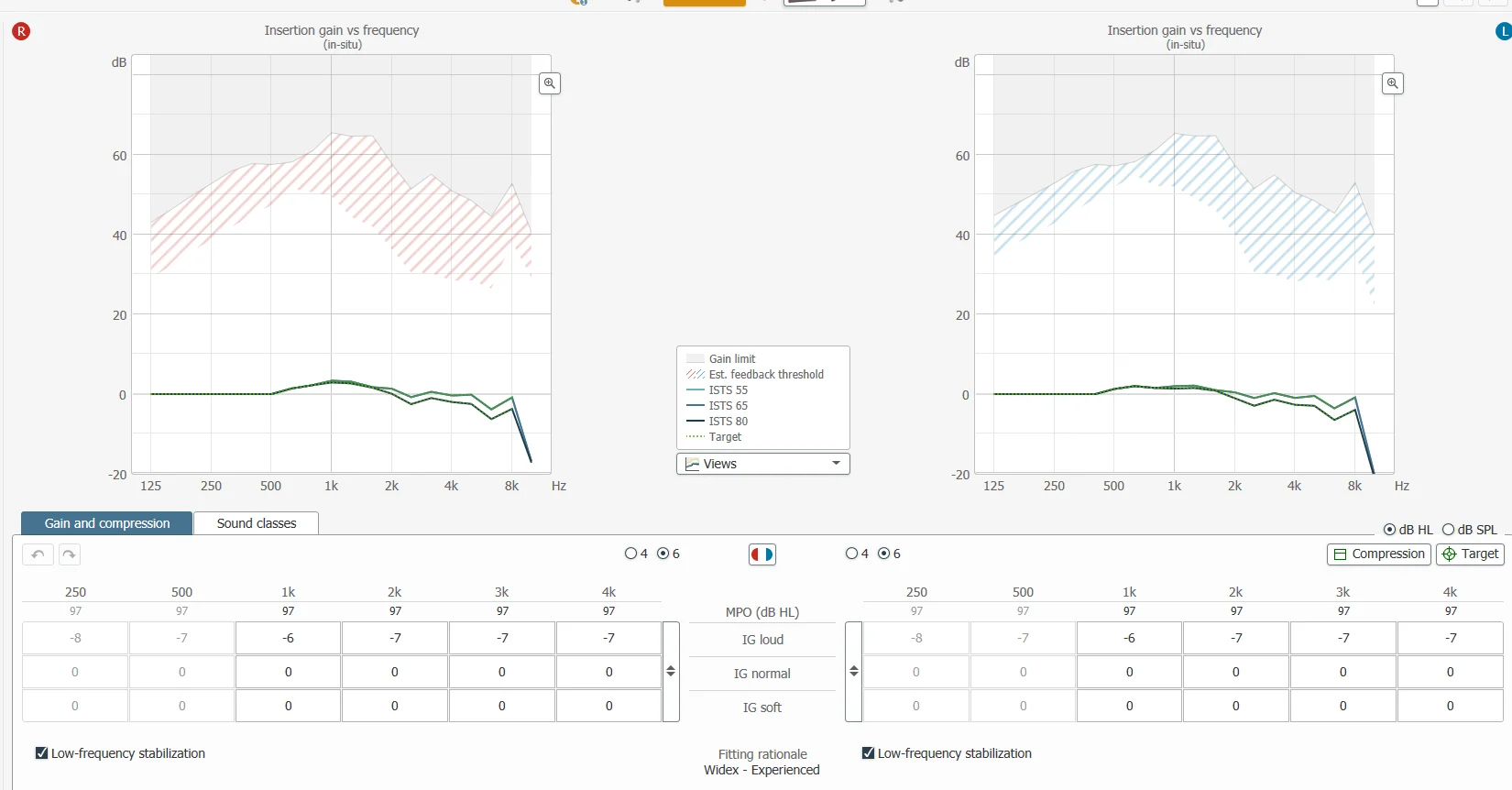
See the pics below for the Widex SmartRIC 110 and the 440.
With the 110, you can only tweak the gains at 6 frequency bands, and there’s no way to manually adjust anything above 4kHz. The 440, on the other hand, has 15 bands and lets you fine-tune gains above 4kHz, which is especially helpful for those with sloping high-frequency hearing loss. In this case, one way to adjust gains over 4kHz is to follow @PaulC’s suggestion. I’ve found that sometimes in it easier to adjust the values using the sensogram than using the fine fitting section – for some reason, Compass GPS can be very stubborn and unpredictable when you want to change a value.
For levels 330, 220, and 110, there are no fitting bands for 6000 Hz and 8000 Hz on the fine tuning page. That’s not to say those levels do not amplify those frequencies, though. They just are adjusted along with the 4000 Hz band. However, you can isolate those (somewhat) by increasing or decreasing the Sensogram threshold at those frequencies.
Even for 440 devices, if I am seeing weird humps or dips at traditional inter-octaves (e.g. 1500 Hz, 3000 Hz, etc.) I will use the Sensogram to try to tease those out.


 San Francisco
 Poland