The thing is, they are competitors, and yesterday they flat out refused over the phone to do a Real Ear Measurement for Oticon. Apparently, in my country everything is just a business; they don’t care about actually helping people.
This is where you go to their professional body and ask for help. If you have no luck there, then its time to talk to the media. Sometimes systemic problems like this are only resolved when light is shone on them and people are held to account.
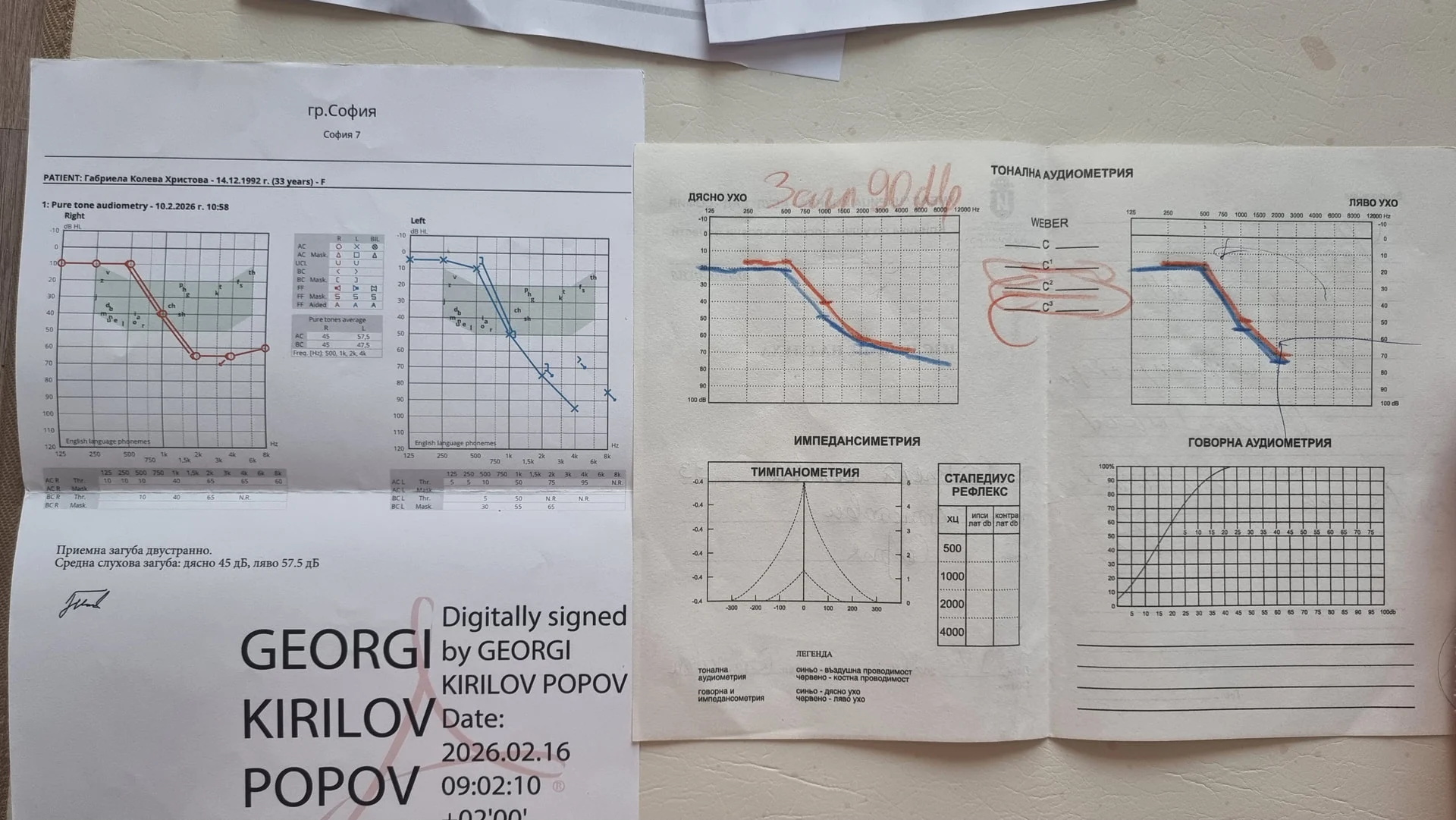
The other day we did a new and a programming session based on it. I have already uploaded it to my profile. For the first time, we were in a different office, and I could actually see the monitor. I noticed that for both ears, the bone conduction at 2k was at 75 , while the air conduction was at 65 or 70 dB (I don’t remember exactly), and the provider just moved the air conduction to 75 dB as well. Also, while doing the adjustments, he selected 5-6 columns across all rows (, Loud, Moderate, and Soft) and was just randomly clicking plus and minus every 5 seconds, asking me, “Is it good like this? How about now?”. There is no way for me to tell if it’s okay in such a short time. I also realized he has never run a Feedback Analyzer and I have never had an Uncomfortable Loudness Level (ULL) or Loudness Discomfort Level () test done.
The moment I stepped out of the office, I started hearing constant wind noise in the microphones. Then my baby screamed in the car, and my ears almost exploded—it actually hurt. I burst into tears and took the hearing aids off. I tried wearing them again at the park, but when a boy nearby yelled, it was painful all over again. Right now, I have to wear them turned down to -4 just to make it tolerable. It is so discouraging that I felt like giving up, but the cashier’s annoyance at the store yesterday, when I had to ask her to repeat herself three times, reminded me that I have no choice but to keep going.
Last night, I ordered a Noahlink Wireless 2 from AliExpress, and it should arrive in about 10 days. I am already watching courses on AudiologyOnline. I know I will manage and fine-tune my hearing aids myself, but I am just so disappointed by the service and, honestly, worried about my hearing with these current settings. If you are not dedicated to what you do, you should just change your profession.
Also, once I find the right settings on my own, I don’t know how to ask them to officially save them into their database without them realizing that I own a programming device and have altered the settings myself.
I got my first hearing aids in Feb and have Oticon Intent 1. I wish I had found these many decades ago (but they did not yet exist) and I was unaware what heard could be like). Next month I get my 6 month appointment. I have ear molds and are great.
Could you please post your previous ? I’d like to compare the two as I don’t remember your hearing being as poor as the new one, but I might be remembering incorrectly.
Thanks for posting this. It was worthwhile getting more datapoints in your hearing test. Your hearing test is significantly better for your left ear. I’m not sure why there is so much variation in the results, but there is asymmetry in your hearing with the left ear being poorer. Were any medical investigations performed for this?
If it were me, I’d be seeking a second opinion and another hearing test from a recommended audiologist. I don’t see any cross-checks on these tests but that doesn’t mean they weren’t performed using different equipment. Have you had acoustic reflexes and speech recognition testing of any kind performed?
Oticon Intent has good wind and handling noise stabilisation technology, so you should be able to resolve that problem but the 35dB drop between 0.5 and 0.75kHz in your left ear may mean you’re being overamplified in this area if matched to prescriptive targets. Most audiometers don’t have the ability to test between these two frequencies, but I would want to if I had it.
You have a very difficult to fit hearing loss with the steep slope and degree of loss in the high frequencies, so I’d be reluctant to self-programme without myself.
Has anyone spoken to you about the acclimatisation process?
My 3 were done by 3 different audiologists at different locations, one of them being ISUL, which is a major hospital and its unit is well-known for hearing care. Unfortunately, none of them performed any additional tests; they always immediately refer me to hearing aid fitting. Obviously, the audiologists are just fitting blindly too. In fact, I am certain most audiologists here don’t even know these tests exist. My current audiologist even mentioned they don’t offer remote tuning because ‘it’s not worth it’ and ‘the market is too small.’ Not to mention that they only keep one Oticon Intent per office; I actually had to wait for them to pull a device from another location, and they even had to swap it once because the battery capacity on the first one had degraded from too much testing. This means they are literally selling the exact same devices they use for trials. If I knew back then what was happening, I would have ordered brand new ones from somewhere else.In Bulgaria, there is only one place that performs , and I would have to buy Phonak hearing aids from them to get it done. I have no choice but to cautiously do the programming myself. Obviously, the is not optimal right now because certain sounds cause me pain. Currently, I am not even wearing the hearing aids because they are so uncomfortable. Thank you for all the recommendations, but the level of hearing care in Bulgaria is not good at all.
Is there any particular reason that you don’t want Phonak hearing aids? I’ve found that the quality of care tends to have a greater influence on success that the brand of device for 4/5 people. In the 1/5 where it does, this relates more to the type signal processing in the device and another brand is needed.
@Um_bongo do you know of any audiometers that can test between 0.5 and 0.75kHz? The 35dBHL drop in the OP’s between these two frequencies (left ear) is very large.
What a bad situation. I might be on tenkan’s side here. It doesn’t sound like access to good care is that available.
But the OP is probably going to need different tips. If the left ear really is 60dB at 1000 Hz, open domes are unlikely to support that. I’d probably want custom tips, but how are those going to end up? OP might be better off just asking for every type of dome and sleeve option to try to find, on their own, the most closed possible option that is tolerable without making their own voice, breath and footsteps boomy. That’s probably step one.
Unlikely to be overfit in any really concerning way, but first hearing aids only NOW? Getting used to appropriate amplification is going to take a fair bit of work. And even with a perfect fit, not all problems will be solved.
It is a really bad situation. I don’t think self-fitting is going to be a great solution for a first time user with this degree of loss. There is going to be a lot of counselling needed. We also don’t even know whether the OP will benefit from hearing aids because there is no word recognition testing to demonstrate improvement when speech is made audible. If I could afford it, I’d travel somewhere where clinical care is better at least for a diagnostic and fitting appointment and then do teleaudiology appointments if travel is too expensive after this.
I asked Gemini: “Will Phonak Bulgaria (clinical services provider) work with patients who use other brands of hearing aids?”
Yes, Phonak Bulgaria (and its local clinic partners like Ototon) will work with patients who use other brands of hearing aids, but only for basic, physical, and diagnostic services. [1, 2]
Because hearing aid programming software is strictly brand-specific, clinical services are divided into what they can and cannot do:
Services They CAN Provide for Other Brands
Hearing Tests & Diagnostics: Clinicians can perform comprehensive and speech-in-noise tests regardless of your current device brand. [3]
Physical Maintenance: They can provide deep cleaning, replace standard domes, swap , and change batteries. [4]
Custom Ear Pieces: They can take ear impressions to make custom earmolds or shells that attach to your existing hearing aids.
General Consultation: Specialists can advise you on your hearing health, evaluate how well your current devices perform, and discuss future upgrade options. [3, 5]
Services They CANNOT Provide for Other Brands
Digital Reprogramming: Clinicians cannot adjust the internal acoustic settings, volume limits, or frequency gains of other major brands (like Oticon, ReSound, or Starkey). They do not possess the proprietary fitting software or hardware links required for competitor brands. [6, 7]
Proprietary Repairs: Internal electronic breakdowns or microphone failures on a non-Phonak device must be sent to that specific manufacturer’s authorized distributor, not a Phonak facility.
Firmware Updates: They cannot update the device software or troubleshoot Bluetooth connectivity issues unique to other brands. [8]
Do your current hearing aids need a physical repair or cleaning, or are you looking to have their sound programming adjusted?
It may be worth providing the programming software on your own laptop and seeing whether they’ll do the job if the limiting factor is access to programming software. It seems like they can do custom moulds for you. I know Sonova wholesale in my region will make custom shells for non-Phonak receivers, you just don’t get free remakes or the same warranties on them because they don’t make the electronic components.
Yes. Sometimes I think that if I didn’t care about professional regulations I could probably travel around central europe with a portable set-up and pay for my adventure quite handily fixing everyone’s hearing aid fits.
I generally agree, and have said often on these boards that isn’t the answer for new users. That new users should get appropriately fitted hearing aids because they don’t even know what they should be hearing, which is even more true in cases like this where they’ve waited decades before getting hearing aids. But if the options are DIY versus bad care? They’ll get some decent advice here, ultimately probably end up under-fit, but can likely only stand to be underfit for a while anyway before being able to tolerate something close to target gain. I think it’s a good idea to see if the Phonak clinicians might work with them. From what I’ve read from other users in Bulgaria I’m not hugely optimistic.
once I find the right settings on my own, I don’t know how to ask them to officially save them into their database without them realizing that I own a programming device and have altered the settings myself.
Don’t worry about them saving your settings in their database. You can just save your settings at home.
Thank you all for your comments. I am getting hearing aids only now because over the years, I visited two different specialists and had a hearing test done in my hometown, and they always told me everything was fine. This was despite the fact that I’ve been asking people to repeat themselves since high school and could never understand a word during French listening comprehension exams. I believe that in recent years, due to Hashimoto’s, a laparoscopy, a C-section, etc., my hearing has worsened significantly.
Phonak Lumity were the first hearing aids I tried back in March of this year. However, after four weeks of wearing them and despite four adjustments by the Ototon audiologist, background and parasitic noises were constantly amplified. I realize now that they simply didn’t give me enough time to adapt. Back then, I just thought that specific model wasn’t right for me. I had read reviews saying Oticon was better because of their BrainHearing technology, which is why I wanted to try them. At this stage, it’s not that I don’t want Phonak—I just don’t have another €6,000 to buy new devices while leaving these to sit in a drawer.
Unfortunately, it is not true that Ototon services other brands. I specifically called them to ask about , and they told me it wouldn’t be possible.
As for the domes, I think the audiologist actually got them right. I am using open bass domes; they don’t cause occlusion, and there isn’t as much whistling as there was with the standard open domes. I believe I can clear up the little remaining whistling with a Feedback Analyzer (which has never been run during my adjustments).
There is an improvement in speech understanding. My husband and I tested this by having him read a text with a lot of consonants; I understood about 95% of it, compared to around 50% with great effort without the hearing aids. However, with the current settings, I still experienced very aggressive noises. I am aware of the adaptation period—after about a month with Oticon, I’ve already gotten used to many of the new sounds, but I don’t think I should be experiencing noises that cause genuine discomfort.
Unfortunately, my trial period with Ototon (Phonak) has ended, otherwise, I would have gone back for a trial just to get the REM done.
I would be willing to travel to another country, but right now I can’t do that with the baby, so that will have to wait. I noticed that Turkey and Romania have good clinics that work with Oticon. I might send them an inquiry to see if they would be willing to perform the necessary tests.
Not between 500 and 750Hz, but looking at the paperwork, the one on the left looks like it should have come from a Med-Rx machine. That will give a value at 750Hz and 1.5Hz.
As to the fitting; it is possible to fit these kind of losses, but you usually have to throw the fitting formula in the bin, to stop the aid gain averaging and causing the down spread of masking. The quality of fit will come from the amount of occlusion that’s acceptable, vs the amount of HF gain.
You essentially fit with a two channel crossover approach: practically shut everything off below 1KHz and get the gain vs. occlusion right in the 2-4KHz bands.
You essentially fit with a two channel crossover approach: practically shut everything off below 1KHz
Is this what Widex does with their “low frequency optimization”? When I did my programming , all the values below 1Khz were greyed and the software did not allow me to change them.
I think looking abroad for help is a good idea at this point. Have a look at the best practices checklists on hearingup.com1 and ask the providers which practices on the list they follow when vetting them. Some of them will be more important than others. We can guide you as to what will be critical for you given your complaints.
For future reference for your configuration of loss I probably would’ve recommended Signia devices with own voice processing. You need quite an occluding fit to get good mid and high-frequency audibility but with your good low-frequency hearing you’re likely to get a lot of reverberation of your own voice doing this. Own voice processing detects when you’re speaking and processes your own voice using a separate strategy eliminating this problem. You get the best audibility of speech without own voice problems. You’d also benefit more from the advanced signal processing of the aids with reducing background noise with a more occluding (vs more open) fitting.


 They’ll get some decent advice here, ultimately probably end up under-fit, but can likely only stand to be underfit for a while anyway before being able to tolerate something close to target gain. I think it’s a good idea to see if the Phonak clinicians might work with them. From what I’ve read from other users in Bulgaria I’m not hugely optimistic.

 Wales, UK

 San Francisco