I read Bernafon Enchanta brochure. There mentioned “Tap” feature on Bernafon Hearing aids.
Did Oticon Intent have these? I guess “why not” they both have sensor motion.
You’re ignoring this member’s posts.
This topic is closed.
217 replies15.2k viewsLast reply
I read Bernafon Enchanta brochure. There mentioned “Tap” feature on Bernafon Hearing aids.
Did Oticon Intent have these? I guess “why not” they both have sensor motion.
You’re ignoring this member’s posts.

What does the Tap feature do on the Encanta? Is it similar to the Phonak tap control feature? The Phonak one has the following 3 functions:
I looked thru the Intent matrix comparison and I don’t see any mention of Tap Control feature.
You’re ignoring this member’s posts.
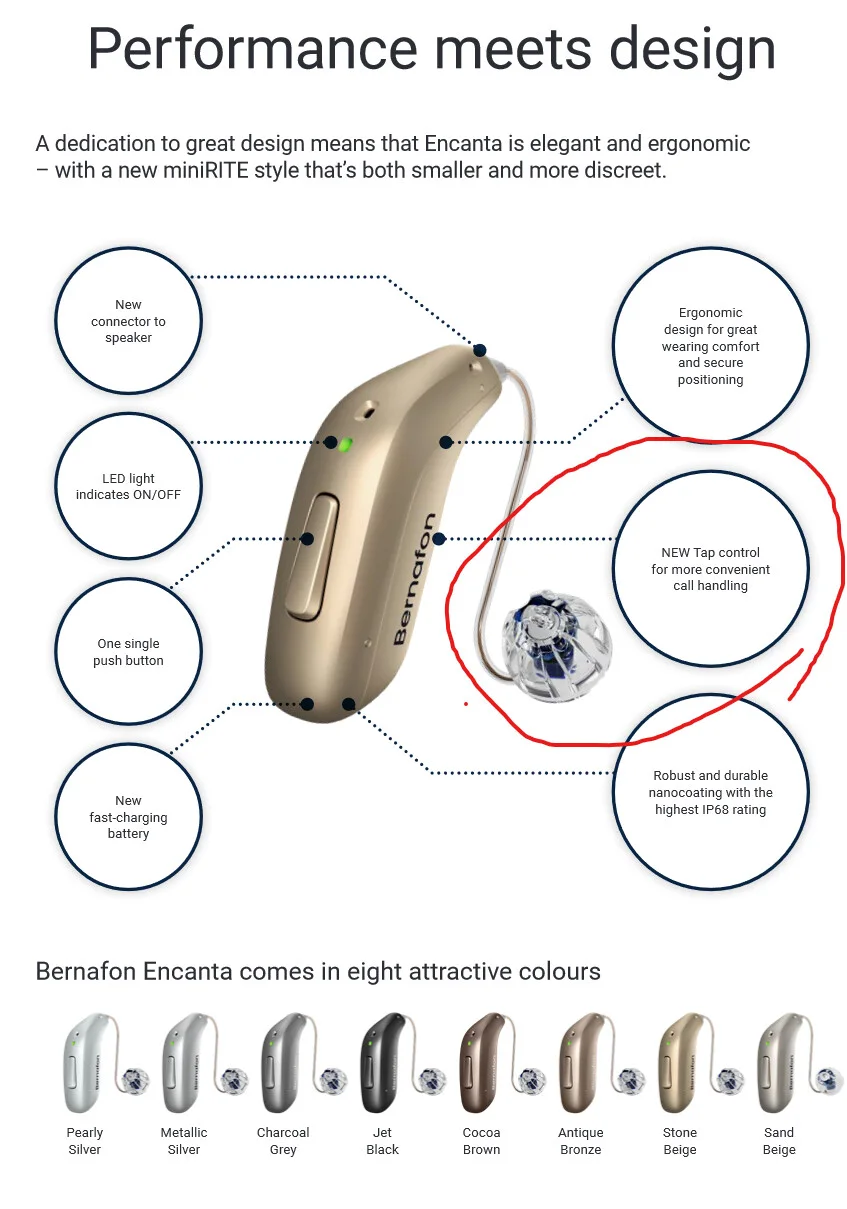
There no further explanation of “tap” feature but it say “call handling”. But I believe there are more than that simple call handling. Potential for more controls like Phonak feature.
You’re ignoring this member’s posts.
You’re ignoring this member’s posts.
No, that’s not what I’m saying. I thought we were just clarifying semantics here. Someone (@user246 ) said that they are changing the Bernafon branding, and I thought that you and @tenkan were trying to get clarification whether they’re talking about the Bernafon brand name changed to a different name (Encanta). So I was just pointing out that it looks like the Bernafon name is still the same as before, and Encanta is not the new brand name that replaces Bernafon, it’s just a new model name introduced by Bernafon.
I maintain the same position I always have that I don’t think the Bernafon Encanta and the Philips 9050 are rebadged Oticon Intent. They may share the same hardware and a lot of the new features that come with the new hardware platform like the accelerometers and the look and feel and the new size 13 contact charging system, new receivers, etc. But it stops there and it looks like the 3 core technologies for the 3 brands (Oticon, Bernafon and Philips) are still different from each other like before.
You’re ignoring this member’s posts.
You’re ignoring this member’s posts.

You’re ignoring this member’s posts.
You can handle calls with a tap, kick Siri into life or start/pause streaming: the feature is on Sonova/other products already.
You’re ignoring this member’s posts.
I read Bernafon Enchanta brochure. There mentioned “Tap” feature on Bernafon Hearing aids.
Did Oticon Intent have these? I guess “why not” they both have sensor motion.
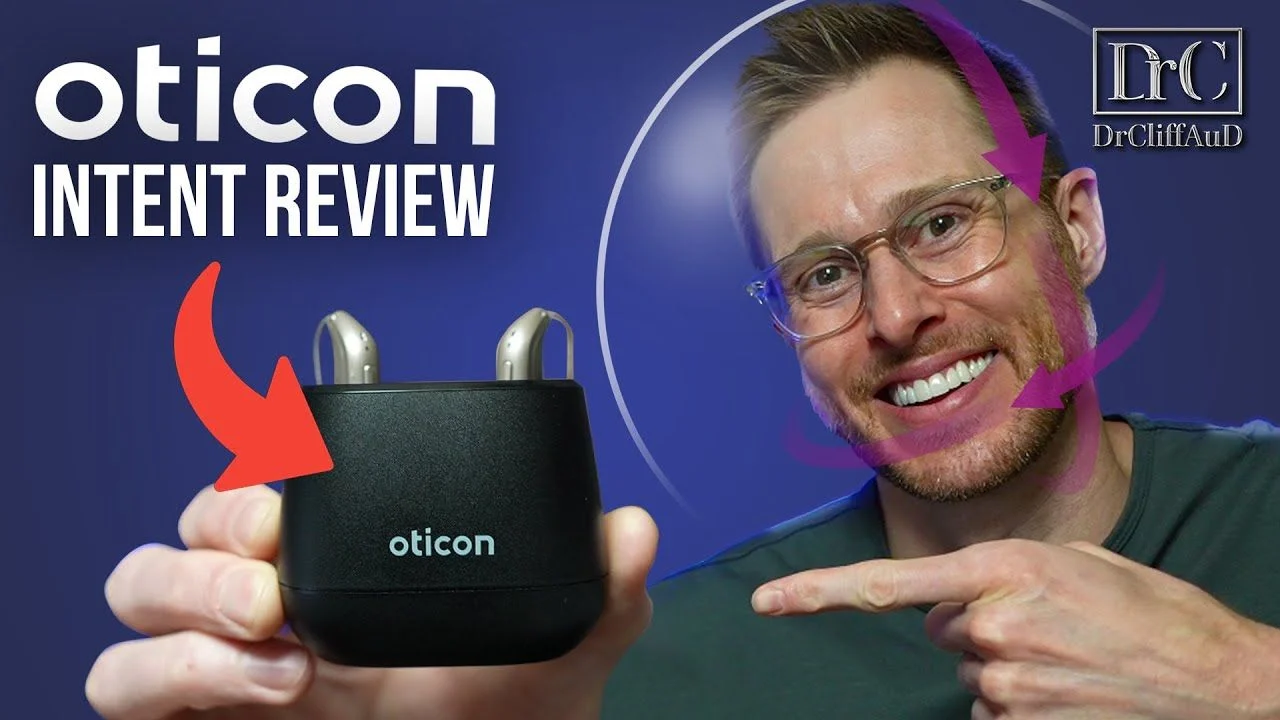
Although I mentioned in an earlier post that I didn’t see any mention of the Tap feature in the Oticon Intent literature, the following video that talks about the Intent did mention about the Tap Control feature at 17:28 minutes into the video. He only said that you can double tap it to answer a phone call. But he said that it won’t stop the streaming content with the double tap. You’d still have to stop the streaming on your phone or accessory manually to silence it. There might be other functionalities possible with the Tap Control (like how Phonak has it for a smart assistant like Siri, also to control the streaming), but it wasn’t mentioned in the video.
You’re ignoring this member’s posts.
Ah OK, I assumed that it was able to access the same funtinality as other products.
You’re ignoring this member’s posts.
You’re ignoring this member’s posts.

Has anyone seen numbers for the processing lag with Intents?
It’s not on datasheets, not mentioned on any test reviews that’s I’ve seen.
You’re ignoring this member’s posts.
I’m not aware that such numbers are usually listed. Usually they’re negligible to the users, even going through a streaming accessories, let alone directly from the mics to the receivers. Why, can you tell a significant lag for it to be a concern? Or have you seen them listed before for previous brands/models?
You’re ignoring this member’s posts.
I have no experience but Widex claims a very small delay (less than 0.5 millisecond) with their ZeroDelay feature:
https://www.widexpro.com/en-us/widex-technology/zerodelay/1
It would be nice to know what the typical delay is for other modern digital aids with . Oticon does specify the latency when using the TV adapter 3 (input to the adapter to output of the speaker of the aid) for different input sources. I have not found such a number for the delay from acoustic signal at the microphones to the output of the receiver (speaker) for Oticon aids (I now have Real 1 aids).
You’re ignoring this member’s posts.
Oticon does specify the latency when using the TV adapter 3 (input to the adapter to output of the speaker of the aid) for different input sources.
Thanks to your mention, I looked it up and this is what I found for the Oticon TV Adapter 3.0 latencies:

It got me curious so I googled up to see what the acceptable latency would be between audio and visual cues and I found the following:
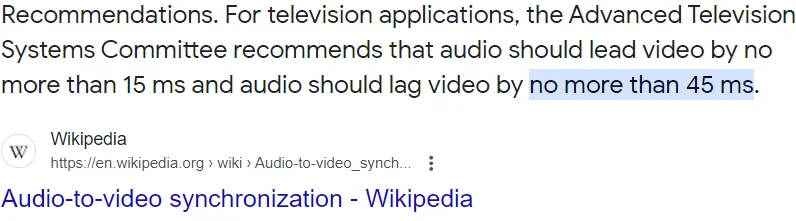
I personally never really notice a significant enough latency between the TV Adapter 3.0 myself. But I guess if you feed Dolby Digital format audio into the TV Adapter, then it can hit the borderline 45 ms audio to video lag, although not exceed it yet.
The issue of audio latency for hearing aids and accessories seems to receive very little attention on this forum from what I’ve noticed. For sure the HA mics to HA receivers latency would be smaller than the streaming accessories latency, so less than 25 ms by deduction (at least for Oticon). How much less is the question. But does it matter how much less if 25 ms is already deemed to be acceptable because 25 ms is less than 45 ms?
You’re ignoring this member’s posts.
The issue of audio latency for hearing aids and HA accessories seems to receive very little attention on this forum from what I’ve noticed. For sure the HA mics to HA receivers latency would be smaller than the streaming accessories latency, so less than 25 ms by deduction (at least for Oticon). How much less is the question. But does it matter how much less if 25 ms is already deemed to be acceptable because 25 ms is less than 45 ms?
I think a description of what Widex may be trying to eliminate is “comb filtering” as used to describe mixing two identical audio signals that are delayed by a small amount (1 -25 milliseconds). The following URL attempts to explain but is not necessarily applicable in hearing aids due to the difference in amplitude between the hearing aid output and any signal passing directly to the eardrum like in an .
https://audiouniversityonline.com/comb-filtering-explained/7
I found a Widex paper on hearing aid delay:
You’re ignoring this member’s posts.

Real 1
Sorry for my late reply. I need to visit here more or set up notifications
They work for me.
I’m retired, don’t need to communicate. I get recruitment in super power aids. I employ speech rescue. I like discreet hearing aids. I use the remote mic in really noisy restaurants along with the companion app to turn down noise almost to zero. I read lips well. On the phone via I hear and music streams good.
You’re ignoring this member’s posts.
means Bluetooth Low Energy, a class of Bluetooth that has been around for years for low power control functions. Bluetooth , or LE Audio for short, is a new class of Bluetooth Low Energy that is optimized for audio, i.e., steaming-type functions, rather than just control, and includes . If you have LE Audio, you have Auracast, and vice versa. Auracast is a feature of LE Audio. But, although it is very confusing, BLE and LE Audio are not the same thing. You can have BLE that is NOT LE Audio.
You’re ignoring this member’s posts.
Hearing Aids0 replies
Fitting Software Requests1.1k replies
Uncategorized451 replies
Hearing Aids168 replies
Hearing Aids73 replies
 Wales, UK
