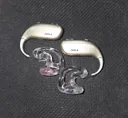
Oticon released the Verit just this year. It is powered by a 312 battery. It is definitely worth considering.
You’re ignoring this member’s posts.
341 replies10.2k viewsLast reply
Oticon released the Verit just this year. It is powered by a 312 battery. It is definitely worth considering.
You’re ignoring this member’s posts.
I've been thinking about this dead horse issue quite a bit lately, given the abysmal performance during my rechargeable hearing aid trial...
My wife is an and we were out to dinner with friends the other night, and she's a Deaf Educator, works in the schools. I was goofing around with my app, trying to tweak the sounds from my aids, so the topic came up, and of course drifted to the battery life since mine started warning me of low battery charge while I was sitting there.... not even 7 PM!!!
Anyway, our friend summed up another perspective.... she prefers when kids have replaceable batteries as opposed to rechargeable, because she can actually do something about the problem if she can replace the batteries.
Anyway, I have been thinking....why do so many folks seem to like or even favor rechargeables? I just don't get it. Is it the environmental impact?
So I did a little research. Apparently, now that trace mercury was eliminated way back in 2011, there is very little if anything toxic in these batteries.
So, is it an issue of filling up the landfills?
Well, I used two size 13 batteries per week. They aren't a perfect cylinder shape, so the actual volume is something smaller than the area of the OD x thickness..... BUT assuming a perfect cylinder shape, in one year I generated approx 26,603.4 cubic mm of waste, not counting the packaging, which is entirely (or at least almost entirely) recyclable....
That's approx 1.68 cubic inches if I've done the math correctly. That's just under a fluid Oz, and would fill up a shot glass about 2/3 of the way to full.... that's in a full year!!!!
OK, so I'll assume that this idea is true, that zinc-air just doesn't produce enough voltage for the modern chips.... so I understand that this is a dead horse issue....
One that I could accept if I were getting a notable and hugely significant performance boost out of these aids. If that were the case, then I can see that it's a trade-off taht is perhaps worth accepting. Maybe that's the case with the chip aids... but I'm not so sure for the non-AI aids. They've been pushing rechargeables since I bought my old Marvel aids. Why? I just don't get it!!!!
You’re ignoring this member’s posts.
You’re ignoring this member’s posts.
ok, yes I can definitely understand dexiterity concerns. And I'm sorry if you are suffering from that, or know someone that is. My dad passed earlier this year with it.
your second point about the warning tones.... that's interesting. A long time ago I put myself on a routine of changing the batteries every Saturday morning, even though I could have always gone till at least Saturday afternoon evening sometime, and even into Sunday..... That said, & the reason I find that interesting is that early on I remember getting plenty of warning time for it, but in later years, the once in a blue moon times that I'd forget to change them on Saturday morning I would often get that beep like you said just before it shut down, just like you said. I always reckoned it to a lower-quality battery since I had transitioned to buying them from Amazon to save a nickel....
If you're truly getting 40 hours of battery life, that is really awesome!!!! Good for you. then I would say those are barely where they need to be... IMO, rechargeables won't really be viable untill a few things happen.
1) a true 2-days life from a charge so that if something happens and you're unable to charge them one night, then you have a chance to do something about it before they fail. I wear them approx 16-18 hours per day, so I need 32-36 hours...call it 40 hours..of real world normal amount of phone calls and streaming
2) and the other thing taht's needed is a fast charge top up without a special charger. Using something that you can find most anywhere not just hearing aid wearers...such as a wireless charging pad... and be able to get a meaningful charge boost in the 15-20 minutes it takes for a shower or whatever...
The Sennheiser aids that I'm trialing now have that same charger. It's great... but if I keep these aids I'll end up buying another one or two of them.... one for my car, one for my travel bag. I've already had a couple of instances when i got the low battery warning and I was out and about with my charger at home. Thankfully I can get by without my aids but I know some folks have a tougher time with it....
You’re ignoring this member’s posts.

doesn't produce enough voltage
Why couldn’t they stack two cells? So, you need two smaller cells than you’d use if you only used one to keep the case thin, or put them in side by side (still wired serially) but you still have a decent bump in available voltage.
WH
You’re ignoring this member’s posts.

Why couldn’t they stack two cells?
Zinc air batteries require air to flow into the holes in the top of them. You couldn't physically stack them without one cell's air holes being blocked.
You’re ignoring this member’s posts.
Why couldn’t they stack two cells? So, you need two smaller cells than you’d use if you only used one to keep the case thin, or put them in side by side (still wired serially) but you still have a decent bump in available voltage.
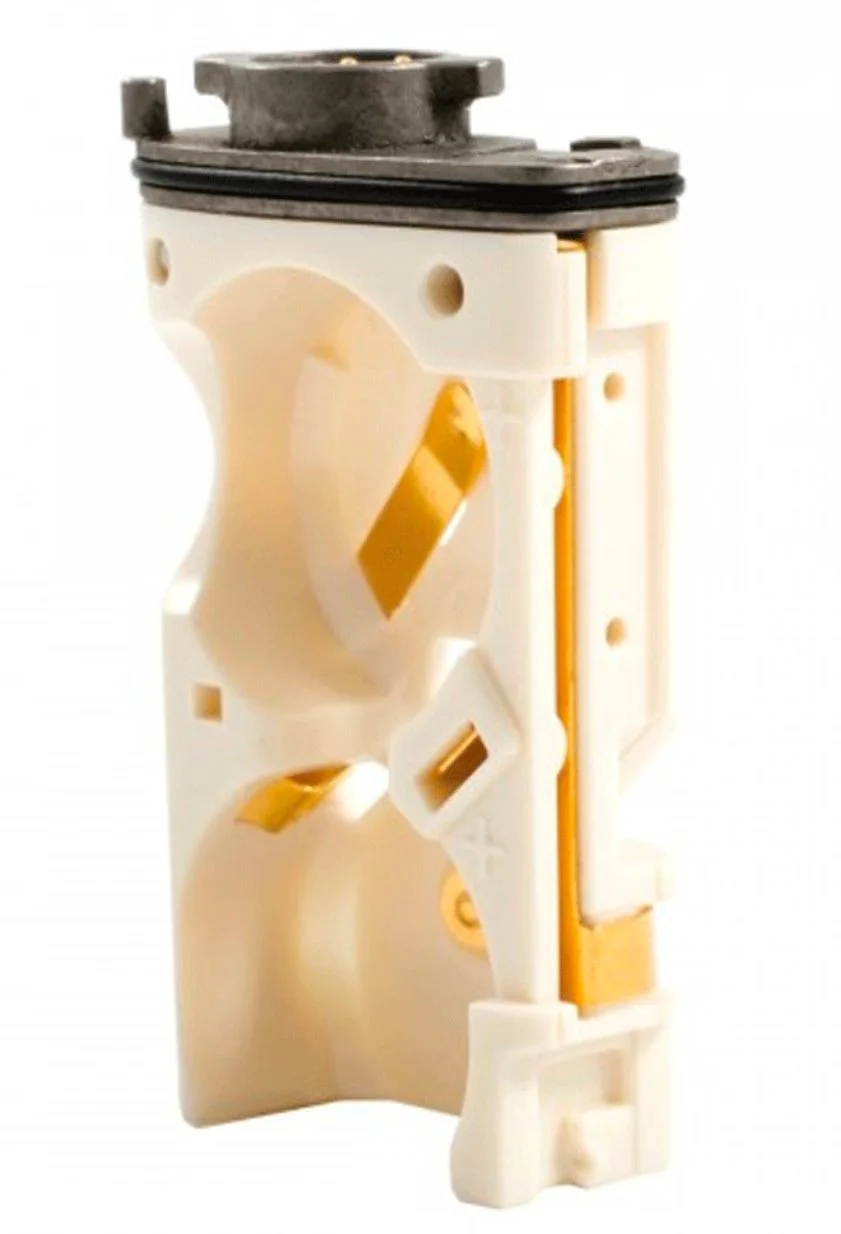
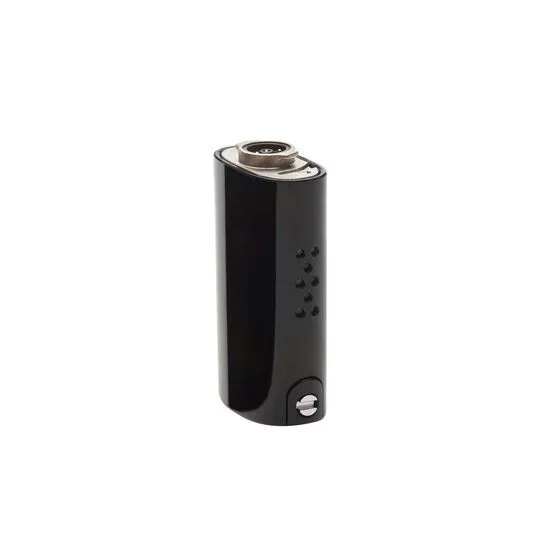
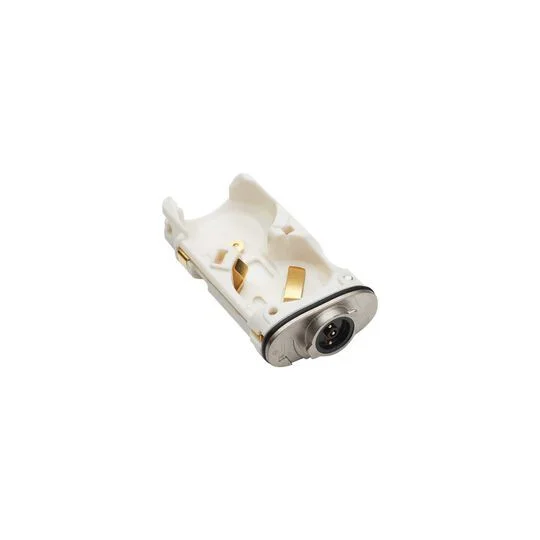
That is probably the case in sound processors, although I am not sure if it it parallel. Look at the small holes in the black plastic for air entrainment:
You’re ignoring this member’s posts.
EU regulations require rechargable batteries in hearing aids by 2027.
Cited previously in Hearing Tracker but I do not know which thread.
You’re ignoring this member’s posts.
In reply to @Hearing_Potential
fair point I suppose
but that seems like a horribly easy hurdle to overcome.... If there were enough folks like me rattling the cage about the problem. No motivation I suppose, they don't care what I think.
but I suppose that they probably are still working on the more complex solution of increasing efficiency of the circuits and increasing the efficiency of the rechargeables.... eventually they'll get there ...or else Mr Fusion will finally be invented and miniaturized for use in hearing aids!
I think @WhiteHat 's thought is a very good out of the box thought! If it was just a matter of voltage it's a beautifully simple solution..as opposed to the high dollar and complex task of bettering rechargeables
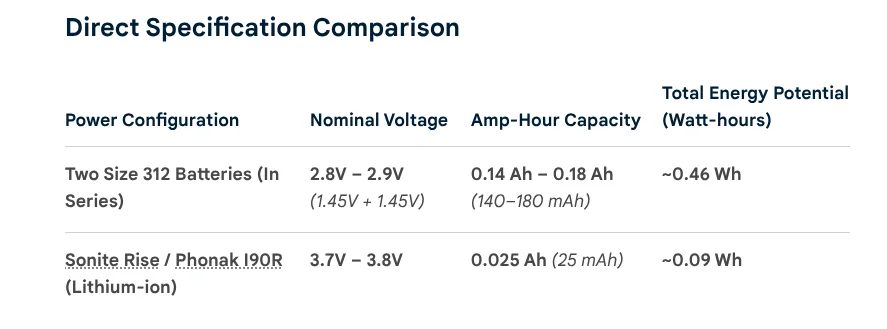
two 312 batteries stacked is 7.2mm thick, compared to my 5.4 mm thick size 13 batteries and it would be close to the same voltage and significantly more Ah capacity
+1.8 mm is something, but I'd take it. I have more room than that between my ears and head!
Anyway, here's what Google tells me about the idea
You’re ignoring this member’s posts.
based on lobby by the lithium ion companies no doubt...or maybe a bunch of misguided folks thinking that these things are filling up the landfills and polluting the planet.
Maybe there's more pollution than I know, involved with manufacturing zinc-airs. I'm just seriously doubtful that it's even in the top 50 legit concerns about the environment
You’re ignoring this member’s posts.

I'm just coming to the end of a 90 day trial of Phonak Audeo rechargeable aids and have decided to take them back as hearing-wise they are not significantly any better than my NHS provided Danalogic ones. I found the recharging a bit of a chore and will be pleased to get back to the Danalogics with disposable batteries. I personally, just found the disposable batteries more convenient. They lasted longer than the rechargables and I can change a battery in about 30 secs. I have a tiny battery holder on my key ring to take spare batteries wherever I go.
My decision is based mainly on the hearing quality and the fact that my NHS aids were free and come with unlimited (at present) free back up. The Phonak aids are more discreet but that doesn't matter to me.
I would think that if legislation demanded that all hearing aids should be rechargeable, then my NHS disposable battery ones would be changed free of charge at the next upgrade but that's just speculation.
You’re ignoring this member’s posts.
Phonak Audeo rechargeable aids
That doesn't say much, is it Lumity (mediocre battery life)? Infinio R? Infinio Sphere? Eon R? Eon Sphere?
I think no benefits is a matter of insufficient fitting. Perhaps you've got M receiver, because Target software suggested that when you should get P receiver? Perhaps you've got too open earpiece?
There's many factors involved to get a successful fitting and that requires patience.
You’re ignoring this member’s posts.

I found the recharging a bit of a chore
Why? What is difficult about charging them overnight, while you sleep?
found the disposable batteries more convenient. They lasted longer than the rechargables
Largely irrelevant, if the rechargeable battery is giving you a full day of use (and they do) you recharge overnight then you can carry on all day, every day
You’re ignoring this member’s posts.
I found the recharging a bit of a chore
They lasted longer than the rechargables and I can change a battery in about 30 secs.
I do like my new Costco Jabra Enhance Max (ReSound Enzo IA) aids and I can get 3 days out of a charge. I do miss changing batteries as I've done most of my life. My previous hearing aids which worn out were Costco Phonak Biro P-UP which used the 675 battery. When I got the Phonak Brio's, I kept a battery usage log on my cell phone in a note pad app. The reason for logging the battery life was to see how long a pair lasted whether streaming or not. I would get 2 days (defective battery) to 22 days per pair. I always waited for the low battery beep before changing both batteries. Between Sep 19, 2014 and Apr 10, 2026, I have used 318 pairs of 675 sized batteries. This is about 11 years 6 months.
Although I am biased as replaceable battery aids are all I've ever had until 4 months ago. I still prefer aids with user replaceable batteries.
You’re ignoring this member’s posts.
The nightly routine of disposable battery powered aids is to take them out.
The routine of rechargeable aids is to take them out, open the charger, fit them into the charger. The risks of unattended overnight charging of Lithium-ion batteries is well documented. I found that a full charge lasted about 1 1/2 days (switching them off for the evening). Twice they ran out during the day away from home.
Disposable batteries last at least a week and I carry spares in my keyring holder.
I find this more convenient.
You’re ignoring this member’s posts.

Agreed. I tweaked the 'car' mode right off the bat on my P90Rs so that on road trips I can both listen to music and listen to conversation.
You’re ignoring this member’s posts.
I find it astonishing the amount of conversation on this topic. It is obviously a Ford v Chevy conversation. individuals simply have their preferences and that's great.
To add my 2 cents, I have been wearing Phonak I90Rs for about 18 months. it never occurred to me to consider a disposable battery option. I just plug them in every night and have never had a problem with them running out of juice. Just like I plug in the iPhone when needed and plug in the laptop when needed. It's no big deal I keep it on the bathroom counter next to other nightly routines.
In closing I don't think anyone is going to convince anyone on this thread to change their views.
But it is an interesting conversation.
:)
You’re ignoring this member’s posts.
p.s. Disposable batteries are considered hazardous waste and should be be disposed of properly. I am sure everyone on this thread is doing that :)
You’re ignoring this member’s posts.
Yes i am worried about it, i have Ultra Power hearing aids and those are not usable with chargeable batteries, with normal batteries i can use the hearing aids Naida p50 about 2 or 3 weeks
You’re ignoring this member’s posts.
The risks of unattended overnight charging of Lithium-ion batteries is well documented.
In the cell phone industry it is. Now, as most people know some cell phones allow you to charge to 80% and some automatically charge based on your usage. I'm too new to rechargeable hearing aids to know anything on this.
I muted my aids for the night rather than putting them in the charger. With the mics off there's nothing to amplify and process. I lose 10% charge this way. Out of curiosity I'll see if there's any battery usage difference between mute and powered off.
You’re ignoring this member’s posts.
Log in to reply to this topic.
Hearing Aids2 replies
Bone Conduction Hearing Aids33 replies
Hearing Aid Self-Fitting (DIY)40 replies
Hearing Aids7 replies
Hearing Aids28 replies
 Poland
 Rural New England
 Christchurch New Zealand
 Worcestershire UK
 Nieuwegein