
So your deaf like the rest of us!
Well, no, the Deaf are a cultural group who communicate primarily using sign language.
You’re ignoring this member’s posts.
145 replies6.5k viewsLast reply
So your deaf like the rest of us!
Well, no, the Deaf are a cultural group who communicate primarily using sign language.
You’re ignoring this member’s posts.

@arydant, not sure how your comment is related to hearing aids or this thread. The only Chinese person who commented here said that China is still lacking in this area.
You’re ignoring this member’s posts.

the Deaf are a cultural group who communicate primarily using sign language
As a generally thick-skinned individual I must confess to get mildly irritated when someone calls me “deaf”. A bit like calling a person with glasses “blind”. Extremely sloppy language.
You’re ignoring this member’s posts.
You’re ignoring this member’s posts.
I may be wrong, but aren’t most hearing aids available in western countries made in China? The design and software is most likely developed elsewhere.
We seem to have this notion that China is somehow non-existent in respect to the dispensing and support of hearing aids, perhaps they just go about it differently. Never underestimate the Chinese, do so at your own peril.
You’re ignoring this member’s posts.
Sigh… I’ve been fantasizing about adding storage to our system (15 kW on our roof), but the numbers here just don’t support it. We pay basically the same price for electricity we buy at night (or when it’s cloudy) as we get from the electric company for what we upload to them when it’s sunny; the only difference is 18% VAT, which we pay them but they don’t pay us.
It no longer makes any financial sense to install solar without batteries in California. All new installs for the last few years are under NEM3 rates and export prices are minimal apart from a few peak periods in the late summer.
This actually makes sense. California doesn’t need any more power when the sun is shining (the state is actually exporting power in the middle of the day), but it does make sense to incentivize people to store the power locally for their own use later or to export in peak periods when demand is high.
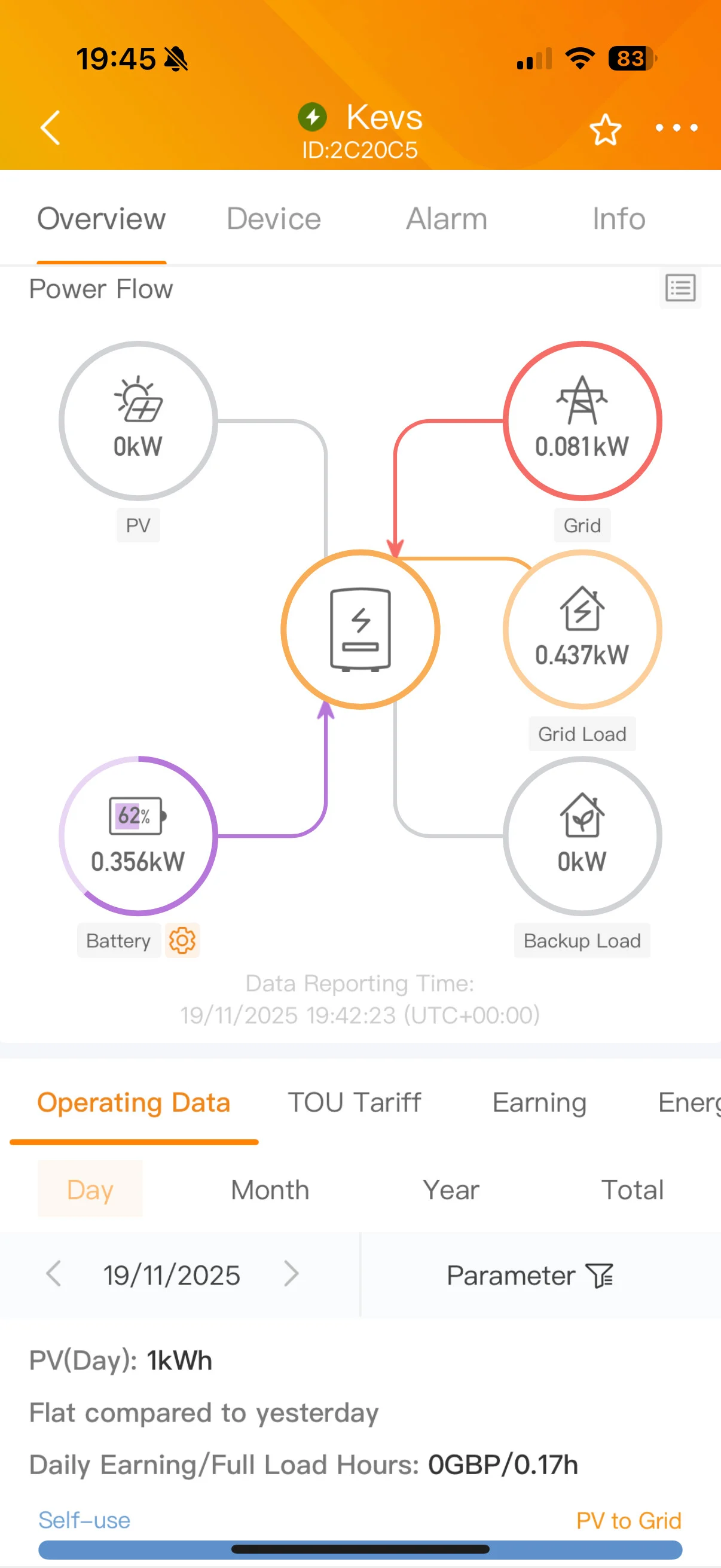
I have 2 separate systems, 4kwh of solar and a 5kwh grid tied inverter, it’s fairly old (13 years) but it still produces well, on a good day in spring it will produce around 28kwh per day, but probably averages around 20kwh, yearly yield is approximately 3500kwh, I believe? The second new system, is totally separate, 6kwh of 2 strings 250v 13 amps DC solar, 500wh PV’s 42v x 14amps, at exactly the same orientation (due south), no shadowing, 8kwh hybrid inverter, grid tied, but I will eventually run this with UPS mode activated, with all my essential loads on a backup consumer unit, and totally separate from the main consumer unit, this will be running off the UPS permanently, this effectively means that any power outages, will not effect me greatly, switchover to UPS during a power cut, will be approximately 4 mili-seconds, you can’t blink that quick! It also means my 6kw solar system is still running to charge the batteries when the UPS kicks in… Cheers Kev
Our solar and battery system is now online. All fully inspected by the county and with permission to operate from the utility company. On fall (autumn) sunny days (even with low sun / short day) we are able to run many days with no grid power imported at all! Cloudy / rainy days (and we had a few those recently as well) not so much of course.
We do get power outages in winter storms so the batteries definitely give us (whole house) back-up power.
Worse still, for safety reasons (which IMO are probably obsolete, but who asks me?) solar-panel owners here are not allowed to go into “island mode” - which means that even if the sun is shining brightly, if there’s a power outage our power goes out along with it. (So that’s another case for battery storage that doesn’t work for us.)
That is typically a limitation of the type of the inverter used. The latest inverters can operate in grid-tied or off-grid modes so you may be able to upgrade your inverters if this is important. You will need a battery system if you want the solar to produce power when the grid is down (the power has to go somewhere) and you will need a gateway to disconnect the solar / batteries from the grid while the grid is down.
This is probably the safety reason you have been quoted. The Utility will have workers working to restore power so you must be isolated from the grid so as to not be sending any power to the grid.
The solar array in our new system can provide power to the house and batteries even when the grid is down. On sunny days we should be able to run for days in a power outage with the batteries topped up by the sun every day. The batteries also support a generator input to allow them to be topped up in an extended outage with little sun.
Edit; Plus 2 x 48v 16.1kwh batteries, giving me 32kwh of battery storage, I will probably add a 3rd battery next year, making it 48kwh… Cheers Kev
We are already thinking another battery would be nice! We have two EVs and charging both does occasionally mean pulling from the grid…
It seems to be a truism once you have some batteries, you always want more…
You’re ignoring this member’s posts.
This is an excellent question and a very sharp observation! While the “Big 5” still dominate the Western retail market, the landscape in China is certainly dynamic.
China’s Role in the Hearing Industry
It’s true that Chinese companies are making significant strides, particularly in the manufacturing and B2B space.
Hearing Aid Manufacturers (The Players)
Global OEM/ODM Hub: The biggest immediate impact is their role as a global OEM/ODM (Original Equipment/Design Manufacturer). Companies like Austar Hearing (founded in 2003) have 20+ years of experience providing advanced and reliable hearing solutions. They are trusted partners for many of the global brands you already know.
Quality & Compliance: These leading Chinese manufacturers aren’t just making cheap copies; they operate to high international standards, holding critical certifications like CE (EU MDR), ISO13485, and registration. This ensures their products meet strict market access requirements globally.
Emerging Brands: We are starting to see the transition from pure manufacturing partners to companies aiming to launch their own branded products, often focusing on the massive domestic market.
The Domestic Chinese Market
Massive Potential: Driven by a large and rapidly aging population, the demand for hearing aids in China is immense and growing quickly.
Focus on Affordability/Tech: The domestic market is rapidly adopting digital and cost-effective solutions, potentially favoring local brands that can leverage efficient manufacturing.
Diagnostic Equipment ( & Audiometers)
Audiometers: There are Chinese manufacturers producing good quality, entry-level to mid-range audiometers.
Specialized/High-End: For high-precision, specialized equipment like REM (Real-Ear Measurement) devices, the market still largely relies on the established global leaders (e.g., those from Denmark, US, etc.) that have strong technical expertise and distribution in major hospitals and clinics.
In short, China is a major manufacturing engine for hearing aids globally and is quickly becoming a technological player in its own right, backed by compliance and a massive home market. The competitive landscape will definitely get more interesting!
You’re ignoring this member’s posts.
Thanks for the generic review. As some pointed out above, a bottleneck appears to be a lack of audiologists (people who fit advanced ) in China. If those remain scarce it will remain hard to produce for the local market.
You’re ignoring this member’s posts.
Why would they remain scarce, China has the ability to throw incredible resources at training audiologists if it so chooses. What evidence is there that supports your opinion? I don’t buy the argument that their ability to produce for the local market is being limited. The Chinese never let a good opportunity go to waste.
You’re ignoring this member’s posts.
customers need to have hearing aids fine-tuned, adjusted, repaired, trouble-shooted, and China is not really set up for that kind of one-on-one interaction
Just reading the posts here, flyjazz.
You’re ignoring this member’s posts.

Excellent summary! I KNOW there is enormous potential in China. The demographics for those likely in need are staggering. If any country can make a high-end aid (that’s even waterproof), I’d bet they could with the right prodding from either central planning or sheer market forces.
Both India’s and China’s population are early adaptors of technology. I remember in India, my in-laws servant had a working cell phone for calling home, whereas my folks had the clunky landline in heavy metal black that was like calling on two Dixie cups strung together the sound quality was so horrid.
It’s just a matter of time before we see some real threats to Oticon, Phonak, Starkey (already selling in China, I believe?). BRING IT ON!
You’re ignoring this member’s posts.

The market is massive @um_bongo, at the time when I investigated the Chinese hearing aid market, it was very, very impressive around a dozen large dispensaries in most of the major cities, for those who wanted to buy ’s, I believe these were brand specific from their major manufacturers, I have no idea what their healthcare provides, tis probably akin to the NHS, good aids, but basic? Prices were approximately a quarter or a third, of what we pay here, but they will have very large volume sales, given their population! Most of their hearing aids, looked much the same as ours, with all the Bluetooth features… Cheers Kev 
You’re ignoring this member’s posts.
@ronshere To go back to your comment a couple of days ago
Call it as having Artificial Hearing - we are expected to believe that is better
Or just Bionic hearing. Yes, both descriptions assume you are using assistance
You’re ignoring this member’s posts.

In reply to @coastal_california
That is typically a limitation of the type of the inverter used. The latest inverters can operate in grid-tied or off-grid modes so you may be able to upgrade your inverters if this is important. You will need a battery system if you want the solar to produce power when the grid is down (the power has to go somewhere) and you will need a gateway to disconnect the solar / batteries from the grid while the grid is down.
This is probably the safety reason you have been quoted. The Utility will have workers working to restore power so you must be isolated from the grid so as to not be sending any power to the grid.
In our case, it’s an actual legal issue - in other words, there’s nothing we can do technology-wise to fix the problem, since the restriction is coming from on high. (Our inverter is a 3-year-old SolarEdge, and I believe that it’s actually capable of operating in “island mode” if the government/electric company authorized the change.) Given the rates we get in both directions for electricity, batteries definitely wouldn’t pay in our case; but it would be nice to have the system operate as a daytime UPS when the power goes out. Sigh…
The good news is that we generated 55 kWH today - worth around US $8.55, which isn’t bad for late November!
You’re ignoring this member’s posts.
There is nothing to stop you from using the UPS facility Don, you just get an electrician to wire a backup system that runs on the UPS (Battery Only) There should be 3 different connections on your inverter, Grid, Generator & Backup or UPS, well technically 4, counting the battery cables… The electrician will run a cable from the inverter UPS connection, a smaller consumer unit is placed adjacent to the main board or main electrical consumer unit, the RCD’s of your essential loads (cooker, sockets, fridge, freezer, lights etc) are removed from your main board, and the cabling, and swapped over to your essential loads box, so they are completely separate from the main board/grid… the essential loads are powered up at all times, but in the event of a power outage, the at the meter detects the Grid is down, and instantly cuts all power to the Grid, the inverter then (around 4 mili-seconds) it switches to battery mode only, and powers the essential loads box, which in effect has no physical connection to the grid, this in turn allows your Solar PV’s to continue charging your batteries only, this is how an UPS/Backup system works… I hope my explanation wasn’t too confusing? Cheers Kev
You’re ignoring this member’s posts.
There is nothing to stop you from using the UPS facility Don, you just get an electrician to wire a backup system…
Nothing except the government and our local electric monopoly - you have no idea how much bureaucracy was involved just in getting our solar installation approved, and that was with us (and the solar provider) doing everything strictly by the book.
We’re not talking America here…
You’re ignoring this member’s posts.

I’d be worried about the Chinese intel guys listening in on my conversations! 
You’re ignoring this member’s posts.
Looks like we have left China to discuss rechargeable here.
You’re ignoring this member’s posts.
you have no idea how much bureaucracy was involved just in getting our solar installation approved, and that was with us (and the solar provider) doing everything strictly by the book.
We’re not talking America here…
It is the same in the US.
Our installer had to submit detailed electrical and mechanical design specs (including data sheets of all the components used) to the county building code department and utility company for review. The review took a few weeks including some follow up questions where they asked for more detail.
Once the designs were approved we had permit approval so installation could start. Once the system was installed the county and the utility inspected the installation to confirm every was installed to code and give permission to operate.
It is very important to get a quality, local installer who knows the code and utility requirements and process. Electrical codes are national but there is still some local variance by state/county (things like which locations are OK for batteries to be safely installed etc).
You hear some horror stories when people try to use not so proficient or ethical installers.
You’re ignoring this member’s posts.
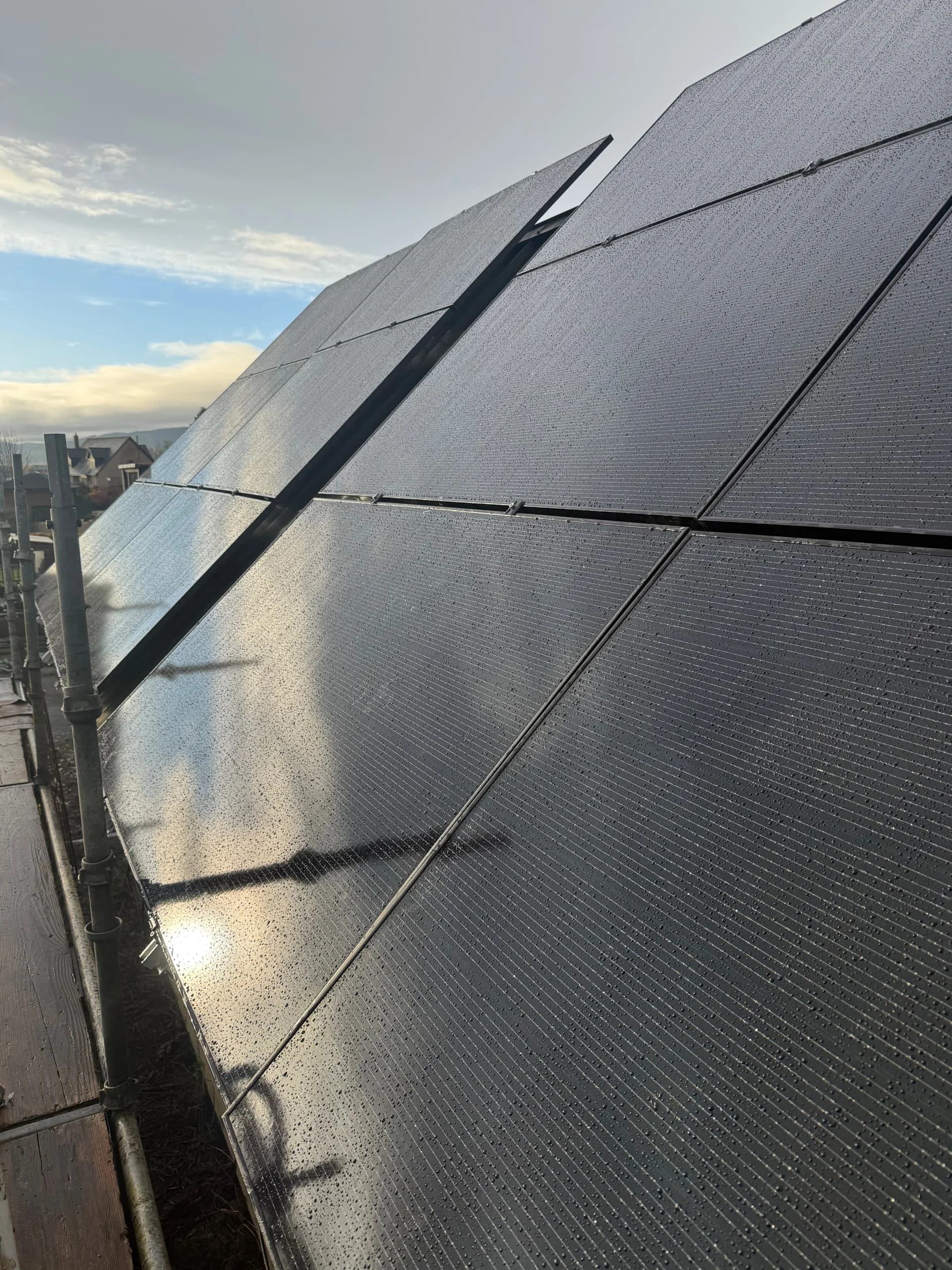
Here in UK, especially Scotland you do not need any planning consent/permission, Domestic Solar Panels are considered a “Permitted Development” I can put 50Kwh of solar on my roof, (if it’s big enough?) you have to own your home, I am not in a conservation area, I do not need to be a qualified Electrician, just competent enough to install, I built the whole system from scratch, with the assistance of some friends to fit the PV Panels. I am 69 years old, perhaps I shouldn’t be swinging around my workshop roof, but boy, you get some extreme satisfaction doing a Solar PV system from scratch… Cheers Kev 
You’re ignoring this member’s posts.
Log in to reply to this topic.
Hearing Aids3 replies
Hearing Aids16 replies
Hearing Aids8 replies
Fitting Software Requests1.1k replies
Hearing Aid Self-Fitting (DIY)302 replies

 Geneva, Switzerland



 Scottish Highlands
 Northern Ireland
 Washington, DC Metro Area